Sunday, May 11, 2008

Cranes Skiffle Group


Another 78 from the boot sale today. On the Embassy label from 1957. Cranes Skiffle Group was actually Chas McDevitt and His band who had a big hit with "Freight Train" with Nancy Whiskey singing the lead vocal that same year.

"The group had already recorded 'Freight Train' for Oriole Records; thanks to the demo discs produced by their new manager, Bill Varley. Bill ran Trio Recordings, a small studio in Tin Pan Alley. It was Varley who suggested that to get an edge over the other skiffle groups they should include a girl in their line-up. Folksinger, Nancy Whiskey, who had also appeared on the Radio Luxembourg talent competition was invited to join the group. At first reluctant to give up her folksinging, she joined the boys at the end of December 1956. They re-recorded 'Freight Train' with Nancy taking the vocals. On the same session they recorded; 'Cotton Song', 'New Orleans' and 'Don't You Rock Me Daddy O'. The last track was released on Embassy records, Oriole Records' cheap subsidiary that sold in Woolworth's. They used the pseudonym 'The Cranes Skiffle Group'. 'Worried Man', originally recorded for Embassy, whilst Jimmie MacGregor was with the group, was substituted on their second Oriole release."

Discover more about Chas McDevitt HERE.


Cranes Skiffle Group - Freight Train

Cranes Skiffle Group - Cumberland Gap


These SendSpace files are available for seven days or until exhausted.

Bobby Kimber


Found this old 78 at a boot sale today for 20p. It was recorded "Under the auspicesof the English Folk Dance and Song Society". Solo concertina. I didn't find much about Billy but a quote here about him sheds some light on his songs and his friends.

"Billy's concertina wasn't accepted by all in the side, either, being somewhat new-fangled (patented in 1844 by Sir Charles Wheatstone, though the “anglo” Billy played was probably based on a patent of 1884), but he could do Laudnum Bunches, The Blue-Eyed Stranger, Constant Billy, Country Garden, Rigs of Marlow, How D'Ye Do Sir, Bean Setting, Haste To The Wedding, Rodney, Trunkles, what some called Trunk Hose, and Draw Back. But the side's fiddler, Mark Cox, had gone off for a servant's job at Magdalen College up at Oxford, so they'd have to follow along of Merry Kimber's squeezebox, with young William Washington, the well-digger, him they called Sip, playing the fool. Youngest dancer'd be Charlie Massey, a brickmaker like his father, William, both of them known rather confusingly by the same nickname – Mac – then the two Coppocks, George, known as Spuggle, and George, known as Curly, the latter with great ambitions, later fulfilled, to have a load of men working for his building business, Billy's brother, Richard Kimber, known as Dobbin, making a great career for himself as a worker with the local district council, John Ward, known as Waggle (and you'd soon know why, if you saw him dancing), a labourer, Jim Hedges, known as Gran, a laundry delivery man, and the oldest man in the side, 54-year-old John Horwood, whose brickmaking trade gave him his nickname of Brickdust.

Discover more about Bobby Kimber HERE.


Bobby Kimber - Rodney

Bobby Kimber - Rigs Of Marlow

Bobby Kimber - Beansetting

Bobby Kimber - 29th May


These SendSpace files are available for seven days or until exhausted.

Wednesday, May 07, 2008

Sir Harry Lauder


A 10" LP on the HMV label issued in the late 50's or early 60's. The songs themselves are probably not the originals but his "hits" re-made in the 30's and 40's.

"Sir Harry Lauder (1870 - 1950), the popular singer and entertainer, who won international renown, was born at Number 4 Bridge Street, Portobello.

As a boy Lauder worked in a flax-spinning mill in Arbroath, where he attended school, and for a time he was a miner. It was in Arbroath that he first appeared on stage. He had a natural singing voice and a talent for composing simple and tuneful songs.

His stage persona depended heavily on the kilt, a curly walking-stick, and much talk of bawbees and allusions to tight-fistedness, and Lauder's critics complained that he caricatured the Scot. Be that as it may, Lauder was just as popular in his own country as he was in England and innumerable countries overseas.

Songs like Roaming in the Gloaming and Keep Right On to the End of the Road retain their magic and have become part of Scotland's folk music. He was knighted in 1919, and in 1927 received the Freedom of Edinburgh."

Something very irritating about a professional scotman like Lauder who played the part to the hilt, but nevertheless I find the mixture of music hall song and stirring highland sentiment and wimsy very attractive in an odd kind of way. Maybe I have some scottish blood in my veins somewhere?

Discover more about Sir Harry lauder HERE.


Sir Harry Lauder - Roaming In The Gloaming

Sir Harry Lauder - I Love A Lassie

Sir Harry Lauder - Stop Yer Tickling Jock

Sir Harry Lauder - The waggle O' The Kilt


These SendSpace files are available for seven days or until exhausted.

Roy Hudd


This LP is on the Flash Back series on Precision Record label from 1976.

"A famous face in showbiz for thirty five years, Roy Hudd is natural comedy entertainer, a talented actor, playwright, sketch-writer, and performer.

He broke into TV appearing on Not So Much A Programme, More A Way of Life, but found wider fame with 1969’s The Roy Hudd Show.

Since 1975 The News Huddlines has had an amazing run on Radio 2, and is something of an institution. Although it's currently off-air, it will be back next year.

Roy's work as a dramatic actor in television has also won him praise. Dennis Potter's Lipstick on your Collar proved a huge success. This led to his most endearing dramatic role, again written for him by Potter, that of Spoonerism-afflicted Ben Baglin in Karaoke. "
So says the BBC website of profiles of the stars.

Discover more about Roy Hudd HERE.


Roy Hudd - Where Did You Get That Hat?

Roy Hudd - While London Sleeps

Roy Hudd - It's A Great Big Shame

Roy Hudd - The Future Mrs. Awkins

Roy Hudd - The Hole In The Elephant's Bottom


These SendSpace files are available for seven days or until exhausted.

Sunday, May 04, 2008

Chris Barber


An LP on the Decca "Ace Of Clubs" label from the late 50's with songs from guests Lonnie Donegan who also plays banjo on some tracks and Ottilie Patterson.

"British jazz trombonist Chris Barber celebrated his 50th year as a bandleader in 1999. Inspired by the King Oliver Creole Jazz Band, Chris formed his first Barber New Orleans Band in 1949 at the age of nineteen. In 1953, along with Monty Sunshine and Lonnie Donegan, he joined forces with Ken Colyer. Then, with the replacement of Colyer by Pat Halcox, Ken Colyer's Jazzmen became Chris Barber's Jazz Band in 1954 and has been one of Europe's most successful traditional jazz bands ever since.
Over the years, Chris Barber's Jazz Band evolved into the Chris Barber Jazz and Blues Band, a rich eight-piece group, blending brass, reeds, and electric guitar into a unique and unmistakable mix of blues and jazz. And despite being 'on the slide' since 1949, having performed over 10,000 concerts and made thousands of recordings, the Chris Barber Jazz & Blues Band keeps marching on, right into the 21st century. At the end of 2001 Chris extended his band with three more musicians into The BIG Chris Barber Band."

Discover more about Chris Barber HERE.


Chris Barber - Bobbie Shaftoe

Chris Barber - Rock Island Line

Chris Barber - New Orleans Blues

Chris Barber - John Henry

Chris Barber - Stevedore Stomp


These SendSpace files are available for seven days or until exhausted.

Friday, May 02, 2008

Wout Steenhuis


Found this today in a charity shop for a few pence. I remember Wout in the 60's guesting on radio shows like "Saturday Club" and "Forces favourites". It's a bit too MOR for me but I know a lot of people love this sort of thing. He's still going strong apparently and recently featured on the Cannon & Ball website -

"Wout hails from Holland but settled in England shortly after the war. In his native country he was already known as the guitarist of the famous Orchestra of the Dutch Swing College (still going strong today). At the end of the war his Dutch Resistance activities caught up with him and a serious shot wound could well have ended his career. But, thanks to treatment in a British Army hospital, his arm was saved and he could play his guitar again,

His early reputation was as a solo Jazz, Ballad and Hawaiian guitarist, but in addition his claim to fame now are his multi-track performances. Shades of Les Paul, maybe, but there is one vital difference: Wout sings and plays everything himself, using a choir of his own voices, guitars, Hawaiian guitar, drums, bass, electric and acoustic pianos, organ, ukelele, and latin-american rhythm instruments, all recorded in his own stereo studios. A one-man orchestra and choir is the end product.

From the stage/cabaret floor Wout controls the playing of backing tapes which contain his own pre-recorded orchestral and vocal accompaniments. At the same time, live through his own mixer/amplifier/mike equipment he adds the melody lines on guitar, Hawaiian guitar and vocals. It is not just a gimmick, but an impressive live performance in which he reproduces the sounds and songs audiences know so well from his records and broadcasts. AND: he is self-contained - needs no backing, bandcalls or p.a.

His material ranges from top-twenty songs to ballads and Hawaiian (Wout's speciality) and includes vocals, not just in English but where required in French, Dutch, German, Spanish, Hawaiian and Maori. His easy-going chat and amusing stories linking his songs and his sounds deserve special mention. Altogether a style which particularly suits "middle of the road" audiences in theatres and clubs."

You can find the whole album at Rapidshare HERE.

Thursday, May 01, 2008

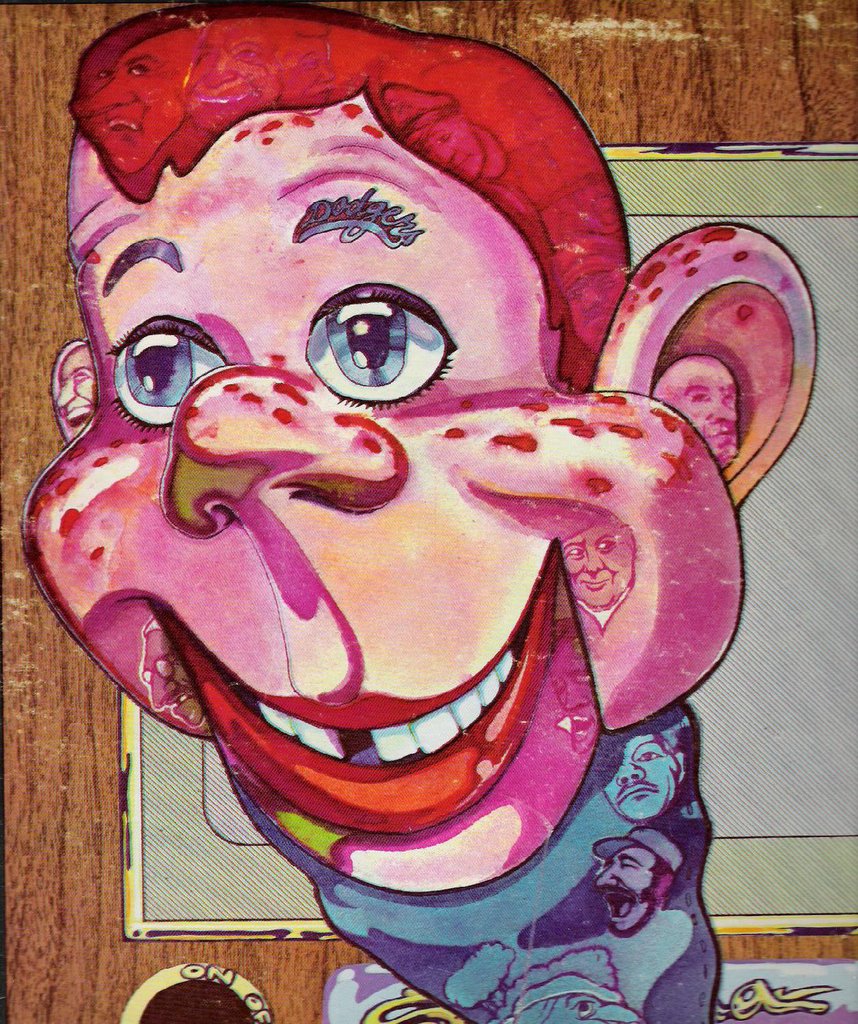
Howdy Doody Time


"The Howdy Doody Show was one of the first and easily the most popular children's television show in the 1950s and a reflection of the wonder, technical fascination, and business realities associated with early television. While Howdy and his friends entertained American children, they also sold television sets to American parents and demonstrated the potential of the new medium to advertisers.

The idea for Howdy Doody began on the NBC New York radio affiliate WEAF in 1947 with a program called The Triple B Ranch. The three Bs stood for Big Brother Bob Smith, who developed the country bumpkin voice of a ranch hand and greeted the radio audience with, "Oh, ho, ho, howdy doody." Martin Stone, Smith's agent, suggested putting Howdy on television and presented the idea to NBC televi-sion programming head Warren Wade. With Stone and Roger Muir as producers, Smith launched Puppet Playhouse on 17 December 1947. Within a week the name of the program was changed to The Howdy Doody Show."

A strange record on the the Leslee label from the 60's I would guess by the graphics. A weird mixture of newsreel from the 50's and 60's and cut between songs and segments of a puppet show for children! Not quite sure who it is aimed at. Certainly a curiosity and I uplaod both sides here for your bewilderment!


Howdy Doody Time - Side One

Howdy Doody Time - Side Two


These SendSpace files are available for seven days ot until exhausted.

Monday, April 28, 2008

George Melly's Bubbling Over Four


This tape was sent to me some years ago by persons unknown. It's a programme called Saturday Skiffle Club hosted by Brian Matthew and went out on BBC Light Programme , as it was then, on 23rd. November 1957. Others on the programme are Dick Bishop's Sidekicks and The City Ramblers.

"He was born in Liverpool and was educated at Stowe public school, where he discovered his interest in modern art, jazz and blues and started coming to terms with his sexuality. This period of his life is described in Scouse Mouse, a volume of his autobiography.
He joined the Royal Navy at the end of the Second World War because, as he quipped to the recruiting officer, the uniforms were 'so much nicer'. As he related in his autobiography, Rum, Bum and Concertina, he was crestfallen to discover that he would not be sent to a ship and was thus denied the "bell-bottom" uniform he desired. Instead he received desk duty and wore the other Navy uniform, described as "the dreaded fore-and-aft". Later, however, he did see ship duty. He never saw active combat, but was almost court-martialled for distributing anarchist literature."

Discover more about George Melly HERE.


Bubbling Over Four - Casey Jones/Kansas City

Bubbling Over Four - This Train/Sporting Life

Bubbling Over Four - I Want A Butter And Egg Man


These SendSpace files are available for seven days or until exhausted.

Max Bacon - Requested Re-Up


"Max was the larger-than-life drummer with the Ambrose Orchestra for many years, who also had a unique Jewish-style humour. Prior to joining Ambrose in late 1927, he had been with Leon van Straten's band in 1926 and also was briefly with Fred Elizalde's band (which seems to be made up of Ambrose musicians) and Al Starita's Kit-Cat band (probably a temporary substitute for Eric Little). He was a regular member of Ronnie Munro's band which recorded for Parlophone and Imperial from 1926 to 1929, and also with Arthur Lally's band at Decca in the early 1930s. His stint with Ambrose lasted until 1940 and his wry comments may be heard on a number of comedy titles, including the famous number "Cohen the Crooner (The Crosby of Mile-End)" which is extant on film. On leaving Ambrose, Max went into variety, and also acting, taking small parts in films and television shows."


Max Bacon - William T. Hell

Max Bacon - Little Red Hooding Ride

Max Bacon - Even A Crooner Must Eat


These SendSpace files are available for seven days or until exhausted.
Saturday, April 26, 2008

Golden Voices Of The Music Hall


An old early 60's compilation on the budget Ace Of Clubs label of music hall artistes from the 30's and 40's I imagine. Not much information on the sleeve.

Ella Shields.
"Ella Shields (September 27, 1879 – August 05, 1952[1]) was a music hall singer and male-impersonator. Her famous signature song, "Burlington Bertie from Bow", written by her manager and first husband, William Hargreaves, was an immediate hit that is still sung to this day. Though American-born, Ella achieved her greatest success in England."

Nellie Wallace
"Nellie Wallace was one of the most famous and best loved music hall performers and is one of the stars commemorated in the new Theatre of Variety at the Grand Theatre Blackpool. She was a 'grotesque', one of a genre that also included Lily Morris, who famously sang 'Why Am I Always the Bridesmaid?' These women made themselves look bizarre and illustrated their comic songs and patter with outlandishly grotesque dances that actually required great dancing skills. They were as loveable and appealing as they were extraordinary to look at and since the characters they portrayed were usually down on their luck, audiences took them to their hearts."


Ella Shields - Burlington Bertie

Ella Shields - The Army

Tom Leamore - Mick MacDonald

Tom Leamore - Percy From Pimlico

Nellie Wallace - The Blasted Oak

Nellie Wallace - Three Times A Day


These SendSpace files are available for seven days or until exhausted.

Sunday, April 20, 2008

Spike Jones & His City Slickers


No excuses for uplaoding more Spike Jones and his wonderful band. This 1986 LP on the Harlequin label is a compilation of early stuff from 1942 when Spike had not got as wacky as in later years. It only highlights the exceptional musicianship of his eight peice band and hints at things to come, especially in songs like "I Wann Go Back To West Virginia" and "St-St-St-Stella".


"Lindley Armstrong "Spike" Jones (December 14, 1911 - May 1, 1965) was a popular musician and comedian. He was born in Long Beach, California.
His father was a Southern Pacific railroad agent. He got his nickname by being so thin that he was compared to a railroad spike. At the age of eleven he got his first set of drums. As a teenager he played in bands that he formed himself. A chef in a railroad restaurant taught him how to use adapted pots and pans, forks, knives and spoons as musical instruments. He frequently played in theater pit orchestras. In the 1930's he joined the Victor Young Band and thereby got many offers to appear to radio shows including the Al Jolson Lifebuoy Show, Burns and Allen (with George Burns) and Bing Crosby's Kraft Music Hall. In 1940, he had an uncredited part in the film Give Us Wings, and in 1942 as a hillbilly in Pass the Biscuits, Mirandy. He joined up with vocalist Del Porter and performed in Los Angeles, gaining a cult following. By 1941 the band included violinist Carl Grayson. Other band members were George Rock (voice and trumpet), Doodles Weaver (voice) and Red Ingle (voice). They became his backing band The City Slickers.Jones's wife was the singer Helen Grayco, who performed on some of his radio shows. They recorded five records for Victor's label "Bluebird" before receiving their big break."

Discover more about Spike Jones HERE.


Spike Jones - I Know A Story

Spike Jones - John Scotter Trot

Spike Jones - The Sailor With The Navy Blue Eyes

Spike Jones - I Wanna Go Back To West Virginia

Spike Jones - Come Josephine In My Flying Machine

Spike Jones - Love For Sale

Spike Jones - Moanin' Low

Spike Jones - St-St-St-Stella


These SendSpace files are available for seven days or until exhausted.

Saturday, April 19, 2008

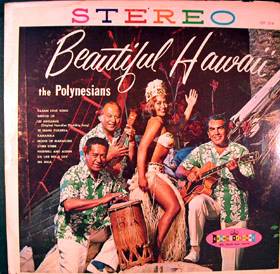
The Polynesians


"The term "Polynesia" was first coined by Charles de Brosses in 1756, and originally applied to all the islands of the Pacific. Jules Dumont d'Urville in an 1831 lecture to the Geographical Society of Paris proposed a restriction on its use, and also introduced the terms Micronesia and Melanesia. This division into three distinct Pacific subregions remains in widespread use today.
Geographically, Polynesia may be described as a triangle with its three corners at Hawai'i, New Zealand, and Easter Island. The other main island groups located within the Polynesian triangle are Samoa, Tonga, and the various island chains that form French Polynesia.
However, in essence it is an anthropological term referring to one of the three parts of Oceania (the others being Micronesia and Melanesia) whose pre-colonial population generally belongs to one ethno-cultural family as a result of centuries of maritime migrations. Then westerners came (more maritime migrations) and alternately abused and enslaved and intermingled with the population."

This record on the Crown label in California features Harry Baty, Sam Kaapuni, Bob Nichols and Joe Keava.


The Polynesians - Pagan Love Song

The Polynesians - Orchid Lei

The Polynesians - Lei Makamae

The Polynesians - Te Manu Pukarua

The Polynesians - Kamahula


These SendSpace files are available for seven days or until exhausted.

Friday, April 11, 2008

Bet Lynch's Legs


Bet Lynch as we all know was the brassy barmaid at the Rover's Return pub in Britain's longest running soap "Coronation Street". I don't remember her legs very well but obviously these boys did and named their band after her pins. Other than that I know nothing about them. Two quirky instrumentals from old cowboy films which have been done better but it has a certain charm and certainly different from a lot of stuff that came out in 1979.
I must point out the wealth of other versions can be found at a wonderful blog called "The Cheeze Factory" , who's link you can find at the side here.


Bet Lynch's Legs - Riders In The Sky

Bet Lynch's legs - High Noon


These SendSpace files are available for seven days or until exhausted

Tuesday, April 01, 2008

Mohd. Rafi


An Indian EP on the Angel label from 1969. Part of a soundtrack to a film called "Tumse Achha Kaun Hai". All the songs here are sung by Rafi but he is joined by Lata Mangeshgar on "Rangat Teri Surat".

"Mohd. Rafi was perhaps the most popular male playback singer ever and maybe the second most popular singer of Indian Cinema after who else Lata Mangeshkar!

Rafi could sing for anyone in any style. At one stage in the 1960s Rafi was the voice of Dilip Kumar, Dev Anand, Shammi Kapoor, Rajendra Kumar, Johnny Walker, Sunil Dutt, Biswajeet, Joy Mukherjee, Dharmendra, Shashi Kapoor and Raaj Kumar! From the classical Madhuban mein Radhika Nachi re to the swinging Aaja Aaja Main hoon Pyar Tera, from the soulful Hum Bekhudi Mein Aapko Pukarein to the comic Sar jo Tera Chakraye, from the philosophical Dekhi Zamaane ki Yaari to the frivolous Aiaiya Karoon Main Kya Sookoo Sookoo, he could sing anything! In fact Rafi was blessed with such a range that he could easily sing in three octaves without veering out of control.

Born in Kotta Sultansingh village in Punjab (now in Pakistan), Rafi moved to Lahore when he was 14. There he studied music under Khan Abdul Waheed Khan, Jeevanlal Matto and Ghulam Ali Khan. He was introduced to radio Lahore by composer Feroz Nizami and made his film debut as playback singer in the Punjabi film Gul Baloch (1944).

He moved to Bombay in 1944 where he was first given a break by Naushad in Pehle Aap (1944). Rafi's earlier singing style appeared influenced by G.M. Durrani and his first really big hit was in Jugnu (1947) where he sang the duet Yahaan Badla Wafaa ka Bewafaee ke Siva Kya Hai with Noor Jehan under Feroz Nizami. But his career really took off with the all-time hit Suhani Raat Dhal Chuki from Dulari(1949). From then there was no looking back and Rafi ruled as the undisputed king of playback singing till the early 70s when Kishore Kumar took over. However it took Rafi much of the 50s to establish his superiority over rest of the competition. Kishore Kumar and to a lesser extent Mukesh and Talat Mehmood were preoccupied by their acting while Hemant Kumar saw a decline in his singing career by the end of the 1950s. Manna Dey never really got the breaks his talent deserved and from 1960-1970 Rafi was unchallenged at the top."

Discover more about Mohd. Rafi HERE.

Mohd. Rafi = Janam Janam Ka Saath Hai

Mohd. Rafi - Tumse Achha Kaun Hai

Mohd. Rafi - Rangat Teri Surat


These SendSpace files are available for seven days or until exhausted.

Saturday, March 29, 2008

Swaranlata & Karamjit Singh Dhuri


An EP on the Odeon EMI from 1973.

"Swaranlata, a tall and alluring Sikh girl from Rawalpindi, was interested in dance, music and films since her childhood. After completing her education, she joined Academy of Music and Arts - Lucknow (UP), and married a rich merchant P.C. Balmoria at the age of 18. Luckily, P.C. Balmoria was himself interested in films and music; therefore, he introduced Swarnlata to the world of films. Swaranlata's first film Awaaz was released in 1942, which was directed by Rafiq Rizvi. Although Swaranlata was cast in a secondary role, she did her role with great confidence opposite such seasoned actors like Maya Banerji and Wasti. Seeing her enthusiasm for films, she was offered the lead role in Najam Naqvi's Tasveer (1943) opposite superstar hero of his time Motilal. Tasveer, a romantic comedy about a philandering doctor did great business at box-office and there was no looking back for Swaranlata. She was showered with offers and was cast as the leading lady in lots of movies including Rattan (1944) which is still considered as one of the greatest hits of Indian Cinema. In 1945, director-cum-producer-cum-actor Nazir started Laila Majnu (1945) under the banner of Hind Pictures, and Swaranlata was cast as Laila. Indian playback singer, Mohd Rafi also appeared in this film, alongside lead pair Swaranlata and Nazir to sing the chorus in tera jalwa jisne dekha. This film, an Arabian love legend, gave rise to a real life romance off the screen as well. Swaranlata converted to Islam and changed her name to Saeeda Bano. Swaranlata and Nazir got married and were inseparable till Nazir's death in 1983".


Swaranlata & Karamjit - Pehli Raat Bada Hi Dar Lagea Si

Swaranlata & Karamjit - Ghund Chuk Mukhra Dikhade

Swaranlata & Karamjit - Thamle De Kol Kol Di

Swaranlata & Karamjit - Ghada Na Chukayo Kudiyo


These SendSpace files are available for seven days or until exhausted.
Friday, March 28, 2008

The Ramblers Dance Band


A Highlife LP on the Decca label from West Africa recorded in 1969.

The sleeve notes say-

"It is over a decade now since Decca started recording local artists in West Africa. During this stretch of time dance bands have sprouted and wilted away to die in the true tradition of musicla groups. Somehow one band has satyed around longer than most; it seems to have succeeded where others have failed. The Ramblers Dance Band, nearly eight years old, have introduced glamour to the West African Highlife scene. the band have provided it's dance fans with their highlife tunes, while for those who prefer to listen it has supplied the necessary innovations to the traditional forms."


"From its early development in Ghana through the 1970s, Highlife was Africa's first big popular music trend. Evolving from the the music of society bands and military marching bands, Highlife music re-africanized these contemporary instrumental ensembles, adding local percussion, indigenous rhythms and crafting local lyrics around powerful local themes. Highlife, named for the lifestyle of the high society Africans who were its early patrons, was the first major popular music trend in West Africa. Some of Nigeria's early highlife luminaries Bobby Benson, Cardinal Rex Lawson, EC. Arinze, Stephen Amechi, Inyang Henshaw, Celestine Ukwu and many others are still revered to this day. Though highlife lost some of its national power during the Civil War years, Highlife Heavies like Chief Stephen Osita Osadebe and Oliver DeCoque remain powerful National forces. Recentely a young generation has worked to put highlife back on the map."

Discover more about Nigerian Highlife HERE


Ramblers Dance Band - Ekombi

Ramblers Dance Band - Agyanka Dabre

Ramblers Dance Band - Ama Bonsu

Ramblers Dance Band - Nyame Ne Nhyehyee

Ramblers Dance Band - Nyame Mbere

Ramblers Dance Band - Alome

Ramblers Dance band - Knock On Wood


These SendSpace files are available for seven days or until exhausted.

Sunday, March 16, 2008

Sandy Nelson


"Let There Be Drums" by Sandy Nelson was one of the very first singles I ever bought back in the 60's - probably an ex juke box single with the centre punched out I used to buy cheaply at Pitsea market in Essex.
This compilation of some of his hits is on the budget Sunset label, released in 1962.

Wikipedia says-

"His song "Teen Beat", released on Original Sound Records, rose to #4 on the Billboard Hot 100 chart in 1959. Subsequently he signed with the Imperial record label, and pounded out two more Top 40 hits, "Let There Be Drums", which went to #3 in the UK Singles Chart, and "Drums Are My Beat". All three were instrumentals (a feat rarely repeated). Guitar on these hits was by co-writer Richie Podolor (aka Richie Allen), later a respected songwriter / producer in his own right.
He attended high school with Jan Berry, Dean Torrence (who together became Jan and Dean), and Kim Fowley. After gaining respect as a session drummer, he played on such well-known songs as "To Know Him Is To Love Him" (Phil Spector's Teddy Bears, 1958), "Alley-Oop" (The Hollywood Argyles, 1960), "A Thousand Stars" (Kathy Young and the Innocents, 1960) and many more.
Near the end of 1963, Nelson was involved in a serious motorcycle accident. The resulting injuries necessitated amputation of his right foot and part of that same leg. Nonetheless, he managed to resume his drumming career, and Nelson continued to record into the early 1970s, releasing 2 or 3 albums a year, mainly consisting of cover versions of popular hits at the time plus a few original compositions.
Nelson, now approaching his seventies, lives in quiet seclusion in Boulder City, NV. and continues to experiment with music on keyboards and piano."


Sandy Nelson - Teen Beat

Sandy Nelson - Big Noise From The Jungle

Sandy Nelson - Honky Tonk

Sandy Nelson - All Night Long

Sandy Nelson - Drums Are My Beat

Sandy Nelson - Drumming Up A Storm


These SendSpace files are available for seven days or until exhausted.

Happy Monsters


A really odd record I bought today at a boot sale. It was released on the Happy House label ( Made In America ) in the 60's I imagine. One side a has a story and the other is all songs ,or rather, tunes- sub funk backing tracks that have percussive intruments like bells, marracas and squeakers layered over the top in a strange haphazard fashion. The resulting mess is quite alarming! I recognise a few tunes here including James Brown's "Papa's Got A Brand New Bag". Maybe you can spot some others? Goodness knows what children thought of this when it was played at their parties!

Happy Monsters - Ooog Frug

Happy Monsters - Monster Rock

Happy Monsters - See See Monster

Happy Monsters - Clap Your Tentacles

Happy Monsters - Kiss Me Goodnight

Happy Monsters - Adventure In The Land Of Oog


These SendSpace files are available for seven days or until exhausted.

Saturday, March 08, 2008

Ken Dodd & The Diddymen


Back due to popular demand . This is an LP I found years ago and have only just had the chance to rip the tracks using my new ION USB turntable ( from Santa ). Hopefully I can upload more vinyl now after being restricted to CD tracks for a couple of months. Excuse the pops and crackles.

Wikipedia says-

"Ken Dodd was born on the 8 November 1927 in Knotty Ash on the outskirts of Liverpool, son of a coal merchant, Arthur Dodd and wife Sarah Dodd. He went to the Knotty Ash School, and sang in the local church choir of St. Johns Church, Knotty Ash. At the age of seven, he was dared by his school friends to ride his bike with his eyes shut.....and he did, for about 10 feet and the bike hit the kerb. Ken went flying open-mouthed onto the tarmac, resulting in his famous teeth of today.

He then attended Holt High, a Grammar School in Childwall, but left at 14 to work for his father.[1] Around this time he became interested in showbusiness after seeing an advert in a comic entitled; "Fool Your Teachers, Amaze Your Friends - Send 6d in Stamps and Become a Ventriloquist!" and sending off for the book. Not long after, his father bought him a ventriloquist's dummy and Ken called it Charlie Brown. He started entertaining at the local orphanage, then at various other local community functions.

He got his big break at the age of 27. In September 1954 he appeared at the Nottingham Playhouse. A nervous young man, he sat in a local Milk Bar for most of the afternoon going over and over his lines before going to the theatre. Although he can't remember much of the actual act of that night. He did recall, "Well at least they didn't boo me off". But there wasn't much fear of that, as Dodd's act went from strength to strength, eventually topping the bill at Blackpool in 1958."

For "Happiness Tour" dates go HERE.


Ken Dodd - Song Of The Diddymen

Ken Dodd - Ballad Of Knotty Ash

Ken Dodd - Doddy's Diddy Party

Ken Dodd - Washboard King Of The Dixieland Band

Ken Dodd - How'ya Diddlin'

Ken Dodd - The Diddly-Doo Parade


These SendSpace files are available for seven days or until exhausted.

Friday, March 07, 2008

Australia All Over


This is the other Australian cassette I found the other day for a few pennies. Its on the ABC label and based on a radio show of the same name hosted by Ian McNamara who choose all the songs and did the liner notes. In them he says- "This recording is really a slice of life - Australian style. The music overflows with the spirit and the soul of the country. It reflects the humour, lifestyle, natural environment and it's history."

I was thinking the other day that there should be more songs about sheds and lo and behold there is a great one here by John Williamson. Also an amusing song about a snack bar by the Tallowood Bush Band. Ted Egan apparently found the song "Two Little Boys" for Rolf Harris but we won't hold that against him!


Ted Egan - Sayonara Nakamura

John Willimason - The Shed

Tallowood Bush band - Number 97 To The Snack Bar Please


These SendSpace files are available for seven days or until exhausted.

Thursday, March 06, 2008

Slim Dusty

Found this cassette recently in the local hospice shop with another Australian tape. Its all drinking songs including the big hit "Pub With No Beer". I think this is another version though.

Wikipedia says-

"In 1951, Slim Dusty married Singer-Songwriter Joy McKean and with her help, achieved great success around Australia. In 1954, Slim and Joy launced a full time business career and launched the Slim Dusty Travelling Show His 1957 hit "A Pub With No Beer" was the biggest-selling record by an Australian to that time, and the first Australian single to go gold. In 1958 David Kirkpatrick was born. Over the course of his career, he collected more gold and platinum albums than any other Australian artist. (The "Pub with No Beer" is a real place, in Taylors Arm, not far from Kempsey where Slim Dusty was born)[citation needed]. In 1959 and 1960 Dutch and German cover versions of the song became number one hits (even evergreens) in Belgium, Austria and Germany, brought by the Flemish country singer-guitarist and amusement park founder Bobbejaan Schoepen. 1964 saw the establishment of the annual Slim Dusty round Australia tour, a 30,000 mile 10 month journey. Dusty not only recorded songs written by himself and other fellow Australian performers, but also recorded classic Australian poems by Henry Lawson and Banjo Paterson with new tunes, to call attention to the old 'Bush Ballads.' An example is The Man from Snowy River by Paterson.


Slim Dusty plaque at the National Truck Driver Memorial at TarcuttaIn 1970, he was made a Member of the Order of the British Empire for services to music. In 1971 he won Best Single at the Australian Country Music Awards at the Tamworth Country Music Festival (Slim's wife Joy McKean won Song of the Year as writer of the song for which he won best single). In all, he won a record 35 "Golden Guitars" over the years. The General Manager of the Grand Ole Opry in Nashville, Tennessee invited him and his wife Joy McKean to perform in 1997, recognizing 50 years contributing to Country Music. He was given the honour to sing Waltzing Matilda in the Closing Ceremony of the Sydney 2000 Olympic Games, with the whole stadium singing along with him. Slim Dusty, with wife Joy McKean, were patrons of the National Truck Drivers' Memorial located at Tarcutta, New South Wales."


Slim Dusty - He's A Good Bloke When He's Sober...

Slim Dusty - You've Got To Drink The Froth To Get The Beer

Slim Dusty - Pub With No Beer

Slim Dusty - The Hangover Song

Slim Dusty - Mad Jack's Cockatoo


These SendSpace files are available for seven days or until exhausted.

Saturday, March 01, 2008

Texas Kitty


Jim in Basingstoke sent this cassette to me recently. Its a rare copy of a 10" LP on the Philips label from the late 50's early 60's that he was sent many years ago and he has been wanting to hear more of Texas Kitty but the internet does not tell us much.
The only image I could find is of an EP. called "Texas Kitty" that was put out about the same time and contains some of the same tracks.

Luckily a Dutch friend Jan managed to track down a short biography on a dutch website. Her real name was Kitty Prins.

"She was born in Groningen, The Netherlands. She was not only a singer, but a professional painter as well. However her carreer in our country never really got from the ground. She was more succesfull in Vlaanderen (the Dutch speaking part of Belgium). She also had a fan-club in South Africa and she had contacts with the Country Music Assocation in the VS, where she perfromed in the Grand Ole Opry in Nashville.
After being seriously disappointed in The Netherland by people breaking contracts and so on, she decided to move to Vlaanderen permanently. Untill 1981 she presented a country show on Belgian radio. The last years of her life she spent painting. The website isn't clear about her birth and death date (1900-1900?)."

Thanks for that Jan.

Discover more about Texas Kitty In Dutch HERE.


Texas Kitty - Just A Little Lovin'

Texas Kitty - New Mule Skinner Blues

Texas Kitty - My Sweet Love Ain't Around

Texas Kitty - Mule Train Yodel Blues

Texas Kitty - My Love For You

Texas Kitty - After Dark

Texas Kitty - I Don't Care

Texas Kitty - My Old Grey Car


These SendSpace files are available for seven days or until exhausted.

Thursday, February 28, 2008

Manolo Escobar


Hazel spotted this in a local charity shop the other day and bought it for me. She was attracted by the sleeve and I can see why. I usually dismiss these Spanish EP's as they are usually souvenirs from holidays in the 60's and very dull flamenco and this is no exception accept for a nice rhumba track "El Porompompero".

Babelfish translation from official Manolo Escobar site-

"Manolo Field of broom married the 10 of December of the 1,959 with Ana Marx, in the Church of San Michael of Colony. Neither it knew to speak the language of the other, and the wedding was celebrated in German and French. The fiancèe and the padrino, their father, following a German tradition, went to the church in a white float thrown by four white horses. The banquet was celebrated in a restaurant property of the parents of Anita. Previously, to 9 in the morning, the civil ceremony had been celebrated. The padrino of the connection was a young Spanish student, friend of Manolo, that also for of interpreter. The young person, something nervous surely, had to translate a phrase that said: "are here you you stop to marry". But what in fact he translated he was: "you Are married". Obvious, Manolo answered that no, which caused the considerable surprise between the assistants, mainly of the fiancèe and their parents. Luckyly, the ambiguity was clarified to the moment, and everything was in an anecdote. Manolo did mili in Larache (Morocco), that in first years 50 still was Spanish protectorate. He was destined in the Establishment of Equine Young and Flat Repair of the Greater one of Larache. It was a consomme' rider, as it demonstrated in the film "the guerrillas"."


Manolo Escobar - Ave maria No Morro

Manolo Escobar - Te Canto Con Mis Guitarras

Manolo Escobar - El Porompompero

Manolo Escobar - El Primer Bautizo


These SendSpace files are available for seven days or until exhausted.

Monday, February 25, 2008

The Palm Court Theatre Orchestra


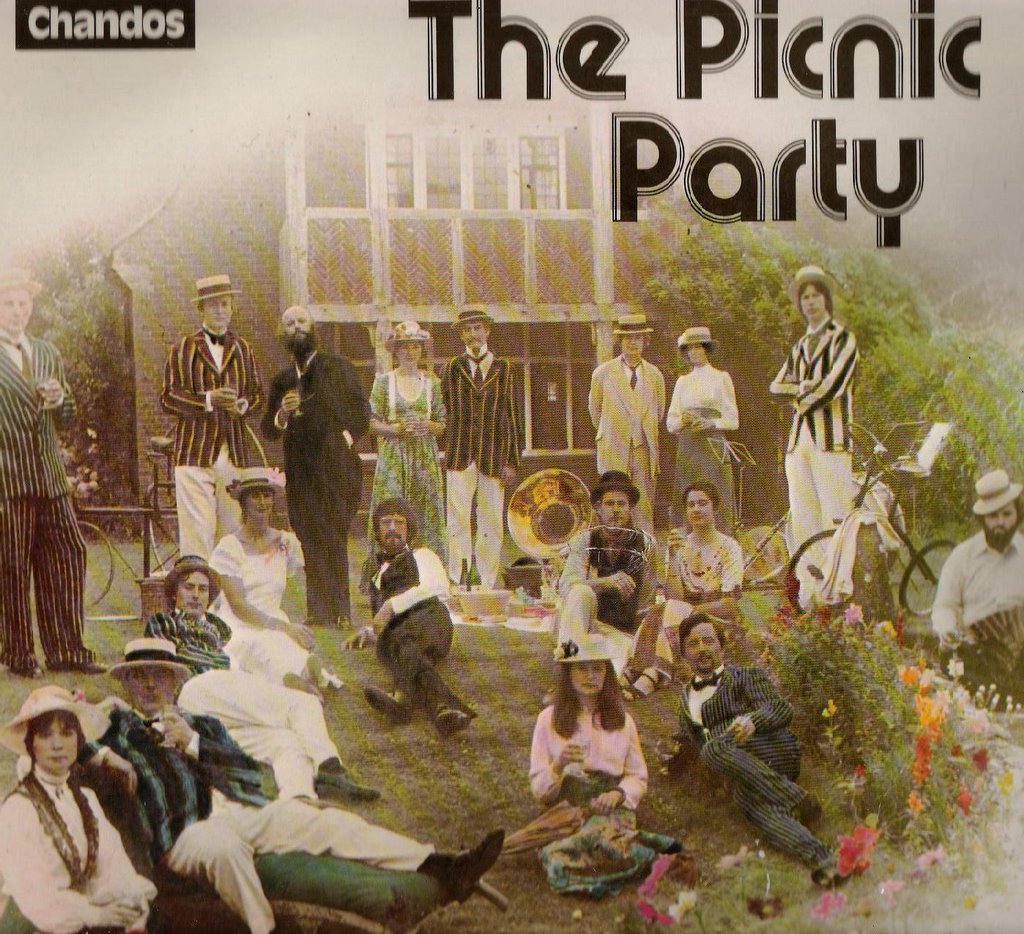
I found this LP at a boot sale last year. Sadly the gate-fold sleeve has been stuck together after being left in the rain so trying to read the sleeve notes is made quite difficult. No information about them could be gleaned from the internet so as far as can make out they were formed in 1978 by Mr. Anthony Godwin, bass clarinettist with the Bournemouth Symphony Orchestra. He had inherited a complete library of theatre music dating from 1880 to 1930 and it's from this that their repetoire is mainly drawn. They try and re-create the sound and atmostphere of those early days by using instruments of that era. For instance on the song "I'm Forever Blowing Bubbles" the soprano Linda Murray is accompanied by David Norton on the musical saw. Linda Murray also sings the other song featured here "Two Little Sausages" that I remember an old uncle of mine singing back in the 60's. This record was released in 1980 on the Chandos label.


Palm Court Theatre Orch. - Down In Zanzibar

Palm Court Theatre Orch. - The Ragtime Bass Player

Palm Court Theatre Orch. - Two Little Sausages

Palm Court Theatre Orch. - In A Persian Market


These SendSpace files are available for seven days or until exhausted.

The Billy Cotton Band (Requested - Re-Up )


A Decca LP in the "World of..." budget section. This compilation from the 40's and 50's of some of his "hits".


"William Edward Cotton (May 6, 1899 – March 25, 1969), better known as Billy Cotton, was a British band leader and entertainer, one of the few whose orchestra survived the dance band era. Today, he is mainly remembered as a 1950s and 60s radio and television personality, although his musical talent emerged as early as the 1920s. In his younger years Billy Cotton was also an amateur footballer, an accomplished racing driver and the owner of a Gipsy Moth which he piloted himself.
Born in Lambeth, London, Cotton was a choirboy and then started his musical career as a drummer, an occupation he also pursued in the army during the First World War. In the interwar years he had several jobs such as bus driver before setting up his own orchestra, the London Savannah Band, in 1924. At first a straight dance band, over the years the London Savannah Band more and more tended towards Music Hall/vaudeville entertainment, introducing all sorts of visual and verbal humour in between songs. Famous musicians that played in Billy Cotton's band during the 1920s and 30s included Arthur Rosebery, Syd Lipton and Nat Gonella. The band was also noted for their African American trombonist and tap dancer, Ellis Jackson. Their signature tune was "Somebody Stole My Gal", and they made numerous records – 78s, that is – for Decca.

During the Second World War Cotton and his band toured France with the Entertainments National Service Association (ENSA). After the war, he started his successful Sunday lunchtime radio show on BBC, the Billy Cotton Band Show, which ran for more than 20 years from 1949. It regularly opened with the band's signature tune and Cotton's call of "Wakey Wakey". From 1957, it was also broadcast on BBC television.
In 1962 Billy Cotton suffered a stroke. He died in 1969 while watching a boxing match at Wembley."


Billy Cotton Band - Friends & Neighbours

Billy Cotton Band - I've Got A Lovely Bunch Of Coconuts

Billy Cotton Band - The Marrow Song

Billy Cotton Band - 'round The Marble Arch

Billy Cotton Band - I Painted It

Billy Cotton Band - Maybe It's Because I'm A Londoner

Billy Cotton Band - Sweet Violets


These SendSpace files are available for seven days or until exhausted.

Wednesday, February 20, 2008

Spike Island


I've had this LP on the cut price Avenue label for a few years now and surprised I haven't featured it before here as it's quite rare. Recorded in 1971 by a country and western band which included Dave Peacock (later to be one half of Chas 'N' Dave ).
Not much to be found onthe web about Spike Island but here's a brief biog from the Chas 'N" Dave official website which doesn't mention Spike Island either!

"Pianist Chas Hodges and guitarist Dave Peacock were widely experienced around the British rock scene of the 1960s and early 70s before teaming up with drummer Mick Burt (another much-travelled musician who had gone back to his original trade as a plumber) to form the group. Chas had worked with the legendary producer Joe Meek, backed Jerry Lee Lewis, played with Mike Berry and the Outlaws, along with Ritchie Blackmore, and also the highly respected Cliff Bennett and the Rebel Rousers, which had Burt on drums. He then joined Albert Lee’s cult band Heads Hands and Feet before playing with Dave and Albert in Black Claw. Dave had been equally active, Starting out in The Rolling Stones (no, not them!) in 1960. Spells with The Tumbleweeds, Mick Greenwood, Jerry Donaghue, and the above mentioned Black Claw followed prior to the pair coming together to go out on their own as Chas & Dave."

Discover more about Chas "N" Dave HERE.


Spike Island - Making My Way Back To Louisiana

Spike Island - Teach Me To Forget

Spike Island - Jambalaya

Spike Island - Too Far Gone

Spike Island - Banjo Pickin' Man


These SEndSpace files are available for seven days or until exhausted.

Tuesday, February 19, 2008

Morgan Fisher - Miniatures


An LP compiled by Morgan Fisher in 1980 on the Pipe label , which featured 51 tracks, all no more than one minute in length. Here's the first 16-

1. ollie halsall & john halsey / bum love
2. the residents / we're a happy family + bali ha'i
3. roger mcgough / the wreck of the hesperus
4. morgan fisher / green and pleasant
5. john otway / mine tonight
6. pete challis & phil diplock / my way
7. robert wyatt / rangers in the nightst
8. stinky winkles / opus
9. mary longford / body language
10. andy 'thunderclap' newman / andy the dentist
11. david bedford / wagner's ring in one minute
12. fred frith / the entire works of henry cow
13. maggie nicols / look beneath the surface
14. joseph racaille / week-end
15. the work / with wings pressed back
16. neil innes & son / cum on feel the noize

Morgan Fisher was overwhelmed by the number of ideas he thought up for albums that he could now record and release. Realising that it was impossible to do everything he conceived, he decided to see how many of these ideas could be included on one album. Rather than recording the music himself, he invited 50 musicians who he admired to send in tracks of up to one minute in length. They responded with unanimous enthusiasm, and as well as receiving tapes through the mail from all over the world, Morgan also packed up his Revox tape recorder and went to several musicians homes to record them there. Original artwork for the sleeve was provided by Ralph Steadman.

Reg Varney


"Reg Varney Plays And Sings" on the EMI One-Up label from 1973.
A bit off the usual meandering track now with a very MOR offering. I promise there won't be many of these. Sometimes I buy a record on the strength of it's sleeve and hope that it delivers more than it promises. Sadly this is a very dull record. Reg's party is with the Mike Sammes Singers and not the crew of "On The Buses"!

Wikipedia says-

"Reg Varney's father worked in a rubber factory in Silvertown and he was one of five children who grew up in Addington Road, Canning Town. He was educated at nearby Star Lane Primary School in West Ham and after leaving school at 14, he worked as a messenger boy and a page boy at the Regent Palace Hotel. He took piano lessons as a child and was sufficiently proficient to get work as a part-time piano player. His first paid engagement was at Plumstead Radical Club in Woolwich, for which he was paid eight shillings and sixpence. He also played in working men's clubs, pubs and ABC cinemas, and later sang with Big Bands of the time. He and his mother decided that showbiz was the career for him, and he gave up his day jobs.
During World War II, he joined the Royal Engineers, but continued performing as an army entertainer which included a tour of the Far East. After being demobbed, he starred on stage in the late 1940s in a comic revue entitled "Gaytime". His stooge in the act was Benny Hill. He then went on to become an all round entertainer, working his way around the music halls.
In 1961, he got the role as a foreman in a TV series called The Rag Trade. Also around this time he did a show for BBC TV called The Seven Faces of Reg Varney where he performed seven different characters in front of an audience at the Shepherd's Bush theatre in London."

Discover more about Reg Varney HERE.


Reg Varney - Paper Doll/Glad rag Doll/Oh! You Beautiful Doll/A Broken Doll

Reg Varney - I Don't Know Why/Pennies From Heaven/Mean To Me


These SendSpace files are available for seven days or until exhausted.
Monday, February 18, 2008

Daniel Farson Presents....


I love this Philips International label LP recorded in 1961 at the Metropolitan Theatre , Edgeware Road in London which features a few of the very last stars of the music-hall. Sadly the Metropolitan Theatre met the fate of so many old music halls and a hotel was built where it used to stand. Daniel Farson, who used to have his own programme on TV in the 60's and also owned a pub in the East End, takes us on a short history of the genre with the help of Hetty King, Albert Whelan, Ida Barr, G.H. Elliot, Billy Danvers and Marie Lloyd Jnr.
As the sleeve notes say- " ... we are lucky that this valuable and poignant record exists to show us what music hall was all about."

Discover more about Daniel Farson HERE.


Daniel Farson Presents... - Side One

Daniel Farson Presents... - Side Two


These Rapidshare links should last longer than the SendSpace files . Let me know if they don't.

Sunday, February 17, 2008

Stanley Holloway


I've mentioned Stanley Holloway before a couple of times but this LP on the Vanguard label from the 60's is quite rare I think and so here's a few more tracks of his reworking of some old music-hall favourites.

Stanley Holloway (born Stanley Augustus Holloway) was born on the 1st October 1890 in London, England, UK and died on the 30th January 1982 in Littlehampton, England, UK.

"He tried to make a go of his first job as a clerk in a Billingsgate fish market, but the call of the theatre was loud and strong. Originally planning an operatic career, Holloway studied singing in Milan, but this came to an end when World War One began. Finishing up his service with the infantry, Holloway headed for the stage again, making his London premiere in 1919's Kissing Time. His first film was The Rotters (1921), and the first time the public outside the theatres heard his robust voice was on radio in 1923. Holloway toured the music hall-revue circuit with his comic monologues, usually centered around his self-invented characters "Sam Small" and "The Ramsbottoms."

Holloway's entree into talking pictures was with a 1930 film version of his stage success, The Co-Optimist. The British film industry of the '30s was more concerned in turning out "quota quickies" so that Hollywood would send over an equal number of American films, but Holloway was able to survive in these cheap pictures, occasionally rising to the heights of such productions as Squibs (1935) and The Vicar of Bray (1937). In 1941, Holloway was cast in one of the prestige films of the season, George Bernard Shaw's Major Barbara; this led to top-drawer film appearances throughout the war years, notably This Happy Breed (1944), The Way to the Stars (1945) and Brief Encounter (1947). Though he'd had minimal Shakespearian experience, Holloway was selected by Laurence Olivier to play the Gravedigger in Olivier's filmization of Hamlet (1947), a role he'd forever be associated with and one he'd gently parody in 1969's Private Life of Sherlock Holmes.

Gaining an American audience through repeated showings of his films on early-'50s TV, Holloway took New York by storm as Alfred P. Doolittle in the stage smash My Fair Lady - a role he'd repeat in the 1964 film version (after James Cagney had turned it down), and win an Oscar in the bargain.

Continuing his activities in all aspects of British show business -- including a 1960 one-man show, Laughs and Other Events -- Holloway decided he'd take a whack at American TV as the butler protagonist of the 1962 sitcom Our Man Higgins. It's difficult to ascertain the quality of this series, since it had the miserable luck of being scheduled opposite the ratings-grabbing Beverly Hillbillies.

Stanley Holloway perservered with stage, movie, and TV appearances into the '70s; in honor of one of his two My Fair Lady songs, he titled his 1981 autobiography Wiv a Little Bit of Luck.

Discover more about Stanley Holloway HERE.


Stanley Holloway - Down At The Old Bull & Bush

Stanley Holloway - If I Should Plant A Tiny Seed Of Love

Stanley Holloway - Where Did You Get That Hat?

Stanley Holloway - If You Were The Only Girl In The World

Stanley Holloway - The Galloping Major

Stanley Holloway - Two Lovely Black Eyes


These SendSpace files are available for seven days or until exhausted.

Saturday, February 16, 2008

Kenneth Williams


An LP on the Decca label from The World Of.... series from 1970. It includes many of Kenneth Williams first songs and sketches from revue some written by Peter Cook when he was an undergraduate.

Wikipedia says-

"Kenneth Williams was born in 1926 in Bingfield Street, King's Cross, London. The son of barber Charles Williams, he was educated at Lyulph Stanley School. His relationship with his parents—he adored his vivacious mother, Louisa ("Lou"), but hated his morose and selfish father—was key to the development of his personality. Williams became an apprentice draughtsman to a mapmaker and joined the army aged 18. He was part of the Royal Engineers survey section in Bombay when he had his first experience of performing on stage with Combined Services Entertainment along with Stanley Baxter and Peter Nichols.

After the war, his career began with a number of roles in repertory theatre, but few serious parts were to lend themselves to his style of delivery. His failure to become established as a serious dramatic actor would disappoint him, but it was his potential as a comic performer that gave him his big break. He was spotted playing the Dauphin in George Bernard Shaw's St Joan in 1954 by the radio producer Dennis Main Wilson, who was casting Hancock's Half Hour. He would lend his distinctive voice and amazing vocal talent to the radio series to almost the end of its run, five years later. His nasal, whiny, camp-cockney inflections (epitomised in his famous "Stop messing about..." catchphrase) would endure in popular lore for many years."


Discover more about kenneth Williams HERE.


Kenneth Williams - Mesopotamia Tango

Kenneth Williams - Evils Of The Weed

Kenneth Williams - One Leg Too Few

Kenneth Williams - All Together


These SendSpace files are available for seven days or until exhausted.

Friday, February 15, 2008

Elsa Lanchester


"Elsa Lanchester was born to an eccentric family on October 28, 1902, in England. Her parents (James and Edith) were considered as Bohemians in all aspects of the work, refusing to legalize their union in any conventional way to satisfy the era's conservative society. An older sibling, Waldo, completed the family. Edith's parents even successfully sent her to an asylum for a while, as she refused to wed James even if she wanted to live with him. Shocking! Consequently, Elsa and her family moved numerous times. At 11 years of age, Elsa was enrolled at Isadora Duncan's School of Dance, in Paris. Sadly, the start of the first World War would prevent her to ever graduate and she was sent home.

Still very young at 12, the war situation obliged Elsa to find work, as she soon became a college dance teacher. Four years later, she helped create the Children's Theater in London and gave lessons for some years. Of course, she was part of an artists group, Cave of Harmony Productions, performing many songs and short sketches in cabarets. In 1927, Elsa made her movie debut in ONE OF THE BEST. The same year, as she was part of the cast of the play Mr. Prohack, she met another young actor that would change her life in a definitive way: Charles Laughton."

I've had this record for many years but it's a favourite for adding odd and exotic tracks to compilation tapes, especially the extraordinairy "The Yashmak Song".
She was most famous for her role as the female monster in James Whale's "Bride of Frankenstein" and her marriage to Charles Laughton who pops up between tracks on this record to make pertinant remarks and join in on the chorus of the old music hall song "She Was Poor, But She Was Honest".


Elsa Lanchester - The Yashmack Song

Elsa Lanchester - It May Be Life

Elsa Lanchester - Faith, Hope & Charity

Elsa Lanchester - Little Fred

Elsa Lanchester - I'm Glad To See Your Back


These SEndSpace files are available for seven days or until exhausted.

The Temperance Seven (requested re-up)


If you ever wondered what else producer George Martin was doing in the early 60's besides guiding the Beatles, he was also producing records by such novelty acts as the Temperance Seven. This record on the Music For Pleasure budget label is a compilation of songs from 1961 to 1963. They had big hits in the U.K. around this time with "Pasadena" and "You're Driving Me Crazy" featuring their affectionate tribute to those dance bands of the twenties and thirties they modeled themselves on. They were the forerunners of such novelty acts that were to follow like the Bonzo Dog Band and Bob Kerr's Whoopee Band.
The original band broke up in the late 60's but a new personel, sometimes augumented by past members are still active to this day.


The Temperance Seven - The Charleston

The Temperance Seven - Sahara

The Temperance Seven - Runnin' Wild

The Temperance Seven - Deep Henderson

The Temperance Seven - Ain't She Sweet

Tuesday, February 12, 2008

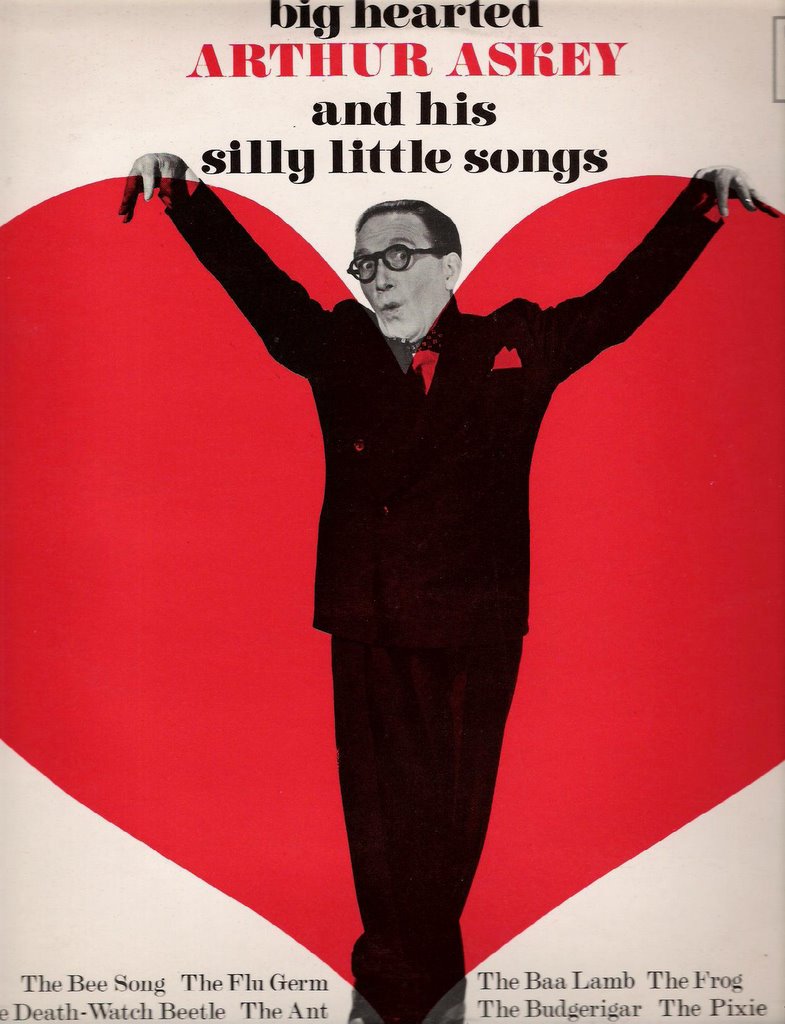
Arthur Askey


"Arthur Bowden Askey was born in Liverpool in 1900. He was very small at 5' 2" (1.6m) and wore distinctive horn rimmed glasses, with a breezy, smiling personality. He served in the forces in World War I and performed in army entertainments. His career began in the music halls, but he rose to stardom in 1938 through his role in the first radio sitcom, Bandwagon on BBC, prior to which radio comedy had consisted of broadcast standup routines. It had begun as a variety show, but had been unsuccessful until Askey and his partner, Richard Murdoch, took on a larger role in the writing. Askey's humour owed much to the playfulness of the characters he portrayed, his improvising and his use of catchphrases, as parodied by the Arthur Atkinson character in The Fast Show.
His catchphrases included "Hello playmates!" "I thank you" (pronounced "Ay-Thang-Yew") and "Move along the bus please."
During World War II, Askey starred in several Gainsborough Pictures comedy films, notably The Ghost Train (1941), "Charlie's Aunt," "I Thank You," "Back Room Boy," "King Arthur Was A Gentleman," "Miss London Ltd.," and "Bees in Paradise." When television arrived, he made the transition well, his first TV series was "Before Your Very Eyes!" (1952) named after another of his catchphrases. In 1957 writers Sid Colin and Talbot Rothwell revived the Bandwagon format for Living It Up, a series that reunited Askey and Murdoch after an absence of 18 years. He also made many stage appearances as a pantomime dame."

This LP on the budget Music For Pleasure label came out in the 60's I think though there is no date on it anywhere. It's mostly songs about animals and birds and one about a pixie.


Arthur Askey - The Death Watch Beetle

Arthur Askey - The Baa Lamb

Arthur Askey - The Frog

Arthur Askey - The Bunny Rabbit

Arthur Askey - The Flu-Germ

Sunday, February 10, 2008

Highlife Vol. 2 ( requested re-up )


I seem to be rediscovering some old African records just lately and here's another found at Brick Lane in the 80's recorded in the 60's. It's on the Melodisc label who also ran the Blue Beat label who put out a lot of the early ska and r&b records by Prince Buster etc.

"Nat Atkins real name is Obafunsho Akinbayo, born in Nigeria, formed his own band in England and also plays with the Edmundo Ros Orchestra."

"Highlife, dance music played mostly in Ghana and Nigeria, represents one of the century's first fusions of African roots and western music, and before 1970, it ruled dancefloors across much of West Africa. Trumpeter and bandleader E.T. Mensah, born in 1919 in Accra, Ghana, formed his first band in 1930s and went on to be crowned the King of Highlife. The World War II era introduced American swing to the highlife mix, already a blend of Trinidadian calypso, military brass band music, Cuban son and older African song forms. In 1948, Mensah formed the Tempos whose songs in English, Twi, Ga, Fante, Ewe, Efik and Hausa seduced admirers as far away as England. In 1956, Mensah's career reached a peak when he performed with the great Louis Armstrong in Ghana. With the rise of Congolese music in the 1960s, highlife's golden era ended. But Mensah continued to perform, as did other top big bands, Jerry Hansen and his Ramblers International, and Uhuru. In the Tempos' wake came many guitar highlife outfits, including Nana Ampadu and his band the African Brothers as well as the City Boys and A.B. Crentsil. Nana now operates a recording studio where he produces releases for the African Brothers, the City Boys, and other highlife groups. Dr. K. Gyasi and his Noble Kings pioneered a sound called sikyi highlife, a lulling, wistful take on the classic dance music. Gyasi too still records, as does Kumasi-based sikyi highlife singer Nana Tuffour.

The glory days of highlife gave many Ghanaian musicians opportunities to move abroad. In the late '60s, the band Osibisa took their "Afro-rock" pop/highlife fusion to a warm reception in England, a harbinger of the world music phenomenon that would explode there a decade later. Highlife stars like Pat Thomas, George Darko, and C.K. Mann have all made the journey from country to city to foreign port-of-call. In Germany, a young singer called Daddy Lumba made his name in the German burgher scene, but now spends half his time in Ghana where his blend of highlife, hip-hop and dancehall reggae has earned him a strong youth following."

Discover more about Higlife music in Ghana HERE.


Nat Atkins & His Crazy Bees - Darling Don't Say No

West African Rythym Bros. - Omo Laso

Yarabe - Sebotimo

West African Rythym Bros. - Ominara

Rans Boi & His African Highlife Band - Fedse

West African Ryhtym Bros. - Y.B. Club

Ayinde Bakare - The Late J.K.Randle


These SendSpace files are available for seven days or until exhausted.

Friday, February 08, 2008

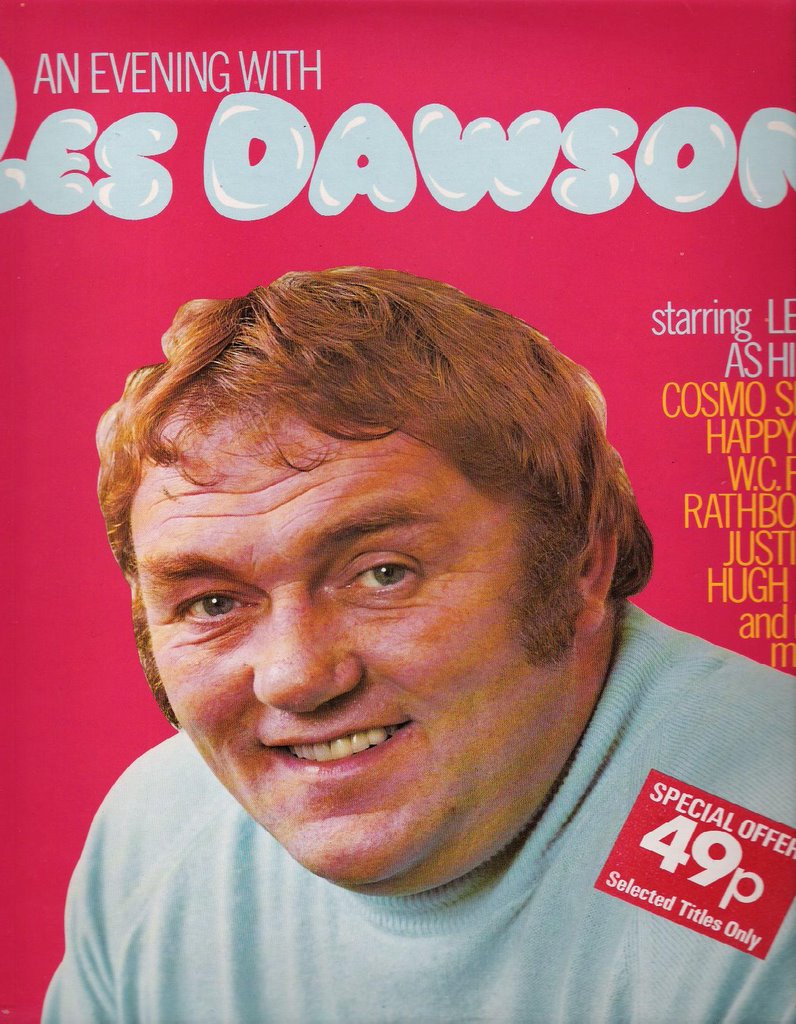
Les Dawson


"Les Dawson (2 February 1931 - 10 June 1993) was a popular Lancashire comedian, known for his deadpan style. Dawson was a curmudgeon, famous for jokes about his mother-in-law and his wife.
Dawson began his entertainment career as a club pianist ("I finally heard some applause from a bald man and said 'thank you for clapping me' and he said 'I'm not clapping - I'm slapping me head to keep awake.'"), but found that he got more laughs by playing wrong notes and complaining to the audience. He made his television debut in the talent show, Opportunity Knocks, and was seldom absent from British television screens in the years that followed. His best known routines featured Roy Barraclough and Dawson as two elderly women, Cissie Braithwaite and Ada Sidebottom who, having worked in a mill in their youth, spoke some words aloud and mouthed others--particularly those pertaining to bodily functions and sex; they also repeatedly pushed up their bosoms, in pantomime dame style, an act copied faithfully from his hero, Norman Evans. Dawson's humour, though earthy, was seldom coarse, and he was as popular with female as with male audiences."

A very funny man and in reality he could play the piano really well. Most of this record is comedy routines but I have extracted two "musical" interludes for your enjoyment, or not as the case may be! A bargain at 49p!

Les Dawson - Intro.

Les Dawson - I Can't Control Myself

Les Dawson - Here We Go

Les Dawson - That's As Maybe

Les Dawson - Jerimiah Fisher Frog

Les Dawson - Show Me The WayTo Go Home

Les Dawson - Goodbye

Les Dawson - Bye Bye Blackbird


These SendSpace files are available for seven days or until exhausted.

Thursday, February 07, 2008

The World OF British Comedy


A great old Decca compilation from the 70's probably featuring a host of acts ( mostly Spike Milligan ) who graced our radios and TV sets back in the 50's and 60's. Someone requested Marty Feldman's "The Great Bell" and so here it is with a few other gems.


Marty Feldman - The Great Bell

Frankie Howard - Ten Guinea Cruise

Spike Milligan - Cold Porridge

The Goons - Eeh! Ah! Oh! Ooh!

Benny Hill - The Sunday Ben

Spike Milligan - Pontius Kak


The SendSpace files are available for seven days or until exhausted.

Wednesday, February 06, 2008

Bend It 91


A strange compilation from the 90's -full of odd football inspired songs and audio snippets. I think also the Exotica label produced several of these over the years and also dabbled in Beatles covers. There is a list of artists who appear on the CD which includes Brian Glover, Geoffrey Boycott, Michael Palin, Sophia Loren, Bruce Forsyth and Michael Caine. I must admit I listened through it a couple of times but never heard any of them!

Exotica Records also plans compilations of the worst songs ever and another about Manchester United.


Unknown - Tip Top Tottenham Hotspur

Unknown - Futbol Argentino

Rainbow Choir - Roger Milla Is My No.9 Dream

Edmundo Ros - Footbal Calypso 1953

3-00 Exponia - Panathinaikos

Louis Philippe - Eusebio Chansons

Mr. Martini - Gascoigne Please

Jimmy Greaves - Strollin' ( Karaoke )


These SendSpace files are available for seven days or until exhausted.

Tuesday, February 05, 2008

Phil Harris


Phil Harris' original hits is a great CD to find if it's still out there. This on the other hand is a re-recorded selection of some of them on the MFP label from 1969. They didn't do such a bad job and the big band numbers especially retain the impact and verve of the originals.

Wikipedia says-

"Although he was born in Linton, Indiana, Harris actually grew up in Nashville, Tennessee and identified himself as a Southerner (his hallmark song was "That's What I Like About the South"). His upbringing accounted for both his trace of a Southern accent and, in later years, the self-deprecating Southern jokes of his radio character. Harris began his music career as a drummer in San Francisco, forming an orchestra with Carol Lofner in the latter 1920s and starting a long engagement at the St. Francis Hotel. The partnership ended by 1932, and Harris led and sang with his own band, now based in Los Angeles. From December, 1936 through March, 1937, he recorded 16 sides for Vocalion, most were hot swing tunes that used a very interesting gimmick; they faded up and faded out with a piano solo (probably these were arranged their pianist Skippy Anderson). This was a novel approach and quite unusual for the time.
On September 2, 1927, he was married to actress Marcia Ralston in Sydney, Australia. The couple adopted a son, Phil Harris, Jr. (b. 1935). They were divorced in September, 1940.
Phil Harris played drums in Henry Halstead Big Band Orchestra in the 1920s.
In 1933, he made a short film for RKO called So This Is Harris, which won an Academy Award for best live action short subject. He followed it up with a feature-length film called Melody Cruise. Both films were created by the same team that next produced Flying Down To Rio, which started the successful careers of Fred Astaire and Ginger Rogers."

Discover more about Phil Harris HERE


Phil Harris - The Darktown Poker Club

Phil Harris - Nobody

Phil Harris - Row, Row, Row

Phil Harris - Lazy River/Basin St. Blues

Phil Harris - That's What I Like About The South


These SEndSpace files are available for seven days or until exhausted.

Monday, February 04, 2008

Osayomore Joseph


An LP on the Emotan record label from Nigeria (1982). One of a big stack of Afrobeat I bought in a junk shop in Stepney, East London where I lived for a while in the 70's and 80's. It may even come from Brick Lane flea market which was nearby and a regular haunt on a Sunday.

"Osayomore Joseph arouses too the same curiosity; due to his talent, his energy, his commitment, he calls back(reminds) without hesitating his elder son(brother), Fela. Its style, its musical game(set,play), draws its roots from the earth(ground) edo; but the culture and the language(tongue) edo are strongly influenced by the yoruba culture for centuries. By listening to Osayomore Joseph, we feel(smell) his(her,its) originality edo with its oriental impulses but the inheritance of Fela and the yoruba culture is quite obvious. This sensation can arrest(dread) in the evolution of the artist since its musician's stage(stadium) of the soil until its highlight of all over the world known national singer, as well as in its rhythmic game(set,play) and its instruments. The theme of the contesting, the posture of public polemicist, the rhetoric warrior or politics(policy), satyr, the irony, the stage setting and the parody, all this pulls the decoration(set) of a democratic kalakuta Republic version. Where from the subject of the walking(march), the fight, and especially the name of its firebrand-lighthouse: Osayomore Joseph Liberation Army."


Osayomore Joseph - Omonogie

Osayomore Joseph - Okpani Ya

Osayomore Joseph - Obo


These SendSpace files are available for seven days or until exhausted.