Thursday, September 15, 2011

Pinky & Perky


EP on the Columbia label from 1962. Accompaniment directed by Brian Fahey. Pinky & Perky were a popular puppet duo on children's television who did versions of many of the pop songs of the day. I suppose the American equivalent would be The Chipmunks.

Wikipedia says -

"The title characters are a pair of anthropomorphic puppet pigs created by Czechoslovakian immigrants Jan and Vlasta Dalibor. The puppets, who had only very limited movements, looked very alike. Pinky wore red clothes and Perky blue, but this distinction was little use on black and white TV, so Perky often wore a hat.
Pinky and Perky spoke and sang in high-pitched voices created by re-playing original voice recordings at twice the original recorded speed; the vocals were sung by Mike Sammes[1] while the backing track was played at half normal speed (Sammes did the same job for Ken Dodd's Diddymen, as Ross Bagdasarian did for the original Chipmunks in the early 1960s) - hence the expression "Pinky and Perky speed", when an LP record is played at 45 rpm or 78 rpm instead of the correct 33⅓ rpm. Pinky and Perky would often sing cover versions of popular songs, but also had their own theme song "We Belong Together."
They had their own TV station "PPC TV". They also performed comedy sketches usually with a human foil (similar to Basil Brush). Actor John Slater worked with them as a straight man for many years, enduring soakings from water pistols and such pranks. Other human companions included Roger Moffat, Jimmy Thompson, Bryan Burdon and Fred Emney.
Their show included other puppets, such as The Beakles (an avian parody of The Beatles), Topo Gigio, a famous mouse puppet who appeared in many later episodes, as well as a female pig. Other puppets included Ambrose Cat, Basil Bloodhound, Bertie Bonkers the baby elephant, Conchita the Cow, Horace Hare and Vera Vixen."

Tracks on side two are -

1. The Hippopotamus Song
2. Woody Woodpecker
3. Nellie The Elephant


Pinky & Perky - Side Two

Khiama Boys


Single on the Jabulani label from 1989. One of a batch that DJ Charlie Gillett sent to me around that time after one of his trips to Africa. I often used to send him mix tapes of odd records I found on my travels and he was kind enough to send things back from time to time. Similar sound to the Bhundu Boys and others who were making inroads into the UK "world music" scene during the late 80's and early 90's.

Music Of Zimbabwe website says -

"Band members included Fanuel 'System' Tazvida, Tineyi Chikupo, Cephas Karushanga, Nicholas Zacharia, Alick Macheso, Ephraim Joe, Sailas Chakanyuka.

Khiama Boys started in the same manner as many other African bands, as a cover band. Formed in 1988, the group performed covers of local and international songs, including Bob Marley. Khiama Boys eventually took to writing their own music, a hybrid of Zimbabwean and South African influences that sounds similar to, in my opnion, a mix of Leonard Dembo and the Bhundu Boys. The group has been active ever since, producing a steady stream of hits and establishing themselves as a froce within the Zimbabwean music scene.

The Khiama Boys, however, have been plagued by a revolving door of band members. Royalty discrepancies forced guitarists System Tazvida and Cephas Karushanga out of the group in 1989 to form their own band, Mabhauwa Express. Tazvida would later join the Sungura Boys, and found the Chezeseza Challengers. Ephraim Joe would depart for the Sungura Boys and an eventual solo career. The late 90s saw guitarist Alick Macheso leave the group to form his own band, current chart toppers Orchestra Mberikwazvo. Today Khiama Boys are fronted by vocalist Nicholas Zacharia, who led their 2001 album, Dzidziso, to sales of over 60 000 copies."


Khiama Boys - Mwana Wangu Wakura

Khiama Boys - Hupenyu

Keep Fit With Andrews


A promotional record (EP) on the Lyn label from the 60's I imagine with popular disc jockey Emperor Rosko telling us how to exercise with music and Andrews Liver Salts.

Wikipedia says -

"Mike Pasternak, better known by his stage name of Emperor Rosko (born December 26, 1942) is a well known pop radio presenter, not to be confused with American radio presenter William (Rosko) Mercer.
Born Michael Joseph Pasternak, he is the son of Hollywood film producer Joe Pasternak. He was influenced in his career choice by KYA Radio Los Angeles DJs Lord Tim Hudson and Wolfman Jack. Rosko's opportunity to broadcast came whilst in the US Navy where he presented a show on an aircraft carrier. He then went to Europe and hosted sponsored programmes in France and Belgium.
He joined Radio Caroline, a pirate radio station broadcasting from a ship off the coast of England, in 1964. There, his pacey American style soon made Rosko one of the station's best loved DJs. He then was heard on French language stations Radio Monte Carlo and Radio Luxembourg.
Rosko compered the Stax/Volt Tour of Europe in 1967 and can be heard introducing Booker T. & the M.G.'s, The Mar-Keys, Carla Thomas, Eddie Floyd, Sam & Dave, and Otis Redding on the two-album set The Stax/Volt Tour in London, recorded at the Finsbury Park Astoria (later the Rainbow Theatre on 17 March 1967.
It is Rosko who is heard introducing soul singer Otis Redding, as well as encouraging the crowd to chant and spell his name on Redding's album Live in Europe, recorded on March 17 and March 21, 1967. As a disc jockey with Radio 1 at its launch in September 1967, Rosko initially recorded shows in France for the Midday Spin programme. On his first Midday Spin show, Rosko introduced himself with "I am the Emperor, the geeter with the heater, your leader, your groovy host from the West coast, here to clear up your skin and mess up your mind. It'll make you feel good all over." He highlighted the new Motown, reggae, and rock music."


Keep Fit With Andrews - Side One

Thursday, September 08, 2011

Ivan Chin & His Calypso Band


A nice suprise on this cheapo Saga LP I found this morning in Help The Aged shop - not the generic calypso I expected but a nice mixture of mento, ska and exotica complete with steel drums and honking saxaphones! Some old favourites here including Yellow Bird and Brown Skin Gal but some oddities including Carnival from the film Black Orpheus and a song called Archie.

The sleeve notes say - "In the West Indies, the CALYPSO in THE Scene, the singers having such fabulous names as Lord Kitchener, Lord Melody, Lord Bryner, Mighty Sparrow and many others. It is encouraging that the West Indians in the UK remain loyal to the music of their homeland and not surprising that the last concert in London featuring The Mighty Sparrow was a sell out."

Readmore about Ivan Chin HERE

Tracks include-

1. Beautiful Barbados
2. Big Bamboo
3. Carnival
4. Archie
5. Matilda Matilda
6. Kingston Market


Ivan Chin - Side Two

Tuesday, September 06, 2011

All Night Rock


A 10 inch LP I found at the market today. Its a bit scratchy but worth a listen I think. Contains a few old Sun rockabilly sides including Roy Orbison, Sonny Burgess and Gene Simmons. All recorded at the Sun Studios in Memphis in 1956. This comp. was put together on the Charley records label in London 1982.

Wikipedia says -

"Simmons was born Gene Simmons in Tupelo, Mississippi, and began his recording career with Sun Records in 1958, while performing as an opening act for labelmate Elvis Presley. However, the label released only one (non-charting) single from his recording sessions. His first and only Top 40 hit was "Haunted House," a cover of a 1958 recording by Johnny Fuller which peaked at #11 on the Billboard Hot 100 in 1964; the song represented one of Hi Records' early successes. The track was later covered by the Compton Brothers, Jerry Lee Lewis and Hasil Adkins. His last work was "Indian Outlaw," which he co-wrote, and was a hit for Country music artist Tim McGraw in 1994.

Simmons' Hi Records recordings were released as an anthology, Haunted House: The Complete Jumpin' Gene Simmons on Hi Records, in June 2001. Sun Records followed suit in December 2006 with the 33-song collection Drinkin' Wine: The Sun Years, Plus. He had recorded several albums with both labels but they were never released."


All Night Rock - Side One

The Clark Sisters


I was hoping this would be more like The Andrews Sisters but sadly a bit more like The Mike Sammes Singers with a big band backing. A bit too sickly for my taste.

Wikipedia says -

"The Sentimentalists, also known as the "Clark Sisters" (and also as the "Original" Clark Sisters; so-called to distinguish them from the current gospel music group of the same name), were an American close harmony singing group, consisting of sisters Mary Clark, Peggy Clark Schwartz, Ann Clark, and Jean Clark. Hailing from Grand Forks, North Dakota, they were a mere seventeen to twenty-three years of age, when they signed with the Tommy Dorsey Band, in 1944, to replace the popular Pied Pipers, after the Pipers had quit Dorsey's band to go out on their own.

Although they never achieved the fame and fortune of some of their contemporaries (like the Andrews Sisters and the McGuire Sisters), the Clark Sisters' recordings are today actually more highly-prized by jazz aficionados, for their unique vocal stylings, in which they often emulate (and in fact sing the actual charts for) instrumental sections. By contrast, neither the Andrews Sisters, nor the McGuire Sisters are today considered to be part of the jazz lexicon, despite their chart success."

Tracks are -

1. ON The Sunny Side Of The Street
2. Opus One
3. Music makers


The Clark Sisters - Side One

Clinton Ford


Found in the indoor market today. On the cheapo Chevron label from 1979. I prefer the Clinton Ford who does novelty songs I must admit - these are rather poor renditions of Jolson favourites which include Let Me Sing And I'm Happy, You Made Me Love You - Swanee, Down Among The Sheltering Palms, Pretty Baby, Back in Your Own Backyard and By The Light Of The Silvery Moon.

Wikipedia says -

"Born Ian George Stopford Harrison, in Salford, Lancashire, and a former Redcoat(Butlins holiday camp entertainer).

Initially he worked as a laboratory assistant but became a Butlins Redcoat in Pwllheli in 1957 and worked there for three summer seasons. In the winters he sang with a group called 'Merseysippi' at the Cavern Club in Liverpool, recording several songs with them including "Get Out and Get Under".

He began his recording career as Clinton Ford with the Oriole record label. He performed skiffle in a band called the 'Backwoods Skiffle Group' and changed his name because his own name did not sound right for some of the American material that he sang. Ford also recorded with the 'Hallelujah Skiffle Group', but the singles didn't sell. However he appeared at the Royal Albert Hall and with Ken Dodd on Dodd's television shows and later he appeared in Stars and Garters, The Billy Cotton Band Show and The Good Old Days.

Ford had his chart success in 1959, with a cover of the Red Foley's song "Old Shep"; albeit for just one week. Ford donated his royalties from "Old Shep" to the Battersea Dogs' Home, so he made nothing from this high-selling record. Nevertheless, Ford had the only version of this famous song ever to appear in the UK Singles Chart. Unable to give up chasing the musical fads of the time, his next chart entry was "Too Many Beautiful Girls" in a trad jazz style, and for his biggest hit he turned to the music hall days of George Formby, who had recorded "Fanlight Fanny" in 1935. This led to an eponymous album that reached No.16 in the UK Albums Chart in May 1962. After touring for a while with Kenny Ball & His Jazzmen, he returned for a stint at Liverpool's Cavern Club, to find that the market for trad jazz and country and western styled novelties had been replaced by the beat music of a certain local band called The Beatles."


Clinton Ford - Side One

Sunday, September 04, 2011

Hank Jacobs


More poppy R&B instrumental with Hank Jacobs on the Sue label from the 60's. Sorry about the scratchy condition of this single.

Way Back Attack site says -

"Unlike many musicians, studio keyboard player Henry "Hank" Jacobs didn't emerge from the womb with a passion to play. He was 17 when he first ran his fingers over a keyboard. In the early-'60s he hooked up with songwriter/arranger Kent Harris and together they made the rounds, working studio sessions in the south, in addition to New York, Los Angeles and other cities. They collaborated on Hank's first instrumental single "Stingray," released on Imperial in 1962.

Jacobs and Harris hooked up with Sue Records owner Juggy Murray in the Big Apple soon after, and the result was "So Far Away," a minor chart single on Sue in January 1964. This instrumental has an atypical sound, as Hank first played piano on the track, then overdubbed it with organ, with the drummer leaning mostly on the cymbals, accentuating the subtle keyboard work. The result is soft yet powerful...after many listens, I've found the song occasionally morphs into something a bit different from what I thought I'd heard before...and back again the next time. Accidental genius? Maybe. At the least, a very cool record. The flip is "Monkey Hips and Rice," less innovative but with more of a party jam feel. Jacobs and Harris co-wrote and arranged both sides.

After "So Far Away," Hank Jacobs continued his session work and can be heard at the piano on a number of well-known mid-'60s records, including soulful sides like "I'm So Thankful" by The Ikettes and Bettye Swann's chart-topping 1967 R&B hit "Make Me Yours."


Hank Jacobs - Monkey Hips and Rice

Hank Jacobs - So Far Away

Dickie Doo & The Don'ts


A pop single this time from the archive - on the London label from late 50's. Catchy little number I vaguely remember being played on the radio at the time.

The Blackcat Rockabilly site says -

"The story of Dicky Doo and the Don'ts revolves around Gerry Granahan (born 17 June 1939, Pittston, Pennsylvania). Having moved to New York in 1955, he earned his keep working demo sessions for music publishers. Herb Abramson of Atco Records signed him as a singer and Gerry had two singles released on that label, one as Jerry Grant and one under his own name. In late 1957 he befriended Dave Aldred, the drummer of Buddy Knox and the Rhythm Orchids, and together they wrote a song called "Click Clack". They made a demo at the Bell Studio, with Granahan's voice multi-tracked, and took it to Dick Clark, host of the nation's most popular TV pop show, American Bandstand. Notwithstanding a blatant conflict of interests, Clark and his producer, Tony Mamarella, were just about to launch their own record label, Swan Records. Clark made "Click Clack" Swan's first release. Granahan could not use his own name, as he was signed to Atco. Clark had a new-born son which he jokingly called Dicky Doo and Tony Mamarella suggested Dicky Doo and the Don'ts as the group's name. When "Click Clack" charted (peaking at # 28), Aldred and Granahan formed a touring group with Ray Gangi (guitar), Al Ways (sax) and Harvey Davis (bass). Aldred even legally changed his name to Richard A. Doo. The group had four more chart entries in 1958-59 with Swan singles. Then Granahan dropped out to concentrate on a new group, the Fireflies (hit : "You Were Mine", # 21, 1959) and on producing acts for his newly formed Caprice label. In between, Granahan also scored a hit under his own name, "No Chemise Please", which went to # 23 in mid-1958 (Sunbeam 102)."


Dickie Doo - Click Clack

Dickie Doo - Did You Cry

Ken Parker


A reggae single from 1972 on the Duke Reid label. I think this was a small hit at the time - certainly in the reggae charts. The original was done by The Browns back in 1959.

Wikipedia says -

"Like many of Jamaica's singers of the era, Parker began by singing in church, where his father was a preacher. He formed a group called the Blues Benders in the mid-1960s, and their first recording was "Honeymoon by the Sea". The group arranged to audition for Coxsone Dodd, but due to a misunderstanding, Parker was the only member to turn up, so he auditioned as a soloist, impressing Dodd sufficiently to launch his solo career. While at Studio One, he recorded singles such as "Choking Kind", "Run Come", and "My Whole World is Falling Down", and an album, Keep Your Eyes on Jesus, followed in 1968. He moved on to work with Duke Reid, who produced hits including "Jimmy Brown", "Help Me Make it Through the Night", and "Kiss an Angel Good Morning". His popularity continued to grow and he recorded for other producers including Bunny Lee ("Guilty"), Rupie Edwards ("Talk About Love"), Byron Lee ("Will the Circle be Unbroken"), Lloyd Charmers ("Queen Majesty"), and Joe Gibbs ("Only yesterday"). By 1972, however, Parker had become disillusioned with the recording industry and ceased recording, relocating to England in 1973 after spending two years in New York City. He continued to perform occasionally but did not return to recording until the early 1980s, setting up his own record label and production company, releasing Gospel records. He later moved to Florida."


Ken Parker - Jimmy Brown

Ken Parker - Jimmy Brown (Version)

Saturday, September 03, 2011

Owen(Gray) & Millie


More old ska from the 60's on the Island label. Owen Gray on the "A" side and Owen teams up with Millie Small , who had a big hit with My Boy Lollipop around the same time, on the "B" side.

Wikipedia says -

"Gray won his first talent contest at the age of nine, and by the age of twelve he was already appearing in public, playing drums, guitar, and keyboards. He attended the Alpha Boys School and turned professional aged 19. Gray was a dynamic performer on stage, who could be gritty or suave as the song dictated.He was the first singer (of many) to praise a sound system on record, with his "On the Beach" celebrating Clement Dodd's Sir Coxsone Downbeat system in 1959, one of the first releases on Dodd's Studio One label. He was one of the first artists to be produced by Chris Blackwell, in 1960, and his "Patricia" single was the first record ever released by Island Records. His first single, "Please Let Me Go", reached the top of the charts in Jamaica, and featured a guitar solo from Ernest Ranglin (Ranglin's first recording session). The single also sold well in the United Kingdom, as did subsequent releases, prompting Gray to emigrate there in 1962. He toured Europe in 1964, and by 1966 he was well known as a soul singer as well as for his ska songs. In the rocksteady era, he recorded for producer Sir Clancy Collins. His popularity continued throughout the 1960s, working with producers such as Clement Dodd, Prince Buster, Arthur "Duke" Reid, Leslie Kong, and Clancy Eccles, including work as a duo with Millie Small, with songs ranging from ska to ballads. He continued to record regularly, having a big hit in 1968 with "Cupid". His 1970 track "Apollo 12" found favour with the early skinheads, and in 1972 he returned to Island Records, recording reggae versions of The Rolling Stones' "Tumblin' Dice" and John Lennon's "Jealous Guy", although they met with little success. During this period, he regularly had releases on Pama and sister label, Camel Records, and one single on Hot Lead Records. He had greater success in Jamaica, however, with "Hail the Man", a tribute to Emperor Haile Selassie, which was popular with the increasing Rastafari following. Gray spent a short time living in New Orleans before returning to Jamaica where he turned his hand to roots reggae, working with producer Bunny Lee, and achieving considerable success. In the 1980s relocated to Miami. He has continued to release new material regularly, often concentrating on ballads and Gospel music."


Owen & Millie - Sugar Plum

Owen Gray - Jezebel

Thursday, September 01, 2011

The Fugitives


Classic rock steady anthem on the Doctor Bird label from 1968.

Wikipedia says -

"Rocksteady is a music genre that originated in Jamaica around 1966. A successor to ska and a precursor to reggae, rocksteady was performed by Jamaican vocal harmony groups such as The Gaylads, The Maytals and The Paragons. The term rocksteady comes from a dance style that was mentioned in the Alton Ellis song "Rock Steady". Dances performed to rocksteady were less energetic than the earlier ska dances. The first international rocksteady hit was "Hold Me Tight" (1968) by the American soul singer Johnny Nash; it reached #5 in the United Kingdom and United States."


The Fugitives - Rock Steady

The Fugitives - Real Gone Loser

Blues Busters


More ska from 1962 on the Island label. Some southern soul influenced ska from the Blues Busters.

Wikipedia says -

"The Blues Busters were a Jamaican vocal duo formed in 1960, comprising Philip James and Lloyd Campbell. The Blues Busters were the most consistently popular Jamaican male duo of the early 1960s, and were part of the Jamaican party that performed at the 1964 New York World's Fair. They initially worked in cabaret shows to tourists in Kingston and Jamaica's north coast, but got their big break when they were asked to accompany Sam Cooke on his tour of the island. Taking inspiration from Cooke, on returning to the cabaret circuit they emulated the soulful harmonies of his performances and recorded a number of soul and reggae cover versions, having minor hits with "Thinking" and "Privilege". They continued until the mid-1980s, by which time they had released several albums, one of which was a tribute to Cooke."


Blues Busters - Oh! Baby

Blues Busters - Behold!

Wednesday, August 31, 2011

Joe Liges


Another ska single from the archives. This time it's Joe Liges on the Blue Beat label from 1963. Joe Liges was apparently a name that a very young Delroy Wilson used to use. Pretty run of the mill stuff compared with what was coming out on Blue Beat at the time.

Wikipedia says -

"Wilson released his first single "Emy Lou"[citation needed] in 1961 for record producer, Clement "Coxsone" Dodd, at the age of thirteen. His early years with Coxsone yielded a number of ska hits, the biggest of which, the Lee Perry-written "Joe Liges" was an attack on rival producer and former Dodd employee Prince Buster. This was followed by another Perry-written attack on Buster, "Spit in the Sky". Further singles followed, including "One Two Three", "I Shall Not Remove", "Look Who Is Back Again" (a duet with Slim Smith), and another anti-Buster song, "Prince Pharaoh", notably the only record featuring the voice of Dodd himself.

His voice matured as he left his teens, around the time of ska's transition to rocksteady and this period in the late 1960s produced many hits including one of the first rocksteady records, "Dancing Mood", "Jerk in Time" (with the Wailers), "Feel Good All Over", "I'm Not a King", , "True Believer in Love", "Rain From the Skies", "Conquer Me" and "Riding For A Fall". "Won't You Come Home", a duet with Ken Boothe on a rhythm originally cut by The Conquerors for Sonia Pottinger has become one of the most-versioned Jamaican tracks ever.[citation needed] After leaving Studio One he recorded for numerous other producers, with varying degrees of success, and set up his own short-lived W&C label along with Wilburn Cole, and the similarly-fated Links label with Ken Boothe, The Gaylads and The Melodians. He enjoyed success with Bunny Lee in the late 1960s and early 1970s with tracks such as "This Old Heart of Mine", "Footsteps of Another Man", and "Better Must Come". His double A-side "It Hurts"/"Put Yourself in My Place" was a skinhead favourite and narrowly missed UK chart success. He recorded a version of "Run Run", a song he had originally recorded for Dodd, for maverick producer Keith Hudson.

1970 saw Wilson's first tour of the UK, where he also recorded a number of songs for the Trojan record label."


Joe Liges - Spit In The Sky

Joe Liges - Tell Me What

Ken Lazarus


A single on the London label's Reggae Series from 1970. Ken Lazarus does a passable enough version of he Maytals "Monkey Man" and the more interesting "Bongo Nyah" on the flip.Not much about Ken on the internet but did find this -

"Jamaican ska and reggea singer. Probably best known for his work as a lead singer in Byron Lee's Dragonaires band. In the early 60s the band toured extensively in the Caribbean which made Ken Lazarus a popular singer on the island. He also became famous as a highly commercial cover artist. Later on he changed his style, recording roots and culture sides."


Ken Lazarus - Bongo Nyah

Ken Lazarus - Monkey Man

The Clique/Lester Sterling


More ska on the Unity label from 1968. Uninspired and rather monotonous "A" side by The Clique but nice instrumental by Lester Sterling on the "B" side. The "Reggie" On Broadway made me laugh too! A missprint I presume!

Wikipedia says -

"Like many Jamaican musicians of his generation, Sterling attended the Alpha Boys School. A founding member of The Skatalites (playing alto saxophone),] he is commonly overshadowed by well-known band members such as Tommy McCook, Jackie Mittoo or Don Drummond. After The Skatalites originally disbanded in 1965, Sterling recorded several solo singles for the London-based producer "Sir" Clancy Collins. Sterling rejioned the Skatalites when they reformed in 1975. The band have continued on and off with a varying line-up since, and Sterling is the only founding members still with the band."


The Clique - Love Can Be Wonderful

Lester Stirling - Reggie On Broadway

Baba Brooks/ Owen and Leon Silvera


A single from the dusty ska and reggae box. This one on the Ska Beat label from 1965. I presume the "A" side is by Owen & Leon Silvera who are new to me. The "B" side by Baba Brooks with Don Drummond on the trombone.

Wikipedia says -

"Oswald "Baba" Brooks aka Baba Leslie (born c.1935) was a trumpet player who played jazz in the 1950s with the Eric Dean orchestra and recorded during the 1960s original Jamaican ska era for producers Duke Reid, Sonia Pottinger and her husband Lindon, King Edwards, and Prince Buster.


Brooks was born in Kingston, Jamaica c.1935. He played trumpet on recording sessions from the late 1950s onwards, often uncredited, and formed his own band in the early 1960s, having a hit in 1962 with "Independence Ska", which celebrated Jamaica's break from colonialism. he also performed on several sessions with The Skatalites. He had further hits in 1964 with "Bus Strike" and "Musical Workshop".The band followed this in 1965 with "Guns Fever", recorded at Studio One. Brooks and his band continued to play on recording sessions until the early 1970s."


Owen & Leon Silvera - Woman

Baba Brooks - Dr. Decker


Sunday, August 28, 2011

Charlie Gillett - Fred Zindi


A while since I uploaded any old Charlie Gillett radio shows so here's two from the 80's and early 90's. The first with guest Fred Zindi about the music scene in Zimbabwe featuring The Real Sounds, Thomas Mapfumo, Lovemore Majavano etc. and the second a truncated Foreign Affair with no guest but the usual eclectic mix of music from all over the world.

The Zimbabwe Herald said -

"Fred Zindi's Music Guide for Zimbabwe is an easy to read book that takes its reader down memory lane by acknowledging the development of music within a historical context.

It traces the evolution of music as personified by the outstanding talents of some music celebrities whose illustrious careers have shaped western, Jazz, Caribbean and Zimbabwean music.

The book targets music teachers, music promoters, sociologists, radio broadcasters; music students; musicians; music researchers; cultural activists and politicians. Zindi's book also acknowledges the music industry as a business dictated by certain regulated norms bordering on issues to do with copyright, royalties; understanding publishing contracts; licensing and music promotion."


Charlie Gillett - Fred Zindi Side One

Charlie Gillett - Fred Zindi Side Two

Charlie Gillett - Foreign Affair 39

Thursday, August 25, 2011

Jimmy C. Newman


An LP on the Stetson label from 1963 found in a charity shop today. Unusual to hear each track introduced by a master of ceremonies - T. Tommy Cutrer. A nice introduction to the music of the Bayous with some old favourites including Jolie Blon, Angeline and Grand Basile.

Wikipedia says -

"Newman was born near Big Mamou, Louisiana. As a child, he listened more to Gene Autry than to the Cajun music of the area, but had a number of Cajun songs in his repertoire when, as a teenager, he joined Chuck Guillory’s Rhythm Boys. He recorded a few unsuccessful sides for J.D. Miller’s Future label in the 1940s, but Miller persuaded Fred Rose in Nashville, Tennessee to give the young singer an opportunity. In 1953, he was signed to Dot Records and the following year recorded "Cry, Cry Darling", which reached No. 4 on the country chart.

His recording success led the Louisiana Hayride in Shreveport, Louisiana, to hire him as a regular performer. His next four records all reached Top 10 status, and in 1956 he was invited to become a member of the Grand Ole Opry. That following year he released his biggest hit, "A Fallen Star", which spent two weeks at No. 2 and also entered the top 25 of the Billboard Hot 100 pop chart.

As an established artist, he began to integrate his Cajun influences into his music and recorded "Alligator Man", which was a top 25 record and continues to be his theme song at the Opry. In 1963, he released another top 10 hit, "The D.J. Cried". His final hits came in 1965 and 1966 with "Artificial Rose" and "Back Pocket Money". When his commercial popularity declined he returned to Cajun music, forming his Cajun Country band and taking the high energy fiddle- and accordion-based music of his native Louisiana to fans around the world. In 1976, his recording of the Cajun French song, "Lâche pas la patate" ("The Potato Song") earned gold record status in Canada. In 1991, Newman and Cajun Country earned a Grammy nomination for their album, Alligator Man.

In 2000, he was inducted into the North American Country Music Association’s International Hall of Fame and in 2004 was inducted into the Cajun Hall of Fame. He is also honored in the Cajun Music Hall of Fame in Lafayette, Louisiana, and in 2009 he was inducted into The Louisiana Music Hall of Fame.

Newman and his wife made their home on their 670-acre (2.7 km2) ranch outside of Nashville in Murfeesboro. He continues to tour and appears regularly at the Grand Ole Opry. In 2006, he joined a select group of entertainers who have marked 50 years of Opry membership."


Jimmy C. Newman - Side One

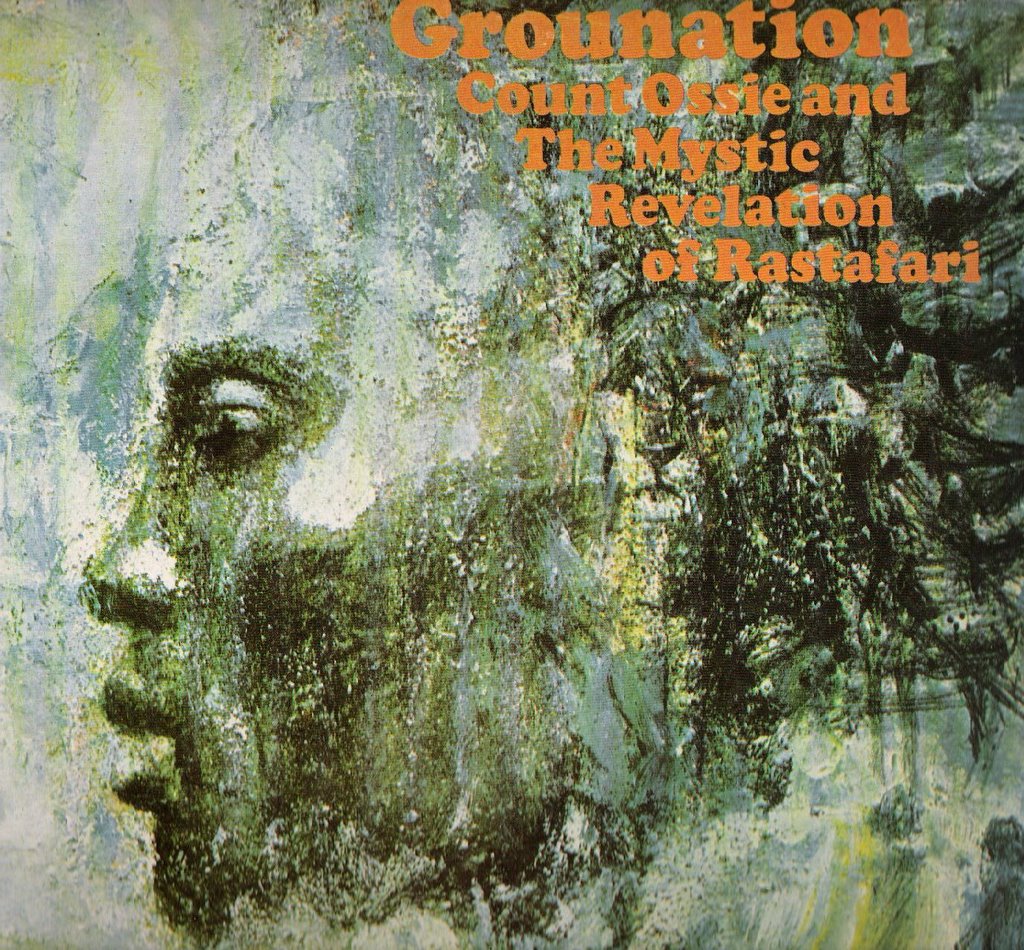
Count Ossie & The Mystic Revelation of Rastafari


I think I found this three record boxed set at a remaindered record shop in Barking in the 80's. It was released in the Vulcan label in 1974. It's called "Grounation" and by Count Ossie and The Mystic Revelation of Rastafari.

"The foundations of reggae and its association with Rastafarianism were established by drummer, percussionist and vocalist Count Ossie (born: Oswald Williams). Together with his band, the Mystic Revelation of Rastafari, Count Ossie combined African-influenced music with the European hymnal tradition to create a unique sound that inspired everyone from Ras Michael and the Sons of Negus and the Skatalites to Bob Marley & the Wailers and Toots & the Maytals.

Count Ossie's earliest inspiration came from rasta elder Brother Job, who introduced him to the philosophies of Rastafarianism. A Nyabinghi drummer from the hills of Jamaica, Count Ossie cut his first singles, including "O'Carolina" and "Chubby," for Prince Buster at the studios of RJR radio. Beginning in 1959, Count Ossie recorded for Sir Coxsone Dodd at Studio One.

Together with music director, tenor saxophone, flute and clarinet player Cedric "I-m" Brooks, Count Ossie formed the Mystic Revelation Of Rastafari. Heavily percussive, the group featured philosopher orator Samuel Clayton, double bass player, poet and vocalist Ras Jose, Ras Jose, Little Bop and Count Ossie's son, Time, on fundae drum, bass drummer and percussionist King Rayo, percussionist and vocalist Bunny, percussionist Moses, baritone saxophone and clarinet player Ras Sam II and trombonist Nambo.

There has been some debate as to the cause of Count Ossie's death in 1976. While some sources claim that he was in an auto accident, others say that he was trampled to death when a crowd panicked at the National Arena."

Read more about Count Ossie HERE.

Tracks are as follows -

1. Ethiopian Serenade
2. Oh Carolina
3. So Long


Count Ossie - Record Two/Side 2

Tuesday, August 23, 2011

Leiber & Stoller (Re-Up)


Continuing the celebration of the radio shows of much missed DJ Charlie Gillett this week's show comes from November 1982 I think and guests Jerry leiber and Mike Stoller who almost single-handedly wrote much of the rock 'n' roll hits of the 50's, including Charlie Brown, Hound Dog, Yakety Yak etc. They were over to see the opening of a musical based on their songs featuring Darts called Yakety Yak,
Charlie is in his element here with two of his heroes and its a lively show with plenty of banter and great songs they wrote or have chosen.

Wikipedia says -

"Their first successes were as the writers of such crossover hit songs as "Hound Dog" and "Kansas City." Later in the 1950s, particularly through their work with The Coasters, they created a string of ground-breaking hits that are some of the most entertaining in rock and roll, by using the humorous vernacular of the teenagers sung in a style that was openly theatrical rather than personal, songs that include "Young Blood," "Searchin'," and "Yakety Yak." They were the first to surround black music with elaborate production values, enhancing its emotional power with The Drifters in "There Goes My Baby" and influencing Phil Spector who worked with them on recordings of The Drifters and Ben E. King. Leiber and Stoller went into the record business and, focusing on the "girl group" sound, released some of the greatest classics of the Brill Building period.
They wrote hits including "Love Me," "Loving You," "Don't," and "Jailhouse Rock," among others for Elvis Presley. They were inducted into the Songwriters Hall of Fame in 1985 and Rock and Roll Hall of Fame in 1987."

Sad news about Jerry Leiber today HERE.

Charlie Gillett - Leiber & Stoller Pt.1

Charlie Gillett - Leiber & Stoller Pt.2

Thursday, August 18, 2011

Fela Kuti


Two short sides on an LP in the wrong sleeve I just discovered but has been in my collection for a long time. Fela seems to be going through a resurgeance now due to the West End stage show "Fela". Some typically danceable afrobeat here from 1970.

Wikipedia says -

"Fela was born Olufela Olusegun Oludotun Ransome-Kuti in Abeokuta, Ogun State, Nigeria into a middle-class family. His mother, Funmilayo Ransome-Kuti was a feminist activist in the anti-colonial movement and his father, Reverend Israel Oludotun Ransome-Kuti, a Protestant minister and school principal, was the first president of the Nigerian Union of Teachers. His brothers, Beko Ransome-Kuti and Olikoye Ransome-Kuti, both medical doctors, are well known in Nigeria. Fela was a first cousin to the Nigerian writer and Nobel laureate Wole Soyinka, the first African to win a Nobel Prize for Literature.

Fela was sent to London in 1958 to study medicine but decided to study music instead at the Trinity College of Music. While there, he formed the band Koola Lobitos, playing a fusion of jazz and highlife. In 1960, Fela married his first wife, Remilekun (Remi) Taylor, with whom he would have three children (Femi, Yeni, and Sola). In 1963, Fela moved back to Nigeria, re-formed Koola Lobitos and trained as a radio producer for the Nigerian Broadcasting Corporation. He played for some time with Victor Olaiya and his All Stars. In 1967, he went to Ghana to think up a new musical direction. That was when Kuti first called his music Afrobeat. In 1969, Fela took the band to the United States. While there, Fela discovered the Black Power movement through Sandra Smith (now Izsadore)—a partisan of the Black Panther Party—which would heavily influence his music and political views and renamed the band Nigeria '70. Soon, the Immigration and Naturalization Service was tipped off by a promoter that Fela and his band were in the U.S. without work permits. The band then performed a quick recording session in Los Angeles that would later be released as The '69 Los Angeles Sessions.

After Fela and his band returned to Nigeria, the band was renamed The Africa '70, as lyrical themes changed from love to social issues. He then formed the Kalakuta Republic, a commune, a recording studio, and a home for many connected to the band that he later declared independent from the Nigerian state. Fela set up a nightclub in the Empire Hotel, named the Afro-Spot and then the Afrika Shrine, where he performed regularly. Fela also changed his middle name to Anikulapo (meaning "he who carries death in his pouch"), stating that his original middle name of Ransome was a slave name. The recordings continued, and the music became more politically motivated.[citation needed] Fela's music became very popular among the Nigerian public and Africans in general. In fact, he made the decision to sing in Pidgin English so that his music could be enjoyed by individuals all over Africa, where the local languages spoken are very diverse and numerous. As popular as Fela's music had become in Nigeria and elsewhere, it was also very unpopular with the ruling government, and raids on the Kalakuta Republic were frequent."


Fela Kuti - Expensive Shit

Fela Kuti - Water Got No Enemy

Tuesday, August 16, 2011

City Quads


I uploaded the first side some months back so as a treat here's the second side. Its one I found at Brick Lane flea market many years ago for a few pence. Its on the Polydor label and made in what was Rhodesia and is now a troubled Zimbabwe. Sleeve printed in Germany. No date but imagine it would be late 50's or early 60's.

No info. on the internet so just a little information on the sleeve notes.

" Polydor presents a unique collection of popular African tunes sung ina variety of native languages by one of the best known vocal groups in Rhodesia, The City Quads. The performance you hear on this LP could be called a mixture of African folklore and pop songs of a kind one is always likely to hear wherever people gather together in an African township."

Tracks are as follows -

1. Abazali - The hero of this song has always been "sitting pretty". He was looked after well in childhood and received many presents, and now he is riding from the township to the city of Salisbury on top of the only double decker bus on the route.

2. Zonki Ntsuku - A rather anxious young man sings: "You know that I have always told you how I love you - and now I am worried about you".

3. Mbaravozi - A song of bad omens, of things Africans would not like to find - indeed, are not likely to find:
A monkey sitting in a fireplace.
A large tiger fish turning round and round dodging the fisherman until it looks like a small sardine.
Finding a fish where the kingfisher should be and a bird where the fish lives.

4. Wacitu Mozi - Among the many existing songs about the supernatural, we have chosen this one which describes how a woman destroyed a village by witchcraft and how she herself was later killed by her husband.

5. Ndafuna Funa - A lover's lament.
6. Mai Ndarira - When a African child is ill it always asks to be carried on it's mother's back rather than be put to bed.

7. Chipo - In this song the child is lost. "Where are you? Father and Mother are looking for you in the hills and dales, but you are nowhere to be found".


City Quads - Side Two

Sunday, August 14, 2011

G.H. Elliot


Another hissy 78 from the 20's or perhaps even earlier. This disc is a mini 78 - only 8 inches across. I have featured G.H. Elliot before and happy to do so again despite the rather politically uncorrect nick name he used.

Wikipedia says -

"G. H. Elliott (1882–1962) was a British music hall singer and dancer. He was born George Henry Elliott in Rochdale, Lancashire in 1882. Known as the "Chocolate Coloured Coon", he came on stage with a painted black face but dressed entirely in white. He had a white top hat, a white tail-coat which came down well below the knees, white gloves, white tie or cravat, white trousers, white shoes and a white cane.

He and his family emigrated to the United States when he was four. There he played juvenile parts on stage including the title role in Little Lord Fauntleroy. He was a member of the Primrose West Minstrels at the age of nine where he first blacked up.


The family returned to England in 1901 where he continued to perform on the music hall stage. After a number of years treading the boards he rose to top of the bill. He was influenced by Eugene Stratton who also used to black up and he sang some of Stratton’s songs particularly Lily of Laguna which he sang in tribute to his hero. Among the songs particularly associated with him are Idaho, I Used To Sigh For The Silvery Moon and Sue, Sue, Sue.

He appeared in two films Music Hall (1934) and Those Were the Days (1934 film) and in This is Your Life as Himself in 1957.

He appeared in two Royal Variety Performances, in 1925 and 1948. He made over 100 records, his first on a wax cylinder and his last in 1960.

He was married twice, first to Emily Hayes who died in 1940 and then to Florence May Street, known as June. She had been an acrobat in acts as various as the Martinez Troupe/Duo and Sereno (Harry Sereno) and June.

G. H. Elliott retired to Rottingdean, Brighton where he lived in a cottage he named Silvery Moon after his song I Used to Sigh for the Silvery Moon. He is buried in the churchyard of St Margaret's Church, Rottingdean[3] and his gravestone shows a stage with curtains drawn back. It bears the words: "The last curtain call for G H Elliott The Chocolate Coloured Coon who passed peacefully away 19 November 1962. Dearly loved R.I.P."


G.H.Elliot - So Long As The Sun Keeps Shining

G.H.Elliot - I'm Going Back Again To Old Nebraska

Flanagan & Allen


An old scratchy 78 from the boot sale today. I think I may have this already but couldn't find it on here so here it is in all it's hissy fizzy glory.

Wikipedia says -

"As music hall comedians, they would often feature a mixture of comedy and music in their act; this led to a successful recording career as a duo and roles in film and television. Just prior to and throughout the Second World War they appeared in several films helmed by Marcel Varnel and John Baxter. Flanagan and Allen were both also members of The Crazy Gang and worked with that team for many years concurrently with their double-act career.

Flanagan and Allen's songs featured the same, usually gentle, humour for which the duo were known in their live performances, and during the Second World War they reflected the experiences of ordinary people during wartime. Songs like 'We're Gonna Hang out the Washing on the Siegfried Line' mocked the German defences (Siegfried Line), while others like 'Miss You' sang of missing one's sweetheart during enforced absences. Other songs, such as their most famous, 'Underneath the Arches' (which Flanagan co-wrote with Reg Connelly), had universal themes such as friendship. The music was usually melodic, following a binary verse, verse chorus structure, with a small dance band or orchestra providing the accompaniment. The vocals were distinctive because while Flanagan was at least a competent singer and sang the melody lines, Allen used an almost spoken delivery to provide the harmonies.

The recordings of Flanagan and Allen remain popular, and the duo are frequently impersonated by professionals and amateurs. Royal Variety Performances often feature people 'doing a Flanagan and Allen', notably Roy Hudd and Christopher Timothy, Bernie Winters and Leslie Crowther. In 1980 the latter two featured in a one-off musical drama about the duo produced by ATV for the ITV network.

The later comedy team Morecambe and Wise, who often expressed their admiration for Flanagan and Allen, recorded a tribute album, Morecambe and Wise Sing Flanagan and Allen (Phillips 6382 095), in which they performed some of the earlier team's more popular songs in their own style, without attempting to imitate the originals. Fans of either comedy team may be slightly disappointed by this album, since all of the selections are performed absolutely straight, with no comedy except for a brief amount of banter after one of the songs. Run Rabbit Run was one of their best hits in World War Two."


Flanagan & Allen - F.D.R.Jones

Flanagan & Allen - If A Grey Haired Lady Says "How's Yer Father?"

Russ Henderson


A strange mixture of styles on this Allegro Lp from 1966 I bought today at a boot sale. Mostly generic calypso but padded out with steel band and west indian drums on a couple of instrumental tracks. Also some ska thrown in for good measure.

His website says -

"Russ Henderson was born in the Belmont Neighbourhood of Port of Spain, Trinidad, in 1924. By the 1940s he had formed his own band, the Russ Henderson Quartet. The group became well known and loved throughout the island, delighting dance halls and clubs with their rhythm and soul.

Russel came to England from his home town of Port of Spain in 1951 to study piano tuning at the North London Polytechnic in Holloway Road. An agent persuaded him to form another band after hearing him play the steel pan. So, Russ Henderson and his Trinidadian Steel Band was formed and a gloomy post-war Britain lit up to the sound of the Caribbean.

Russ Henderson receiving an MBE for Services to Music

Over the coming years, Russ set about embedding Caribbean music in the British culture. He taught school children how to play steel pan and lead his band into starting the Notting Hill Carnival. He toured the country with his band, playing on television shows, in films, in clubs, at Cambridge University balls and even at Prince Andrew's 21st birthday party at Windsor Castle. He was recently knighted as MBE by Prince Charles and now in his 80s, he is still a regular performer at the jazz connisseur's 606 Club in Lots Road, Chelsea."

Tracks are -

Side One.

1. Walking The Dog
2. Coconut Woman
3. Yellow Bird
4. Stone Cold Dead In De Market
5. Peanut Vendor

Side Two.

1. Sammy Dead Oh!
2. Non Ho L'eta Per Amarti
3. Marienne
4. Jamaica Farewell
5. West Indian Drums


Russ Henderson - Side One

Russ Henderson - Side Two

Saturday, August 13, 2011

Homer & Jethro


Another comedy country Lp from the charity shop the other day. I have featured Homer and Jethro before but happy to share this side which is a compilation of some of their best from the 50's and 60's on RCA.

Wikipedia says -


"Homer and Jethro were the stage names of American country music duo Henry D. Haynes (1920–1971) and Kenneth C. Burns (1920–1989), popular from the 1940s through the 1960s on radio and television for their satirical versions of popular songs. Known as the Thinking Man's Hillbillies, they received a Grammy in 1959 and are members of the Country Music Hall of Fame.


Haynes and Burns met in 1936 during a WNOX-AM audition in Knoxville, Tennessee when they were both 16 years old. Known as Junior and Dude (pronounced "dood'-ee"), the pair was rechristened Homer (Haynes) and Jethro (Burns) when WNOX Program Director Lowell Blanchard forgot their nicknames during a 1936 broadcast. In 1939 they became regulars on the Renfro Valley Barn Dance radio program in Dayton, Ohio.

They were drafted into the US Army during World War II but served separately; they reunited in Knoxville in 1945, and in 1947 they performed on WLW-AM's Midwestern Hayride in Cincinnati. They sang exaggerated hillbilly-styled versions of pop standards as their comedic hook, with Haynes on guitar and Burns on mandolin. They originally recorded for King Records, where they also worked as session musicians backing other artists until a dispute over song credits with label owner Syd Nathan led Nathan to release them from the label. The duo and other stars were fired by new management at WLW in 1948, and after a brief tour, they moved to Springfield, Missouri and performed on KWTO-AM with Chet Atkins, the Carter Family and Slim Wilson."


Tracks are as follows -

1. Daddy Played First Base
2. What Have You Done For Me Lately
3. Gone
4. Ballad Of Davey Crewcut
5. We Did'nt Make It Through The Night
6. Please Help Me I'm Crawling
7. Sink The Bismark


Homer & Jethro - Side One

Wednesday, August 10, 2011

The Tennors


More ska from 1969 on the Doctor Bird label.

Wikipedia says -

"The group was formed in Kingston in the mid-1960s by singer George "Clive" Murphy who formed a duo with Maurice "Professor" Johnson. They called themselves the Tennor Twins. They auditioned a song called "Pressure and Slide" in 1967 while sitting in the back of a taxicab for arranger Jackie Mittoo of Studio One. Murphy and Johnson were then joined by Norman Davis, and the trio recorded the song backed by Mittoo. This, their first single, was one of the major Jamaican hits for the year 1967,[1] but, according to Murphy, the group never received any royalties for the track.

Rather than continue to deal with Studio One record producer Coxsone Dodd, the Tennors formed their own label and grew its own stable of artists. The accidental death of Johnson reduced the trio back to a duo, and Murphy and Davis continued as songwriters. They offered their song, "Ride Yu Donkey", to many artists, but ended up recording it themselves after it was turned down. The song was released in 1968 and was a huge hit.

Other songs by the Tennors included "Cleopatra (I've Got to Get You Off My Mind)", "Grandpa", Massi Massa", "Girl You Hold Me" and "Rub Me Khaki", "Sufferer", "Sign of the Times", "Biff Baff" (aka "Traitor"), "Bow Legged Girl", "Little Things", "Cherry" and "Oh My Baby".

The group became a trio again with the addition of Ronnie Davis in 1968. Other singers who were in the Tennors included Nehemiah Davis, George Dekker, Howard Spencer, and Hilton Wilson. The trio backed singer Jackie Bernard on "Another Scorcher", and moved towards reggae with the song "Reggae Girl"."


The Tennors - Little Bit Of This

The Tennors - Shameface

The Abbey Tavern Singers


I had high hopes of this being more traditional Irish music than the rather lack lustre folk that we get here. The cover photo features a Uillean pipe player but no sign of it on the songs on side two at least.

"The story, as outlined by the ARC Records sleeve notes, stated that: "The Abbey Tavern Singers were formed in 1962 when Mrs. (Minnie) Scott-Lennon of the Abbey Tavern in Howth, Dublin decided that musicians and balladeers performing in a relaxed sing-along manner would be popular. Within a short time the newly formed Singers were drawing capacity crowds into the Howth establishment. In 1966 a solid Irish rouser "We're Off To Dublin In The Green" featuring the singers was released on TV as a beer commercial. This ad created by Carling Breweries Ltd. increased the group's popularity many times over and indeed in Canada listening to the Abbey Tavern Singers fast became the new national past-time. This song-come-jingle was then released on record by the Singers and became an international hit. Shortly thereafter the Abbey Tavern Singers toured North America and charmed the continent."


Abbey Tavern Singers - Side Two

Brinton Turkle


An EP I found (no sleeve ) in the Hospice shop today. I was intrigued by the name and the title. Turns out to be a rather dull story about a boy and his pet seagull.


"Brinton Turkle was born on August 15,1915 in Alliance, Ohio. He drew constantly in school. "Unfortunately, none of my school teachers appreciated it. If only one elementary school teacher had egged me on, I think I would have acquired art skills much earlier than I did." Turkle had an immense interest in the theatre, but the uncertainty of that life wasn't appealing. After a job in advertising in Chicago, he married and moved to Santa Fe, New Mexico, where he was able to indulge his theatrical interests. He had an ambition to write and illustrate three children's books so he could dedicate them to each of his three children. He was awarded a Caldecott Honor in 1970 for Thy Friend, Obadiah (Viking).

Turkle writes, "In writing, I use all sorts of tricks to capture the attention of my young audience: suspense, humor and even charm, when I can muster it. But no matter how successfully I may entertain, I am really up to something else: subversion. My abilities are implacably lined up against the hypocrisy, materialism and brutality that so pervade our society. As my readers leave childhood behind, I hope that they will carry with them an appreciation for such alternatives as integrity, mutual respect, kindness and reverence for life. These alternatives are in my books and I pray that exposure to them will play a part in the construction of a better tomorrow."


Brinton Turkle - Thy Friend Obadiah

Monday, August 08, 2011

The Techniques/ Tommy McCook


More scratchy ska from the archives. This time it's on the Treasure Isle label. Tommy McCook and the Supersonics play on both but the "A" side is sung by The Techniques.

Wikipedia says -

"The group was formed by Winston Riley in 1962 while still at school, with the initial line-up also featuring Slim Smith, Franklyn White, and Frederick Waite. They regularly performed at Edward Seaga's Chocomo Lawn club, where they were spotted by talent scouts from Columbia Records, who released their first single, "No One", released only in the United Kingdom in 1963. Their Jamaican debut came in 1965 when they were introduced to producer Duke Reid by singer Stranger Cole, with Reid-produced singles such as "Don't Leave Me", "When You Are Wrong", "and "Little Did You Know" appearing on labels such as Island Records, and Reid's own Duke and Treasure Isle labels. Smith left the group in 1966, to pursue a solo career at Studio One, and later forming The Uniques with White. He was replaced by Pat Kelly. The shift from ska to rocksteady suited The Techniques, with a string of hits in 1967 and 1968 following, including "You Don't Care", "Queen Majesty", "I Wish It Would Rain", "It's You I Love", and "Love Is Not a Gamble".

The group left Treasure Isle in 1968, with Riley setting up his own 'Techniques' record label, releasing further sides by the group and also his productions of other artists. The group's line up changed regularly with Riley the only constant member. Other members in the late 1960s included Lloyd Parks, Bruce Ruffin, and Dave Barker. Kelly returned for a time, recording lead vocals on "What Am I To Do?"."


The Techniques - You Don't Care

Tommy McCook - Down On Bond Street

Rupie Edwards/The Mediators


Another rather scratched and battered ska single from the 60's, this time on the Success label distributed by Pama Records. I think the labels are on the wrong way round as the instrumental track says it features Rupie Edwards who is a singer.

Wikipedia says -

"Rupie Edwards, an only child, moved to Kingston in 1958, where he set up his first band while still at school. His first recording was "Guilty Convict" b/w "Just Because", for L.S. 'Little Wonder' Smith in 1962, released on Melodisc's Blue Beat label in the UK, and was paid £15 for the session. After recording a few singles, he became involved with the Virtues and, from 1968, started to focus only on his own productions.

By the beginning of the 1970s, apart from releasing singles as a singer, he had recorded artists like The Heptones, Bob Andy, Johnny Clarke, Joe Higgs, Gregory Isaacs and The Ethiopians on his own record labels 'Success' and 'Opportunity'. He also worked with DJs such as U-Roy and I-Roy, and released some instrumental versions with his studio band, The Rupie Edwards All Stars. The group included musicians such as saxophonist Tommy McCook, trombone player Vin Gordon, drummer Carlton 'Santa' Davis, guitarist Hux Brown, pianist Gladstone Anderson, bassist Clifton 'Jackie' Jackson and organist Winston Wright."


Rupie Edwards - Look Who A Bust Style

The Mediators - Look Who A Bust Style

Reggae Boys/Upsetters


Another single from the dusty ska and reggae box. This time on the Punch label from Pama Records in London. Produced by Lee Perry? Late 60's again I imagine. Not sure which is the "A" side- not that it matters. Both are good.

Wikipedia says -

"Perry's musical career began in the late 1950s as a record seller for Clement Coxsone Dodd's sound system. As his sometimes turbulent relationship with Dodd developed, he found himself performing a variety of important tasks at Dodd's Studio One hit factory, going on to record nearly thirty songs for the label. Disagreements between the pair due to personality and financial conflicts, a recurring theme throughout Perry's career, led him to leave the studio and seek new musical outlets. He soon found a new home at Joe Gibbs's Amalgamated Records.

Working with Gibbs, Perry continued his recording career but, once again, financial problems caused conflict. Perry broke ranks with Gibbs and formed his own label, Upsetter, in 1968. His first single "People Funny Boy", which was an insult directed at Gibbs, sold well with 60,000 copies sold in Jamaica alone. It is notable for its innovative use of a sample (a crying baby) as well as a fast, chugging beat that would soon become identifiable as "reggae" (the new kind of sound which was given the name "Steppers"). From 1968 until 1972 he worked with his studio band The Upsetters. During the 1970s, Perry released numerous recordings on a variety of record labels that he controlled, and many of his songs were popular in both Jamaica and the UK. He soon became known for his innovative production techniques as well as his eccentric character.

In the early 1970s, Perry was one of the producers whose mixing board experiments resulted in the creation of dub. In 1973, Perry built a studio in his back yard, The Black Ark, to have more control over his productions and continued to produce notable musicians such as Bob Marley & the Wailers, Junior Byles, Junior Murvin, The Heptones, The Congos and Max Romeo. With his own studio at his disposal, Perry's productions became more lavish, as the energetic producer was able to spend as much time as he wanted on the music he produced. Virtually everything Perry recorded in The Black Ark was done using basic recording equipment; through sonic sleight-of-hand, Perry made it sound unique. Perry remained behind the mixing desk for many years, producing songs and albums that stand out as a high point in reggae history."


Reggae Boys - Selassie

The Upsetters - Dry Acid

Sunday, August 07, 2011

Marcia Griffiths/Soul Brothers


Another ska single from the archives On the Rio label from the late 60's. The "A" side has a vocal by Marcia Griffiths and the "B" is an instrumental by the Soul Bros.

" The Soul Brothers bridged the gap between Ska and the arrival of Rocksteady mixing it all up with Funk, Jazz and Latin styles. The Soul Brothers recorded at Studio One between 1965-1967. This was the transitionary period between Ska and Rocksteady where the music was a mixture of Funk, Latin and Jazz sometimes with a reminder of Ska and the hint of Rocksteady. The previous era of Ska had been dominated by the Skatalites."

Read more about Marcia Griffiths HERE.


Marcia Griffiths - Mr. Everything

Sould Bros. - T.N.T.

Johnny & The Attractions


Not much gleaned on the interweb about this one although some say it's lead voval is by someone called Dudly Williamson of whom I know nothing. Pleasant enough ska/rock steady song. Also issued on Trojan I believe at some point. Originally released in 1968.


Johnny & The Attractions - Coming On The Scene

Johnny & The Attractions - Anything You Want

Wednesday, August 03, 2011

Jubelkvartetten


Another Nowegian buy from a junk shop in Hamar. Mostly religious songs one suspects from the other records in the pile. This LP is on the Hemmets Harold label and features a motely crew who play instruments ranging from accordion to trumpet.
I suspect a search on the internet will prove as fruitless as the others but any knowledge of this and previous postings much appreciated.


Tracks are as follows -

1. Var Glad Och Sjung
2. Snart Kommer Solen Ater
3. Hem O Hem
4. Hans Namn Ar "Underbar"
5. Men Vid hemmets Dorr
6. Ja, Han Gar Med


Jubelkvartetten - Side One

Schytts Jigs Sawes


Another of my Norwegian vinyl purchases which turned out to be Swedish but attracted by amusing sleeve and title and the price of just one krona.
One the Mariann label and released in 1975 and features songs from 1962 to 1974 that were big hits on Scandinavia I presume? Some covers here which stand out especially Bonnie B and maudlin rendition of Danny Boy.

Tracks are -

1. Kors I Josse Namn
2. En Spannande Dag For Josefine
3. Bonnie B
4. Nagonting Har Hant
5. Nina Fina Ballerina
6. Danny Boy
7. Upp Och Ner
8. Lika Bla Som Nina Ogon


Schytts Jigs Sawes - Side One

Norske Favoritter


We went to Norway recently for a few days and I managed to buy some vinyl in various junk shops and markets. Hoping for amusing home grown Norwegian music but managed to buy two Swedish records by mistake much to the amusement of our hosts. Well, it is hard to tell them apart at first glance!
Anyway, this first record is actually Norwegian and a selection of songs that graced the Norwegian charts in the 60's I would guess. Nothing much special here but do listen to the last track by Arne Bendiksen which features some horrific yodelling!

Wikipedia says of Arne Bendiksen -

"Arne Joachim Bendiksen, born 19 October 1926 in Bergen, Norway, died 26 March 2009, was a Norwegian singer, composer and producer, described as "the father of pop music" in Norway.

In the 50s, 60s and 70s, he was a major figure in Norwegian popular music. First, as a member of the group The Monn Keys, later as soloist and composer for other artists. Besides writing his own songs, he also translated many foreign hits into Norwegian, making them Norwegian hits. Arne Bendiksen took part in the Norwegian Eurovision Song Contest selections several times, both as an artist and as a songwriter. Three times he represented Norway in Eurovision as singer; in 1964 (Eurovision Song Contest 1964) with Spiral as soloist, in 1973 (Eurovision Song Contest 1973) with Ã…, for et spill and in 1974 (Eurovision Song Contest 1974) with Hvor er du?. Four times he took part as composer, most memorable as songwriter for Ã…se Kleveland's Intet er nytt under solenin 1966 (Eurovision Song Contest), finishing a strong third.

Beginning in 1964 he was the boss of his own record company. Thanks to him, popular artists like Wenche Myhre and Kirsti Sparboe reached fame. However, in the Eurovision Song Contest finals of 1969, Norway received a mere 1 point for the song Oj, oj, oj, så glad jeg skal bli, which was composed by Arne Bendiksen and performed by Kirsti Sparboe.

Arne did not let this crush his spirits though, and he continued his dedicated work as a singer/songwriter throughout the 70s. In the 80s, he gave a shot at the popular children's cassette industry and released his major children's work Barnefest i Andeby - Children's party in Duckburg - a cassette filled with catchy songs about the various Disney characters inhabiting the fictional city of Duckburg. This popular cassette got a sequel, released especially for the Christmas season, called Jul i Andeby - Christmas in Duckburg.

In June 2006, his all-new self-composed children's musical stage debuted in the small elementary school Fjellstrand Skole in Nesodden, Akershus.

Arne Bendiksen died on 26 March 2009, after having been sick for a short period of time. The cause of death was heart failure."


Tracks are as follows -

1, En Student Fra Uppsala - Kirsti Sparboe
2. Ruby - Benny Borg
3. Ved Horisontens Rand - Finn Eriksen
4. Arizona - Lillian Askeland
5. Friarvise Fra Aust-Agder
6. Med Tuba Og Tyrolerhatt - Arne Bendiksen


Norske Favoritter - Side One

Songs For A Singin' Party


At first glance one would think from the sleeve that Jack Jackson would be singing or DJ'ing on this Heinz promotional EP from the 60's but he's just on the sleeve to endorse the record which is a pretty MOR come trad jazz with cringey vocal group who sound a bit like the Mike Sammes Singers. The trombonist sounds a bit like George Chisholm? I will try and glean more on the internet but don't hold out much hope.

Wikipedia says of Jack Jackson -

"He was born in Barnsley, the son of a brass band player and conductor, and began playing cornet at the age of 11 before playing violin and cello in dance bands.He learnt to play trumpet and worked in swing bands in circuses, revues, ballrooms and ocean liners before joining Jack Hylton's band in 1927. He left Hylton in 1929, freelanced for a while, and then joined Jack Payne's band in 1931. He left Payne to form his own band in 1933. By 1939, the band was resident at the Dorchester Hotel in London, and had a regular radio show on Radio Luxembourg.

After the war he decided not to reform his band, and turned to compering on the BBC Light Programme in such shows as "Record Roundabout", which ran from 1948 to 1977. His methods of presentation included punctuating records with surreal comedy clips, and using quick cutting of pre-recorded tapes to humorous effect. This was a major influence on later British DJs such as Kenny Everett and Noel Edmonds. He also had a chat show on TV in 1955.

He emigrated to Tenerife in 1962, sending his taped programmes by air to the BBC each week. Suffering from a bronchial illness, he returned to England to live in 1973, and died at Rickmansworth in 1978.

He is remembered as a member of the UK Radio Academy's Hall of Fame."


Songs For Aingin' Party - Side One

Latin Percussion


An LP found in a charity shop the other day on the KOKO label from the 60's I would guess. Attracted by the sleeve art which really is the best thing about it. The music being fairly mild exotica and not in the same league as Arthur Lyman etc. Seems designed mainly to test your new Hi-Fi system.

Tracks are -

1. Brazil
2, Taboo
3. La Machida
4. The Breeze and I
5. Malaguena
6. Mama Inez


Latin Percussion - Side One