Sunday, November 27, 2005

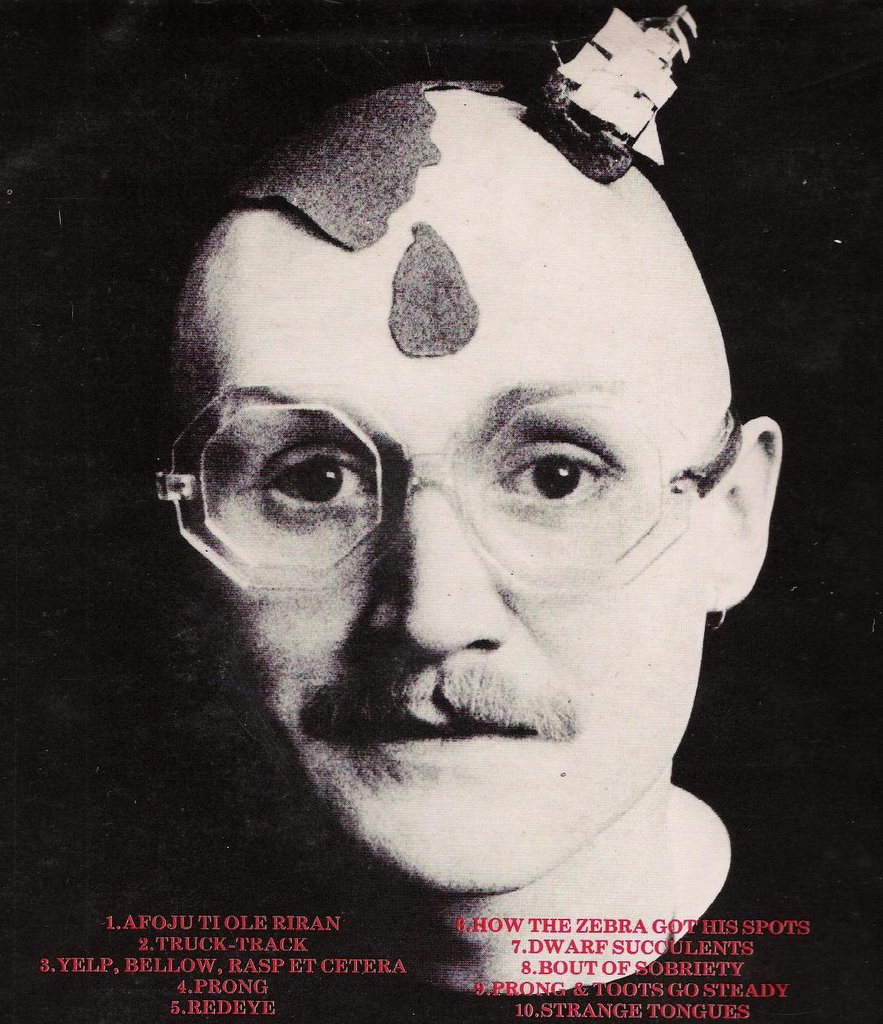
Vivian Stanshall


by Jason Ankeny
"Dubbed the "court jester of the underground rock scene in the 1960s" by influential DJ John Peel, Vivian Stanshall earned his greatest notoriety as the original tenor in the absurdist Bonzo Dog Band, although he was also a noted artist and comedian. Stanshall was born on March 21, 1943 in East London, England before World War II forced him and his mother to evacuate to Oxfordshire. While attending art school under the well-known pop artist Peter Blake (the designer of the Beatles' famed Sgt. Pepper album cover), Stanshall formed the Bonzo Dog Dada Band with flatmate Rodney Slater and fellow student Larry Smith in 1962.

Later shortened to simply the Bonzo Dog Band, the satirical group became highly successful before creative differences triggered their break-up in 1970. Stanshall quickly resurfaced with a series of short-lived and diverse projects: the first, the Sean Head Showband, issued the single "Labio Dental Fricative," while his second solo release, under the guise of Vivian Stanshall and His Gargantuan Chums, was a parody cover of Terry Stafford's "Suspicion." "Blind Date" was recorded as biG Grunt, a group also comprised of Bonzo Dog Band auxilliary members Roger Ruskin Spear, Dennis Cowan and "Borneo" Fred Munt; while the group did play a handful of live gigs, they met their premature demise when Stanshall, a heavy drinker and drug user, suffered a nervous breakdown and was hospitalized.

In 1974, Stanshall emerged with his debut solo LP Men Opening Umbrellas, recorded with Steve Winwood; Stanshall later returned the favor, collaborating with Winwood on his own self-titled debut and contributing significant lyrical ideas to 1980's Arc of a Diver. After narrating Mike Oldfield's Tubular Bells, Stanshall was tapped to guest host the BBC Radio 4 program Start the Week, where he developed his monologue Rawlinson End, which later inspired his own 1978 release Sir Henry at Rawlinson End as well as a film of the same title which starred Trevor Howard.

In 1981, Stanshall issued the autobiographical Teddy Boys Don't Knit, followed three years later by the spoken word project Henry at Ndidis Kraal. The Rawlinson saga continued with Rawlinson Dogends, a 1991 play staged at London's Bloomsbury Theatre complete with musical backing from Rodney Slater and Roger Ruskin Spear. Another autobiographical radio play, Essex Teenager to Renaissance Man, followed in 1994, along with film and voiceover work. Vivian Stanshall died in a house fire on the morning of March 5, 1995."

More about Vivian Stanshall HERE.

Vivian Stanshall - Dwarf Succulents

Vivian Stanshall - Bout Of Sobriety

These Rapid Share files are accessible by scrolling down the page and clicking on the FREE button. Wait at the bottom of the page for your file to appear ( about 20 seconds).

Friday, November 25, 2005

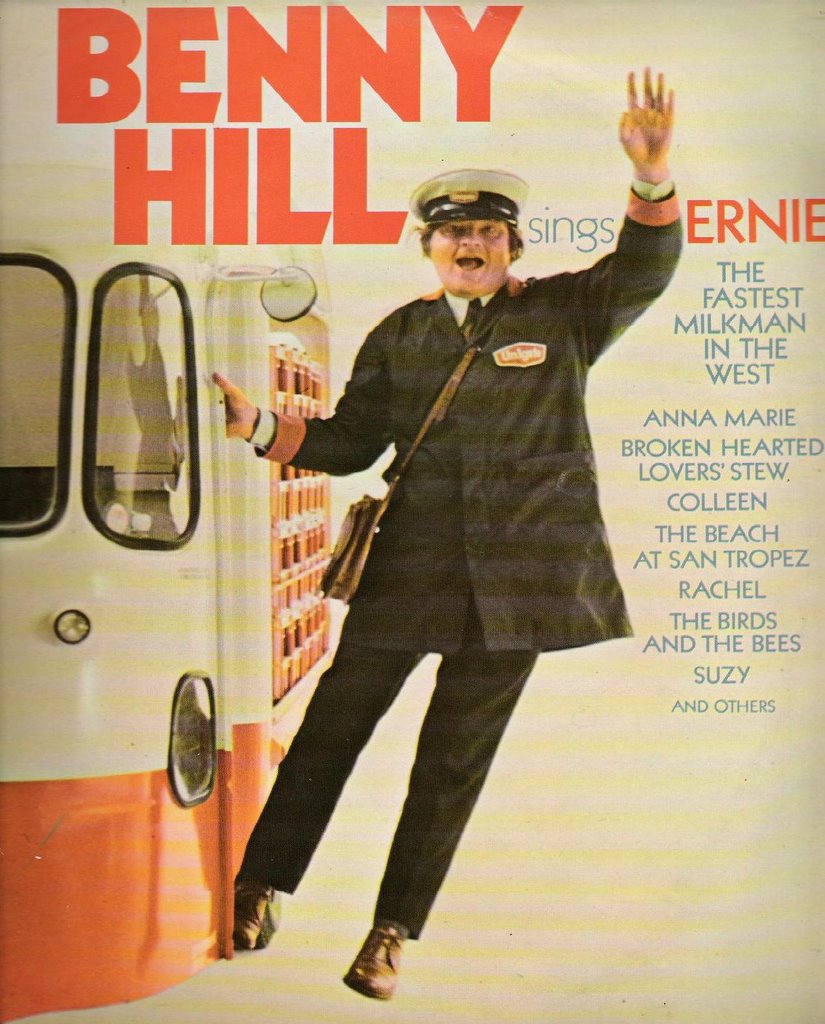
Benny Hill


"Born Alfred Hawthorn Hill (January 21, 1924/1925 - April 20, 1992), in Southampton, Benny Hill was a prolific comic British actor. In fact, he was one of the most universally recognized British comedians. He worked compulsively and had only a few friends, although colleagues who knew him closely insist that he was never lonely, but was content with his own company. He never married, although he did propose to two women, one the daughter of a British writer, and was rejected by both. He never owned his own home, nor even a car, instead preferring to rent a small flat in Teddington, a convenient walking distance to the Teddington Studios where he taped the one-off one-hour episodes of his television programme, The Benny Hill Show."

Found at a boot sale last year this budget "Music For Pleasure" 1971 release contains Hill's big U.K. hit "Ernie" and other comic songs as featured on his TV show. Words and music by Benny Hill. Arranged and conducted by Harry Robinson.

Find out more about Benny Hill HERE

Benny Hill - Broken-Hearted Lovers Stew

Benny Hill - Ting-A-Ling-A-Loo

These Rapid Share files are accessible by scrolling down the page and clicking on the FREE button. Wait at the bottom of the page for your file to appear ( about 20 seconds ).

Flanders and Swann


"In 1936, Michael Flanders and Donald Swann met at school in Westminster. Little did they know at that point the partnership they were going to make in later years, to become famous and release several recordings of their highly successful revues, and remembered for many years after their deaths.

At the Westminster school, they worked together for the first time in 1939, when Donald, born in 1923 in Llanelli to Russian parents, provided piano music for a revue called 'Go for it' that Michael, born in 1922 in London, was performing in. After school, both men went to Christ Church, Oxford, but they had little to do with each other. The war then came into the frame, Michael serving on a destroyer, and Donald in the Ambulance service in Greece and Palestine. It was during this time that Michael contracted Polio after his ship was torpedoed, and was made wheelchair-bound for the rest of his life. Following the war, the two got back together, and set about writing songs; Donald providing the music, while Michael, who originally wanted to be an actor, writing the words.

The first revue they contributed to, Oranges and Lemons, featured the song In The D'Oyly Cart, a send-up of Gilbert and Sullivan. The show started in 1948, and ran for a couple of years. Following the first revue were Penny Plain, Airs on a Shoestring and Pay the Piper, all of which, like the first, directed by Laurier Lister, and starring other performers such as Joyce Grenfell and Ian Wallace. After these, in 1950, the pair made their first step towards independence, performing songs in the Whistler Ballroom in 1950.
The pair, renown for their revue-writing talents, were invited to give a lecture on this topic at the Dartington School of Music in 1956. It was here Michael started to introduce each song with a short narrative. This, he found, went down as well with the audience as the songs themselves, and so this was integrated into the performance, and in 1959 the duo performed their first fully-fledged revue of their own, At the Drop of a Hat, at the New Lindsay theatre in Notting Hill gate.

After three weeks, the show was moved to the Fortune theatre in the West end, where it ran for over 750 performances. It was during this run the performance was recorded by George Martin (of Beatles fame). 1959 also saw the first US tour, and one to Switzerland, and the recording of their first studio album, The Bestiary of Flanders and Swann. The pair toured England after this, and then, in 1963, their second revue opened at the Haymarket theatre. At the Drop of Another Hat ran for almost a year, and was recorded, like the first show. The pair toured Australia at this time also.
After Another Hat, the F&S found the format of revues rather restricting, and branched out into other areas. Michael Flanders Narrated many radio shows, stories and documentaries, and presented radio quiz shows. Donald wrote more music, including for the Hoffnung concerts. They did have a final tour, and very successful it was too, and then they decided to stop 'while they were ahead'. "

This album "The Bestiary" released in 1961 in the U.K. and later in the U.S. but without "The Wompom" which is a shame as it's by far the best track and funniest as Flanders and Swann add an array of vocal gymnastics not heard on any of their other records.

Flanders & Swann - The Ostrich

Flanders & Swann - The Wompom

These Rapid Share files are accessible by scrolling down the page and clicking on the FREE button. Wait at the bottom of the page for your file to appear ( about 20 seconds ).

Wednesday, November 23, 2005

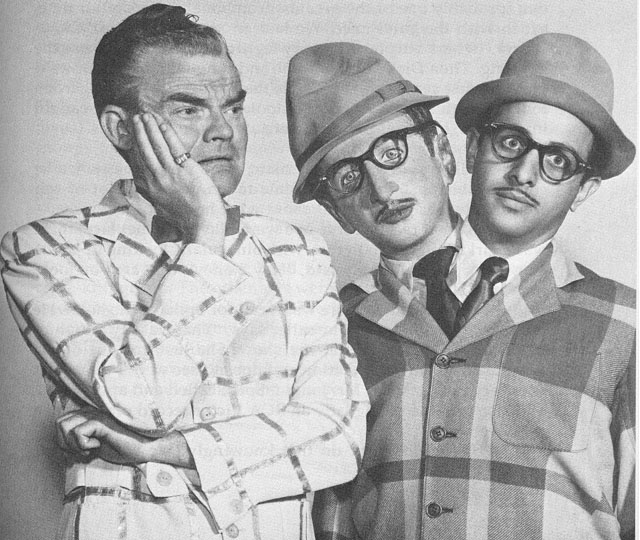
Spike Jones


"Lindley Armstrong "Spike" Jones (December 14, 1911 - May 1, 1965) was a popular musician and comedian. He was born in Long Beach, California.
His father was a Southern Pacific railroad agent. He got his nickname by being so thin that he was compared to a railroad spike. At the age of eleven he got his first set of drums. As a teenager he played in bands that he formed himself. A chef in a railroad restaurant taught him how to use adapted pots and pans, forks, knives and spoons as musical instruments. He frequently played in theater pit orchestras. In the 1930's he joined the Victor Young Band and thereby got many offers to appear to radio shows including the Al Jolson Lifebuoy Show, Burns and Allen (with George Burns) and Bing Crosby's Kraft Music Hall. In 1940, he had an uncredited part in the film Give Us Wings, and in 1942 as a hillbilly in Pass the Biscuits, Mirandy. He joined up with vocalist Del Porter and performed in Los Angeles, gaining a cult following. By 1941 the band included violinist Carl Grayson. Other band members were George Rock (voice and trumpet), Doodles Weaver (voice) and Red Ingle (voice). They became his backing band The City Slickers.Jones's wife was the singer Helen Grayco, who performed on some of his radio shows. They recorded five records for Victor's label "Bluebird" before receiving their big break."

This EP was on the tape sent today with the Johnny Standley and it seems churlish not to include it all as its very funny despite the bad quality of some of the surface noise. Sorry! I have quite a few Spike Jones albums, records and tapes but never heard this one before with Spike introducing each track.

Find out more about Spike Jones HERE.

Spike Jones - Fun In Hi-Fi Pt.1

Spike Jones - Fun In Hi-Fi Pt.2

These Rapid Share files are available by scrolling down the page and clicking on the FREE button. Wait at the bottom of the page for your file to appear ( about 20 seconds ).

Johnny Standley


I'm afraid I know very little about Johnny Standley. All I could glean from the internet is that he travelled with his father's "tent shows" in the Mid West and this single, "It's In The Book", was his one "hit" in 1952. The second part of the song is taken from an advert for Granma's Lye Soap. No other recordings seem to be available. This EP was found by a friend of mine who had been looking for it for a while. He sent me a copy on a tape today along with this very pale photo-copy of the sleeve. I had to darken it a bit on photoshop, hence the rather strange tones. Johnny reminds me of a few other American comedy acts of the 50's like Jonathan Winters and Milton Berle etc. and his preaching style like that of the english eccentric Gerrard Hoffnung.

Johnny Standley - It's In The Book

Johnny Standley - Clap Your Hands

These Rapid Share files are accessible by scrolling down the page and clicking on the FREE button. Wait at the bottom of the page for your file to appear ( about 20 seconds ).

Sunday, November 20, 2005

Sophie Tucker


"Sophie Tucker was born in Russia while her mother was emigrating to America to join her husband, also a Russian Jew. Her birth name was Sophia Kalish, but the family soon took the last name Abuza and moved to Connecticut, where Sophie grew up working in her family's restaurant.

Playing piano to accompany her sister at amateur shows, Sophie quickly became an audience favorite; they called for "the fat girl." At age 13, she already weighed 145 pounds.

She married Louis Tuck in 1903, and they had a son, Bert, but she divorced Tuck fairly quickly. Leaving Bert with her parents in 1906, she went to New York, changed her name to Tucker, and began singing at amateur shows to support herself.

She was required to wear blackface by managers who felt that she would not otherwise be accepted, since she was "so big and ugly" as one manager put it. She joined a burlesque show in 1908, and, when she found herself without her makeup or any of her luggage one night, she went on without her blackface, was a hit with the audience, and never wore the blackface again.

She briefly appeared with the Ziegfield Follies, but her popularity with audiences made her unpopular with the female stars, who refused to go on stage with her.

Tucker's stage image emphasized her "fat girl" image but also a humorous suggestiveness. She sang songs like "I Don't Want to Be Thin," "Nobody Loves a Fat Girl, But Oh How a Fat Girl Can Love." She introduced in 1911 the song which would become her trademark: "Some of These Days."

She added jazz and sentimental ballads to her ragtime repertoire, and, in the 1930s, when American vaudeville was dying, she took to playing England. She made eight movies and appeared on radio and, as it became popular, television."

Sophie Tucker - I've Got A Cross-Eyed Papa

Sophie Tucker - Hula Lou

These Rapid Share files are accessible by scrolling down the page and clicking on the FREE button. Wait at the bottom of the page for your file to appear ( about 20 seconds ).

Stanley Holloway


Stanley Holloway (born Stanley Augustus Holloway) was born on the 1st October 1890 in London, England, UK and died on the 30th January 1982 in Littlehampton, England, UK.

"He tried to make a go of his first job as a clerk in a Billingsgate fish market, but the call of the theatre was loud and strong. Originally planning an operatic career, Holloway studied singing in Milan, but this came to an end when World War One began. Finishing up his service with the infantry, Holloway headed for the stage again, making his London premiere in 1919's Kissing Time. His first film was The Rotters (1921), and the first time the public outside the theatres heard his robust voice was on radio in 1923. Holloway toured the music hall-revue circuit with his comic monologues, usually centered around his self-invented characters "Sam Small" and "The Ramsbottoms."

Holloway's entree into talking pictures was with a 1930 film version of his stage success, The Co-Optimist. The British film industry of the '30s was more concerned in turning out "quota quickies" so that Hollywood would send over an equal number of American films, but Holloway was able to survive in these cheap pictures, occasionally rising to the heights of such productions as Squibs (1935) and The Vicar of Bray (1937). In 1941, Holloway was cast in one of the prestige films of the season, George Bernard Shaw's Major Barbara; this led to top-drawer film appearances throughout the war years, notably This Happy Breed (1944), The Way to the Stars (1945) and Brief Encounter (1947). Though he'd had minimal Shakespearian experience, Holloway was selected by Laurence Olivier to play the Gravedigger in Olivier's filmization of Hamlet (1947), a role he'd forever be associated with and one he'd gently parody in 1969's Private Life of Sherlock Holmes.

Gaining an American audience through repeated showings of his films on early-'50s TV, Holloway took New York by storm as Alfred P. Doolittle in the stage smash My Fair Lady - a role he'd repeat in the 1964 film version (after James Cagney had turned it down), and win an Oscar in the bargain.

Continuing his activities in all aspects of British show business -- including a 1960 one-man show, Laughs and Other Events -- Holloway decided he'd take a whack at American TV as the butler protagonist of the 1962 sitcom Our Man Higgins. It's difficult to ascertain the quality of this series, since it had the miserable luck of being scheduled opposite the ratings-grabbing Beverly Hillbillies.

Stanley Holloway perservered with stage, movie, and TV appearances into the '70s; in honor of one of his two My Fair Lady songs, he titled his 1981 autobiography Wiv a Little Bit of Luck."

Stanley Holloway - Any Old Iron?

Stanley Holloway - Wot Cher!

These Rapid Share files are accessible by scrolling down the page and clicking on the FREE button. Wait at the bottom of the page for your file to appear ( about 20 seconds ).

Saturday, November 19, 2005

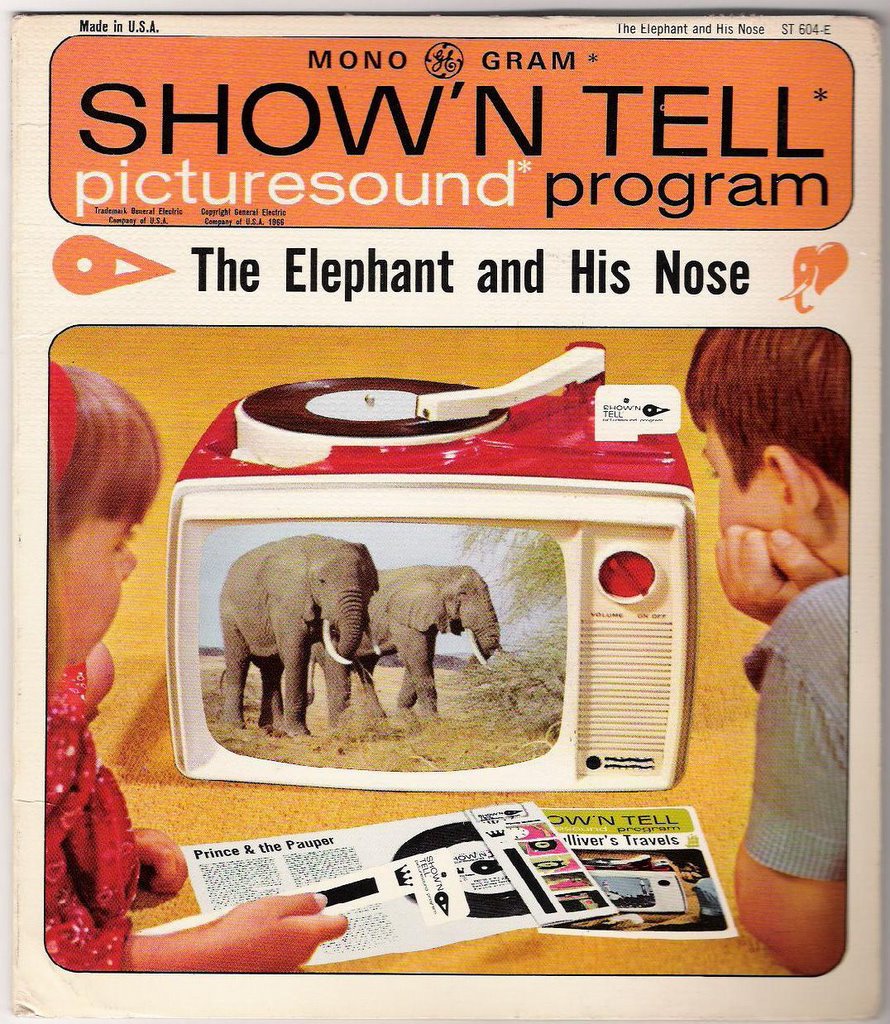
Show 'n Tell


Something slightly different this time. I suppose the ingenius cover art caught my eye first and finding a 7" record inside that plays at 33 also made me curious. It also has a clever plastic book mark type gadget that has a selection of tiny tranparent slides on a slit down the middle - this fits into the TV/record player combi you see on the cover. Really the elephants you see there are a cheat as the image you would get would be very blurred and more like a Give-A- Show projector that my sister used to have, which beamed feeble cartoons on the bedroom wall with the aid of a 6 volt battery. Nevertheless, the idea is great and the tinkling piano on the soundtrack is very engaging. I imagine Bill Bailey would see this in a different light though! Made by the General Electric Co. 1964.

Show 'n Tell - The Elephant An His Nose

This Rapid Share file is accessible by scrolling down the page and clicking on the FREE button. Wait at the bottom of the page for your file to appear ( about 20 seconds ).

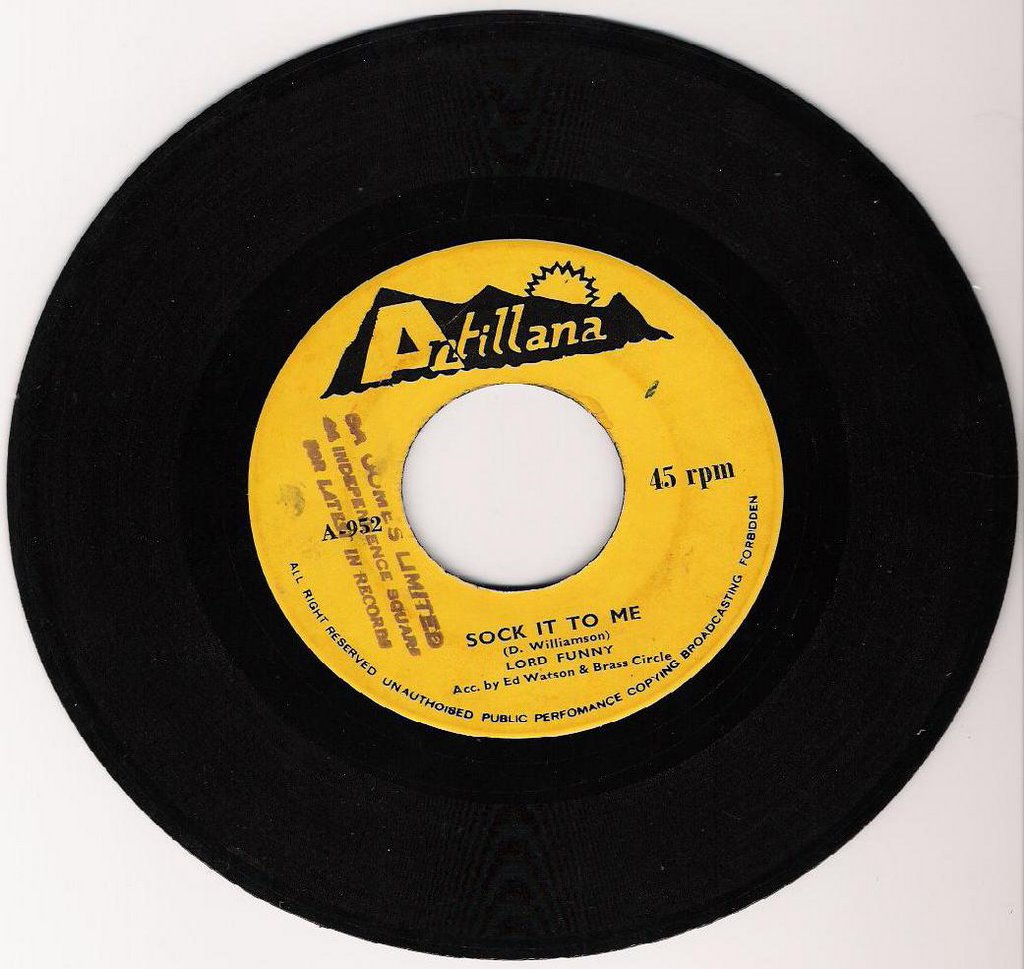
Lord Funny


A 7" single on the Antillana label from 1970 found down Brick lane market many years ago. I have a ton of these old ska, blue beat, rock steady, calypso singles that I used to collect back in the 70's and 80's. Sorting through them the other day I realised that I hadn't really listened to many of them or if I did it was just one side. Some are so scratched and warped they don't bear a second playing. I tried to find out about Lord Funny and the internet doesn't help much this time. I found a discography of "Funny" and it seems he still records under the this name and dropped the "Lord" title. Maybe he thought it sounded more up to date or snappier? I prefer Lord Funny. The B side is great too all about the dangers of not brushing your teeth!

Find out more about calypso by going HERE.

Lord Funny - Sock It To Me

Lord Funny - Check Up

These Rapid Share files are accessible by scrolling down the page and clicking on the FREE button. Wait at the bottom of the page for your file to appear ( about 20 seconds ).

Wednesday, November 16, 2005

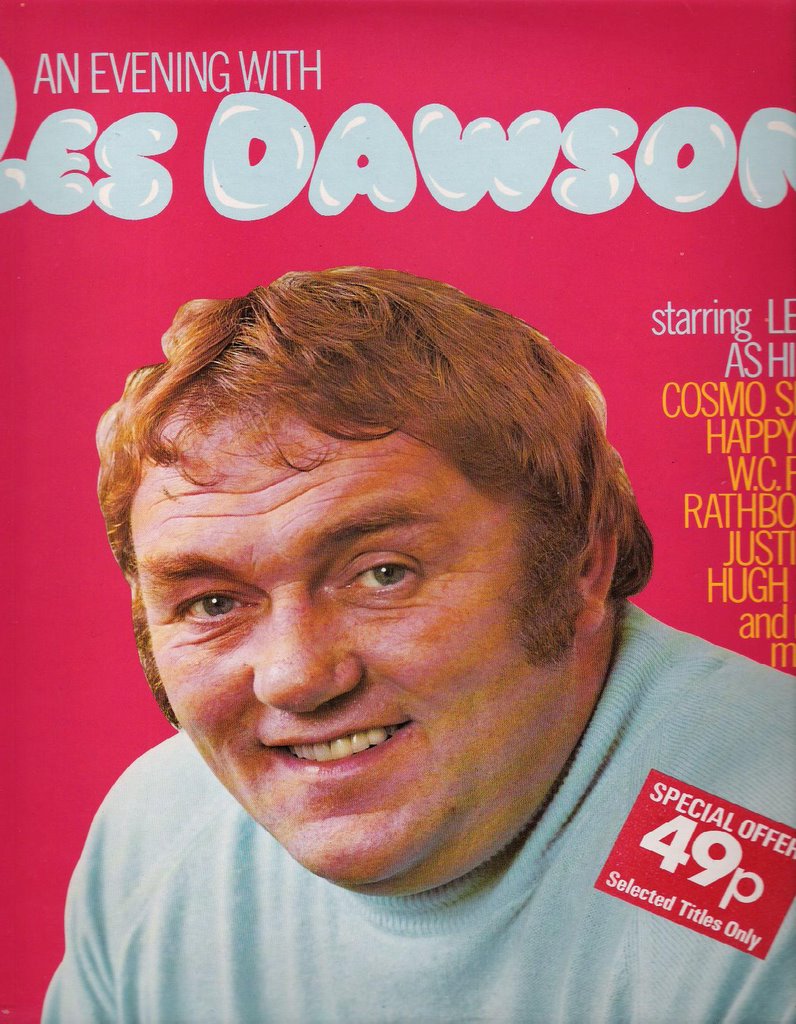
Les Dawson


"Les Dawson (2 February 1931 - 10 June 1993) was a popular Lancashire comedian, known for his deadpan style. Dawson was a curmudgeon, famous for jokes about his mother-in-law and his wife.
Dawson began his entertainment career as a club pianist ("I finally heard some applause from a bald man and said 'thank you for clapping me' and he said 'I'm not clapping - I'm slapping me head to keep awake.'"), but found that he got more laughs by playing wrong notes and complaining to the audience. He made his television debut in the talent show, Opportunity Knocks, and was seldom absent from British television screens in the years that followed. His best known routines featured Roy Barraclough and Dawson as two elderly women, Cissie Braithwaite and Ada Sidebottom who, having worked in a mill in their youth, spoke some words aloud and mouthed others--particularly those pertaining to bodily functions and sex; they also repeatedly pushed up their bosoms, in pantomime dame style, an act copied faithfully from his hero, Norman Evans. Dawson's humour, though earthy, was seldom coarse, and he was as popular with female as with male audiences."

A very funny man and in reality he could play the piano really well. Most of this record is comedy routines but I have extracted two "musical" interludes for your enjoyment, or not as the case may be! A bargain at 49p!

Les Dawson - Me and My Girl

Les Dawson - My Blue Heaven

These Rapid Share files are accessible by scrolling down the page and clicking on the FREE button. Wait at the bottom of the page for your file to appear (about 20 seconds ).

Tuesday, November 15, 2005

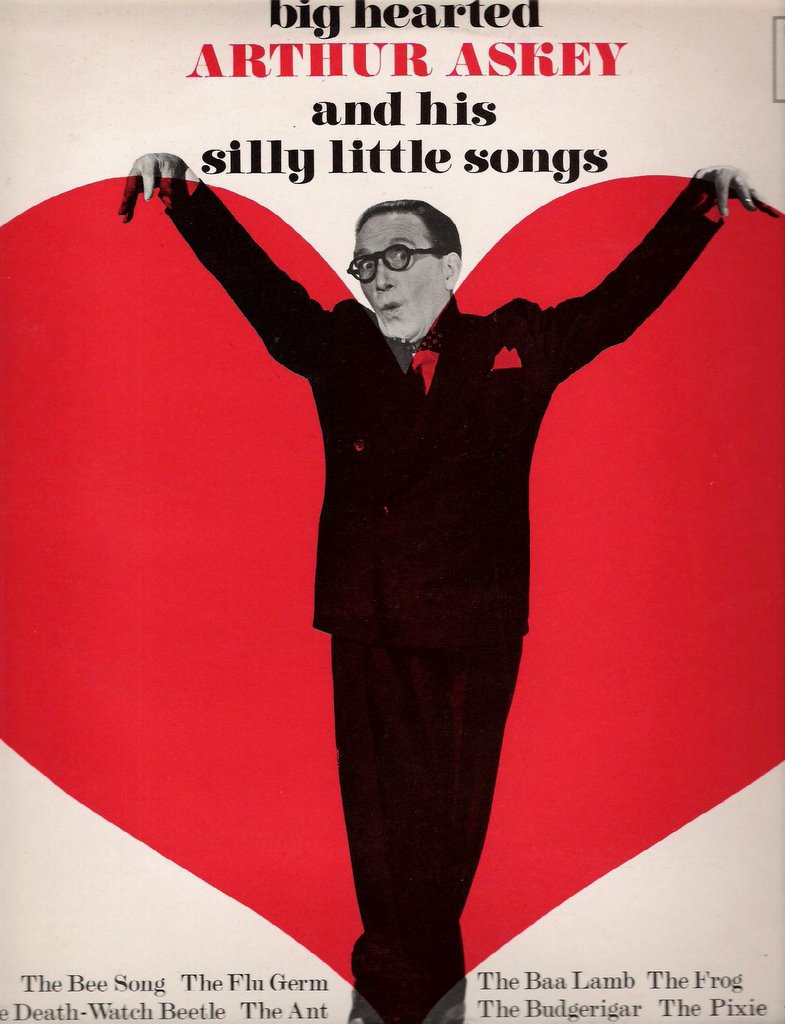
Arthur Askey


"Arthur Bowden Askey was born in Liverpool in 1900. He was very small at 5' 2" (1.6m) and wore distinctive horn rimmed glasses, with a breezy, smiling personality. He served in the forces in World War I and performed in army entertainments. His career began in the music halls, but he rose to stardom in 1938 through his role in the first radio sitcom, Bandwagon on BBC, prior to which radio comedy had consisted of broadcast standup routines. It had begun as a variety show, but had been unsuccessful until Askey and his partner, Richard Murdoch, took on a larger role in the writing. Askey's humour owed much to the playfulness of the characters he portrayed, his improvising and his use of catchphrases, as parodied by the Arthur Atkinson character in The Fast Show.
His catchphrases included "Hello playmates!" "I thank you" (pronounced "Ay-Thang-Yew") and "Move along the bus please."
During World War II, Askey starred in several Gainsborough Pictures comedy films, notably The Ghost Train (1941), "Charlie's Aunt," "I Thank You," "Back Room Boy," "King Arthur Was A Gentleman," "Miss London Ltd.," and "Bees in Paradise." When television arrived, he made the transition well, his first TV series was "Before Your Very Eyes!" (1952) named after another of his catchphrases. In 1957 writers Sid Colin and Talbot Rothwell revived the Bandwagon format for Living It Up, a series that reunited Askey and Murdoch after an absence of 18 years. He also made many stage appearances as a pantomime dame."

This LP on the budget Music For Pleasure label came out in the 60's I think though there is no date on it anywhere. It's mostly songs about animals and birds and one about a pixie.

Arthur Askey - The Death Watch Beetle

Arthur Askey - Chirrup

These Rapid Share fles are accessible by scrolling down the page and clicking on the FREE button. Wait at the bottom of the page for your file to appear ( about 20 seconds ).

Monday, November 14, 2005

Martin Winsor & Redd Sullivan


I found this in a charity shop last year. It comprises mostly of traditional folk songs but also two "novelty" songs included from the days of music hall.
Redd Sullivan and Martin Winsor started the Troubadour folk club in London in the 50's and many of the great names of folk played there. People like Bob Dylan, Tom Paxton, Shirley Collins, Martin Carthy etc.
Martin Winsor was born in Liverpool but moved to London where he became an authority on London folk-lore and dialect. He sang all kinds of songs from vaudeville , Irish folk songs, Scottish folk songs, sea shanties, pop songs and monologues. In fact anything that took his fancy became part of his extensive repertoire.
Redd Sullivan started singing in folk clubs in 1953 and well known on radio and television in the 60's when he appeared on Easy Beat, Roundabout, Country Meets Folk and Folk On Friday.
Also accompanying on this record are jeannie Steel, Alastair McDonald and Ian Campbell.

Winsor & Sullivan - I Wish I Could Shimmy Like My Sister Kate

Winsor & Sullivan - Beans, Bacon and Gravy

These Rapid Share files are accessible by scrolling down the page and clicking on the FREE button. Wait at the bottom of the page for your file to appear ( about 20 seconds ).

Sunday, November 13, 2005

Country Pie


My record collecting chum and devout Chas & Dave fan Jim Benson told me about this record a few years back. He says it's an early session by Chas & Dave during a spell of financial insecurity when they desperately needed the money.Chas Hodges plays guitar as well as piano on this session and Mick Burt is on Drums.Coincidentally I found a copy at a bootsale a couple of months later! Its on the cheap and cheerful Avenue label and released in 1971.

"Pianist Chas Hodges and guitarist Dave Peacock were widely experienced around the British rock scene of the 1960s and early 70s before teaming up with drummer Mick Burt (another much-travelled musician who had gone back to his original trade as a plumber) to form the group. Chas had worked with the legendary producer Joe Meek, backed Jerry Lee Lewis, played with Mike Berry and the Outlaws, along with Ritchie Blackmore, and also the highly respected Cliff Bennett and the Rebel Rousers, which had Burt on drums. He then joined Albert Lee’s cult band Heads Hands and Feet before playing with Dave and Albert in Black Claw. Dave had been equally active, Starting out in The Rolling Stones (no, not them!) in 1960. Spells with The Tumbleweeds, Mick Greenwood, Jerry Donaghue, and the above mentioned Black Claw followed prior to the pair coming together to go out on their own as Chas & Dave."

Find out more about Chas & Dave HERE.

Country Pie - Hillbilly Fever

Country Pie - Wrong Yo Yo

These Rapid Share files are accessible by scrolling down the page and clicking on the FREE button. Wait at the bottom of the page fro your file to appear ( about 20 seconds ).

Saturday, November 12, 2005

Jimmy Edwards


Another boot sale find from the Summer. Recorded live at the Pied Bull pub in Streatham in London in 1973.

"He was a portly, moustachioed figure who excelled in portraying minor authority figures such as Pa Glum on the hit BBC radio series Take It From Here and the headmaster of a down-at-heel boarding school in Whack-O! He was virtually born to play Shakespeare's burly knight, Sir John Falstaff but, sadly, never did. Now largely forgotten, despite being bigger in his heyday than Sid James, Frankie Howerd and Kenneth Williams combined, there are still a few who remember his talent to amuse.

Throughout his life he had nursed a passion for music, from his early days as a choirboy at St Paul's Cathedral to conducting the Royal Artillery band at the Albert Hall. His love was so intense he even incorporated this musicality into his act, first at Cambridge in the famous Footlights then, after a spell in the RAF, at London's infamous Windmill Theatre.

Whereas contemporaries such as Harry Secombe and Peter Sellers had a fine singing voice or could play the drums, Edwards created a whole act around the trombone. An instrument he had played in the Arimatheans Dance Band when a freshman at King's College, Cambridge, just before the outbreak of hostilities in 1939. This, and other brass instruments, would later be incorporated into a routine that would establish him as a seasoned performer on stage, screen and television, although lasting success on the big screen eluded him."

JImmy Edwards - I've Never Seen A Straight Banana

Jimmy Edwards - Drinking Song

These Rapid Share files are accessible by scrolling down the page and clicking on the FREE button. Wait at the bottom of the page fro your file to appear ( about 20 seconds ).

Friday, November 11, 2005

Richie Delamore


Not much to be found on the internet about this chap from the Bahamas whose LP I found some time ago at Brick Lane flea market so will quote the sleeve notes written in 1962.
" Many calypsos are so universally popular, and so widely sung, they lose their identity as to their origin, Delamore uniquely styles his songs in the manner of their original home.
The orchestra accompanying Richie is composed of musicians from every part of the Caribbean. Their able handling of Goombay music, native of the Bahamas, and most popular with the dancers, is subtly aided by it's Trinidadian members whose steel drum softness stresses the Goombay beat.
CARIB (the record label) is happy to record this twenty three year old artist who made his first album for RCA Victor at seventeen, and continues to grow in popularity."

Richie Delamore - The Monkey Song

Richie Delamore - Man Smart

These Rapid Share files are accessible by scrolling down the page and clicking on the FREE button. Wait at the bottom of the page for your file to appear ( about 20 seconds ).

The Palm Court Theatre Orchestra


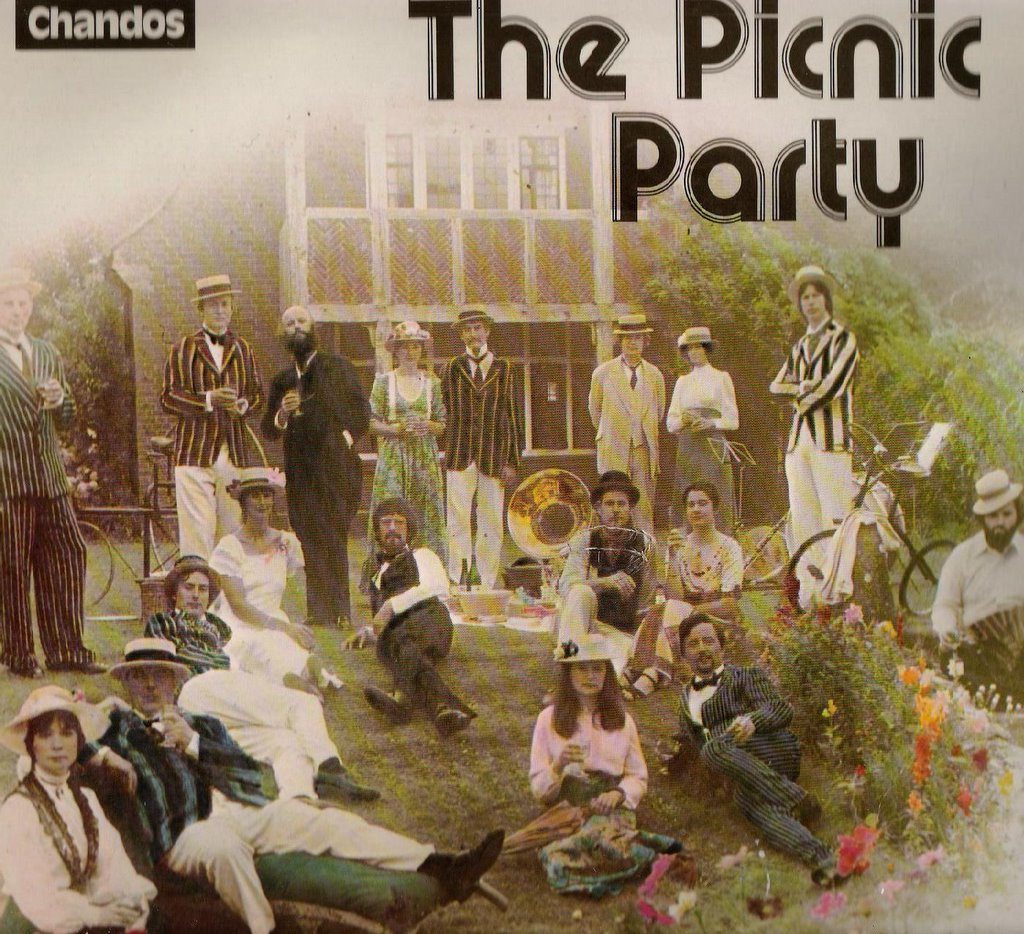
I found this LP at a boot sale last year. Sadly the gate-fold sleeve has been stuck together after being left in the rain so trying to read the sleeve notes is made quite difficult. No information about them could be gleaned from the internet so as far as can make out they were formed in 1978 by Mr. Anthony Godwin, bass clarinettist with the Bournemouth Symphony Orchestra. He had inherited a complete library of theatre music dating from 1880 to 1930 and it's from this that their repetoire is mainly drawn. They try and re-create the sound and atmostphere of those early days by using instruments of that era. For instance on the song "I'm Forever Blowing Bubbles" the soprano Linda Murray is accompanied by David Norton on the musical saw. Linda Murray also sings the other song featured here "Two Little Sausages" that I remember an old uncle of mine singing back in the 60's. This record was released in 1980 on the Chandos label.

The Palm Court Theatre Orch. - I'm Forever Blowing Bubbles

The Palm Court Theatre Orch. - Two Little Sausages

These Rapid Share files are accessible by scrolling down the page and clicking on the FREE button. Wait at the bottom of the page for your file to appear ( about 20 seconds ).

Wednesday, November 09, 2005

Eddie Lund


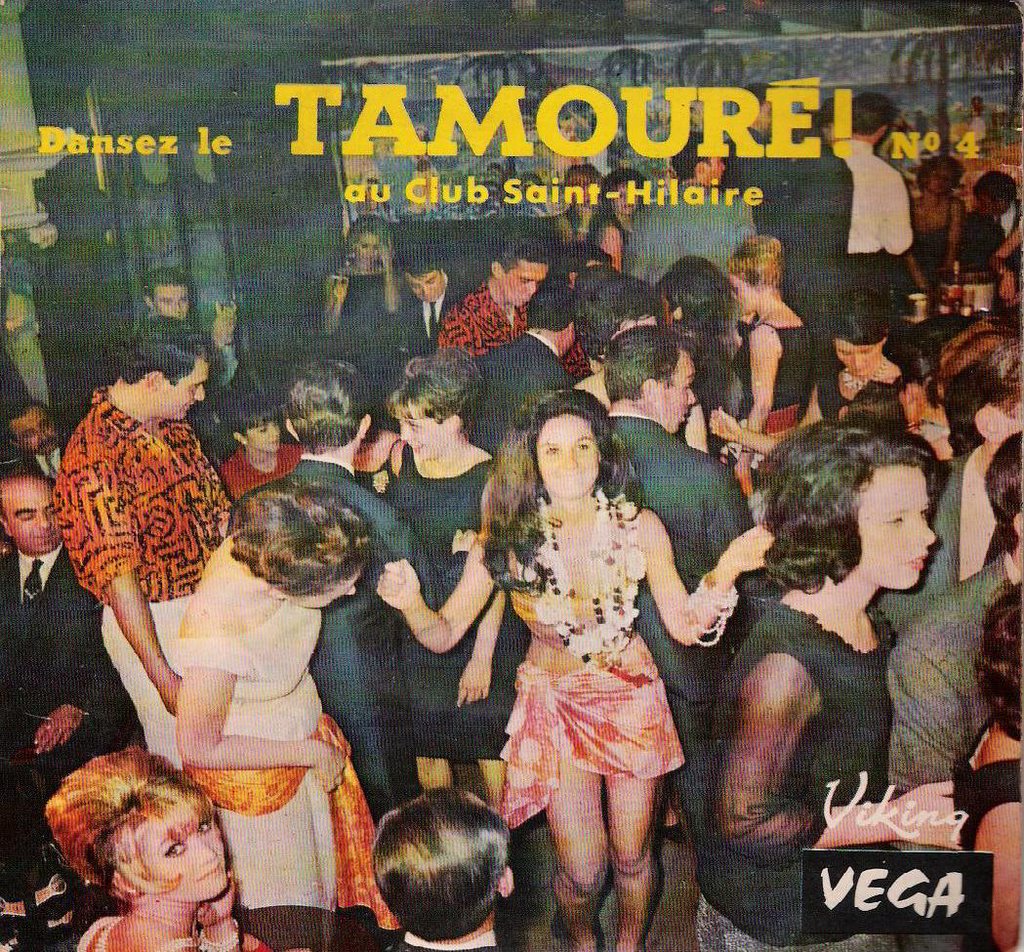
"And here the fourth TAMOURE which leaves enunmoisa sorrow... While waiting cinquieme and the continuation... I think that it will be the maeillor: Because, more rapid that a Caravel, TAHITI invaded Paris in one night... Because for this insane night of the Holy Club Hilaire the TAMOURE has had gane its letters of nobility and the friendship of French the Paris Whole... of the islands it became Parisian! And I am on malgre the cold and the gray of the winter the sun and the chaleureaux sky of the islands will regneront On bets this season..."

From the Babelfish translation of the french on the back of the cover of this 45 EP I found many years ago at Brick Lane flea market.

Tahitian folk music sounds not unlike Hawaiian folk music but played at the wrong speed!

A short biography about Eddie Lund HERE

Eddie Lund - Toku Tokaringa

Eddie Lund - Tau Mafatu

These Rapid Share files are accessible by scrolling down the page and clicking on the FREE button. Wait at the bottom of the page for your file to appear (about 20 seconds ).

Jona Lewie


"Jona Lewie (born John Lewis, March 14, 1947) is a British singer, songwriter and multi-instrumentalist.
After being a member of the amateur group Dramatis Personae while still at school, Lewis started in the music business as a session pianist, before forming the cult pub-rock band Brett Marvin and the Thunderbolts in the late 1960s. The group were a popular live act for several years, but their only mainstream hit single was Seaside Shuffle (1972), released under the one-off nom de disque Terry Dactyl and the Dinosaurs. Borrowing heavily from Mungo Jerry's 1970 chart-topper In The Summertime, Seaside Shuffle was an unashamedly commercial disc quite at odds with the Thunderbolts' usual style, and reached number 2 in the British singles chart.

However, Lewis looked likely to remain a one-hit wonder until he was signed up by Stiff Records in 1977. Following appearances on the Stiff package tours, he finally scored a solo hit with the humorous synthpop number, You'll Always Find Me in the Kitchen at Parties (1980) - (right) which made the British top 20. Although his next single Big Shot - Momentarily failed to make any impact, by the end of the year he was back in the charts with what became his biggest (and, to date, last) hit, Stop The Cavalry."

I found this 1974 single on the Sonet label back in the 80's and it's one of my favourites from that pre-punk era when "pub rock" and roots music was being touted as the next big thing.

Jona Lewie - Piggy Back Sue

Jona Lewie - Papa Don't Go

Tuesday, November 08, 2005

Max Miller


"Max Miller, Britain's top comedian in the 1930s, 1940s and 1950s, was born in Brighton, on the south coast of England in 1894. He excelled as a stand-up comic playing to large audiences in variety theatres, where his skill was such that he could hold an audience in the palm of his hand. He was master of the double entendre. He was mischievous, brash and quick-witted; he dressed over the top and he certainly lived up to the name the Cheeky Chappie. Even the poorest jokes got a laugh; his timing and delivery were legendary.

Max Miller left school at 12 and, after drifting from job to job, was called up by the army to serve in the First World War. During the war he acquired a taste of entertaining whilst performing to his fellow soldiers and, after the war, he pursued his show-business ambition starting with the occasional gig in pubs and halls. His first break came about when he joined a concert party on the Brighton sea front as a song and dance man. It was good training for the future and, from time to time, he would get the chance to tell a gag or two. The occasional booking in a London theatre followed this. His talent developed and soon he excelled as a solo performer writing his own material and composing his own songs. He rose to fame and, in the 1930s, reached the top of the bill playing all the major variety theatres including the most famous of them all, the London Palladium."

Find out more about Max Miller at this website dedicated to him HERE.

Max Miller - Mary From The Dairy

Max Miller - The Girls I Like

These Rapid Share files are accessible by scrolling down the page and clicking on the FREE button. Wait at the bottom of the page for your file to appear ( about 20 seconds ).

Monday, November 07, 2005

Jerry Colonna


"Jerry was born Gerardo Colonna in Boston on September 17, 1904, of Italian immigrant parents. As a little boy he admired his grandfather's enormous moustache ("You could see it from the back!") so much that he often painted one on his upper lip with axle grease. As soon as he could manage it, he grew a "baffi" of his own. Jerry was extremely gifted musically, and he loved jazz, beginning as a drummer then finding his metier in the trombone.
Moving to New York, he became a fixture in orchestras on major radio shows and in the top big bands. At one point he was named one of the five best trombonists in the country.
In 1930 he married Florence Purcell, a pretty flapper he met on a blind date in New York who turned out to be a Boston girl. They would stay in love for the next 56 years, adopting a baby son, Robert, in 1941.

In the late 30's Jerry's career took an unexpected turn. Comedian Minerva Pious, who played Mrs. Nussbaum on the Fred Allen show, loved Jerry's off-stage antics (he had received so many warnings from CBS for his pranks that he was finally put on perpetual notice. But they never actually fired him -- he was too good a trombonist). Pious decided that Fred Allen, a workaholic, needed a laugh, so she convinced him that Jerry was a brilliant operatic tenor and that Fred should give him an audition. When Jerry gave out with an ear-splitting "You're My Everything," Fred literally fell to the floor laughing and gave him a few guest spots on the show. These led to movie roles, and to the Kraft Music Hall, hosted by Bing Crosby. Bing took Minerva Pious' in-house joke to new lengths by announcing publicly that Giovanni Colonna, one of the greatest living baritones (!) would make his American radio debut on the show. After that broadcast, a number of classical music critics stopped talking to Bing altogether. The following summer, following an appearance at the Del Mar racetrack clubhouse, Jerry was approached by Bob Hope, and radio history was begun.
Jerry's recordings ("I have destroyed many beautiful songs.") are collected today by connoisseurs of madcap comedy. He is probably best known for his hysterical versions of "On The Road To Mandalay" and "Ebb Tide" (where most recordings of the latter began with the sounds of surf and seagulls, Colonna's also includes chickens)."

Jerry Colonna - Big Fat Minnie

Jerry Colonna - Bowzer

These Rapid Share files are accessible by scrolling down the page and clicking on the FREE button. Wait at the the bottom of the page for your file to appear ( about 20 seconds ).

Sunday, November 06, 2005

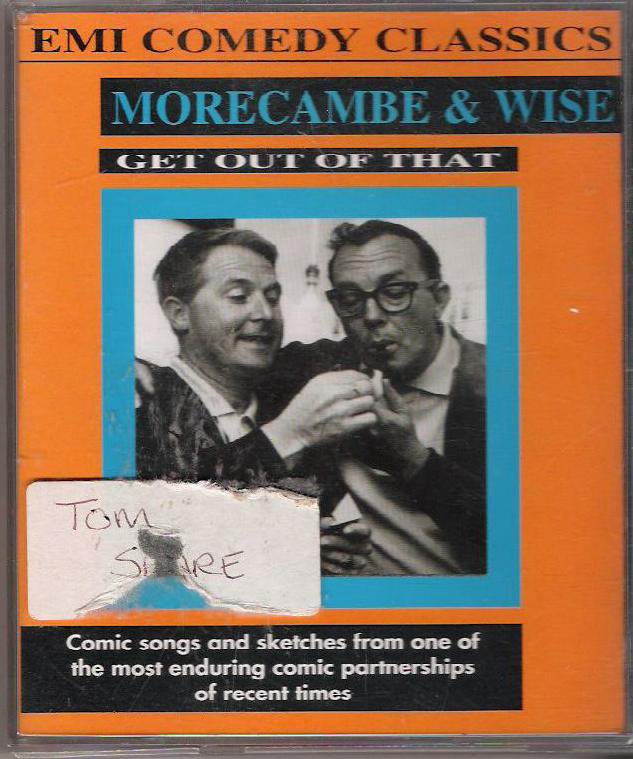
Morecambe and Wise


I found this double cassette yesterday at a rummage sale held by the Salvation Army in town. I think it was 50p. A lot of comic songs that I'd not heard before including the two uploaded here. They were very much a part of my television viewing as a child and teenager- something the whole family could laugh along with. The songs only hint at what they were like to see on TV. Eric's looks to camera alone were worth a thousand catch phrases.

"The theatrical/TV impresario Bernard Delfont gave Morecambe and Wise their own ITV show after the pair appeared frequently on the small-screen in 1960, notching up 12 spots on Val Parnell's Sunday Night At The London Palladium. Now the same network pitched them into a show of their own, teaming the comedians with another double-act, the writers Sid Green and Dick Hills. Sid and Dick, as they soon became known to the nation, also ventured out from behind-the-scenes to feature in front of the cameras with the comics.

The first ATV series - broadcast live each week from the Wood Green Empire in north London - was so successful that a second run was commissioned and given a Saturday primetime slot; from here on, after seven years of irregular TV appearances, Morecambe and Wise were firmly established as stars of the medium and Britain's best comedy double-act. Catchphrases soon developed, with Eric as the wag and Ernie the butt of all jokes: Morecambe would grab Wise by the throat and remark 'Get out of that!'; Morecambe would claim that Wise possessed 'short fat hairy legs'; the two comics, with their scriptwriters, sang a catchy comedy song that attained national fame, 'Boom Oo Yatta Ta Ta'; and every programme ended with the first line - but never more - of the age-old dirty joke 'There were these two old men sitting in deckchairs...'.

As a result of these marvellous ITV shows, Morecambe and Wise branched out into the cinema with three starring feature films, The Intelligence Men, That Riviera Touch and The Magnificent Two, released in 1964, 1966 and 1967 respectively."

Go HERE to find out more about Eric and Ernie.

Morecambe & Wise - Me, and My Shadow

Morecambe & Wise - The "B" Side

These Rapid Share files are accessible by scrolling down the page and clicking on the FREE button. Wait at the bottom of the page for your file to appear ( about 20 seconds ).

Friday, November 04, 2005

Cicely Courtneidge and Jack Hulbert


acourtnidgehulbert
Originally uploaded by wastedpapiers.

"Jack Hulbert was born on 24th April, 1892 at Ely in Cambridgeshire.  As an undergraduate at Cambridge he appeared in a number of shows and revues, both professional and amateur, until his last production, Cheer-oh! Cambridge (1913) was such a success that it moved to the Queen's Theatre in London.  There he met Cicely Courtneidge, the daughter of theatrical producer Robert Courtneidge, and they worked together for the first time in The Pearl Girl.
Cicely Courtneidge was born in Sydney on 1st April, 1893, while her father was on tour with his company.  After spending some years of her childhood in Australia she moved permanently to Britain in 1907.  Her first stage appearance was in one of her father's productions at Manchester in 1901, although her acting career didn't begin in earnest until The Arcadians (Shaftesbury Theatre, 1909) which ran for 809 performancesJack and Cicely were married in 1916, and enjoyed huge success as a cohesive unit in revues and musicals in London.

Their film careers began from the early 'thirties with comic and musical vehicles such as The Ghost Train, Falling For You and Jack's the Boy.  Throughout that decade they were among the top two or three acts both on stage and screen, rivalled only in the latter by Tom Walls' farces and Jessie Matthews' musical-comedies."


This World Record Club LP is from 1968. "Flies Crawl Up The Window" is from the film "Jack's The Boy" (1932) and "If I Had Napoleon's Hat" is from the film "Aunt Sally" ( 1933 ).

Find out more about Jack and Cicely HERE.

Jack Hulbert - The Flies Crawl Up The Window

Cicely Courtneidge - If I Had Napoleon's Hat

These Rapid Share files are accessible by scrolling down the page and clicking on the FREE button. Wait at the bottom of the page for your file to appear ( about 20 seconds ).

Wednesday, November 02, 2005

Rupert Clemendore


jazz trinidad
Originally uploaded by wastedpapiers.
Another of those mysterious records from Brick Lane flea market I think that caught my eye. Though the sleeve art is pretty subdued - no palm trees and exotic looking dusky maidens just the words "Patois Jazz" is enough to make me wonder what this might sound like. I must admit the general ambience of the tunes here fall into the cocktail lounge variety. Here is the whole of side two for your listening pleasure..

The sleeve notes by Red Camp say-
"Who else but Rupert would keep the same off-beat two measures going for three and a half minutes under his own vocal? What's more, almost everyone so far likes it; and that's what's so disturbing. Neither of the two vocals is sung. The one with the syncopated perpetual motion is a rather involved story called "Clem's Confusion" relating various adventures with a kind of international harem which descend on innocent him whilst walking down Park Street. Strictly speaking, this is more of a recitation than a song - but not to be confused with the school room type.
What Rupert does with his voice on "Chop Suey Mambo"(sic), the other one, must remain completely unclassified."

Charlie Drake


acharliedrake
Originally uploaded by wastedpapiers.
"The diminutive Charlie Drake, who had a fine line in slapstick and pathos and a catch-cry of "Hello my darlings", featured in this BBC comedy series (which followed his successful 1959 - 1960 Charlie Drake program).

The Charlie Drake Show was scripted by Drake and Richard Waring, and produced by Ronald Marsh. It featured slapstick-style sketches and situations which brought out the pathos and genius of this much underrated comedian.

Meanwhile on ITV, Charlie featured in a comedy-music series (also called The Charlie Drake Show) in 1963 under producer Colin Clews with scripts by Drake and Lewis Schwarz. A very young Olivia Hussey also appeared in some of the routines.

Drake also starred in The Worker from 1965 - 1970 and then in the early 70's had a show called Slapstick and Old Lace in which he involved viewers in singalongs and madcap sketches in a Vaudeville style (7 x 30 minute episodes).

Charlie Drake was no stranger to accidents, but his narrowest escape was in the first of a new series entitled Bingo Madness. The plot called for Drake to be hurled through a bookcase by two villains, feign unconsciousness, fall to the floor and then be picked up and thrown out of a window.

The stunt nearly ended in tragedy as Drake really was knocked unconscious when he came through the bookcase. It was a live show and the actors, not realize anything was amiss, carried on, picking him up and bundling him through the window. Drake's head crashed against a stage weight.

After the initial applause, there was a hush as everyone realized something was wrong. The director blacked out the screen as millions of people witnessed what could have been the death of Charlie Drake. He lay in a coma for days, and the rest of the series was cancelled."

Charlie also had a successful recording career throughout the 50's and 60's- two of his biggest hits being "My Boomerang Won't Come Back" and "Please Mr Custer".


Charlie Drake - I've Lost The End Of My Yodel

Charlie Drake - Starkle Starkle Little Twink

These Rapid Share flies are accessible by scrolling down the page and clicking on the FREE button. Wait at the bottom of the page fro your file to appear (about 20 seconds ).

Monday, October 31, 2005

Don Juan


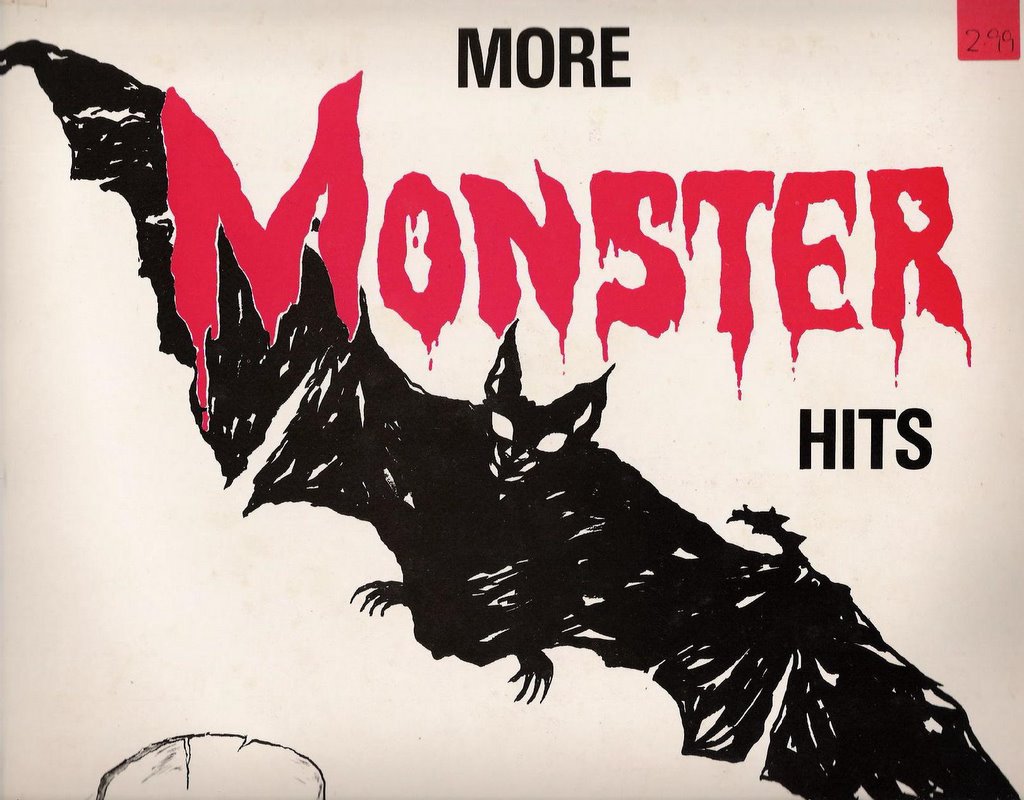
Another mystery disc for Halloween. Found at a boot sale last year for a few pence. It sounds a bit like the Barron Knights for those firmiliar with their work. Calling it "Monster Hits" is quite funny as they obviously never had any or anything approaching a hit. Nothing can be found about them on the internet. Bullseye seems to be a label based in the North East of England and run on a shoe string judging by the sleeve art! Other tracks include versions of Cecelia, Take These Chains From My Heart and Old Shep. The whole thing seems to have been masterminded by someone called Ray Banks who has even signed the back of the sleeve.

Don Juan - Dracula

Don Juan - Ghost Riders In The Sky

These Rapid Share files are accessible by scrolling down the page and clicking on the FREE button. Wait at the bottom of the page for your file to appear (about 20 seconds ).

Sunday, October 30, 2005

King Horror


Not much is known about King Horror despite browsing various search engines. This very worn and scratchy LP on the Trojan label is an old favourite of mine featuring twelve "ska" and "rock steady" stomping tunes from the late 60's and early 70's. Other tracks include The Upsetters, Nora Dean and the Prophets. These two tracks though stand out , being perfect for Halloween.

King Horror - Loch Ness Monster

King Horror - Dracula Prince of Darkness

These Rapid Share files are accessible by scrolling down the page and clicking on the FREE button. Wait at the bottom of the page for your file to appear (about 20 seconds ).

Bobby 'Boris' Pickett


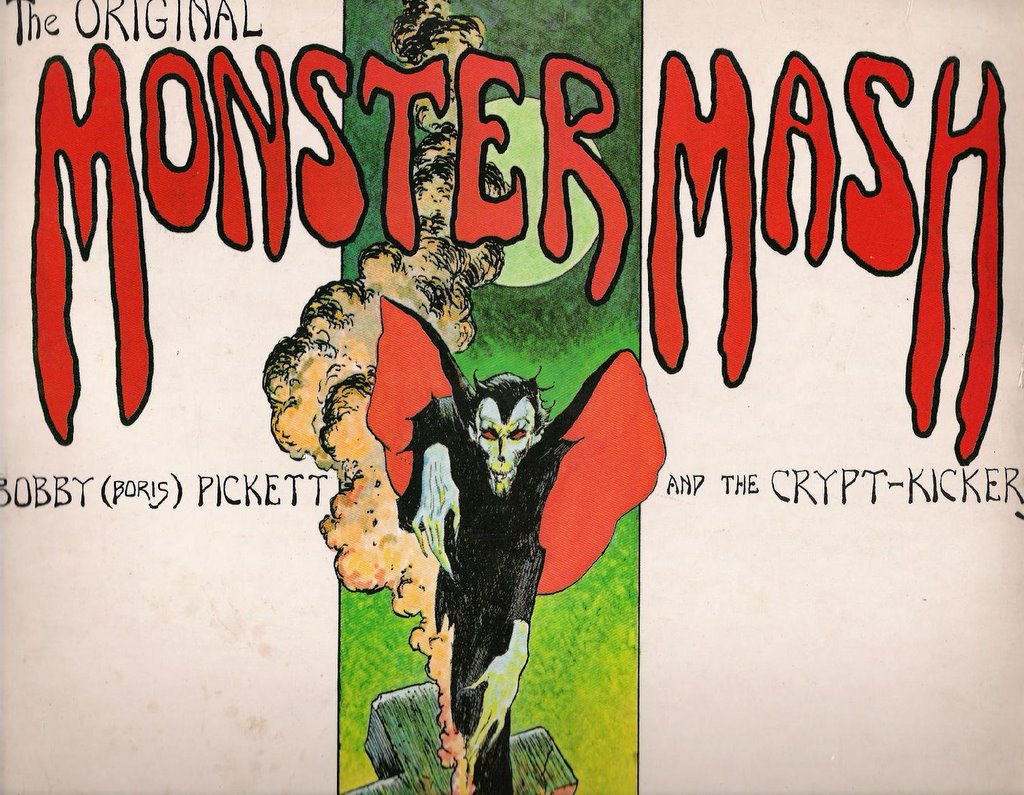
"Born Robert George Pickett on February 11th, 1940, Bobby was fascinated by horror movies as a child. By the time he was nine, he started to imitate Boris Karloff, whom he would see at the movie theatre that his father managed in Somerville, Massachusetts.

Following his discharge from the army in 1961, he moved to Los Angeles to try his hand at show business. As a member of a vocal group called "The Cordials" , he would do impersonations between songs, often using his impression of Karloff, which was a crowd favourite. His friend and fellow band mate, Lenny Capizi suggested that the pair try to take advantage of the novelty song craze that was happening in the early sixties by writing a tune around Bobby's Karloff imitation. It took nearly a year after the suggestion to get around to it, but when they did, the two worked out "The Monster Mash" in about an hour and a half.

To record their song, they approached producer Gary Paxton, who sang The Hollywood Argyles' hit, "Alley Oop". Pickett and Paxton, along with Leon Russell, Johnny McCrae and Rickie Page recorded the tune, and when the session was done, it was Paxton who came up with the idea of putting "Bobby 'Boris' Pickett and the Cryptkickers", on the record's label. Pickett also added all his own sound sound effects: the creaky door opening is a nail being pulled from a piece of wood, the boiling cauldron is Pickett blowing bubbles into a cup of water with a straw and the chains are him moving chains up and down. The song was recorded in just one take.

Gary Paxton took the tape to four major labels, who all turned it down. Not discouraged, he had a thousand copies pressed himself and started delivering them to radio stations across California. Soon, the Monster Mash was getting airplay and London Records, who had rejected the song earlier, called Paxton to sign a deal.

Eight weeks later, on October 20, 1962, the record hit number one, just in time for Halloween."

Bobby 'Boris' Pickett - Transylvanian Twist

Bobby 'Boris' Pickett - Sinister Stomp

These Rapid Share files are accessible by scrolling down the page and clicking on the FREE button. Wait at the bottom of the page for your file to appear (about 20 seconds ).

Friday, October 28, 2005

Prince Buster


prince buster
Originally uploaded by wastedpapiers.
I can't remember where I found this but always had a soft spot for "ska" music and Prince Buster was one of the pioneers back in the 60's. Very much influenced by New Orleans R&B and jazz. Rico Rodriguez, who features on the "Soul of Africa" instrumental once said his heroes were people like Gene Ammons, Smiley Lewis and Dave Bartholemew.

"Jamaica was in the throes of a new social revolution when Prince Buster Campbell was born on May 24, 1938. Bustemante had declared an island wide strike and excitement was at it's height.
His father was a railroad worker and, at the tender age of 4, young prince Buster (named after the great Jamaican leader) began his primary education at the Central Branch School in Kingston. Some years later when he was attending St. Anne's School he became interested in professional boxing and spent most of his early years in the booths.
Match or workout over he would stray over Kingston looking for music- and finding it. Night after night, together with a small "spasm" band consisting of friends with sticks and pans for drums, he would sing through the warm tropical nights on the corner of Luke Lane and Drummond Street."


Part of sleeve notes by James Asman.

Rico Rodriguez - Soul of Africa

Prince Buster - Run Man Run

These Rapid Share files are accessible by scrolling down the page and clicking on the FREE button. Wait at the bottom of the page fro your file to appear (about 20 seconds )>

Thursday, October 27, 2005

'Owdham' Edge


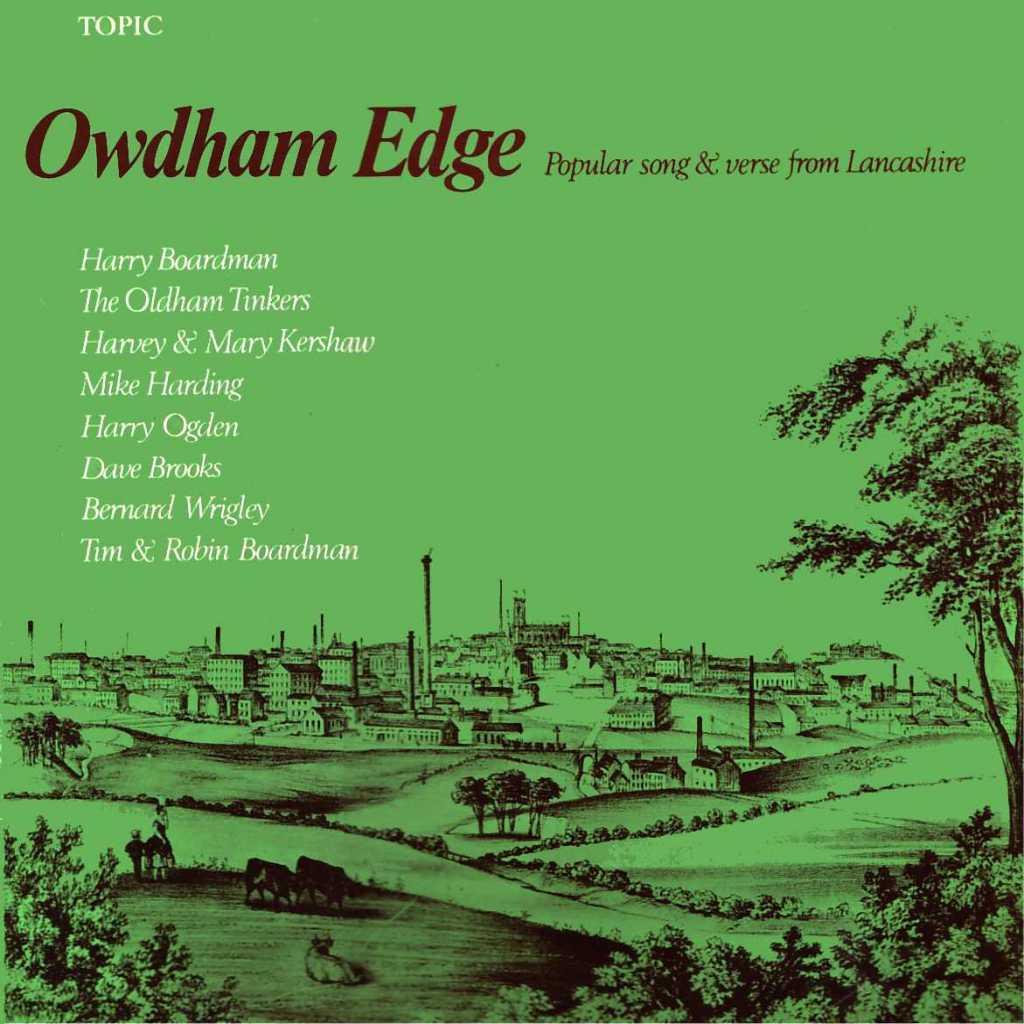
A great LP on Topic that I found in my local branch of Oxfam for £2.99. Oxfam is notorious for charging high prices for their records as they have "experts" who go through "Record Collector" lists and quote the highest valuation possible, despite the record's condition. I was happy to pay this though as the disc was in perfect condition and has some wonderful old songs by a variety of artists from Lancashire. The Oldham Tinkers in particular are favourites of mine - having seen them play live at Northwich Memorial Hall a few years back. Bernard Wrigley was also on the bill that night and was very funny - his patter taking up most of his performance with just a few songs sprinkled in between. To see him wrestling with a bass concertina is something I shall never forget!
Heres what it says on the Lp sleeve-

"From the start of the post-war folk song revival , particular regions of England were at the forefront because of their abundance of material and the number of singers who were determined to revive and popularise their local songs and stories. Apart from the folk songs by their strictest definition, urban industrial songs and localised music-hall songs, were all absorbed into the repertories of the mainly young revival singers."

Bernard Wrigley - Our Bill

The Oldham Tinkers - 'Owdham' Edge

These Rapid Share files are accessible by scrolling down the page and clicking on the FREE button. Wait at the bottom of the page fro your file to appear (about 20 seconds ).

Tuesday, October 25, 2005

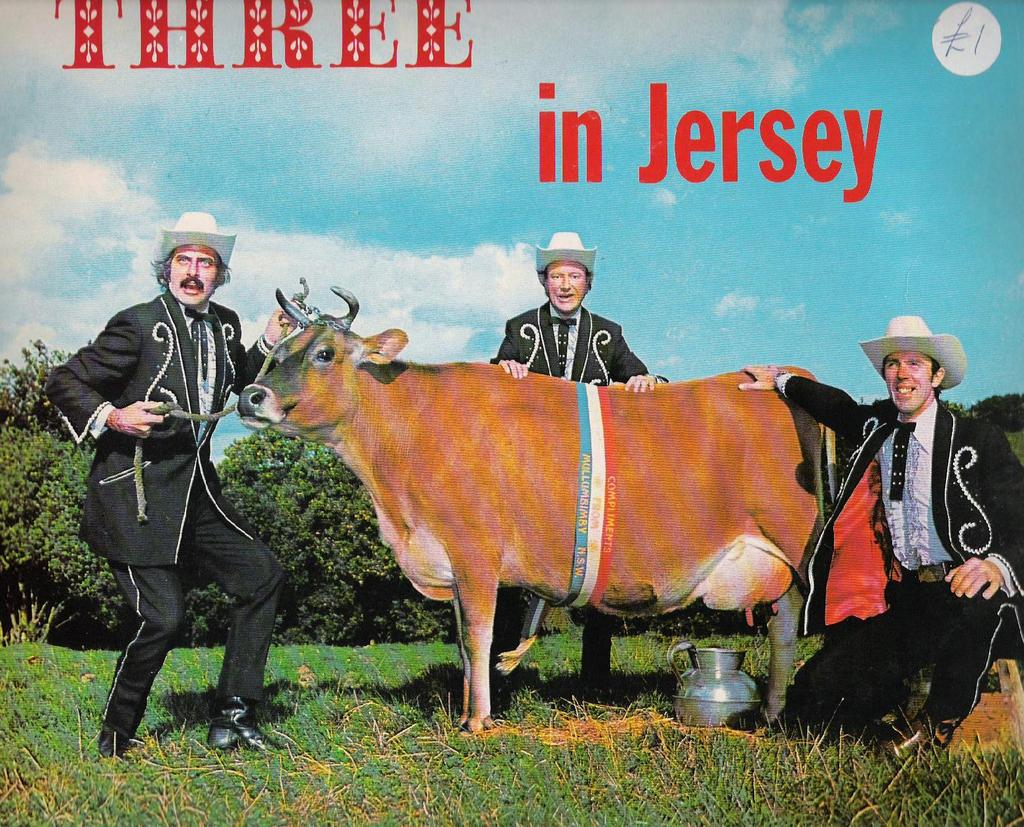
The Original Tennesse Three


An obscurity now by the "undisputed kings of the C&W scene in Jersey" , the Original Tennessee Three! Another of those daft sleeve designs that leap out at you from the piles of Mantovani, Russ Conway and Gilbert & Sullivan records one has to sift through to find something remotely interesting. Mostly this is pretty ordinairy fare but a couple of novelty songs stand out which I have uploaded here.
The cow on the autographed sleeve is none other than "Dunedin's Moonlight", Supreme Champion in Jersey in 1973, about the time this record was made I imagine.

O.T.T. - May The Bird Of Paradise Fly Up Your Nose

O.T.T. - We Had Some Chickens

These Rapid Share files are accessible by scrolling down to the bottom of the page and clicking on the FREE button. Wait at the bottom of the page for your file to appear (about 20 seconds ).

Sunday, October 23, 2005

Ronnie Hawkins


"Ronnie Hawkins, born January 10, 1935 in Huntsville, Arkansas, United States, is a pioneering rock and roll musician. (He should not be confused with Canadian indie rock singer-songwriter Ron Hawkins.)
At the age of nine, his family moved to nearby Fayetteville. After graduating from high school, he studied physical education at the University of Arkansas where he formed his first band, "The Hawks," touring with them throughout Arkansas, Oklahoma and Missouri. His band helped launch such talented artists as Levon Helm, Rick Danko and Robbie Robertson. Hawkins owned and operated the Rockwood Club in Fayetteville where some of Rock music's earliest pioneers came to play including Jerry Lee Lewis, Carl Perkins, Roy Orbison and Conway Twitty.
Known for his early work with "The Band," he is most often referred to as Rompin' Ronnie Hawkins or "The Hawk." In 1958, he went to Canada where he made Peterborough, Ontario his permanent home. For the past 40 years, he been performing all over North America and has recorded over 25 albums. His best-known hits are "Forty Days" and "Mary Lou." His 1984 LP, 'Making It Again', garnered him a Juno Award as Canada's best Country Male Vocalist. Playing with The Band, Hawkins helped tear down the Berlin Wall in 1989 and performed at President Bill Clinton's 1992 inaugural party. In addition to his music, he has also become an accomplished actor hosting his own television show "Honky Tonk" in the early 1980s and appearing in such films as Heaven's Gate with his friend Kris Kristofferson and Hello, Mary Lou: Prom Night II."

I loved "Who Do You Love" the first time I heard it, played on a friends Dansette record player back in the early 60's. It must have the most blood curdling screams in rock 'n roll on it and some of the greatest guitar licks by a very young Robbie Robertson who was to find fame later in The Band." Horace" too is very memorable for its humour and crazy lyrics. In fact the whole LP on Roulette (1970) of re-issues from the 50's is great.

More about Ronnie Hawkins at his official website which you can find HERE.

Ronnie Hawkins - Who Do You Love

Ronnie Hawkins - Horace

These Rapid Share files are accessible by scrolling down the page and clicking on the FREE button. Wait at the bottom of the page for your file to appear (about 20 seconds ).

Friday, October 21, 2005

Al Jolson


"Al Jolson (born Asa Yoelson in Seredzius, Lithuania on May 26, 1886 – October 23, 1950) was an American singer and the son of Jewish immigrants. He was one of the most popular entertainers of the 20th century.
The son of a Jewish cantor, Jolson became a popular singer in New York City in 1898, and gradually developed the key elements of his performance: blackface makeup; exuberant gestures;operatic-style singing; whistling and directly addressing his audience.
By 1911, he had parlayed a supporting appearance in the Broadway musical La Belle Paree into a starring role. He began recording and was soon internationally famous for his extraordinary stage presence and personal rapport with audiences. His Broadway career is unmatched for length and popularity, having spanned close to 30 years (1911-1940). However, he is best known today for his appearance in one of the first "talkies" The Jazz Singer, the first feature film with sound to enjoy wide commercial success, in 1927. In The Jazz Singer Jolson performed the song "Mammy," which became a racial slur describing a matronly black woman. In truth, Jolson's singing was never jazz, indeed his style remained forever rooted in the vaudeville stage at the turn of 20th century."

You can read more about Al Jolson HERE.

Al Jolson - Who Played Polka With Pochahontos

Al Jolson - I'll Stand Underneath Your Window and Whistle

These Rapid Share files are accessible by scrolling down the page and clicking on the FREE button. Wait at the bottom of the page for your file to appear (about 20 seconds ).

Wednesday, October 19, 2005

Frank Sidebottom


"Frank Sidebottom: Nothing more than Chris Sievey wearing a paper maché head. He was created by Sievey as the Freshies' number one fan (well, The Freshies' only fan), and managed to get a career out of being the band's only fan. Ironic that the Freshies' fan would be more famous than the Freshies themselves.

Frank once sold a video by mail-order called "Frank's Home Movie Video". He reportedly recorded a personalised intro on each video ordered, and coloured all the sleeves in by hand!

He had many songs released, although all of them are near impossible to get hold of. For example, he released a couple of "Timperley" EPs, where all the tracks contained, er, "Timperley" (it was where he lived, or something). Yes: all of them. Every single one. Other famous releases included "Frank Sings The Magic Of Freddie Mercury and Queen", and the 12" version called "Frank Sings The Magic Of Freddie Mercury And Queen And Kylie Minogue (you know; her off 'Neighbours')". The most memorable tracks being "Frank Gordon" (a version of "Flash Gordon"), and "I Am The Champion" (a version of "We Are The Champions"). He also released a single entitled "Panic by The Sidebottoms", containing no less than nine different mixes of the same song (one of which was the "Demon Axx Warriors from Oblivion Mix"). And John Kettley wasn't the only BBC weatherman to have a song written about him, as Ian McCaskill's name was put to Frank's imaginatively-titled "Ian McCaskill". And we haven't even mentioned "Best of the Answering Machine", "6 All-time Great Footballing Chants (including 'Nil-Nil', 'Wemberley', and 'There's Only One Referee')" or "Frank checks into Auntie Edie's", yet. Or the album "B******s To Christmas"."

Frank Sidebottom - Timperley Blues

Frank Sidebottom - Firm Favourite Ads

These Rapid Share files are accessible by scrolling down the page and clicking on the FREE button. Wait atthe bottom of the page for your file to appear (about 20 seconds ).

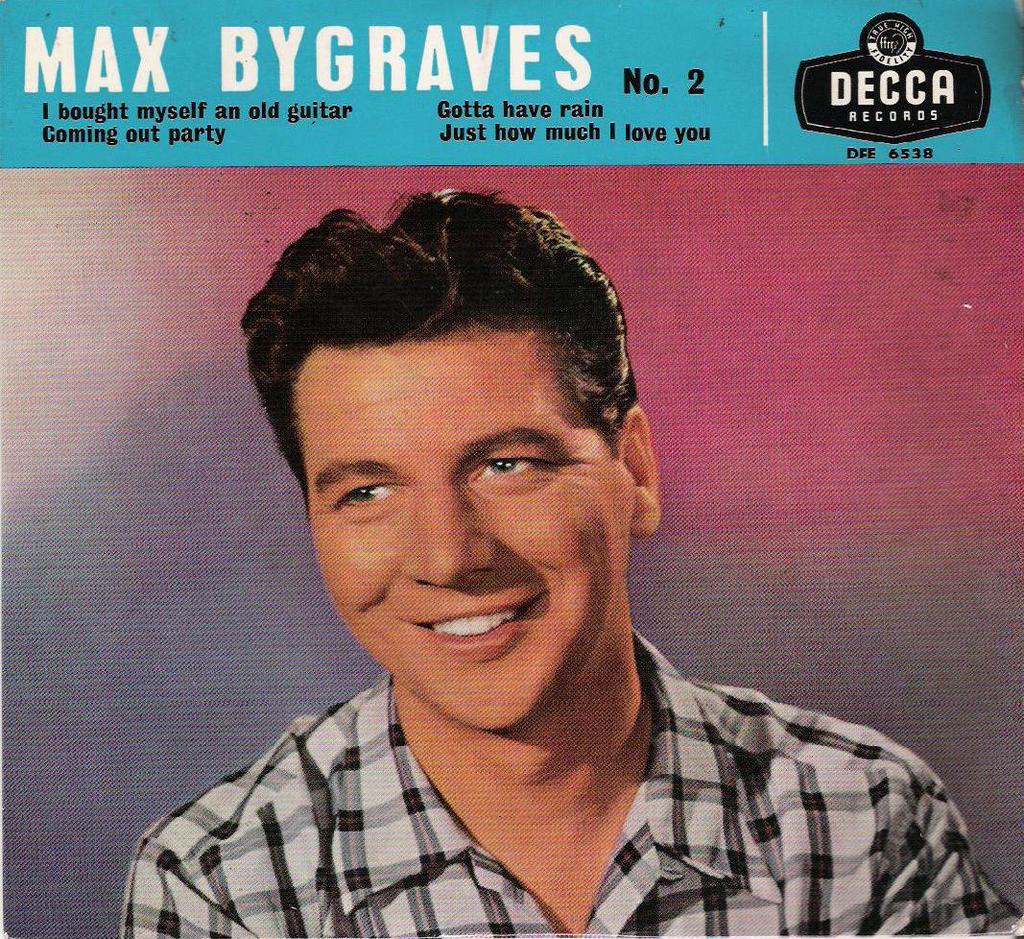
Max Bygraves


"b. Walter Bygraves, 16 October 1922, London, England. Performing as a soloist in his school choir and employing Max Miller impressions in the RAF, with music hall dates in the late '40s, led Bygraves quickly to his recording debut and first Royal Command Performance in 1950. His debut record, with the Carrol Gibbons Band, contained impressions of Al Jolson, and was followed by a string of novelty hits through the '50s such as, Cowpuncher's Cantata, Heart Of My Heart, Gilly Gilly Ossenfeffer Katzenellen Bogen By The Sea, Meet Me On The Corner, You Need Hands/Tulips From Amsterdam, Jingle Bell Rock and Fings Ain't Wot They Used To Be. On the popular BBC radio show, EDUCATING ARCHIE, scripted by comedian Eric Sykes, he gave a receptive nation catch phrases like, ‘a good idea son!’ and ‘bighead!’. Bygraves became enormously popular on stage and television with his clever mix of song and patter, defying the dramatic changes in music and entertainment taking place in the '60s. In the early '70s with Pye Records musical director Cyril Stapleton and the Tony Mansell Singers, Bygraves recorded an album of standard songs in medley form, called SING ALONG WITH MAX. It was the first of an amazingly successful series for which he has now won over 30 Gold Discs. Surprisingly, he has never adapted his ‘song and dance’ image to films, although he has played several, mainly dramatic, roles to substantial critical acclaim, including A CRY FROM THE STREETS and SPARE THE ROD. As early as the late '50s he formed his own music publishing company, Lakeview Music. It was intended to publish his own songs, like You Need Hands, however he bought the publishing rights to a 16 song show score for £350 because he liked one of the numbers. The show was Lionel Bart's OLIVER, and in the '80s he sold the rights to Essex Music for a quarter of a million pounds."

I found this old four track EP today in Chester's branch of what used to be the Spastic Society until they changed it to a name I can never remember. I've always avoided Max Bygraves like the plague but the youthful sleeve photo and the titles of the songs convinced me I should part with my 75p.

Max Bygraves - I Bought Myself An Old Guitar

Max Bygraves - Coming Out Party

These Rapid Share files are accessible by scrolling down the page and clicking on the FREE button. Wait at the bottom of the page for your file to appear (about 20 seconds ).

Saturday, October 15, 2005

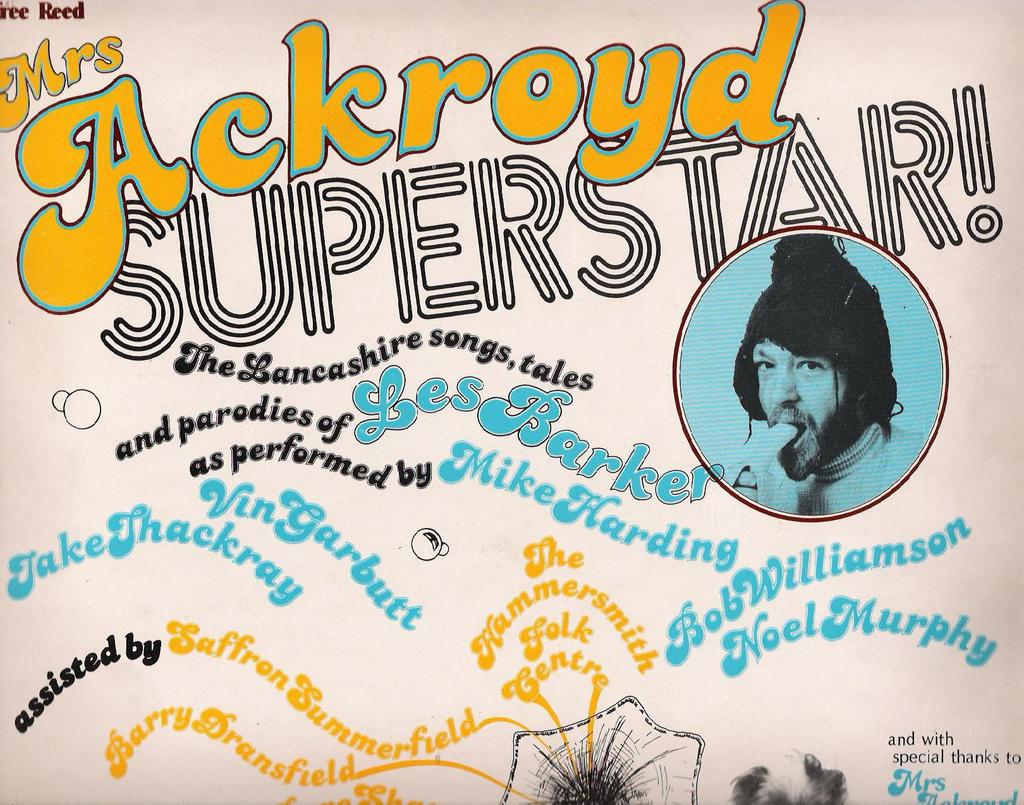
Mrs. Ackroyd


Mrs.Acroyd is actually a dog and according to poet and songwriter Les Barker wrote several books of poems with Les's help back on the 70's and 80's. This LP "Mrs Ackroyd - Superstar" in on the Free Reed label from 1977.
Here's a excerpt from the liner notes by Les-
"I was born at an early age in Manchester and quickly became a mediocre left back in a Church of England youth club football team, which consisted of nine catholics, an agnostic and a police cadet who got sent off every week for shouting obscenities at referee's daughters. He is now a big fat constable and kept in a glass case on the Golden Mile at Blackpool. You put your money in the slot and he laughs his head off at you for it."

Anyway, on this great record are various people including Les doing versions of Les's songs. You can find out more about Les Barker and the Mrs. Ackroyd Band HERE.

Les Barker - Holland's Meat Pies

Bob Williamson - Kippers For Tea

These Rapid Share files are accessible by scrolling down the page and clicking on the FREE button. Wait at the bottom of the page for your file to appear (about 20 seconds).

Thursday, October 13, 2005

The Chimes Family In The Ukraine


"The Chimes Family is a leading harmonic group with an inimitable style. It consists of Michael Chimes and his three sons, Gilbert, Craig and Michael Jr.
Michael Snr. at an early age was a member of the "Borrah Minevitch's Harmonica Rascals"> he has appeared in leading TV shows such as Ed Sullivan, Perry Como, Garry Moore and has been featured again and again on every major radio and TV network. His harmonica can be detected in most of the leading commercials. he has featured with prominent artists such as Harry Belafonte, Robert Russell Bennett, Keely Smith, the New Christy Minstrels, Johnnny Mathis and The Weavers and too many others to be listed.
The Three sons joiedn the act at the age of 6. This highly unusual family group has played all over the world and appeared in every major city in Canada."

This LP on the Request label was found at a boot sale recently. It reminds me of those old variety acts that you don't see anymore like the Morton Frazer Hamonica Gang and the The Three Ginx. Every week on the London Palladium they always seemed to have a juggler, and ventriloquist and a harmonica band!

The Chimes Family - Don't Wink You Girls

The Chimes Family - Over The Bridge

These Rapid Share files are accessible by scrolling down the page and clicking on the FREE button. Wait at the bottom of the page for your file to appear (about 20 seconds).

Bernard Cribbins


"Born in 1928, in Lancashire, Bernard Cribbins is one of the best known children's entertainers in the UK. He has been an actor since the age of 14, when he became a student player with his local repertory company.
By the 1950s, Cribbins had become a star of the London stage, featuring in his own revue. It wasn't until the 1960s, however, until he attained true public acclaim, appearing in a string of successful films and had musical success with a number of novelty records like Right Said Fred and Hole in the Ground. He is better known today for voice over work (The Wombles, as well as numerous advertisements) and his appearances on Noel's House Party on BBC1."

Bernard Cribbins - One Man Band

Bernard Cribbins - Winkle Picker Shoes

These Rapid Share files are accessible by scrolling down the page and clicking on the FREE button. Wait at the bottom of the page fro your file to appear (about 20 seconds).

Monday, October 10, 2005

Mickey Katz


Another of those record labels that jump right out at you when you are sifting through piles of Mantovani, Mrs.Mills and Madonna records. Thankfully the songs are as weird and wonderful as the sleeve photo!
Here's what it says on the sleeve blurb-

"The difference between being slipped a Mickey Finn and a Mickey Katz is that you get knocked out in different ways. And in the latter case you keep coming back for more. Well, here's that more: a long playing, high fidelity "mitzeah."
Mickey's approach to a song is simple. He grabs the nation's favourites and gives them the stamp of his unique and abundant wit. The poor unsuspecting tune suddenly finds itself with more twists than a barrel of pretzels and more spice than a plate of pastrami. The famous doggie in the window turns out to be a pickle. It's no longer stars you shouldn't let get in your eyes, it's "schmaltz". And the wheel of fortune , alas, is nothing more than a "schlemiel".
Mickey was a musician before he was a comedian, and he played with several of the country's best bands before winning fame as the top dialectitian in Spike Jones' outfit. Now for his records and shows he hires the finest studio musicians in Hollywood, determined that his material shall not only be funny but musically solid."

For more about Mickey Katz and other great music go HERE.

Mickey Katz - The Pickle In The Window

Mickey Katz - Don't let The Schmaltz Get In Your Eyes

These Rapid Share files are accessible by scrolling down the page and clicking on the FREE button. Wait at the bottom of the page for your file to appear (about 20 seconds).
Tex Ritter


"Born Woodard Maurice Ritter on January 12, 1905, "Tex" was the son of James Everett and Elizabeth (Matthews) Ritter of Murvaul, Texas, in Panola County. He died in Nashville, Tennessee on January 2, 1974. He became one of the best-known singing cowboys in western movies. Tex's youngest son, John Ritter, became a popular TV star in the '70s and '80s.

Tex lived with his sister while growing up in the Jefferson County town of Nederland. He graduated from South Park High in nearby Beaumont. While attending the University of Texas from 1922 to 1927, including a year in law school, Tex found his calling in the Men's Glee Club. He was greatly influenced by the folk music knowledge of, and cowboy folksongs collected by UT professors J. Frank Dobie, Oscar J. Fox, and John A. Lomax.

After a brief enrollment at Northwestern University, Ritter began his singing career at radio station KPRC in Houston in 1929. In 1930, he toured with a band throughout the South and Midwest. The following year, he joined the New York Theater Guild and appeared in Green Grow the Lilacs (the play that later served as the basis for the musical Oklahoma). In 1932, he became a featured singer in the Madison Square Garden Rodeo, which further established his "singing cowboy" reputation. He soon landed a starring role in "The Lone Star Rangers," one of the first western radio programs in New York."

More about Tex Ritter HERE.

Tex Ritter - Rye Whiskey

Tex Ritter - Blood On The Saddle

These Rapid Share files are accessible by scrolling down and clicking on the FREE button. Wait at the bottom of the page for your file to appear (about 20 seconds).
Wednesday, October 05, 2005

Danny (Kalauawa) Stewart


Another of those records you just have to buy for the sleeve alone. The music is quite good too despite playing safely in that middle of the road type Hawaiian "easy listening" vein that fans of this music seemt to love. I was once a member of the Hawaiian Tape Club which passed around compilations of exotic south sea island music and most of it was very dull - even duller than this! I sent round a few "novelty" tiki tapes to liven things up a bit but they met with scant response from the mostly fuddy-duddy members.
Heres a quote from the LP sleeve-

"The forces set in motion by the missionaries have made themsleves felt very strongly in the songs that Hawaii now sends out to the world. In the first place there is the effect of a people quite recently pagan very quickly civilised and nourishing beneath the surface an engaging naivete which gives to Hawaiian songs something of the quality of the calypso. But there is also a more direct influence, for the form of Hawaiian music is not ancient in origin but has been evolved and adapted over the last century. Even the Hawaiian guitar and ukulele are imported commodities, though the habit of running the fingers over the strings to give a singing intonation has been developed here more than anywhere else. As a final blow to those who dream of going native it must also be recorded that the form of the songs has been shaped most strongly by the swinging tempo of the hymns that those missionaries originally bought from new England and turned into the popular music of the islands."

Danny Stewart - Hawaiian War Chant

Danny Stewart - Little Brown Gal

These Rapid Share files are accessible by scrolling down to the FREE button - clicking on it and waiting at bottom of page for your file to appear (about 20 seconds).
Tuesday, October 04, 2005

Ronnie Barker & Ronnie Corbett


"For sixteen years, big Ronnie Barker and little Ronnie Corbett hit hard on the nation's funny bone with their gently subversive, often wonderfully rude comedy routines, which lampooned countless aspects of British life - pompous authority figures, eccentric middle class guests at dreary cocktail parties, shabby men (with distinctly surreal private lives) putting the world to rights over a beer or ten, ghastly restaurants with rude waiters and incompetent chefs, bumptious politicians, leery rock stars and deeply suspicious doctors. Although often regarded as a "safe" series, The Two Ronnies' best sketches often strayed toward decidedly bizarre and ridiculous Monty Python territory, which isn't surprising as several of the Pythons (together with genius upstarts like Marshall and Renwick) wrote for the series - that's when the great Ronnie Barker wasn't providing the bulk of the material himself under a number of unlikely pseudonyms! (Remember Gerald Wiley? That was him.) The musical numbers can seem dated to modern eyes, but the country and western parodies from 'Big Jim Jehosophat'(Corbett) and 'Fatbelly Jones'(Barker) were always a joy, wrapping dozens of double-entendres around some genuinely catchy tunes, as were the lesser-seen spoofs of Chas and Dave, Status Quo and even Kid Creole and the Coconuts! As with many of the 'old school' comedians, the Two Ronnies' work has endured far better than many of the 'alternative' comedians who tried to push them aside - not only that, they're still being repeated."

Sadly Ronnie Barker passed away today and so this serves as a small reminder of his comedy genius.

Jehosophat & Jones - Stuttering Bum

Jehosophat & Jones - Gal From Arkansas

These Rapid Share files are accessible by scrolling down the page and clicking the FREE button. wait at bottom of page for your files to appear (about 20 seconds).

Monday, October 03, 2005

Lonzo and Oscar


Not really a boot sale find but a tape sent to me by a friend who knows the sort of daft music I like.
Lonzo and Oscar are from that same mad hillbilly country vein as The Korn Kobblers, The Hoosier Hotshots etc. and as well as writing amusing songs they could play their instruments too. Listen to the fine mandolin and fiddle playing on these two tracks. Here's a short extract from awebsite devoted to them-

"A total of sixteen songs were recorded for RCA Victor that year under the name of "Lonzo and Oscar with their Winston County Pea Pickers." Their best selling song was released in 1948. Written by Dwight Latham and Moe Jaffe, "I’m My Own Grandpa" became their signature tune and was recorded by many others. RCA Victor did not have the capacity to release this record (I'm My Own Grandpa); they had to enlist help in 10 other countries to press the record because RCA Victor couldn't do it fast enough. It sold over four million copies. Originally, RCA Victor approached Eddy Arnold to sing and release this record, but Eddy thought that it would suit Lonzo and Oscar better.

In 1949, the team switched record companies, finding their home with Capitol Records. Their first recording date with Capitol was August 21, 1949; however, Lloyd recorded his first songs as Ken Marvin on Capitol two days before he recorded as Lonzo and Oscar with Rollin. The latter recorded a total of ten songs for Capitol. By the end of January 1950, Lloyd was tired of the zany comedy act of Lonzo and Oscar, and he left the group to become Ken Marvin full-time. Lloyd asked Rollin if he could quit; Lloyd always told Rollin that "Sometime in my life, I am gonna try to go solo. It's something that I've always wanted to do." Lloyd had to choose a different name because WSM (the Grand Ole Opry radio station) stipulated that Lloyd would have to give up the name "Lonzo," so Rollin could find another Lonzo and continue with the "Lonzo and Oscar" name. As a child, Lloyd was an old western movie lover, and there was a guy that he liked named Marvin, and this is how he chose the stage name of Ken Marvin. After Lloyd left the group, he started playing shows with "Little" Jimmy Dickens, who had the hit song "Sleepin' at the Foot of the Bed," which was co-written by Eugene "Happy" Wilson, who was also from Haleyville, Alabama.

Rollin Sullivan was not alone though. Johnny Sullivan stepped up to take on the role of Lonzo. Rollin produced the group from this point on. The group went to Decca Records and recorded twenty-one songs that were released as singles. In 1963, the group scored another hit with "Country Music Time." A tragic car accident caused the death of Johnny Sullivan on June 5, 1967, and resulted in Rollin continuing on with the name of Lonzo and Oscar when he found David Hooten, who was the third Lonzo."

Lonzo & Oscar - Tickle The Tom Cat's Tail

Lonzo & Oscar - Hey Joe

These Rapid Share files are accessible by scrolling down the page and clicking on the FREE button. Wait at bottom of page for your file to appear (about 20 seconds).
Sunday, October 02, 2005

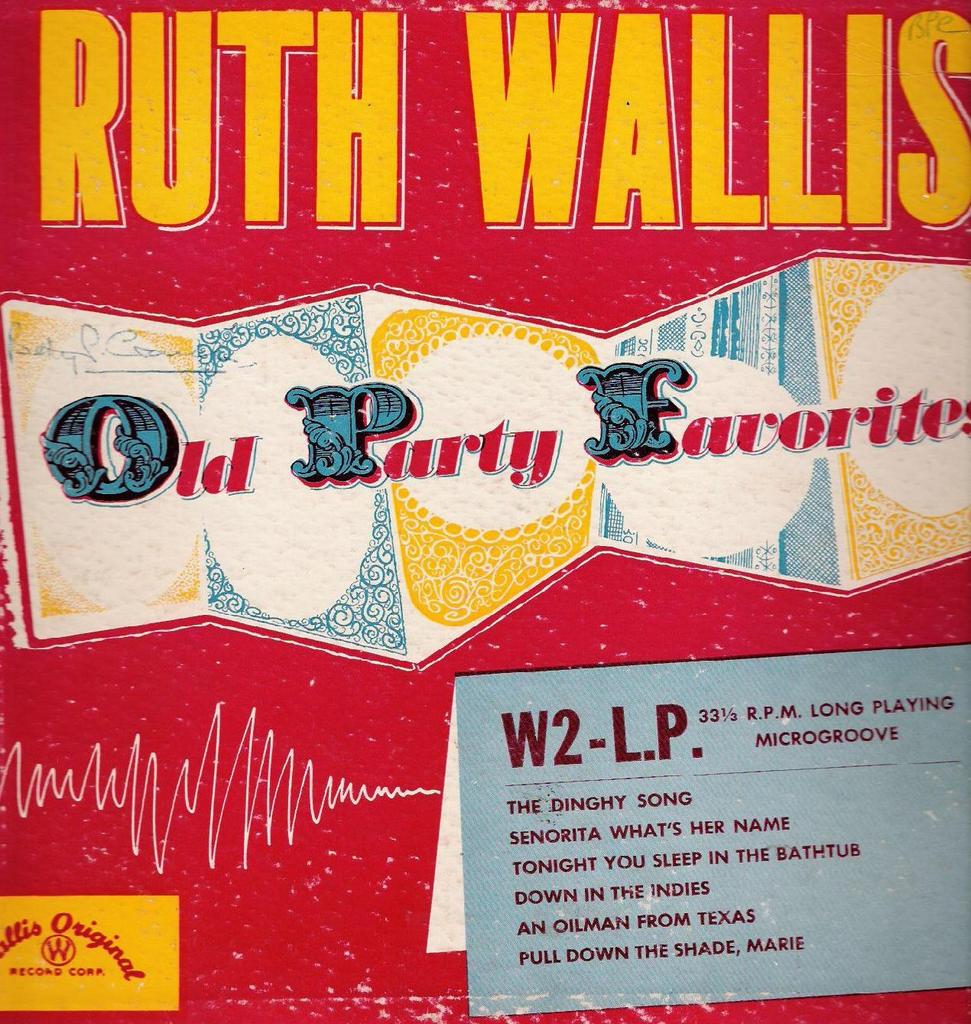
Ruth Wallis


"Called the "high priestess of the double entendre," and the "queen of the wicked ditties," in the '50s and '60s, Ruth Wallis was an American woman whose saucy novelty songs made her a worldwide success. She was born in Brooklyn, and gave big-band singing a whirl, even doing a stint with Benny Goodman's band. She later established herself as a cocktail lounge singer and began writing her own songs. Her records weren't played on the radio, but they became hits nonetheless. Unlike many other party records, which could barely afford more than a singer and a piano, Ruth Wallis' songs had full orchestras, usually under the direction of Mac Ceppos or Jimmy Carroll. Her albums made fun of male shortcomings and proved that women could enjoy sex and risque humor as much as men."

Ruth Wallis - The Dinghy Song

Ruth Wallis - Down In The Indies

These Rapid Share files are accessible by scrolling down the page and clicking on the FREE button. Wait at the bottom of the page for your file to appear (about 20 seconds).
Fred Dagg


This is one of those records you just have to buy when you see it in a charity shop as New Zealand comedy aimed at sheep farmers is a very rare commodity around these parts. I knew nothing about Fred Dagg and still know very little. Here's what Wikipedia says about him-

"Fred Dagg is a fictional archetype satirist from New Zealand created and acted on stage, film and television by John Morrison Clarke. Clarke graced New Zealand TV screens as Dagg during the mid to late 1970s, "taking the piss" out of the post-pioneering Kiwi bloke and ‘blokesses’.
When Clarke first unveiled the character of Fred Dagg in recordings and on New Zealand TV in 1975, he became a national star and icon. Clarke also recorded a series of records and cassettes as Dagg, as well as publishing several books.
The Fred Dagg character is a stereotypical farmer and New Zealand bloke; clad in a black singlet and gumboots, and supposedly attended by numerous associates all named 'Trev'. One memorable expression was uttered whenever there was a knock at the door: "That'll be the door".
"Fred Dagg" first became a household name in New Zealand in 1975, with the release by Clarke (as Dagg) of two singles with EMI, "Traditional Air"/"Unlabelled", and "We Don't Know How Lucky We Are"/"Larry Loves Barry", with the latter making it to number 17 on the national charts.
An album called "Fred Dagg's Greatest Hits" followed and was a massive seller. Thirty years after its release this album remains one of New Zealand's all-time biggest selling records."

Fred Dagg - Larry Loves Barry

Fred Dagg - The National Anthem

These Rapid Share files are accessible by scrolling down to the FREE button. Click on it. Wait and bottom of page for your file to appear (about 20 seconds).

Saturday, October 01, 2005

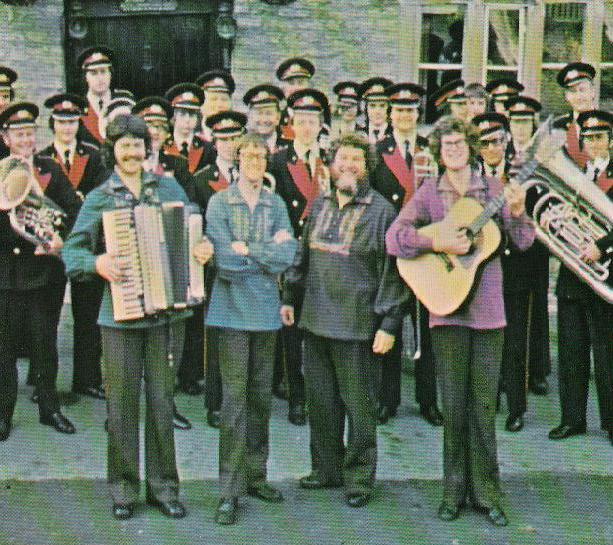
The Yetties


"Contrary to a popularly held theory, The Yetties did not get their name because of their fancied resemblance to the fabled hairy Himalayan monsters - although, come to think of it, looking at those 1970s photos, I can see how this misunderstanding might have occurred! But they got their name because they hail from the Dorset village of Yetminster, near Yeovil and Sherborne.

Formed way back the early 1960s, the band's original members were Bonny Sartin, Pete Shutler, Mac McCulloch and Bob Common. The line-up remained unchanged until 1979, when Bob left. The remaining trio has continued to perform right up to the present day. Over the years they have toured the world and recorded a large number of albums. Apart from their own compositions, the band has built up a huge repertoire of music of many types from diverse sources, including folk songs, dance music and popular songs from England, Scotland, Ireland, the US and other countries."

I found two Yetties albums in the Salvation Army charity shop in town the other day for a pound each. One is actually signed by the band thus doubling it's price straight away! Seriously though, despite not being a great "Scrumpy & Western" fan I do seem to gravitate towards these records mainly because of the two or three novelty songs they usually contain. On this album from 1976 on the Decca label called "The Village Band" they are joined by the Sherbourne Town Band who appear on several of their other LP's and the songs range from traditional pub songs to old engliosh folk songs and even "Cigareetes and Whusky and Wild, Wild Women".

Find out more about The Yetties by going HERE.

The Yetties - The Barley Mow

The Yetties - Costa Del Dorset

These Rapid Share files can be accessed by scrolling down the page and clicking on the FREE button. Wait at the bottom of the page for your file to appear (about 20 seconds).

South Seas Adventure


This curious "souvenir" EP playing at 45r.p.m. is another find from Brick Lane. Its taken from the soundtrack of a "Cinerama" film of the 50's or early 60's I would guess. I just love the small clips of Hawaiian music here and the "Click Go The Shears" song which sounds anything but authentic!
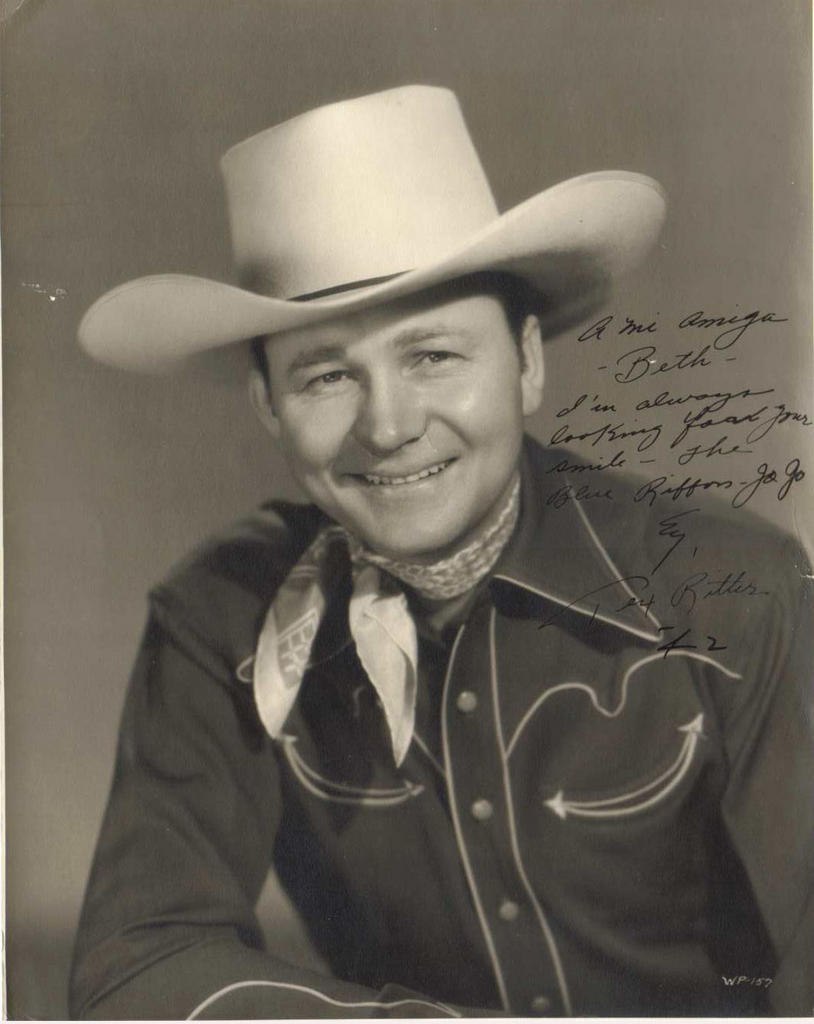
Here's a bit about Cinerama I found which describes how inventor Fred Waller discovered this "breakthrough" technology and more can be found HERE.

"It used three cameras and three projectors on a curved screen 146° deep. Making an anagram of the letters in “American,” he called it “Cinerama”. Even in an industry up to its Mitchell magazines in hyperbole, its impact was staggering. Running only 13 weeks in one theater in New York, “This Is Cinerama” was the highest grossing film of 1952. Several more travelogues would follow, climaxed by two dramatic films co-produced with MGM in 1962. Cinerama, which had been rejected by all the majors as too expensive - however impressive it was - now created a landrush. When they saw its drawing power, every studio scrambled to come up with a copycat process. The 1.33 aspect ratio was dead and the widescreen era was on. Cinerama’s 3-panel glory days lasted only 11 years, but it has never been forgotten by anyone who saw it."

The only Cinerama film I saw was Stanley Kubrik's "2001- A Space Odessy" which seemed quite stunning at the time and it's sad that these films don't get to be seen anymore outside of film museums.

South Seas Adventure - Part One

South Seas Adventure - Part Two

These Rapid Share files are accessible by scrolling down the page and clicking the FREE button. Wait at bottom of page for your file to appear (about 20 seconds).