Wednesday, April 27, 2011

Billy Cotton Band


LP on the Columbia label from 1961 when the The Billy Cotton Band Show was at it's height on BBC radio and TV. I have fond memories of his show being aired at Sunday lunchtime as the family all sat round the dinner table to eat. I bought this purely for the nostalgia of a bygone time that will never be again.

Wikipedia says -

"William Edward Cotton (6 May 1899 – 25 March 1969), better known as Billy Cotton, was a British band leader and entertainer, one of the few whose orchestras survived the dance band era. Today, he is mainly remembered as a 1950s and 1960s radio and television personality, although his musical talent emerged as early as the 1920s. In his younger years Billy Cotton was also an amateur footballer for Brentford F.C.(and later, for the then Athenian league club Wimbledon, now AFC Wimbledon), an accomplished racing driver and the owner of a Gipsy Moth which he piloted himself.
Born in Smith Square, London, to Joseph (born in 1858 in Coventry, Warwickshire) and Susan Cotton, Cotton was a choirboy and then started his musical career as a drummer, an occupation he also pursued in the army during the First World War. He enlisted in the Royal Fusiliers by falsifying his age and saw service in Malta and Egypt, before landing at Gallipoli in the middle of an artillery barrage. Later in the war he was recommended for a commission and learned to fly Bristol Fighter aircraft. He flew solo for the first time on 1918-04-01, the day the Royal Flying Corps became the Royal Air Force. He was then not yet 19 years old.
He married Mabel E. Gregory in 1921 and had two sons, Ted and Bill Jnr. In the inter-war years. he had several jobs such as bus driver before setting up his own orchestra, the London Savannah Band, in 1924. At first a straight dance band, over the years the London Savannah Band more and more tended towards music hall/vaudeville entertainment, introducing all sorts of visual and verbal humour in between songs. Famous musicians that played in Billy Cotton's band during the 1920s and 1930s included Arthur Rosebery, Syd Lipton and Nat Gonella. The band was also noted for their African American trombonist and tap dancer, Ellis Jackson. Their signature tune was "Somebody Stole My Gal", and they made numerous records – 78s, that is – for Decca.
During the Second World War Cotton and his band toured France with the Entertainments National Service Association (ENSA). After the war, he started his successful Sunday lunchtime radio show on BBC, the Billy Cotton Band Show, which ran from 1949 to 1968. In the 1950s composer Lionel Bart contributed comedy songs to the show. It regularly opened with the band's signature tune and Cotton's call of "Wakey Wakey". From 1957, it was also broadcast on BBC television.
In 1962 Billy Cotton suffered a stroke. He died in 1969 while watching a boxing match at Wembley. His son, Bill Cotton, later became BBC's head of variety."

Tracks are as follows -

1. Somebody Stole My Girl
2. Sing Sing Sing / Sugartime / Let's gather Round The parlour Piano / Bill Bailey Won't You Please Come Home ( with Alma Cogan, Russ Conway and the Silouettes.)
3. Exodus Song ( with Grisha Farfel )
4. And The Great Big Saw Came Nearer and Nearer ( with Alan Breeze & The Highlights )
5. Let's Face The Music & Dance ( with Alma Cogan )
6. She's Funny That Way / The Man I Love / You Were meant For Me ( with Alma Cogan )
7. Ta Ra Ra Boom De Ay / Ragtime Cowboy Joe / Row, Row, Row ( company and audience )


Billy Cotton Band - Side One

Cliff Carlisle


Another from the recent boot sale batch. On the Old Timey label from 60's I imagine, though songs recorded back in the 30's. Similar to Tommy Collins but more yodelling and exceptional steel guitar.

Wikipedia says -

"Carlisle was born in Taylorsville, Kentucky and began performing locally with cousin Lillian Truax at age 16. Truax's marriage put an end to the group, and Carlisle began playing with Wilber Ball, a guitarist and tenor harmonizer. The two toured frequently around the U.S. playing vaudeville and circus venues in the 1920s.
Carlisle and Ball first played at Louisville, Kentucky radio station WHAS-AM in 1930, which made them local stars, and later that year they recorded for Gennett Records and Champion Records. In 1931, they recorded with Jimmie Rodgers. Toward the end of 1931, Carlisle signed with ARC and was offered performance slots on several radio stations, including WBT-AM in Charlotte, North Carolina, WLS-AM in Chicago and WLW-AM in Cincinnati, Ohio. Cliff's brother Bill became his guitarist after Ball left in 1934. During the 1930s Carlisle, who recorded a large amount of material despite a hiatus from 1934 to 1936, frequently released songs with sexual connotations including barnyard metaphors (which became something of a hallmark).
Carlisle toured with his son, "Sonny Boy Tommy," to occasional consternation from authorities in areas where this contravened local child labor laws. He continued to perform on WMPS-AM in Memphis, Tennessee for several years in the 1940s, but by the 1950s had retired from music.
In the 1960s, The Rooftop Singers covered his tune "Tom Cat Blues"; in its wake, Carlisle and Ball did a few reunion shows together and recorded for Rem Records. On April 2, 1983, Carlisle died at the age of 79 in Lexington, Kentucky."

Tracks are as follows -

1. Hobo Blues
2. Shot The Innocent man
3. Two Little Sweethearts
4. Trouble Minded Blues
5. The Hobo's Fate
6. Payday Fight
7. Waiting For A Ride


Cliff Carlisle - Side One

London Barrel Organ


This was 10p in a charity shop so could hardly pass it up. Turns out to be pretty much what I expected and a nostalgic reminder of what the buskers of Victorian London must have sounded like - monkey with tin cup and all!

Wikipedia says -

"A barrel organ (or roller organ) is a mechanical musical instrument consisting of bellows and one or more ranks of pipes housed in a case, usually of wood, and often highly decorated. The basic principle is the same as a traditional pipe organ, but rather than being played by an organist, the barrel organ is activated either by a person turning a crank, or by clockwork driven by weights or springs. The pieces of music are encoded onto wooden barrels (or cylinders), which are analogous to the keyboard of the traditional pipe organ.

The pieces of music (or tunes) are encoded onto the barrel using metal pins and staples. Pins are used for short notes, and staples of varying lengths for longer notes. Each barrel usually carried several different tunes. Pinning such barrels was something of an art form, and the quality of the music produced by a barrel organ is largely a function of the quality of its pinning. This complex encoding of music was an early form of programming.
The organ barrels must be sturdy to maintain precise alignment over time, since they play the same programming role as music rolls and have to endure significant mechanical strain. Damage to the barrel, such as warpage, would have a direct (and usually detrimental) effect on the music produced.
The size of the barrel will depend on the number of notes in the organ and the length of the tune to be played. The more notes, the longer the barrel. The longer the tune, the greater the diameter.
Since the music is hard-coded onto the barrel, the only way for a barrel organ to play a different set of tunes is to replace the barrel with another one. While not a difficult operation, barrels are unwieldy and expensive, so many organ grinders only have one barrel for their instrument."

Tracks on side one are -

1. I Do Like To Be Beside The Seaside
2. Don't Dilly Dally
3. The Honeysuckle & The Bee
4. Wouldn't It Be Loverly
5. Run Rabbit Run
6. That Old Fashioned Mother Of Mine
7. God Bless The Prince Of Wales

London Barrel Organ - Side One

Tommy Collins


An LP on the Capitol label from 1984 but original recordings from 1959. Found at car boot the other day in Frodsham. I'd not heard of Tommy Collins before I must admit but pleasantly surprised by the overall sound which reminds me of Hank Williams and several other artistes of that era when country music had that hillbilly swing.

Wikipedia says -

"Leonard Raymond Sipes (September 28, 1930 – March 14, 2000), better known as Tommy Collins, was an American country music singer and songwriter.
Active primarily during the 1950s through 1970s, Collins was instrumental in helping create the Bakersfield sound of the country music genre. He enjoyed a string of hits during the mid-1950s including "It Tickles" and "Watcha Gonna Do Now". He also wrote several songs for other artists, including "If You Ain't Lovin' (You Ain't Livin')", which was a top 10 hit for Faron Young in 1954 and a No. 1 hit by George Strait in 1988.
After several years in the ministry, Collins returned to recording. In 1965, he had a comeback hit with "If You Can't Bite, Don't Growl". In the 1970s, he wrote several hits for Merle Haggard, including the No. 1 hits "Carolyn" and "The Roots of My Raising". In 1981, Haggard recorded a biographical tribute to Collins called "Leonard".
Collins was the inspiration and character talked about in Craig Morgan's song, "I Wish I Could See Bakersfield"
Collins remained active in the songwriting business. He died March 14, 2000, in Ashland City, Tennessee."

Tracks on side one are -

1. You Better Not Do That
2. I Always Get A Souvenir
3. Untied
4. How Do I Say Goodbye
5. I'll Be Gone
6. It Tickles


Tommy Collins - Side One

Friday, April 22, 2011

Pedro & His Amigos


My son actually bought this record in Buxton yesterday in a charity shop as a joke gift for a friend. I managed to borrow it to have a listen before he wrapped it up. Despite the amuisng sleeve the record offers little for the world music afficianado! It is quite charming in its simplicity and so uploading three tracks so you can hear a sample of what you might find if ever you see it in your local charity shop or boot sale.


Eddie & His Amigos - Granada

Eddie & His Amigos - El Gallo

Eddie & His Amigos - Tico Tico

Kantata


Not sure where I got this LP on the Asona label from. Made in 1986 in London England.

The sleeve notes by Anthony Roberts-Frampong say -

" Katana are Lee Duobo, Sylvester Kwame, Eddie Sey, Ogene Kologbo, Emmanuel Roberts and Fouad Amoo. Now based in West Berlin their music features strong funky harmonies but retains the subtle influence of their West-African roots - Highlife.
This is the second album, the first namely AKWANKWAA (DUKE) released on the Oval label in 1984. It is interesting to note that this is the finest example to date of Katana's work, and when you listen to it you will undoubtedly agree with me. It is an excellent blend of smooth and funky highlife sounds exemplified by IT'S HIGH TIME NOW, ODO BEBA (ATEAA), and with their more defined treatment of the Ghanaian traditional song MONSOM."

Side two features the tracks -

1. Monsom
2. saturday Night
3. Feeling So Nice


Katana - Side Two

Wednesday, March 30, 2011

Eddy Okonta


An LP found some years ago in Brick Lane flea market. Nigerian highlife on the Phonodisk label from the 80's one assumes from the album title "Page One '81".
Side Two here with the tracks as follows -

1. Anioma
2. Adura
3. Mama Sweet Papa Super


Remembering Eddy Okonta, the Obi of trumpet
By Benson Idonije

"IF Eddy Okonta, the late great trumpeter and highlife musician were still alive, today's musicians would be learning the technique of articulating 'rhythm' as an essential musical component at his feet. While he lived, he pretty well appreciated the fact that the main essence of African music is 'rhythm' and he used it to full advantage, thoroughly Africanising his own brand of highlife in the process.

He had served an initial apprenticeship with the Sammy Akpabot Sexlet, an aggregation that revolved this same name even as it increased or diminished with time. He was there with the late Oba Funso Adeolu on auto and tenor saxophones. He enjoyed sharing solos with him while bandleader Akpabot himself provided an ideal background for highlife and dance music to blossom with his dexterity on the vibraphone, an instrument which only Akpabot could play at the time in the whole of West Africa.

As an instrument, the vibes has a special way of resonating sounds and floating them through harmonies and arrangements. But Eddy's high notes helped to put all the reverberation in check for dancing and easy listening.

Eddy later served a long term of apprenticeship with the late Bobby Benson of Africa, this time culminating in outstanding professional musicianship, with proficiency in arranging and composing. He not only put the final polish to his accomplishment with the Bobby Benson Jam Session where he stood out the way Chief Bill Friday and Zeal Onyia before him did, his artisting now reached its apotheosis in the area of improvisational design. He began to use the vast resources of his creativity to construct solos that contained revolutionary melodic language and rhythmic subtlety.

As one of the pioneering big bands in the country, the Bobby Benson Jam session offered all its graduates a well rounded musical experience and discipline as they were exposed to all dance music forms including swing, Latin American , Jazz, Afro Cuban, the ball room type that dominated the colonial era with the music of Joe Loss and Victor Sylvester, and all."


Eddy Okonta - Side Two

I.K. Dario


A Nigerian Juju LP on Decca from the 60's I imagine found at Brick Lane flea market many years ago. The five tracks on side one are as follows - Eni mi ko sen'nia - Toba ndara f'oko aya ni - Toba rije f'omo ni keji - Ojo ikehin - E huwa rere.

"Considered by many to be the "father of juju" for his many innovations, Isaiah Kehinde Dairo was born in Kwara State, Nigeria, in 1931. One story has it that his lifelong love of music stemmed from a drum that his father, a carpenter, made for him in his youth and that accompanied him wherever he went. In early adulthood, Dairo tried earning a living as a barber, a construction worker, and a cloth merchant, among other jobs. Dairo sat in with early juju bands at night, led by musical pioneers Ojoge Daniel and Oladele Oro. In the mid-'50s he formed his own group, the ten-member Morning Star Orchestra, which gained fame later as the Blue Spots.

Though highlife was the most popular form of band music in West Africa at the time, Dairo and his band released a long succession of influential singles that, by the end of the Nigerian Civil War in 1970, helped establish juju as the premier Nigerian sound. Dairo changed the tenor of juju by introducing the accordion and talking drums to the orchestra and singing in a variety of regional dialects, which widened the rural appeal of the music. When his appeal began to wane at the end of the 70s, he gave up performing, turning first to managing clubs and a hotel in Lagos, then to a ministry in the Cherubim and Seraphim church movement. In 1990 he recorded his first album in 15 years with a re-formed Blue Spots band."

Bob Tarte.

Tracks are as follows -

1. Eni mi ko se'nia
2. Toba ndara f'oko aya ni
3. Toba rije f'omo ni keji
4. Ojo ikehin
5. E huwa rere


I.K.Dario - Side One

Friday, March 18, 2011

Charlie Gillett - Andy Summers


I was reminded the other day that it's been a year since Charlie passed away and in memory of him I am uploading another of his great Capital Radio shows - this time with guest Andy Summers who used to play bass in the Police and later went on to do solo projects with Robert Fripp etc. Andy plays an eclectic choice which includes Captain Beefheart, Les Paul, Hot Club Of France and Steve Reich.

Wikipedia says -

"Summers was born in Poulton-le-Fylde, Lancashire, England to Maurice and Jean Somers. When he was a young child, he moved to Bournemouth, Dorset, attended Summerbee School and took up the guitar at age 14. By 17 he was playing in local clubs. While a teenager he worked in a Bournemouth music store frequented by a young Robert Fripp. Although Summers had been essentially self-taught when he began his professional musical career, he studied classical guitar at California State University at Northridge for four years until 1973.

Pre-Police careerSummers began his recording career in the 1960s as the guitarist for the R&B group Zoot Money's Big Roll Band, and its subsequent psychedelic-era incarnation, Dantalian's Chariot. In 1968, Summers was a member (for a couple of months, from May to July[citation needed]) of the Canterbury scene jazz fusion band Soft Machine, although he did not record with the group[citation needed] He also recorded with Eric Burdon and The Animals (Love Is),and spent much of the mid-seventies doing session work for Jon Lord, Neil Sedaka, Kevin Ayers, Kevin Coyne, David Essex and others. In 1977 he was invited by ex-Gong bassist Mike Howlett to join his band Strontium 90 along with Sting and Stewart Copeland.

The Police (1977–1983; 2007–2008)
Summers achieved international prominence as the guitarist for The Police (which he first had contact with in 1977, and of which he was the oldest member by almost a decade), most notably on popular hits such as "Message in a Bottle", "Don't Stand So Close to Me", and "Every Breath You Take". Summers also wrote songs for the Police, such as "Omegaman" and "Mother". In 1980 his instrumental "Behind My Camel" won the Grammy for Best Rock Instrumental. Although Sting was the primary lead vocalist, Summers sang lead vocals on several songs, including "Be My Girl Sally", "Friends", "Someone to Talk to" and "Mother."


Charlie Gillett - Andy Summers Pt. 1

Charlie Gillett - Andy Summers Pt. 2

Ivy Pete & His Limbomaniacs


An LP on the Somerset label from the late 50's when "limbo" was a big dance craze. This is a weak kind of blue-eyed calypso that was made for tourists and for playing at parties. Great kitsch sleeve though which is the only reason I bought it.
The sleeve notes don't tell us much about Ivy pete and his band but says- " Authorities say all you need for a limbo party is three poles ( two upright and one across - see sleeve ) and a group of people with strong backs "bent" on having a ball with "Ivy" Pete and the gang. We recommend you don't try the flame bit on the pole.... this is for real experts or drunks that live near the firehouse."

Tracks are -

1. Jamaica Farewell
2. Little Brown Skin Girl
3. Sly Mongoose
4. I Adore Her
5. Donkey Wants Water
6. Limbo Man


Ivy Pete & His Limbomaniacs - Side One

Chicken Rock


Not a great deal found on the web regarding (William) Fat "Daddy" Holmes. This rockabilly and surf instrumental compilation was released in 1974 and contains songs by a variety of obscure artistes including The Chancellors, Scottie Stuart, Carl Bonafede and Jesse Lee Turner. The stand out tracks though are by Holmes with quirky chicken sound effects on "Chicken Rock" ( 1954 ) and dopey hep-cat jive talk on "Where Yo Is" from around the same time.

Tracks on Side Two are as follws -

1. Rockin' Blues - The Beaumarks
2. Roots - The Champs
3. Little Rocker - Scottie Stuart
4. Story That's True - Carl Bonafede & The Gem Tones
5. Baby Please Don't Tease - Jesse Lee Turner
6. You Don't Bug Me - Terry Daly & The Nu Tones
7. Moonlight Party - The Beaumarks
8. Chicken Rock - Fat Daddy Holmes


Chicken Rock - Side Two

Friday, March 11, 2011

Miriam Makeba


An LP from 1963 on the London label I found many years ago. I thought I had featured it here but a quick look in the archive proved fruitless, so here it is. Nice varied selection as the title implies - ranging from gospel, jazz and calypso. Side Two with tracks-

1. Liwa Wechi
2. Nagula
3. Carnival
4. Night Must Fall
5. Love Tastes Like Strawberries
6. Can't Cross Over

Wikipedia says -

"Miriam Makeba (4 March 1932 - 10 November 2008), nicknamed Mama Africa, was a Grammy Award winning South African singer and civil rights activist. In the 1960s she was the first artist from Africa to popularize African music in the U.S. and around the world. She is best known for the song Pata Pata first recorded in 1957 and released in the U.S. in 1967. She recorded and toured with many popular artists, such as Harry Belafonte, Paul Simon, and her former husband and South-African Hugh Masekela. She actively campaigned against the South African system of Apartheid. As a result the South African government revoked her citizenship and right of return. After the end of Apartheid she returned home. She died on 10 November 2008 after performing in a concert organized to support writer Roberto Saviano in his stand against the Camorra, a mafia-like organisation local to the Region of Campania."


Miriam Makeba - Side Two

Mighty Sparrow


Another old calypso LP on the National label from the West Indies. Made in 1966.
Excuse the jumps and scratches - I think this one has been well played in the past.

Wikipedia says -

"In 1956, Sparrow won Trinidad's Carnival Road March and Calypso Monarch competitions with his most famous song, "Jean and Dinah". His prize for the latter was $40. In protest of the small sum, he wrote the song "Carnival Boycott" and attempted to organize other singers to boycott the competition. About half of the singers followed. Sparrow claims credit for succeeding improvements in the conditions of calypso and steelband musicians in Trinidad, as well as the formation of the Carnival Development Committee, a musicians' assistance organization. Sparrow refused to participate in the competition for the next three years, but he continued to perform unofficially, even winning another Road March title in 1958 with "P.A.Y.E."

Calypso music enjoyed a brief period of popularity in other parts in the world during the 1950s. Trinidadian expatriate Lord Kitchener had helped popularize calypso in England, and Sparrow also found some success there. In the United States, interest in calypso was sparked largely by Harry Belafonte's 1956 album Calypso, the first LP to sell over one million copies. In January 1958, Sparrow, along with longtime rival Lord Melody, traveled to New York City seeking access to the American music audience. Sparrow had already been recording with Balisier and Cook Records, and with Belafonte's help he also began to record for RCA Victor. He did not achieve the success he had hoped for; he said in a 2001 interview, "When nothing happened for me, I went back to England and continued on with my career."

In 1960 Sparrow returned to the Calypso Monarch competition, winning his second Kingship and third Road March title with "Ten to One Is Murder" (an autobiographical song about an incident in which Sparrow allegedly shot a man and "Mae Mae." He also began recording for his own label, National Recording. He continued to enjoy great popularity in Trinidad throughout the 1960s."

Tracks -

1. B.G. Plantain
2. Obeah Wedding
3. Papa Jack
4. Sir Garfield Sobers
5. Bikini Girl ( not uploaded - jumps!)


Mighty Sparrow - Side Two

Conroy Recorded Music Library


The titles of the tracks sounded intriguing but turns out to be pretty standard MOR orchestral stuff nicked from the classics - hints of Mozart, Bach and Beethoven.Made in 1974 by Berry Music Co. Ltd.

Tracks include titles such as Whats New, Whats On, Whats Next, Brave New World and Beyond Tomorrow.


Conroy Music Library - Side One

Wednesday, March 09, 2011

Charlie Gillett - Undercurrents 14


Another Undercurrents radio show hosted by Charlie Gillett from the early 80's. No guest but an interesting selection of records as always - mostly independent singles from that time on small labels.


Charlie Gillett - Undercurrents 14 Pt.1

Charlie Gillett - Undercurrents 14 Pt.2

Tuesday, March 08, 2011

English Melodeon Players


An album on the Plant Life label recently bought from the Oxfam shop for 99p. Mostly instrumentals by solo artistes at the forefront of the folk music world back in 1986 when this first came out. Tracks on side one included here are as follows -

1. A Small Fee/Crying Jenny and Laughing Joan - Martin Ellison
2. Young Collins/Princess Royal - Roger Watson
3. The Rose Tree - Tony Hall,Dave Roberts & Roger Watson
4. The Olde Favourite - Tony Hall
5. Johnny Mickey Barry's/The Freedom Of Ireland - Edward II & The Red Hot Polkas
6. 100 Pipers - Tony Hall

Find out more about the melodeon HERE.


English Melodeon Players - Side One
Mohammed El-Bakkar


I thought I had featured this LP some years ago but looking back through the archive I see that I missed it for some reason. Apart from the striking sleeve it has some very nice Egyptian music on it. Sounds very authentic to me but what do I know! Made back in the 60's for the Hi-Fi enthusiasts more than anyone and an interesting flavour of the Middle East long before the phrase "world music" was ever invented.

Wikipedia says -

"Mohammed El-Bakkar (Arabic: محمد البكار‎; d. Pawtucket, Rhode Island, United States, September 8, 1959) was a Lebanese tenor, oud player, and conductor.

El-Bakkar was a noted tenor and appeared in several Arabic-language films. He moved to the United States in 1952 and lived in Brooklyn. He released several LPs of Arabic music in the United States. He also played a singing Oriental rug salesman in the Broadway musical Fanny, in the Oriental bazaar scene; the production ran from 1954 to 1956.

He died of a cerebral hemorrhage on September 8, 1959, at the age of 46, after collapsing while performing at an annual Lebanese American festival in Lincoln, Rhode Island."


Mohammed El-Bakkar - Side One
Charlie Gillett - Frances Lass


Francis Lass was a journalist writing the gig guide at Time Out magazine back in the 80's when she guested on Charlie's "Undercurrents" radio show on Capital. Some memorable tracks from mostly British bands of the time like Scritti Polliti, Girls At Our Best and The Chefs etc. New small label bands with a pop sensibility that still sound good today. A shame that so many of them vanished without trace!


Charlie Gillett - Frances Lass Pt. 1

Charlie Gillett - Francis Lass Pt.2

Thursday, March 03, 2011

The Standells


Had this LP in my collection for years - probably a Cheshire Street market find from the 70's or 80's. I uploaded some tracks once before so time I did so again. Obviously a band who were highly regarded at the time but almost forgotten now except by a few fans of 60's "garage bands".

"The Standells were formed in 1962 by guitarist Tony Valentino and organist Larry Tamblyn. The early line-up included Gary Lane on bass and drummer Gary Leeds, who would later find more success with the Walker Brothers. Leeds was eventually replaced by former Mousketeer Dick Dodd. As for the name the band chose, they would later tell Dick Clark on American Bandstand, they were just "standing around" one day, trying to think up a name for the band. The quartet became a leading attraction in Los Angeles night-spots and recorded some weak selling albums and singles for Liberty, MGM, and Vee Jay. As a popular local band, they also found themselves appearing in the movie "Get Yourself a College Girl", and getting a lot of television work (most notably, a guest appearance on 'The Munsters').

The band managed to hit the upper regions of the U.S. Top 100 with tunes like "Big Boss Man" and "Someday You'll Cry", but they didn't really hit their stride until teaming up with producer Ed Cobb, formerly of the vocal group the Four Preps. Cobb wrote a song called "Dirty Water", which marked quite a change of direction from their previous clean-cut image. At first the group didn't even like the song, but six months after it was released, "Dirty Water" was the number 11 song in the nation.

With their image now considerably toughened, the group issued four albums in quick succession in 1966 and 1967, as well as appearing in (and contributing the theme song to) the psychedelic exploitation movie "Riot on Sunset Strip". Cobb, in addition to writing "Dirty Water," also penned their other singles, including "Sometimes Good Guys Don't Wear White", "Why Pick on Me" and 'Try It" (the last of which was widely banned for its suggestive delivery). The group did write some decent material of their own, such as "All Fall Down", which bears an interesting similarity to some of Pink Floyd's early work.

Tower Records, as was the case with most of its artists, didn't apply intelligent long-range planning to the band's career, releasing too many albums at once. The group didn't help their own cause by issuing an awful vaudeville-rock single, "Don't Tell Me What to Do", under the transparent pseudonym of the Sllednats (Standells spelled backwards). It would be their last recording."

Songs on Side One are -

1, Why Pick On me
2. Paint It Black
3. MiHai Fatto Innamorare
4. Black Hearted Woman
5. Sometimes Good Guys Don't Wear White

The Standells - Side One

Franco Et Son T.P.O,K,Jazz


I can't remember exactly where this album came from - maybe one of the prizes I picked up during a Tower Records dash where I had a minute to run through the store and grab as many records as I could. I think this was one of them. Lucky me eh?
I did grab a few turkeys on the way through in my haste it must be said. Luckily the store was very kind and let me swap a few some days later - the ones I didnt really want. This one is great though and Franco at his most melodic and hypnotic - almost too hypnotic at times - you think the needle has stuck!
On the Choc label recorded in Belgium? Or maybe just made in Belgium - not sure where it was recorded.

Wikipedia says -

"François Luambo Makiadi was born in the rural village of Sona Bata in the western Bas Zaire region of what is now the Democratic Republic of the Congo (then the colony of Belgian Congo). When he was still a baby, his parents moved to the capital city of Leopoldville (now Kinshasa). His father, Joseph Emongo, was a railroad worker while his mother baked homemade bread to sell at a local market. At age seven he built a rudimentary guitar that he played to attract customers to his mother's stall. His talent was recognized by guitarist Paul Ebengo Dewayon who taught François how to play. In 1950, the twelve year old made his professional debut as a member of Dewayon's band, Watam, impressing audiences with his skills on a guitar almost as big as himself. Three years later, François recorded his first single Bolingo na ngai na Beatrice (My love for Beatrice) after he had become part of the house band for Loningisa Studio. The band leader, Henri Bowane, shortened his given name to "Franco", a tag that would stay with him for the rest of his life. Under Bowane's tutorage Franco became a lead guitarist skilled at the Congolese guitar display style called sebene, and also began writing songs for Loningisa artists and singing some himself. By now he had embraced the Cuban rumba and other styles of African music mixed with Latin influences.

In 1955, although he was being given plenty of studio work, Franco formed a band with Jean Serge Essous that debuted in the OK Bar in Leopoldville. The following year the band was renamed OK Jazz (later TPOK Jazz) in honor of the place it had begun. Within a year of its founding, OK Jazz, now with singer Vicky Longomba, was challenging Grand Kalle's African Jazz as the biggest group in Congolese music, and it continues to be the standard by which modern Congolese musicians are judged. In 1958, Essous left OK Jazz, as 19 year-old Franco went on to become the main songwriter of a constantly metamorphosizing group that ballooned from six original members to about 30 in the 1980s. Franco claims that OK Jazz produced over 150 albums during the 30 years of its existence, though 84 have been conclusively documented, and the band dominated the Congolese music scene."


Franco/ O.K. Jazz - La Resonse De Mario/Sadou

Wednesday, March 02, 2011

King Fighter (Requested Re-Up)


Another old calypso LP from the archives found many years ago in Cheshire Street market, just off Brick Lane. This rarity is on the National label and released in the 60's one imagines though no date on the record. It comes without a sleeve so had to search the internet to find it. What a great sleeve it was too!

"King Fighter (Shurland Wilson) (March 10, 1928 - December 12, 1999)

Born in Victoria Village, on the east coast of Guyana, Wilson got his name, King Fighter, because he was a boxer known for his fancy footwork. Fighter started out as a fisherman, then a boxer, before becoming a calypso singer. He started out singing boleros and love songs before switching to calypsos.

One of his main influences was the Guyanese vaudeville singer Bill Rogers. As for calypso, his favorites were Kitch and Melody and he started singing in Guiana. However, he left and moved to Trinidad because he couldn't make a living in his native country as either a boxer or a singer.

He came to Trinidad in the Fifties and was an active performer, primarily in the OYB tent until the 1980s. He first appeared in Trinidad with fellow Guyanese calypsonian Lord Coffee in 1955 and quickly rose to be a very successful calypso singer. He was a finalist for 1957 monarchy out of the Young Brigade with Smart Woman and Dhalpourie (Indian Wedding). He was singing both his Why BG Don't Want to Federate and Animal Beauty Contest that year. He was recorded extensively on a large of record labels in the Fifties and Sixties on records issued both in British Guiana, Trinidad and in England."

Discover more about King Fighter HERE.


King Fighter - Quarkey

King Fighter - Peace

King Fighter - Beat He

King Fighter - Lovely Country

King Fighter - They Want Me

King Fighter - Wash The Plate

King Fighter - Senorita Cindy

King Fighter - You Does Come Too Soon

King Fighter - Envy

King Fighter - Dollar Bill

Lord Christo (Requested Re-Up)


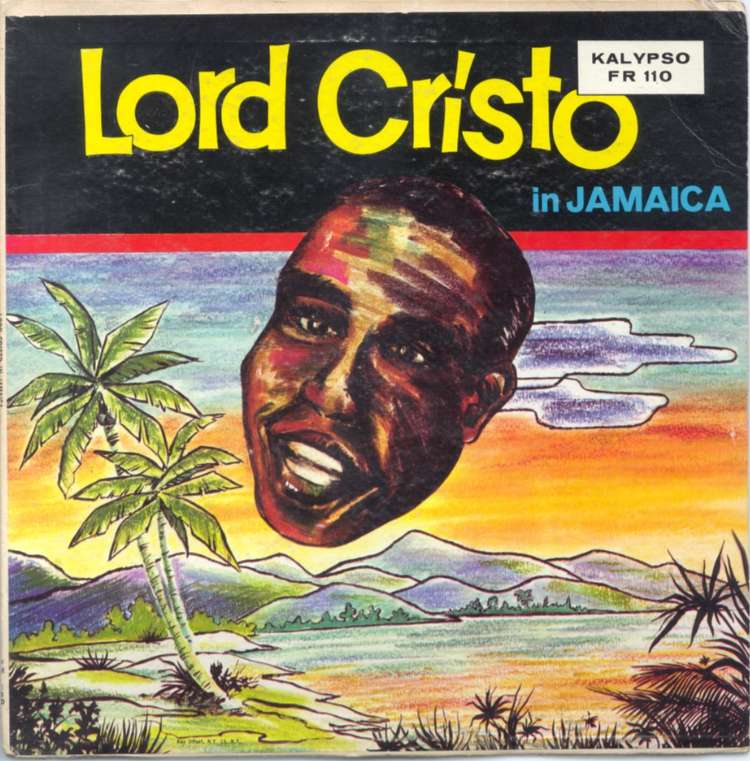
Another calypso record from Brick Lane picked up in the 80's. It's on the cleverly titled Kalypso label and released in 1963.

"Christo made a living as a cabinet-maker and sang in church choirs before he became the lead singer for the John "Buddy" Williams Band in the 1940s. His calypso career began in 1952 when he appeared at Atilla the Hun's Victory Tent. He then joined the McLean Brothers and accompanied them on a tour of the USA in December 1952. He later moved over to the Young Brigade Tent in 1955. The Young Brigade Tent became the Original Young Brigade Tent (OYB) in 1956, and Christo continued to sing with the OYB until he left for Chicago, Ilinois, USA, where he appeared at various nightclubs and on television. He returned to Trinidad in 1960 and continued to sing at the OYB for the rest of his career. Although he never won a title, Christo's popular songs "Miss Universe" and "Chicken Chest" were tailor-made for steelbands and were played extensively on the road during the 1957 Carnival."

A great archive of old calypso HERE at Irwin Chusid's radio show in the last hour. Well worth a listen if you like this kind of stuff. The first couple of hours is good too!


Lord Christo - Side One

Lord Christo - Side Two

Saturday, February 19, 2011

Portsmouth Sinfonia


From the other side of that Marty Feldman cassette. Some popular songs given the PS treatment. I've heard worse orchestras I must admit! Funny for about 2 minutes.

Wikipedia says -

"The Portsmouth Sinfonia was an orchestra founded by a group of students at the Portsmouth School of Art in Portsmouth, England, in 1970. The Sinfonia had an unusual entrance requirement, in that players had to either be non-musicians, or if a musician, play an instrument that was entirely new to them. Among the founding members was one of their teachers, English composer Gavin Bryars. The orchestra started as a one-off, tongue-in-cheek performance art ensemble but became a cultural phenomenon over the following ten years, with concerts, record albums, a film and a hit single. They last performed publicly in 1979."

Songs include - Pinball Wizard, Apache, Leader Of The Pack and A Whiter Shade Of Pale.


Portsmouth Sinfonia - Rock Classics

Gus Elen


I saw a Gus Elen compilation LP in the Oxfam shop the other day and was tempted to buy it but realised I had most of the tracks already on a cassette that somebody sent me some years ago. All dubbed from scratchy old 78's so excuse the terrible sound quality. I doubt the LP's sound was any better though.

Wikipedia says -

"Gus Elen (22 July 1862 – 17 February 1940 (aged 77)[1]) was a British music hall singer. He achieved success from 1891, performing cockney songs and sketches as a 'coster' comedian.

Gus Elen began his career busking, and found a position singing in a minstrel troupe. His solo success began with the coster songs, sung in 1891 at the Middlesex Music Hall[2], when his comedy partner, a man named Daniels, died in a boating accident. They had performed a 'blackface' comedy act, but solo he performed cockney songs and sketches as a 'coster' comedian, dressed in the clothes of a poor East End costermonger, coming himself from a similar background. In an interview, given after he had become a star, he said,
“ Years before I entered the ranks of music hall performers proper, I used to contribute to the programmes of the weekly sing songs held at such places as 'Poppy Lords' in Lisson Grove; the 'Magpie and Stump', Battersea; or the 'George Street Recital Hall'. At the last named hall, the salaries ranged from a shilling to three and sixpence a night with a cup of coffee and a bun thrown in by way of refreshment. In those days I often filled in a season on the 'waxeys' (on the seaside) at Margate and Ramsgate in a Negro minstrel troupe ”
—in Vaudeville, Old and New: An Encyclopedia of Variety Performers in America
Elen was praised as an "authentic cockney from the poor streets" and was well known for his involvement in personally organized charity events. For many years he and his wife distributed free Christmas gifts to the poor in public."

Songs included here are -

1. The Publican
2. The Coster's Pony
3. Don't Stop Me Half A Pint Of Beer
4. I'm Going To Settle Down
5. Pretty Little Villa In Barking
6. Nature's Made A Big Mistake
7. Meriah
8. Arf A Pint Of Ale
9. The Pavement Artist
10. Wait Til the Work Comes Around

Gus Elen - Coster Songs

Charlie Gillett - Voices


Another "World Of Difference" radio show from 11-10-87 with first half based on listeners choice of "Voices" as a theme which includes Howling Wolf, Youssou N'Dour, M'Bilia Bel etc. The second half of the show Charlie's guests are Ben Mendelsohn and Trevor Armstrong choosing some of their favourites from that time.


Charlie Gillett - Voices Pt.1

Charlie Gillett - Voices Pt. 2

Friday, February 18, 2011

Marty Feldman


This record is called "The Crazy World of Marty Feldman" and came out in 1969. I don't think it's ever been issued on CD. Tell me if I'm wrong. It certainly should be as its a great album and full of very funny songs like the eight samples here. Written not by Marty but by Dennis King, John Junkin and Bill Solly who all later went on to write songs for the Two Ronnies and Morecambe and Wise etc.Marty is mainly remembered for his work with Mel Brookes and such films as Young Frankenstein, Sherlock Holmes Younger Brother and the ill-fated Yellowbeard but it was in radio he got his start writing for such shows as Round The Horne. Later he worked in television with the Frost Report and At Last the 1948 Show etc. He also wrote for the Army Game and Bootsie and Snudge.He had his own TV series in the late 60's early 70's and another record was issued using the soundtrack to some of these sketches.Although a vegetarian, he was a heavy smoker and died of a massive heart attack at the age of 49 in Mexico whilst filming Yellowbeard.

Discover more about Marty Feldman HERE.

Songs are as follows -

1. Waltzing With You
2. District Nurse Hargreaves
3. Worlds In Rhyme
4. The Elephant Song
5. Eurovision Song
6. Ilford Town Hall
7. Kensington High Street
8. La Sauce
9. There's a Little Part Of Me
10. Psychedelic Rubbish
11. The Five To Eleven Wal;tz
12. Mavis Wavertree
13. You Without Me
14. The Great Bell


Marty Feldman - The Crazy World Of...

Friday, February 11, 2011

Fred Douglas


Not really a boot sale find but an excuse to upload some novelty songs by Fred Douglas who I know nothing about except he made lots of cover versions of hits on the cheap Regal label that sold in Woolworths I believe back in the 30's and 40's. Later they had the Embassy label which did a similar service - all the pop hits of the day by obscure singers who nobody had ever heard of! Fred Douglas went by many other nome de plumes, some say as many as 60 including the comedy duo The Two Gilberts.

Chris Gavin says of The Two Gilberts -

"Almost nothing is known about this comedy duo, but it can be surmised from their recordings that the people making up the pairing varied with time. The odd thing is that the Two Gilberts appear at a time when comedy duettists had just about died out in terms of popularity. Harry Cove & Billy Thompson had dominated the recording studios (along with the likes on Will Brockton, Jack Charman, Stanley Kirkby, Lionel Rothery etc) with their duet records from before WWI. People with a good ear claim that Fred Douglas, a prolific maker of records in his own name, is always one of the pair. Recently it has been claimed that the most regular duo were Fred Douglas and Leslie Rome.

Interestingly, both Cove and Thompson were mainstays of The Two Gilberts at different times. Thompson seems to be Douglas's first partner before Cove took over in mid-1924. Recordings by Tom Gilbert exist, usually paired with recordings of the Two Gilberts, these records issued as by Tom Gilbert are also by Fred Douglas; the Regal company obviously dreamt up the name as a tie-in with the duettists as well as issuing record under Douglas's own name.

It seems that about these artists: Douglas, Thompson & Cove, very little is known as they spent pretty well the whole of their careers as recording artists, generally looked down upon by collectors and researchers as "of no historical importance or interest"."


Fred Douglas - Valencia

Fred Douglas - In The Gloaming Of Wyoming

Fred Douglas - California

Fred Douglas - On Mother kellys Doorstep

Tuesday, January 25, 2011

Charlie Gillett - Todd Rundgren


Another radio show from The Alchemists series on Capital around early 80's with Charlie talking to guest Todd Rungren who plays some of his own records and some by people he has produced like the New York Dolls and The Psychedelic Furs.

Wikipedia says -

"Todd Harry Rundgren (born June 22, 1948) is an American musician, singer-songwriter and record producer. Hailed in the early stage of his career as a new pop-wunderkind, supported by the certified gold solo double LP Something/Anything? in 1972,[1] Todd Rundgren's career has produced a diverse range of recordings as solo artist, and during the seventies and eighties with the band Utopia. He has also been prolific as a producer and engineer on the recorded work of other musicians.

During the 1970s and 1980s, Rundgren engineered and/or produced many notable albums for other acts, including Stage Fright by The Band, We're an American Band by Grand Funk Railroad, Bat Out of Hell by Meat Loaf (now ranked as the fifth biggest-selling album of all time), and Skylarking by XTC. In the 1980s and 1990s his interest in video and computers led to Rundgren's "Time Heals" being the eighth video played on MTV, and "Change Myself" was generated on commercially available Amiga Computers.

His best-known songs include "Hello It's Me" and "I Saw the Light" which have heavy rotation on classic rock radio stations, and "Bang the Drum All Day" featured in many sports arenas, commercials, and movie trailers."


Charlie Gillett - Todd Rundgren Part 1

Charlie Gillett - Todd Rundgren 2

Brian Rust 1922 - 2011


I have fond memories of Brian's radio show in the 80's on Capital. Mardi Gras was a great programme about jazz, swing and an eclectic mix of oldies from the days of 78's and wax cylinders. It was on before Charlie Gillett's show so sometimes caught the last half hour or so and often wished I'd paid more attention at the time but my tastes were more atuned to rock, blues and R&B. I did pick up this tape from Brick Lane market of two of his shows which interested me because of the novelty music slant in one show called Mad Items from 1st March 1981. The other is called Minidiscs etc. from 8th March 1981. Brian's introductions to records have been trimmed substantially but I hope it still gives a flavour of this great knowledgable DJ and music that never fails to entertain despite it's age.

The Times obituary says -


"Charles Dornberger's 1927 version of Tiger Rag was unlikely musical fare for the newly launched Capital Radio in 1973. However, amid the contemporary pop played by Kenny Everett and the middle-of-the-road melodies presented by Michael Aspel, the tune introduced the weekend vintage jazz and dance band programme Mardi Gras, presented by Brian Rust. For seven years, Rust played the music he had devoted his life to researching and found a wide audience for what was a very specialist area of knowledge.

To jazz enthusiasts Rust was better known as the author of the standard work, Jazz Records, 1897-1942, which ran through five editions from 1961 to 1983. It documented the music, dates and personnel of every jazz recording made during those years and the author's dedication to accuracy, and to scholarly discographical methods, made it a byword within the industry.

Yet Rust also produced equally distinguished books on prewar dancebands and American recordings. He wrote learned articles on discography and record collecting and also researched the early days of Edison's cylinder recordings to go alongside his encyclopedic knowledge of the 78rpm disc. Brian Arthur Lovell Rust was born in London in 1922, and began collecting danceband records as a child. In his teens he became fascinated by jazz, but his first job was in a bank and during the Second World War he was in the London Fire Brigade. But in 1945 he began work in the BBC Gramophone Library, where he sought out dance records for the Light Programme.

He was to stay in the library for 15 years, greatly expanding his knowledge of jazz and dance music, and undertaking trips to America to find out more. Among those he met and interviewed was Nick La Rocca, the cornetist with the Original Dixieland Jazz Band who had made the first jazz records of all. He also collaborated with Walter Allen on one of the first attempts to combine biography with discography, in the life of the pioneer New Orleans cornetist Joe "King" Oliver.

In 1960 Rust left the BBC to work as a freelance researcher and author. He not only published books but articles for Melody Maker and The Gramophone, as well as copious notes for LP record sleeves. Already at the centre of a network of record collectors, Rust undertook copious correspondence with other enthusiasts round the world.

Rust published a text on methods of discography in 1980, and in 1992 he received a lifetime achievement award from the Association of Recorded Sound Collections.

During his time at the BBC he had also played jazz, as a member of the Original Barnstormers Spasm Band, in which he performed on the washboard. The band was recorded by Parlophone, and its temporary success led to Rust being forced to leave it, as his superiors at the BBC said it would be a conflict of interest for one of the corporation's librarians to appear on television as a musician. He rejoined the band soon after the offending broadcast, but left when he became a freelance writer.

He is survived by his wife Mary and by two daughters and a son.

Brian Rust, author, discographer and radio presenter, was born on March 19, 1922. He died on January 5, 2011, aged 88."


Brian Rust - Mad Items

Brian Rust - Mini Discs

Thursday, January 20, 2011

That'll Be The Day (re-up)


In 1972 David Essex/Ringo Starr made the film "That'll Be The Day" on the Isle of Wight. Billy Fury made a cameo appearance in the movie as "Stormy Tempest", a 50's holiday camp ballroom singer, more or less reflecting his own image from the early days. The movie premiered in West End in April 12th 1973 and was a huge success, as was it's soundtrack album which spent 7 weeks as No. 1 on the charts. The album contained a mixture of oldies together with some specially-recorded material, including 5 tracks by Billy.
This wonky cassette is just half the double LP and has been chewed all down one side hence the poor sound quality. The Viv Stanshall track seems to have recorded o.k. this time despite the tape being a bit chewed up. Stanshall is actually credited with the writing of What In The World (Shoop) that Billy Fury (Stormy Tempest) sings here and I've no Idea who Dante and the Evergreens are? They could even be Billy Fury in a different guise.

Here's a segment from a site about Steve Winwood who does some work on the soundtrack along with many others.

"An article in New Musical Express 10/28/72 described the project: "The film features the music of the times (before the Beatles). The Everly Brothers are seen in the picture, as are Viv Stanshall and Bill Fury who fronts a mythical band of the period. It is this band, known as the Stormy Tempest and the Typhoons, that is creating particular interest because of its star-studded line-up. The personnel is of a flexible nature and Keith Moon, Pete Townshend, Ron Wood, Graham Bond and John Hawkins have already been featured in soundtrack recordings. The NME learns this week that Stevie Winwood and Jack Bruce have now joined this array of musical talents."

The 2-LP soundtrack features three sides of oldies, ironically including Bobby Vee And The Crickets' version of "Well All Right", and one side of new material. The new tracks are credited to David Essex ("Rock On"), Billy Fury ("A Thousand Stars", "Long Live Rock", "That's All Right Mama", "Get Yourself Together", "What Did I Say"), Viv Stanshall ("Real Leather Jacket"), Stormy Tempest ("What In The World (Shoop)"), Eugene Wallace ("Slow Down"), and Wishfull Thinking ("It'll Be Me"). Steve did not appear in the film. To date, the album has only been re-issued on an incomplete bootleg CD. Our assessment is that Steve probably played organ on "That's All Right Mama" and "Get Yourself Together", and possibly piano on Ray Charles' "What Did I Say"."

Here's Side Three of a four sided cassette which includes -

1. That'll Be The Day - Bobby Vee & The Crickets
2. Born Too Late - The Ponitails
3. Wake Up Little Suzy - Everly Brothers
4. Sealed With A Kiss - Brian Hyland
5. Real Leather Jacket - Viv Stanshall
6. At The Hop - Danny & The Juniors
7. Ally Oop - Dante & The Evergreens
8. What In The World (Shoop) - Stormy Tempest
9. That's Alright Mama - Billy Fury
10.Get Yourself Together - Billy Fury

Discover more about Billy Fury HERE.


That'll Be The Day - Side 3

Captain Beefheart 1941 - 2010


An old bootleg tape with various odds and ends from Don Van Vliet and various bands including early work with Frank Zappa. I was lucky enough to see Captain Beefheart and his Magic Band back in the early 70's at the Royal Albert Hall ( with Foghat who were awful ) and it was amazing - even better live than on record despite the sound problems. Always a fan since hearing a terrific session on the John Peel show in 1967.

Wikipedia says -

"Born January 15, 1941(1941-01-15)
Glendale, California, U.S.
Died December 17, 2010(2010-12-17) (aged 69)
Arcata, California, U.S.[1]
Genres Experimental rock, blues-rock, avant-garde, psychedelic rock, progressive rock,[2] free jazz, protopunk, surrealist, spoken word, outsider, alternative rock,
Occupations Songwriter, singer, musician, artist, poet, lyricist, composer, record producer, film director
Instruments Vocals, harmonica, saxophone, clarinet, oboe, french horn, shehnai, recorder, flute, piccolo, piano
Years active 1964–1982
Labels A&M, Buddah, Blue Thumb, ABC, Reprise, Straight, Virgin, Mercury, DiscReet, Warner Bros., Atlantic, Epic
Associated acts The Magic Band, Frank Zappa, The Mothers of Invention, The Tubes, Jack Nitzsche

Don Van Vliet (pronounced /væn ˈvliːt/), born Don Glen Vliet (January 15, 1941 – December 17, 2010) was an American musician, singer-songwriter and artist best known by the stage name Captain Beefheart. His musical work was conducted with a rotating ensemble of musicians he called The Magic Band, active between 1965 and 1982, with whom he recorded 12 studio albums. Noted for his powerful singing voice with its wide range, Van Vliet also played the harmonica, saxophone and numerous other wind instruments. His music blended rock, blues and psychedelia with free jazz, avant-garde and contemporary experimental composition. Beefheart was also known for exercising an almost dictatorial control over his supporting musicians, and for often constructing myths about his life.

During his teen years in Lancaster, California, Van Vliet acquired an eclectic musical taste and formed "a mutually useful but volatile" friendship with Frank Zappa, with whom he sporadically competed and collaborated. He began performing with his Captain Beefheart persona in 1964 and joined the original Magic Band in 1965. The group drew attention with their cover of Bo Diddley's "Diddy Wah Diddy", which became a regional hit. It was followed by their acclaimed debut album released in 1967 on Buddah Records, Safe as Milk. After being dropped by two consecutive record labels, they signed to Frank Zappa's newly formed Straight Records. Zappa as producer granted Beefheart the unrestrained artistic freedom in making 1969's Trout Mask Replica, ranked fifty-eighth in Rolling Stone magazine's 2003 list of the 500 greatest albums of all time. In 1974, frustrated by lack of commercial success, he released two albums of more conventional rock music that were critically panned; this move, combined with not having been paid for a European tour, and years of enduring Beefheart's abusive behavior, led to the entire band quitting. Beefheart eventually formed a new Magic Band with a group of younger musicians and regained contemporary approval through three final albums: Shiny Beast (Bat Chain Puller) (1978), Doc at the Radar Station (1980) and Ice Cream for Crow (1982).

Van Vliet has been described as "one of modern music's true innovators" with "a singular body of work virtually unrivalled in its daring and fluid creativity". Although he achieved little commercial or mainstream critical success, he sustained a cult following as a "highly significant" and "incalculable" influence on an array of New Wave, punk, post-punk, experimental and alternative rock musicians. Known for his enigmatic personality and relationship with the public, Van Vliet made few public appearances after his retirement from music (and from his Beefheart persona) in 1982 to pursue a career in art, an interest that originated in his childhood talent for sculpture. His expressionist paintings and drawings command high prices, and have been exhibited in art galleries and museums across the world. Van Vliet died in 2010 after many years of suffering from multiple sclerosis."


Captain Beefheart - Raities Side One

Charlie Gillett - Lovemore Majaivana


A City Beats radio show from 6/9/87 on Capital. Charlie's guest is Lovemore Majaivana from Zimbabwe. Excellent show with music from many Zimbabwean artists and from Lovemore's current album. We saw him in concert around this time in London and he and his band were fantastic.

Wikipedia says -

"Majaivana sang in the church choir in which his father was minister. By the age of 15 he became a drummer in a local Bulawayo band. After moving to the capital city, Salisbury (now Harare) he gave up drumming and began singing in nightclubs covering Tom Jones and Elvis Presley songs. After playing in Bulawayo for four years, he returned to Salisbury and formed his own band, [[Jobs Combination]named after Job's Nightclub (owned by then businessman Job Kadengu) where the group was the resident band].

Jobs Combination involved teaming up with blind singer Fanyana Dube, performing various popular musical idioms. They had several successful singles early on, and their debut album, Isitimela, was a big seller. Despite all this, the band broke up shortly thereafter, and Majaivana sang with the Real Sounds for about two months.

The turning point in his career came when he joined the Zulus, a band from Victoria Falls which featured two of his brothers. Finally having a stable base from which to work, Majaivana and his band released an album of traditional folk songs, Salanini Zinini, that he and his brothers had learned from their mother in 1984. From then, he progressed away from his former Western influences, and his popularity steadily grew especially in Ndebele speaking Matebeleland and Bulawayo in particular. His first international album was released in 1990."


Charlie Gillett - Lovemore Majaivana Part One

Charlie Gillett - Lovemore Majaivana Part Two

Saturday, January 01, 2011

Orchestre Sim-Sim International


An LP on the Plainis Phare label from Switzerland in 1985. The band though are from Zaire as far as I can make out from the french sleeve notes. A curious mixture of soukous and free jazz reminding at times of Albert Ayler , Captain Beefheart's Magic Band etc. Not much to glean from the web but a rough translation of the sleevenotes says-

"For everyone in Kinshasa "the old sim " hear Nsimba Vuvu - is almost an institution, long accomplice Manu Dibango in Cameroon, Nsimba returned a few years ago the country, full of plans. He set up a small studio and gets to work with numerous young talent that we re-found later in the most prominent orchestras of the city. Edited it to tens of Zaire 45 laps and was finally released in Europe with an International Sim Sim-disk lowland Zone4 lighthouse -the compositions of the "old" Nsimba reflect the eclectic musician who is imbued with the rhythms of folklore and Central Africa."


Orchestre Sim Sim - Ngogo

Orchestre Sim Sim - Nakupenda

Orchestre Sim Sim - Makom-Mese

Orchestre Sim Sim - Kokiko

Friday, December 31, 2010

The Master Singers


A novelty item from a chariy shop recently - an EP on the EMI label from 1966. I seem to remember the Highway Code song sung in a kind of Gregorian Chant being played on the radio back in the 60's.

"The Mastersingers first appeared on a television show starring Cleo Laine and John Dankworth, broadcast for the first time on Christmas Day 1982. Since then their format has changed several times and they have worked with a host of people including Howard Keel, Wendy Craig, Roger Whittaker, Mary O'Hara, Moira Anderson, Ken Dodd, Vince Hill, Gemma Craven, George Hamilton IV and many more. For many years recording was their prime function, providing vocal backing for the stars mentioned above and occasionally taking the limelight themselves.

The Mastersingers developed a very special relationship with Malcolm Williamson CBE AO. Master of the Queen's Music. He was commissioned to wnte "Love's Redeeming Work Is Done" for the group to sing in the Dewsbury Festival of Christian Music in 1995. Several members of the group have known Malcolm since he worked in Yorkshire some sixteen years ago, leading courses for teachers and children on some of his music. The Mastersingers recorded an album of his choral music on the 21st and 22nd of September 1996 in the chapel of St Catharine's College, Cambridge. It is now on general release. "Love's Redeeming Work Is Done" was broadcast on "Songs of Praise" on BBC1 on 27th and 28th November 1995.

The group returned to Abbey Road Studio 2 in January 1998 to record their fourth album, "Rhapsody". This. together with their first two albums, "Softly" and "Beautiful Music, Dangerous Rhythm" are on sale, along with their Williamson album. "Love's Redeeming Work"."


The Master Singers - The Highway Code

The Master Singers - Rumbletum Song

The Master Singers - Weather Forecast

The Master Singers - Roadilore

Souvenir Of Australia


A recent charity shop aquisition in Chester. On the HMV label from 1970. A strange mixture of prose , poetry and songs to give a flavour of Australia back then. All the usual suspects are here including Rolf Harris and The Seekers representing the popular vote and balanced with some folk songs and classical with the likes of Joan Sutherland and The A.B.C. Symphony Orchestra. Compiled and narrated by John Clements.


Souvenir Of Australia - Side One

Souvenir Of Australia - Side Two

Monday, December 20, 2010

Xmas With Chas & Dave (Re-UP)

Chas 'N' Daves Christmas Knees Up at White's Club in Tottenham in North London , Dec. 25th 1993.
A small segment from radio show broadcast on BBC.

1. Intro.
2. Darling I don't Care
3. I Saw Mummy Kissing Santa Claus
4. The Jimmy Brown Song ( Barron Knights)
5. Flying
6. Sausage & Mash

Xmas Cassette


A selection from the privately pressed? tape of old xmas songs and adverts cunningly cobbled together by Eddie Gorodetsky in 1997 that someone sent me a couple of years ago.

Tracks are-

1. Christmas For Moderns - Maynard Ferguson
2. Jingle Bells - Jimmy McGriff
3. Frosty The Snowman - The Lizard Men
4. Cowboy Santa Claus - Bill Lacey & Group

Freddie "Parrot Face" Davies


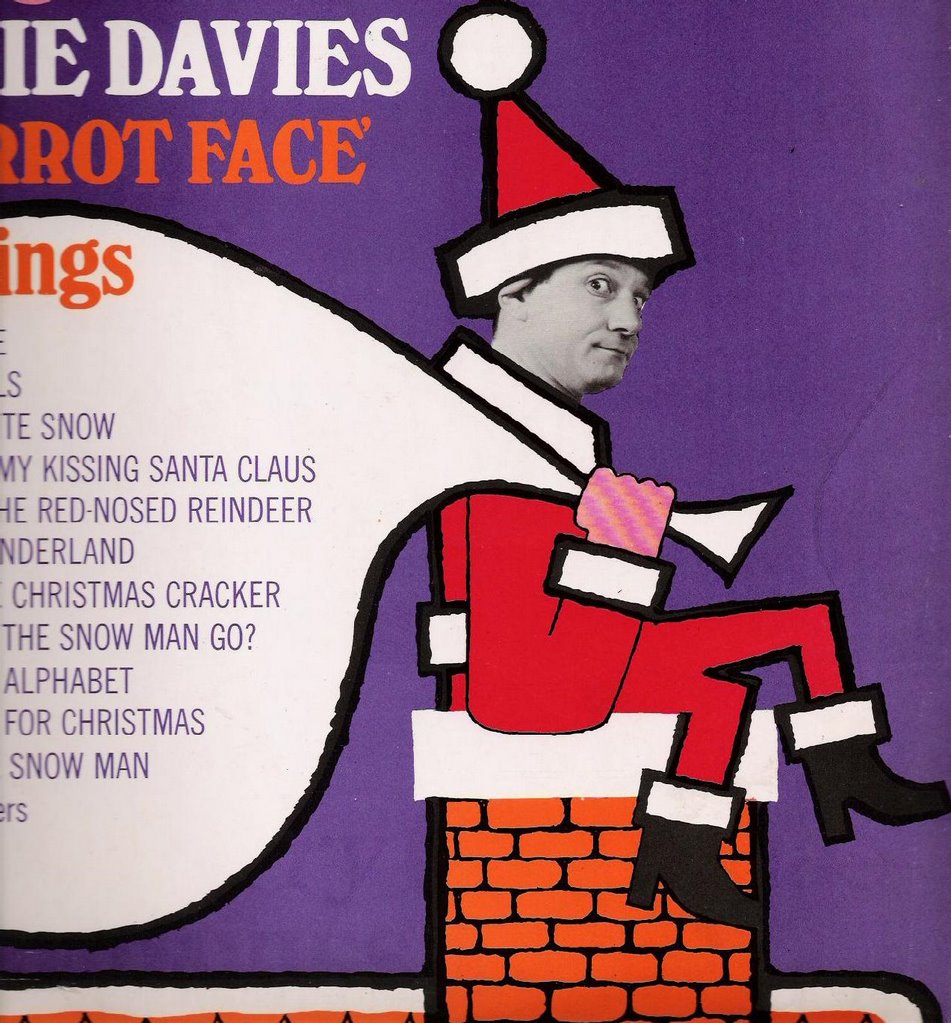
As everyone seems to be uploading all their Christmas junk, I thought I would find a few horrors lurking in my collection and join in with the festive fun ( or not, as the case may be ). This LP on the Major Minor label was released in 1968 when Freddie was at the height of his powers. As you will hear his comedy was not very subtle and relied heavily on a strange impediment - a lisp with a limp.

"He learned his craft as a Butlin's Redcoat in the 1950s. By 1963 he had pulled an old hat over his face and adopted a ferocious lisp to become "Parrot Face", pronounced "Parrot Faith".

A sniffy producer at the BBC told him: "You can't do that voice - it's an impediment."

Two years later, having won Opportunity Knocks outright and become a national favourite, Davies returned to the Beeb. Was his "impediment" now acceptable?

"I suppose it will have to be," flounced the same producer.

But as quickly as he flew to stardom, this Parrot vanished from sight. New, alternative comedy came along and tastes changed, he smiles ruefully.

"People get fed up with performers doing the same thing and they move on, particularly with comedy in the 1980s."

And yet there's more to it than that. Looking back, he reckons he was never focused enough to be a great comedian.

"A lot of comedians are not very nice people," he confides. "They have this single-minded selfishness. I wanted other things."

He had a spell in drama management, spent years entertaining cruise-liner passengers, starred in the brilliant Lee Evans film Funny Bones, toured in the Victoria Wood play Talent, and became a fixture for two years in the TV series Harbour Lights."


Freddie Davies - Sleigh Bells

Freddie Davies - Rudolph The Red Nosed Reindeer

Saturday, December 18, 2010

RIP Don Van Vliet


His obituary in the Guardian HERE

Thursday, December 16, 2010

Harry Belafonte


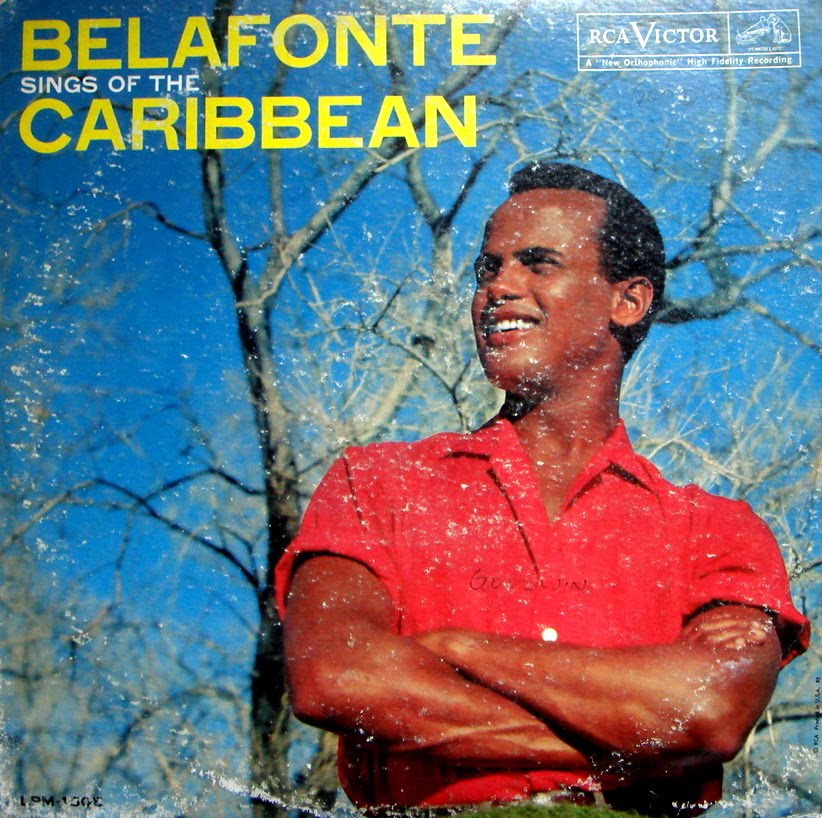
A recent charity shop find. Rather battered sleeve and scratched vinyl but always interesting to hear Harry's versions of old calypsos. A few well known ones here and some not so well known like Coconut Woman and Scratch Scratch which are really quite good despite the heavenly choir in the background. Not a patch on the real thing but worth a listen.

Side One - Scratch Scratch - Lucy's Door - Cordelia Brown - Don't Ever Love Me - Love, Love Alone - Coacoanut Woman.
Side Two - Haiti Cherie - Judy Drownded - Island In The Sun - Angelique - lead Man Holler.

Wikipedia says -

"Belafonte started his career in music as a club singer in New York, to pay for his acting classes. The first time he appeared in front of an audience he was backed by the Charlie Parker band, which included Charlie Parker himself, Max Roach, and Miles Davis among others. At first he was a pop singer, launching his recording career on the Roost label in 1949, but later he developed a keen interest in folk music, learning material through the Library of Congress' American folk songs archives. With guitarist and friend Millard Thomas, Belafonte soon made his debut at the legendary jazz club The Village Vanguard. In 1952 he received a contract with RCA Victor.

His first wide-release single, which went on to become his "signature" song with audience participation in virtually all his live performances, was "Matilda", recorded April 27, 1953. His breakthrough album Calypso (1956) became the first LP to sell over 1 million copies (Bing Crosby's "White Christmas" and Tennessee Ernie Ford's "Sixteen Tons", both singles, had previously surpassed the 1 million mark). The album is number four on Billboard's "Top 100 Album" list for having spent 31 weeks at number 1, 58 weeks in the top ten, and 99 weeks on the U.S. charts. The album introduced American audiences to Calypso music (which had originated in Trinidad and Tobago in the early 20th century) and Belafonte was dubbed the "King of Calypso," a title he wore with some reservations, since he had no claims to any Calypso Monarch titles."


Harry Belafonte - Side One

Harry Belafonte - Side Two

Wednesday, December 15, 2010

Charlie Gillett - Fan Fan


Another great 80's radio show from DJ Charlie Gillett - this time guest is Congolese band leader Fan Fan who used to play with Franco & OK Jazz and now with his own band Somo Somo. Despite the language barrier ( Fan Fan speaks no English ) Charlie manages to entertain us with the help of a interpreter. Some nice music from Franco, Rocheureax and Mblia Bel to name but a few.

More about Fan Fan HERE.


Charlie Gillett - Fan Fan Pt.1

Charlie Gillett - Fan Fan Pt.2

Charlie Gillett - Ebenezer Obey/ Joe Hagan


Continuing homage to late great DJ Charlie Gillett - a Foreign Affiar from Capital Radio back in the early 80's with guests Ebenezer Obey and Joe Hagan. Some great choices of music from all including much Nigerian Ju Ju and tracks from Ebenezer's latest album at the time.

Wikipedia says -

"Obey, whose full name is Ebenezer Remilekun Aremu Olasupo Obey-Fabiyi, was born in Idogo, Ogun State, Nigeria of Egba-Yoruba ethnic background. He is of the Owu subgroup of the Egba. He began his professional career in the mid-1950s after moving to Lagos. After tutelage under Fatai Rolling-Dollar's band, he formed a band called The International Brothers in 1964, playing highlife-juju fusion. The band later metamorphosed into Inter-Reformers in the early-1970s, with a long list of Juju album hits on the West African Decca musical label.

Obey began experimenting with Yoruba percussion style and expanding on the band by adding more drum kits, guitars and talking drums. Obey's musical strengths lie in weaving intricate Yoruba axioms into dance-floor compositions. As is characteristic of Nigerian Yoruba social-circle music, the Inter-Reformers band excel in praise-singing for rich Nigerian socialites and business tycoons. Obey, however, is also renowned for Christian spiritual themes in his music and has since the early-1990s retired into Nigerian gospel music ministry.

"


Ebenezer Obey - Foreign Affair

Thursday, December 02, 2010

Club Ska '67


An LP from 1967 on the Wirl label featuring some great tracks that were to inspire another generation of bands during the Two Tone ska revival a few years later.

Wikipedia says -


"After World War II, Jamaicans purchased radios in increasing numbers and were able to hear rhythm and blues music from Southern United States cities such as New Orleans by artists such as Fats Domino and Louis Jordan.The stationing of American military forces during and after the war meant that Jamaicans could listen to military broadcasts of American music, and there was a constant influx of records from the US. To meet the demand for that music, entrepreneurs such as Prince Buster, Clement "Coxsone" Dodd, and Duke Reid formed sound systems. As jump blues and more traditional R&B began to ebb in popularity in the early 1960s, Jamaican artists began recording their own version of the genres. The style was of bars made up of four triplets, similar to that of "My Baby Just Cares for Me" by Nina Simone, but was characterized by a guitar chop on the off beat - known as an upstroke or skank - with horns taking the lead and often following the off beat skank and piano emphasizing the bass line and, again, playing the skank. Drums kept 4/4 time and the bass drum was accented on the 3rd beat of each 4-triplet phrase. The snare would play side stick and accent the third beat of each 4-triplet phrase. The upstroke sound can also be found in other Caribbean forms of music, such as mento and calypso."


Delroy Wilson - Dancing Mood

The Gaylads - Stop Making Love

Rita Marley - Pied Piper

The Soul Brothers - Lawless Street

Sir Lord Comic - Ska-ing West

The Rulers - Copasetic