Friday, April 13, 2012

Bob Fisher & His Skiffle Group


An LP found today in the Oxfam shop for a mere three quid which was a surprise as they usually charge a lot more for rarities like this. I assume it is rare as not much mention of Bob Fisher or his skiffling pals online. The record was made in Canada on the Arc label so they may be Canadians cashing in on the skiffle boom of the late 50's? Any leads greatly appreciated as usual.

Bob Fisher - Have A Drink On Me

Bob Fisher - Putting On The Style

Bob Fisher - Wabash Cannon Ball

Bob Fisher - Maggie Mae

Bob Fisher - Big Midnight Speacial

Bob Fisher - Grand Coulee Dam

Wednesday, April 11, 2012

Paragons


The last scratchy reggae single for the time being. This one is by the Paragons who I know little about on the Treasure Isle label from 1968.

Wikipedia says -

"The Paragons were originally Garth "Tyrone" Evans, Bob Andy, Junior Menz, and Leroy Stamp. In 1964 Stamp was replaced by John Holt, and Howard Barret replaced Menz.
The early Paragons sound was influenced by American soul music and used the tight vocal harmonies of Jamaican groups of the early 1960s. In 1964, the group caught the attention of the record producer, Duke Reid, and they cut a succession of singles for his Treasure Isle record label.
After this early success Bob Andy quit the group, and the Paragons abandoned their soulful sound to become the most popular rocksteady act in Jamaica, but disagreements over money led to the band's break-up in 1970. Of the band's other members, only John Holt went on to have a significant solo career.
The Paragons' recordings, most famously "Tide Is High", written by Holt, and featuring the violin of "White Rum" Raymond, are among the highlights of Jamaican popular music. "The Tide Is High" was taken to the top of the UK and US charts by Blondie in 1980; whilst Atomic Kitten's cover version also topped the UK Singles Chart in 2002."


Paragons - Silver Bird

Paragons - So Close To You

Tuesday, April 10, 2012

Keith & Enid/Trenton Spence


Another obscure single - to me anyway. I've never heard of Trenton Spence and not much about him on the internet. Any info. greatly appreciated as always. Keith & Enid I do know as I have an LP by them somewhere that has been requested. If only I could find it! Watch this space.


Keith & Enid - Send Me

Trenton Spence - People Will Say We're In Love

Desmond Dekker/ The Maytals


More greats from the reggae pile. Another double "A" side with Desmond Dekker and The Maytals sharing the honours on this 1968 single on the Pyramid label.

Wikipedia says of Desmond Dekker -

"He was born Desmond Adolphus Dacres in St. Andrew, Jamaica and grew up in Kingston, where he attended the Alpha Boys' School. After his mother took ill and died, his father moved him to St. Mary, and then to St. Thomas, where he apprenticed as a tailor before returning to Kingston and taking a job as a welder, singing around his workplace while his co-workers encouraged him. In 1961 he auditioned for Coxsone Dodd (Studio One) and Duke Reid (Treasure Isle). Neither was impressed by his talents, and the young man moved on to Leslie Kong's Beverley's record label, where he auditioned before Derrick Morgan, then the label's biggest star.

With Morgan's support, Dekker was signed but did not record until 1963 because Kong wanted to wait for the perfect song, which "Honour Your Mother and Father" was felt to be. "Honour Your Mother and Father" was a hit and was followed by "Sinners Come Home" and "Labour for Learning", and at this time Desmond Dacres became Desmond Dekker. His fourth hit made him into one of the island's biggest stars. It was "King of Ska", a rowdy and jubilant song on which Dekker was backed by The Cherrypies (also known as The Maytals). Dekker then recruited four brothers, Carl, Patrick, Clive and Barry who became his backing band, The Four Aces.
Dekker and the Howards recorded a number of hits including "Parents", "Get Up Edina", "This Woman" and "Mount Zion". Until 1967 Dekker's songs were polite and conveyed respectable, mainstream messages. In that year, however, he appeared on Derrick Morgan's "Tougher Than Tough", which helped begin a trend of popular songs glamorizing the violent rude boy culture. Dekker's own songs did not go to the extremes of many other popular tunes, though he did introduce lyrics that resonated with the rude boys starting with one of his best-known songs, "007 (Shanty Town)". The song established Dekker as a rude boy icon and he also became an established hero in the United Kingdom's mod scene.[citation needed] "007 (Shanty Town)" was a Top 15 hit in the UK, and Dekker toured that country with a posse of mods following him."

Wikipedia says of The Maytals -

"Frederick "Toots" Hibbert, the frontman of the group, was born in May Pen, Clarendon, Jamaica in 1945, the youngest of seven children. He grew up singing gospel music in a church choir, and moved to Kingston in 1958 at the age of thirteen.
In Kingston, Hibbert met Henry "Raleigh" Gordon and Nathaniel "Jerry" Mathias, forming in 1961 a group whose early recordings were incorrectly attributed to 'The Flames' and 'The Vikings' in the UK by Island Records. The Maytals first had chart success recording for producer Clement "Coxsone" Dodd at Studio One. With musical backing from Dodd's house band, The Skatalites, the Maytals' close-harmony gospel singing ensured success, overshadowing Dodd's other up-and-coming vocal group, The Wailers. After staying at Studio One for about two years, the group moved on to do sessions for Prince Buster before recording with Byron Lee in 1966. With Lee, the Maytals won the first-ever Jamaican Independence Festival Popular Song Competition with their original song "Bam Bam" (later covered in a Dancehall style by Sister Nancy, and also by Yellowman in 1982). However, the group's musical career was interrupted in late 1966 when Hibbert was arrested and imprisoned for 18 months. He stated that he was not arrested for ganja, but whilst bailing a friend. He also stated that he made up the number 54-46 when writing "54-46 That's My Number" about his time in jail.
Following Hibbert's release from jail towards the end of 1967, the Maytals began working with the Chinese Jamaican producer Leslie Kong, a collaboration which yielded a string of hits throughout the late 1960s and early 1970s. These included "Do the Reggay", one of several songs released in 1968 to first use the word 'reggae' (spelled 'reggay') in a Jamaican recording; "Pressure Drop"; "54-46 That's My Number" the 1969 Jamaica festival's popular song winner; "Sweet and Dandy"; and "Monkey Man", the group's first international hit in 1970."


Desmond Dekker - Foo Manchu

The Maytals - We Shall Overcome

Monday, April 09, 2012

Winston Jarrett


More reggae from 1974 - this time Winston Jarrett on the Atra label.

Wikipedia says -

"Born in 1940 in Lime Tree Gardens, Saint Ann Parish, Jarrett grew up in the Jones Town area of Kingston after moving there with his mother at the age of five. There, he was taught to play guitar by Jimmy Cliff and Alton Ellis. Jarrett's introduction to the music industry was as a member of Alton Ellis's backing band The Flames in the early 1960s, formed when Ellis's original singing partner Eddie Perkins emigrated to the US, singing on hits such as "Dancecrasher", "Cry Tough", "Rocksteady" and "Girl I've Got a Date". While with Ellis he wrote songs such as "Sunday Coming" and "True Born African". In 1967, Jarrett parted ways with the UK-bound Ellis and with fellow Flame Edgar "Egga" Gardner formed The Righteous Flames with Junior Green, and the trio recorded for Arthur "Duke" Reid's Treasure Isle label and then for Clement "Coxsone" Dodd's Studio One label. In 1969 they also recorded for Lee "Scratch" Perry ("Zion I Love You"). In the 1970s, they were generally billed as 'Winston Jarrett and the Righteous Flames'. Among the members of The Righteous Flames was Danny Clarke, who left to form The Meditations in 1974.
In the 1970s, tired of recording for others without receiving adequate payment, Jarrett self-produced much of his output, releasing it on his own Attra, Human Rights and Humble labels. Jarrett recorded as a solo artist in the late 1970s and 1980s, releasing the Wise Man album in 1979 and Rocking Vibration in 1984. He re-formed the Flames, releasing the album Jonestown in the late 1980s, and in the early 1990s recorded a tribute album to Bob Marley, also featuring Peter Tosh and Bunny Wailer."


Winston Jarrett - No Time To Waste

Winston Jarrett - Time Dub

The Soul Vendors/ Ethiopians


Double "A" sided single featuring the Soul Vendors and The Ethiopians on the Studio One label from 1967.

The Soul Vendors -

"The Soul Vendors the group that gave us 'Rock Steady', the phrase originated by Coxone Dodd, the record producer and owner of Studio One studio. This new sound was much slower than Ska, stronger base line and a persistent shuffling rhythm together with some very fine sax and trumpet solo's, and the organ was used to greater effect. The vocal styles were very soulful, heavily influenced by the USA soul and R & B records of that period. "Rock Steady" by Alton Ellis issued in 1967 on the Treasure Isle label sums up the new style, using repeat upbeat guitar riff and the brass section answering the vocals, beautiful sax solo, even a vocal backing group, all added up to a suberb production by Duke Reid who went on to make this new sound his own. "

Wikipedia says of The Ethiopians -

"The group started out recording for Clement 'Coxsone' Dodd in 1966. Dillon had previously released some mento songs under the name Jack Sparrow. Around late 1966, Morris left the Ethiopians. Having left Dodd, the Ethiopians started recording at Dynamic Studios for the W.I.R.L. label, releasing the rocksteady "Train to Skaville", which was their first success. In 1968, they recorded the song "Everything Crash", their first big hit. The song criticised the political situation in Jamaica at the time, such as water rationing and power cuts that led to unrest; such as an incident in which thirty one people were shot by the police.[citation needed] "Everything Crash" was later covered by Prince Buster. "The Whip" is another of their enduring songs from that period.
In 1969 they released the album, Reggae Power, and in 1970, Woman a Capture Man. Between 1970 and 1975, the Ethiopians switched from producer to producer, releasing songs such as "No Baptism", "Pirate", and "Good Ambition". Reid left the group in 1974. In September 1975, Taylor was killed by a van while he was crossing a road. In 1977, Dillon's fellow Ethiopians members Bro Fatty, Bro Ewing, Bro T, Mello and Hychi Dread released the album Slave Call, under The Ethiopians name.
In 1991, Dillon recorded the solo album On the Road Again. Toward the end of the 1990s, Dillon formed a new Ethiopians lineup with female backing vocalists Jennifer Lara and Merlene Webber, who appeared on the 1999 album, Tuffer Than Stone.[2]
After developing a brain tumor, on 28 September 2011 Dillon died at his daughter's home in Kingston, Jamaica."


Soul Vendors - Pupa Lick

Ethiopians - Leave My Business Alone

Sunday, April 08, 2012

Prince Buster


More ska from 1965 on the Blue Beat label. Classic Prince Buster that wasn't a big hit like Al Capone etc. but sounds pretty good to me now.

Wikipedia says -

"Cecil Bustamente Campbell, O.D. (born 28 May 1938), better known as Prince Buster, and also known by his Muslim name Muhammed Yusef Ali, is a musician from Kingston, Jamaica. He is regarded as one of the most important figures in the history of ska and rocksteady music. The records he made on the Blue Beat label in the 1960s inspired many reggae and ska artists.


Campbell began his professional career as a singer in 1956; performing in Kingston nightclubs. He formed a succession of bands with several of his friends, none of which were successful.
Campbell's music career reached maturity with the growth of the sound system. Across Jamaica, music promoters drove vans filled with stereo equipment to stage mobile parties. The operators of the sound system would play the popular R&B dance records of the day and often they would have a vocalist called a toaster call out the dancers' names, chant in rhythm, and make light-hearted boasts. Deejay "toasting" was one of the precursors to the style of vocal delivery that eventually evolved into rap.
Eventually, Campbell was introduced to Clement Dodd, a musically-inclined businessman who operated one of Kingston's most popular sound systems. Interestingly, Campbell was not hired as a musician but as security; because of rivalries between fans devoted to a particular sound system, the parties sometimes could become quite rough, and Campbell had been a skillful amateur boxer as a teenager. It was in this line of work that he earned the nickname "The Prince", which along with his boyhood moniker "Buster" (from his middle name Bustamente), formed the name under which he would later become famous."


Prince Buster - Big Fight

Prince Buster - Red Dress

Saturday, April 07, 2012

Sweet Confusion


Another reggae single on the Escort label from 1969.
Again very hard to find anything about them on the internet. Any info. greatfully received.

Sweet Confusion - Conquer Lion

Sweet Confusion - Hotter Scorcher

Rico Rodrecez


Odd spelling of Rico Rodriquez here on this Pama single from 1968. A chugging ska instrumental takes on two big soul hits of the 60's.

"One of the most prolific session players of Jamaica's pre-ska era, trombonist Rico Rodriguez recorded both as a solo artist and as an honorary member of The Specials. Born October 17, 1934, his musical pursuits began while attending Kingston's Alpha Boys School, an institution for wayward boys, where he studied trombone under the legendary Don Drummond. In the years to follow, Rico emerged as one of Jamaica's most highly regarded session musicians, often working under the direction of the renowned producer Duke Reid.

In 1961, in the months prior to the explosion of the ska phenomenon, he relocated to the UK, where he recorded a number of sides for the fledgling Island label and gigged extensively on the jazz and R&B circuits, playing with Georgie Fame's Blue Flames and others. He also remained a top-notch session man, appearing on Sugar & Dandy's 1967 classic "A Message to You Rudy," among others. "

Discover more about Rico Rodriquez HERE.


Rico Rodrecez - It's Not Unusual

Rico Rodrecez - Soul Man

Wednesday, April 04, 2012

Stargazers Of Kumasi


EP on the Philips label from 1963. The Stargazers consist of DeRoy Taylor, Adlib Kwaku Anim, Dan Danquah,and Patience Ocansey.

The label blurb says -

"The "Stargazers" dance band is a highlife-band with a very popular "beat", a beat created in Kumasi, but well known for years thoughout West Africa.
This popularity did not come easily and they had to work hard for their success by composing first-class dance music, playing well rehearsed arrangements and travelling to many places in Ghana and other West African counties to find dance halls.
The Stargazers of Kumasi ave made broadcasts and were the first Ghanaian band to appear on television (W.N.T.V.) and they have also made a large number of records."


Stargazers - Maggie Menewo Bewu/Fa To Woho Fa

Stargazers - Asamando/Wansemapobi

Soul Rhythms


Pleasant enough rock steady single on the Gas label from 1969. Nothing found for the Soul Rhythms on the internet.


Soul Rhythms - Soul Call

Soul Rhythms - Musical Gate

The Two Kings


Rather scratchy single on the Island label from 1965. Average rock steady songs by a duo that's unknown to me. Hardly surprising considering the dullness of both songs here.


The Two Kings - Hit You Let You Feel It

The Two Kings - Honey I Love You

Friday, March 30, 2012

The Maple Leaf Four


A record on the Embassy label from 1961 I found in a Brighton charity shop recently. I assume they were a Canadian band but not much about them on the internet sadly.

The sleeve notes say -

"Hey there, stranger. Just like to invite you in and set yourself down to hear a mighty fine round-up of some mighty fine songs.

Which is the best way to introduce you to"Home On The range", a collection of the best cowboy songs presented by that sharp shooting, sure shooting quartet, The Maple Leaf Four."

It goes on in that rather irritating fashion and gives you no information about them whatsoever!

Tracks are -

1. Mule Train
2. Call Of The Canyon
3. (Roll Along) Wagon Train
4. Old Shep
5. Home On The Range
6. Ole Faithful

Maple Leaf Four - Side One

Monday, March 26, 2012

Kicking Mule


A nice compilation of folky blues guitar from Kicking Mule on the Sonet label from 1974. Some fine instrumental and a couple of vocal tracks including such notables as Rev. Gary Davies, Stefan Grossman, Woody Mann etc.

Wikipedia says of Rev. Gary Davies-

"Gary Davis was born in Laurens, South Carolina, and was the only one of eight children his mother bore who survived to adulthood. He became blind as an infant. Davis reported that his father was killed in Birmingham, Alabama, when Davis was ten, and Davis later said that he had been told that his father had been shot by the Birmingham High Sheriff. He recalled being poorly treated by his mother and that before his death his father had given him into the care of his paternal grandmother.
He took to the guitar and assumed a unique multi-voice style produced solely with his thumb and index finger, playing not only ragtime and blues tunes, but also traditional and original tunes in four-part harmony
In the mid-1920s, Davis migrated to Durham, North Carolina, a major center for black culture at the time. There he collaborated with a number of other artists in the Piedmont blues scene including Blind Boy Fuller and Bull City Red. In 1935, J. B. Long, a store manager with a reputation for supporting local artists, introduced Davis, Fuller and Red to the American Record Company. The subsequent recording sessions marked the real beginning of Davis' career. During his time in Durham, Davis converted to Christianity; he would later become ordained as a Baptist minister. Following his conversion and especially his ordination, Davis began to express a preference for inspirational gospel music."


Tracks are as follows -

1.Dave Laibman - Granpa Spells
2. Peter Finger - Second Love
3. Rev. Gary Davies - Let Us Get Together
4. Art Rosenbaum - Sallu Goodwin
5. Dave Evans - Sad Pig Dance
6. Larry Sandberg - Delta Swing
7. Dale Miller - Black Berry Rag
8. Peter Finger - Watchtower

Kicking Mule - Side Two

Sunday, March 25, 2012

Rythm & Blues Party


This Philips Lp from 1963 has lost it's sleeve somewhere along the way. I tried to find it online but no luck. A great compilation of rockin' R & B blasts from the past including such delights as Balin' Wire by Sil Austin, Pog Wog by Red Prysock and He Got What He wanted by Little Richard to name but a few.

Side one includes -

1.Shufflin' Home - Sil Austin
2. Jim Dandy - Ruth Brown
3. Rockin' Robin - Clyde McPhatter
4. 2 Point 8 - Red Prysock
5. I'll Drown In My Own Tears - Ray Charles
6. Caldonia - Louis Jordan
7. Foot Stompin' - Red Prysock
8. Pink Shade Of Blue - Sil Austin

R & B Party - Side One

Friday, March 23, 2012

Joe Loss


Not a record I would normally buy but I was intrigued by some of the odd song titles. No self respecting mod would ever march to the title song. Hard to believe it was a minor hit at the time. The other tunes on this HMV EP from 1964/65 are far more interesting though and elements of Ska and R&B are clearly heard on tracks like March of The Voomins and Go Home Bill Ludendorff.

Wikipedia says -

"Loss was born in Spitalfields, London, the youngest of four children. His parents, Israel and Ada Loss, were Russian Jews and first cousins. His father was a cabinet-maker who had an office furnishing business. Loss was educated at Jews' Free School, Trinity College of Music and the London College of Music. He started violin lessons at the age of seven and later played violin at the Tower Ballroom, Blackpool and also with Oscar Rabin. Loss started band leading in the early 1930s, working at the Astoria Ballroom and soon breaking into variety at the Kit-Cat Club. In 1934 he topped the bill at the Holborn Empire but in the same year moved back to the Astoria Ballroom where he led a twelve piece band. With broadcasting, recording and annual tours in addition to the resident work the band became highly popular over the next few years.In the 1950s Loss was resident band leader at the Hammersmith Palais and was remembered by a trainee nurse at Hammersmith Hospital as being as kind and gentlemanly when she attended him in hospital as in his public persona. His band's signature tune "In the Mood" would often be requested three or more times a night.
Loss's daughter Jennifer was the wife of British coach-builder Robert Jankel.
Loss died on 6 June 1990 and is buried at Bushey Jewish Cemetery in Hertfordshire."


Joe Loss - March Of The Mods/ Morocco Bound

Joe Loss - March Of The Voomins/ Go Home Bill Ludendorff

Tuesday, March 20, 2012

Charlie Gillett - Dave Kitson


This rather fuzzy tape from the early 80's features Charlie with guest Dave Kitson who used to promote bands at the Moonlight Club in West Hampstead in London at that time and later went on to produce records and start a record label called Red Flame.
Interesting mix of mostly obscure independent bands of the time and one reggae record to break up the flow of synth pop. This "Undercurrents" radio show was on Capital for about two years I think and I have most of them on tape (this one is numbered 15 ) but most have vanished. Hopefully I can find a few more and please the folk who have requested them over the years.

Guardian obituary for Charlie Gillett HERE.


Charlie Gillett - Dave Kitson

Monday, March 19, 2012

Charlie Gillett - Little Richard/ Danny Holder (Re-up)


A two part City Limits show on Capital here from the early 80's - the first half featuring rock 'n roll pioneer Little Richard who was in London to promote a biography that had just been published. Charlie plays some of his hits and and Richard chooses a couple of his favourites including Ike & Tina Turner and Prince.
The second half of the show is Danny Holder's choice of the Soca and Calypso hits of the time including songs by Relater and Sparrow etc.

Wikipedia says of Little Richard-

"Richard Wayne Penniman (born December 5, 1932) known by the stage name Little Richard, is an American singer, songwriter, pianist and recording artist, considered key in the transition from rhythm and blues to rock and roll in the 1950s. The Rock and Roll Hall of Fame web site entry on Penniman states that:

"He claims to be “the architect of rock and roll,” and history would seem to bear out Little Richard’s boast. More than any other performer - save, perhaps, Elvis Presley, Little Richard blew the lid off the Fifties, laying the foundation for rock and roll with his explosive music and charismatic persona. On record, he made spine-tingling rock and roll. His frantically charged piano playing and raspy, shouted vocals on such classics as "Tutti Frutti", "Long Tall Sally" and "Good Golly, Miss Molly" defined the dynamic sound of rock and roll."

Penniman began his recording career in 1951 by imitating the gospel-influenced style of late-1940s jump blues artist Billy Wright, but did not achieve commercial success until 1955, when, under the guidance of Robert "Bumps" Blackwell, he began recording in a style he had been performing onstage for years, featuring varied rhythm, a heavy backbeat, funky saxophone grooves, over-the-top Gospel-style singing, moans, screams, and other emotive inflections, accompanied by a combination of boogie-woogie and rhythm and blues music. This new music, which included an original injection of funk into the rock and roll beat, inspired James Brown, Elvis Presley, Otis Redding and generations of other rhythm & blues, rock and soul music artists. He was subsequently among the seven initial inductees into the Rock and Roll Hall of Fame in 1986 and was one of only four of these honorees (along with Ray Charles, James Brown, and Fats Domino) to also receive the Rhythm and Blues Foundation's Pioneer Lifetime Achievement Award.

In October 1957, while at the height of stardom, Penniman abruptly quit rock and roll music and became a born-again Christian. In January 1958, he enrolled in and attended Bible college[8] to become a preacher and evangelist and began recording and performing only gospel music for a number of years. He then moved back and forth from rock and roll to the ministry, until he was able to reconcile the two roles in later life."


Charlie Gillett - Little Richard

Charlie Gillett - Danny Holder

Charlie Gillett - Rico (Re-up)


More old radio shows from the archive - one from 1977 with Rico Rodriguez playing some of his influences including Don Drummond and Gene Ammons. Rico now plays in Jools Holland's band but has a lengthy career in Jamaica playing on many Ska sessions in the 60's.

Wikipedia says if Rico -


"Rodriguez was born in Kingston, Jamaica, and was taught to play the trombone by his slightly older schoolmate Don Drummond at the Alpha Boys School. In the 1950s, he became a rasta and became closely musically related to rasta drummer, Count Ossie. In 1961, he moved to the UK and started to play in reggae bands there. In 1976, he recorded the album, Man from Wareika under contract with Island Records.In the late 1970s, with the arrival of the 2 Tone genre, he played with ska revival bands such as The Specials. One of his most notable performances was on The Specials' song, "A Message to You, Rudy".

Rodriguez also helmed his own outfit, Rico and the Rudies, to yield the albums Blow Your Horn and Brixton Cat.

In 1995 Island Records released the album Roots to the Bone, an updated version of Rodriguez's earlier work, Man from Wareika.

Since 1996, amongst other engagements, he has played with Jools Holland's Rhythm and Blues Orchestra and he also performs at various ska festivals throughout Europe with his own band.

He was awarded an MBE (Member of the Order of the British Empire) at Buckingham Palace on 12 July 2007, for services to music."

fRoots article about Charlie HERE.


Charlie Gillett - Rico

Wednesday, March 14, 2012

Charlie Gillett - Roy Brown (Re-Up)


Another great old Honky Tonk radio show from 1978 broadcast on Radio London. Charlie is talking to R&B pioneer Roy Brown and playing some of his hits from the 40's and 50's and tracks from Roy's latest release. Interspersed with some fascinating tales of how it was for black artists in the record business back then - unscrupulous managers and all.

Wikipedia says -

"Roy James Brown (September 10, 1925 — May 25, 1981 was a pioneering Rhythm & Blues singer, songwriter and musician who had a primary influence on the early development of rock & roll music. Brown sang R&B tunes with a gospel feel, the first blues singer to do so. The "call and response" gospel style was limited to the church prior to Brown's arrival to the music scene. R&B was mostly "jivey" novelty tunes, like "Caledonia" by Louis Jordan and blues sung behind jazzy, boogie-woogie beats like "Roll 'em Pete" by Joe Turner. His seminal "Good Rocking Tonight" was covered by Wynonie Harris, Elvis Presley, Ricky Nelson, Jerry Lee Lewis, and Pat Boone. In addition, his melismatical pleading, gospel-steeped delivery impacted the vocal styles of B.B. King, Bobby Bland, Jackie Wilson and Little Richard. His role as a crucial link between postwar R&B and rock's initial rise is underappreciated by the masses."


Charlie Gillett - Roy Brown Pt. 1

Charlie Gillett - Roy Brown Pt. 2

Tuesday, March 13, 2012

Danny ( Kalauawa) Stewart


Another of those records you just have to buy for the sleeve alone. The music is quite good too despite playing safely in that middle of the road type Hawaiian "easy listening" vein that fans of this music seemt to love. I was once a member of the Hawaiian Tape Club which passed around compilations of exotic south sea island music and most of it was very dull - even duller than this! I sent round a few "novelty" tiki tapes to liven things up a bit but they met with scant response from the mostly fuddy-duddy members.
Heres a quote from the LP sleeve-

"The forces set in motion by the missionaries have made themsleves felt very strongly in the songs that Hawaii now sends out to the world. In the first place there is the effect of a people quite recently pagan very quickly civilised and nourishing beneath the surface an engaging naivete which gives to Hawaiian songs something of the quality of the calypso. But there is also a more direct influence, for the form of Hawaiian music is not ancient in origin but has been evolved and adapted over the last century. Even the Hawaiian guitar and ukulele are imported commodities, though the habit of running the fingers over the strings to give a singing intonation has been developed here more than anywhere else. As a final blow to those who dream of going native it must also be recorded that the form of the songs has been shaped most strongly by the swinging tempo of the hymns that those missionaries originally bought from new England and turned into the popular music of the islands."

Tracks are as follows -

1. Song Of The Islands
2. Lovely Hula Hands
3. Hawaiian War Chant
4. Little Brown Gal
5. Fair Hawaii
6. Sweet Leilani

Danny (Kalauawa) Stewart - Side One

Monday, March 12, 2012

From The Bayou


Another from the dusty attic pile - originally bought at Cheshire Street in East London in the 80's or 90's. A nice selection of Cajun tracks on the Liberty label from 1970 chosen by Mike Leadbitter to tie in with the publication of a book of the same name.

Wikipedia says -

"The first recorded Cajun song, "Allons à Lafayette" (Let's go to Lafayette) was recorded in 1928 by Joe Falcon and Cléoma Breaux. Standard versions of songs started to emerge due to the increase in the availability of phonographs. Some of the earliest recordings of Cajun music that exist were done in Louisiana during the late 1920s by noted historian and American folklorist Alan Lomax.
Many notable musicians during the time period include Joe Falcon and Cleoma Breaux, Amédé Ardoin, Breaux Brothers, Segura Brothers, Leo Soileau accompanied by accordionist Mayuse (Maius) Lafleur or Moise Robin, and Dennis McGee accompanied by fiddler Sady Courville or Ernest Frugé.
By the mid-to-late 1930s, a large influx of English speaking people came for the oil fields in Southwest Louisiana. Also, a large migration of French speaking Cajuns expanded to Texas. It was common for performers to sing in both French and English and borrow heavily from the popular country music and Texas swing music on the radio.
Notable musician Harry Choates recorded the first national hit with a Cajun song, Jolie Blonde in 1946. Other groups from the 1930s and 40s that were able to garner national attention include Leo Soileau and His Four Aces, the Hackberry Ramblers, Happy Fats and the Rhythm Boys, the Alley Boys of Abbeville, the Dixie Ramblers, and J. B. Fuselier and His Merrymakers. Choates' Jolie Blonde, and Hank Williams' song Jambalaya (On the Bayou), which used the melody of the Cajun song Grand Texas, spawned regional and national interest in the music, opening the door to Nashville country music careers for Cajun musicians Jimmy C. Newman, Rufus Thibodeaux, Doug Kershaw, Jo-El Sonnier, and others."

Tracks are -

1. Sweet Thing - Cleveland Crochet
2. Coming Home - Jay Stutes
3. The La La Blues - La La Laverne
4. Mardi Gras Chant - Dewey Balfa
5. Mama Rosin - Little Yvonne Le Blanc
6. La Cucaracha - Nathan Abshire
7. Cajunland Twist - Buck Mouhart


From The Bayou - Side Two

Osayomore Joseph


An LP on the Emotan record label from Nigeria (1982). One of a big stack of Afrobeat I bought in a junk shop in Stepney, East London where I lived for a while in the 70's and 80's. It may even come from Brick Lane flea market which was nearby and a regular haunt on a Sunday.

"Osayomore Joseph arouses too the same curiosity; due to his talent, his energy, his commitment, he calls back(reminds) without hesitating his elder son(brother), Fela. Its style, its musical game(set,play), draws its roots from the earth(ground) edo; but the culture and the language(tongue) edo are strongly influenced by the yoruba culture for centuries. By listening to Osayomore Joseph, we feel(smell) his(her,its) originality edo with its oriental impulses but the inheritance of Fela and the yoruba culture is quite obvious. This sensation can arrest(dread) in the evolution of the artist since its musician's stage(stadium) of the soil until its highlight of all over the world known national singer, as well as in its rhythmic game(set,play) and its instruments. The theme of the contesting, the posture of public polemicist, the rhetoric warrior or politics(policy), satyr, the irony, the stage setting and the parody, all this pulls the decoration(set) of a democratic kalakuta Republic version. Where from the subject of the walking(march), the fight, and especially the name of its firebrand-lighthouse: Osayomore Joseph Liberation Army."

Tracks are as follows -

1. Omonogie
2. Okpani Ya
3. Obo

Osayomore Joseph - Side Two

Wednesday, March 07, 2012

Mickey Katz - Fiddler On The Roof


Not the usual Mickey Katz humour here but instrumental music from the hit Broadway show on the Ember label from 1967.

The sleeve notes say -

"There are many things in Jewish tradition so undeniably warm and appealing that they are sought out and embraced by all people. Broadway's "Fiddler On The Roof" is the very essence of these traditions, and the public has responded with it's acclaim for this masterpiece of musical theatre, its composer and author Jerry Brock and Sheldon Harnick, and it's star Zero Mostel.

It is in keeping with this spirit that another Yiddish favourite , Mickey Katz, takes the honours here with this captivating instrumental portrayal of "Fiddlers" wonderful score. In this music that depicts the life of a small Jewish community in Czarist Russia, you will experience the depth of a proud father's melancholy wonder upon realising that somewhere between "Sunrise and Sunset" his children have grown to adulthood; the playful philosophy of "If I Were A Rich Man" and the zesty lachiam"Toast To Life; the soulful beauty of a "Sabbath Prayer"; and the nostalgic reminiscence of people about to leave their modest town "Anantevka".

Tracks are -

1. Fiddler On The Roof
2. Sabbath Prayer
3. If I Were A Rich Man
4. Now I Have Everything
5. Medley: Far From The Home I Love/ Anakevka

Mickey Katz - Fiddler On The Roof Side One

Charlie Gillett - Running


Another Charlie Gillett on Capital Radio from the 80's this time a themed show about "Running". The usual eclectic mix of records including The Coasters, Sly & The Family Stone, Spencer Davies Group etc.

Charlie Gillett - Running Pt.1

Charlie Gillett - Running Pt.2

Tuesday, March 06, 2012

Alan Stivell


Curious mixture of Breton harp and electric guitars from this 1973 LP on the Fontana label. The songs work best for me when unencumbered by noisy rock musicians and the real folk shines through.

Wikipedia says -

"Alan Stivell (born Alan Cochevelou January 6, 1944) is a Breton musician and singer, recording artist and master of the celtic harp who from the early 1970s revived global interest in the Celtic (specifically Breton) harp and Celtic music as part of world music.


Alan was born in the Auvergnat town of Riom. His father Georges (Jord in Breton) Cochevelou was a civil servant in the French Ministry of Finance who achieved his dream of recreating a Celtic or Breton harp in the small town of Gourin, Brittany. In 1953, Alan began playing the instrument at the age of nine under the tutelage of his father and Denise Megevand, a concert harpist. Alan also learned Celtic mythology, art and history as well as the Breton language, traditional Breton dance and the Scottish bagpipe and the bombarde, a traditional Breton instrument, from the oboe family. Alan began playing concerts at eleven years and studying traditional Breton, English, Irish, Scottish, and Welsh folk music, also learning the drum, Irish flute, and tin whistle. He competed in and won several Breton traditional music competitions in the Bleimor Pipe band. Alan spent his childhood in Paris, with its cosmopolitan influences from France, Algeria, Morocco and elsewhere. But he fell in love with Breton music and Celtic culture in general, and often went back in his teens to Brittany.
Alan's first recording came in 1960 ("Musique gaelique"), a single that was followed by the LP Telenn Geltiek in 1964. He already recorded solo harp and harp backing singers in 1959 with Breiz ma bro ("Brittany my country") and a Mouez Breiz EP ("Voice of Brittany") with the female singer Andrea Ar Gouilh. His stage name, "Stivell", means "fountain" or "spring" in Breton. This name refers both to the Breton renewal and to his surname "Cochevelou" (an evolution of kozh stivelloù, "the old fountains")."

Tracks are as follows -

1. An Dro Nevez
2. Maro Ma Mestrez
3. Brezhoneg Raok
4. An Hani A Garan
5. Metig
6. Kimiad
4.


Alan Stivell - Side Two

Sunday, March 04, 2012

Frank Luther (re-Up)


Found a couple of years ago in a charity shop in Westcliff - on - Sea in Essex. One of Frank's records for children. I remember his classic "Three Billy Goats Gruff" that used to be played all the time on Children's Favourites on the radio throughout the 50's and 60's.

"Frank Luther (August 4, 1905 - November 16, 1980) was an American country music singer, songwriter and pianist.
Born Frank Luther Crow Lakin, Kansas, he was raised in Bakersfield, California. A trained pianist, he moved to New York City in 1928 to pursue a career in music. A country music singer, he was one of the first "Urban Cowboys", performimg country music at big city clubs as "Frank Luther and his Pards." He is remembered as the composer of "Barnacle Bill The Sailor" written with Carson Robison.
He married Zora Lyman, a fiddle player who performed and recorded with him. Eventually, Luther shifted his focus to children's songs, enjoying considerable success with his recordings on which he sang and told stories. Among the popular albums for children that Frank Luther released were "Raggedy Ann Songs & Stories" and "A Child's First Birthday Record."
For his contribution to the recording industry, Frank Luther has a star on the Hollywood Walk of Fame at 1708 Vine Street.
Frank Luther died in 1980 in New York city."


Frank Luther - Mr. Small

Friday, March 02, 2012

The Music Of Cosmos


Found in a record shop in Chester today in the 50p box. I was drawn to the sleeve art I suppose rather than the music which is pretty much as you would expect from an 80's TV show - lots of popular classics, Vangelis and few atmospheric oddities like the Bulgarian chanting thrown in for good measure.

Wikipedia says of Carl Sagan -

"Carl Edward Sagan ( /ˈseɪɡən/; November 9, 1934 – December 20, 1996) was an American astronomer, astrophysicist, cosmologist, author, science popularizer and science communicator in astronomy and natural sciences. He published more than 600 scientific papers and articles and was author, co-author or editor of more than 20 books. He advocated scientifically skeptical inquiry and the scientific method, pioneered exobiology and promoted the Search for Extra-Terrestrial Intelligence (SETI).
Sagan is known for his popular science books and for the award-winning 1980 television series Cosmos: A Personal Voyage, which he narrated and co-wrote. The book Cosmos was published to accompany the series. Sagan wrote the novel Contact, the basis for a 1997 film of the same name."

Tracks are as follows -

1. Symphony No. 19 by Alan Hovhaness (extract)
2. Legacy by Synergy
3. Russian Easter Festival Overture by Nicola Rimspky-Korsakov
4. Inside The Heart Of The Universe by Toru Takemitsu
5. Fly Night Bird by Roy Buchanan
6. Beauborg. Part 2 by Vangelis
7. The Rite Of Spring (extract) by Igor Stravinsky
8. Entends tu les Chiens Aboyer? by Vangelis
9. Bulgarian Shepheardess by Bulgarian Group
10. Heaven & Hell Part 1 by Vangelis

The Music Of Cosmos - Side Two

Thursday, March 01, 2012

Mickey Katz (Re-Up)


Another of those record labels that jump right out at you when you are sifting through piles of Mantovani, Mrs.Mills and Madonna records. Thankfully the songs are as weird and wonderful as the sleeve photo!
Here's what it says on the sleeve blurb-

"The difference between being slipped a Mickey Finn and a Mickey Katz is that you get knocked out in different ways. And in the latter case you keep coming back for more. Well, here's that more: a long playing, high fidelity "mitzeah."
Mickey's approach to a song is simple. He grabs the nation's favourites and gives them the stamp of his unique and abundant wit. The poor unsuspecting tune suddenly finds itself with more twists than a barrel of pretzels and more spice than a plate of pastrami. The famous doggie in the window turns out to be a pickle. It's no longer stars you shouldn't let get in your eyes, it's "schmaltz". And the wheel of fortune , alas, is nothing more than a "schlemiel".
Mickey was a musician before he was a comedian, and he played with several of the country's best bands before winning fame as the top dialectitian in Spike Jones' outfit. Now for his records and shows he hires the finest studio musicians in Hollywood, determined that his material shall not only be funny but musically solid."

For more about Mickey Katz and other great music go HERE.

Tracks are as follows -

1. I'm A Shlemiel Of Fortune
2. A Shmo Is A Shmo
3. Home Ofen Range
4. Patcha-Me
5. That Pickle In The Window
6. Don't Let The Shmaltz Get In Your Eyes


Mickey Katz - Side Two

Val Merrall


A poor tribute to Flanagan & Allen by Val Merrall on the cheapo Avenue label from 1971.
Apparently the nephew of Bud Flanagan and band leader . I found lots of links to the Val Merrall Orchestra but no biography as such.

Tracks are as follows -

1. Who Do You Think (You're Kidding Mr. Hitler)
2. On The Outside Looking In
3. Can't We Meet Again
4. Strolling

Val Merrall - Side One(extract)

Wednesday, February 29, 2012

Paul Daniels


An oddity this being a magician doing tricks on a record. A bit like a ventriloquist doing a radio show! They seemed to get away with it though for some reason. Just a small segment uploaded here as the whole thing is pretty tedious.

Wikipedia says -

"Daniels was born at 51 North Street in South Bank, Middlesbrough, the son of Handel Newton Daniels and Nancy Lloyd. Handel (known as Hugh) was a cinema projectionist at the Hippodrome Theatre and a former worker at Imperial Chemical Industries (ICI) Wilton.
During World War II, Daniels was evacuated to the Helmsley area. After Sir William Turners Grammar School on Coatham Road in Coatham, Redcar (now the Redcar & Cleveland College Connections Campus on Corporation Road) and his first job as a junior clerk in the treasurer's office of Eston council, Daniels served as a conscript in the 1st Battalion, The Green Howards, during his National Service and was posted to the British garrison in Hong Kong, before training as an accountant in the Civil Service. Even at this early age he had thinning hair which he claimed to be an act of 'magic'. Daniels later sported a wig for much of his television career. After working as a junior clerk and then as an auditor in local government Daniels joined his parents in the grocery business they were running at the time.[citation needed] He later set up his own shop – at one point a mobile shop – but eventually gave this up in favour of his growing career as a magician.
[edit]Showbusiness career
Daniels' interest in magic began at the age of 11 when, during a holiday, he read a book called How To Entertain At Parties. He has stated that: "From that moment, I can safely say that all I ever wanted to do in life was to become a professional magician". He began performing magic as a hobby, occasionally entertaining at parties and youth clubs and later doing shows for fellow servicemen during his national service. After returning to civilian life he continued to develop his magic by performing in clubs in the evenings while working at his grocery business during the day. At one point he worked with his first wife Jackie under the name of 'The Eldanis', an anagram of Daniels. It was while working the clubs that he developed what would become his long running catchphrase, "You'll like this...not a lot, but you'll like it." He has stated that he first came up with the line at a club in Bradford as a way to deal with a heckler.
A major turning point in Daniels' career came in 1969 when he was offered a summer season at Newquay. He decided to sell his grocery business and try magic as a full time career. He made his television debut on the long-running talent show Opportunity Knocks in 1970, and came second. Television producer Johnnie Hamp saw Daniels in that show and later gave him a regular spot on a show compèred by Bernard Manning The Wheeltappers and Shunters Social Club for Granada Television."


Paul Daniels - Side Two(extract)

The Bumper Fun Album


" The Best from BBC TV and Radio Children's Programmes" it says on the sleeve and includes samples from Listen With Mother, Play School, The Flumps, etc. and featuring the voices of Brian Cant, Rolf Harris,Lionel Morton, Gorden Snell etc. On the BBC Records label from 1979.

Wikipedia says of Brian Cant -

"Born in Ipswich, he currently lives in Buckinghamshire and is married to writer and director Cherry Britton, sister of TV presenter Fern Britton and actor Jasper Britton. They have three children, daughter Rose, and twins Christabel and Peter. He has two sons from his first marriage, Nicholas and Richard, who is also an actor. He is the son-in-law of the British actor Tony Britton and brother-in-law of the television chef Phil Vickery.
In 1999 he was diagnosed with Parkinson's Disease, referring to this in an interview with BBC Breakfast which was shown on 24 November 2010.

Cant is particularly well known for his work on many BBC children's programmes from the 1960s to the 1980s, including Play School, Play Away, Trumpton, Chigley, Camberwick Green and Bric-A-Brac. He was performing in drama-based BBC TV Schools Programmes about the Romans when he heard that auditions were being held for a new children's pre-school programme which was to be shown on the new BBC 2 channel. At his audition he was asked by programme editor Joy Whitby to get in a cardboard box and pretend to 'row out to sea'. He pretended to fish from his 'boat' and caught a wellington boot full of custard. He was cast as a presenter and first appeared on the third week in May 1964, and stayed with the programme for twenty-one years, becoming to many viewers 'Mr Play School'.
During the 1990s Cant starred as 'Brian' the farmer in the children's puppetry television programme Dappledown Farm, as well as providing the voice for one of the characters, Harry the Heron.
Cant is the storyteller of the UK version of Jay Jay the Jet Plane, and the narrator for the popular Canadian children's show Bruno.
Aside from his work on children's television, Cant is also an established actor. In the 1960s he appeared in two Doctor Who stories, in 1965 as "Kert Gantry" in The Daleks' Master Plan[3] and in 1968 as "Tensa" in The Dominators. He was one of the guest presenters used in the 1982 series of the game show It's a Knockout after Eddie Waring retired.
In 1998 Cant parodied his previous contributions as a narrator in 'The Organ Gang', a weekly segment in Lee and Herring's This Morning With Richard Not Judy, a BBC TV Sunday afternoon comedy show."

Tracks are as follows =

1. Party Time - Toni Arthur , Lionel Morton and Jonathan Cohen
2. Underneath The Spreading Chestnut Tree/ Standing on One Leg - Brian Cant
3. London's Burning/ The Sun Has Got His Hat On - Louise Hall-Taylor, James Earl Adair and Children's Choir of Christchurch, East Sheen.
4.Simon Says - Gorden Snell
5. Turkey In The Straw/ Papillon - Rolf Harris & Long Stratton V.C. Middle School, Norwich.
6. Trip To The Moon - The Flumps
7. Tomorrow - Katherine Stowell and members of the Girl Guides Association.


Bumper Fun Album - Side Two

Tuesday, February 28, 2012

Monster Mix


Trying out the Sound Cloud Mix thingy for the first time. An old monster/weird stuff comp. from 1994 featuring Viv Stanshall, John Otway, Annette, Penguin Cafe Orchestra etc. Let me know what you think and I'll upload some more maybe.

Monday, February 27, 2012

Charlie Gillett - Hamid Zagzoule


I've had requests for more Charlie Gillett shows so here's one from December 1988 on Capital Radio featuring Hamid Zagzoule who was a guest several times and always choose interesting tracks to play. Here the hour ( condensed to 45 minutes without traffic reports and adverts etc.) is filled with some wonderful highlights of the year including Baba Maal, Les Quatre Etoiles, and James Carr to name but a few.

"Hamid, who hails from Casablanca, is a producer and DJ living in London. He was a regular guest at the legendary Mambo Inn in Brixton, with occasional appearances at the Jazz Café, The South Bank Centre, the Barbican, Dingwals, Mwalimu Express, the Belmondo Club and once at the Albert Hall!Hamid has collaborated with Charlie Gillett on a number of radio broadcasts, notably the production of the ‘Saturday Night’ show on BBC Radio’s London Live station (previously GLR). He is a regular reviewer on Lucy Duran’s World Roots show on BBC Radio 3.For the past five years, Hamid has designed and programmed all the interval music between live acts at the Womad Festival, Rivermead, Reading, UK.Hamid has compiled CDs including ‘Cairo 2 Casablanca (Ptumayo)’, ‘The Couscous Beat’ (North Africa and beyond), ‘The Mediterranean Café’ (the authentic sounds of the Mediterranean), ‘Cairo Road’ (showcasing the stars of Arab classical music) and ‘Afrique Dynamique’ (the best in African Dance music) - all on the Nascente label. His latest CD ‘Tea in Marrakech’ (the funkiest sounds from the Kasbah) is out on Earthworks/Sterns.Hamid is currently part of the posse of resident DJs spinning the grooviest hits from the Med, North Africa and the Middle East in Cafe Oran Club at the Cargo in London.Biography provided by Hamid Zagzoule, 2001"


Read more about Charlie GillettHERE.


Charlie Gillett - Hamid Zagzou

Thursday, February 23, 2012

Della Reece


What first strikes you about this album on the Jubilee label (1960's) is the incredible weight! I first thought there must be two LP's in the sleeve and surprised to find just the one. This thing was made to last! A nice potted history of the blues with Della waxing lyrical about some of its origins in between tracks. Pleasant enough orchestra conducted by Sy Oliver accompanying throughout , verging on the MOR side of the blues.

Wikipedia says -

"Reese was born Delloreese Patricia Early in the historic Black Bottom neighborhood of Detroit, Michigan to African American steelworker Richard Thaddeus Early and Nellie Mitchelle, a Native American (Cherokee) cook. Delloreese's mother also had several older children, before her birth, all of whom did not live with her, hence, she lived as an only child. At only six years old, Reese began singing in church. From this experience, she became an avid gospel singer. As a young lady of the 1940s, on the weekends, she and her mother would go to the movies, independently, to watch the likes of Joan Crawford, Bette Davis and Lena Horne portray glamorous lives on screen. Afterwards, Reese would act out the scenes from every single film. In 1944, she began her career directing the young people's choir, after she had nurtured acting plus her obvious musical talent. She was often chosen, on radio, as a regular singer. At the age of thirteen, she was hired to sing with Mahalia Jackson's gospel group. Delloreese entered Detroit's popular Cass Technical High School (where she attended the same year with an unknown star, Edna Rae Gillooly, later known as Ellen Burstyn). At Cass Tech, she was a brilliant, no-nonsense student. She also continued with her touring with Jackson. With higher grades, she was the first in her family to graduate from high school in 1947, at only 15. Afterwards, she formed her own gospel group, the Meditation Singers. However, due in part to the death of her mother, and her father's serious illness, Reese had to interrupt her schooling at Wayne State University to help support her family. Faithful to the memory of her mother, Deloreese also moved out of her father's house, due to her feuding with her father, who had a new girlfriend. She then took on odd jobs, such as truck driver, dental receptionist, and even elevator operator, after 1949.
Performing in clubs, Early soon realized that she had no choice but to shorten her name from "Delloreese Early" to "Della Reese", knowing that her birth name was too long for a club marquee."

Tracks are -

1. The Story Of The Blues
2. Good Morning Blues
3. Empty Bed Blues
4. Squeeze Me
5. You've Been A Good Old Wagon
6. Sent For You Yesterday


Della Reece - Side One

Roger Saint- Pierre


I must admit I was intrigued by the blurry sleeve photo of the drummer playing his bongos and hoped the LP on the Ocora label (1984) would be a pleasant surprise but alas its just another tedious and pretentious drum solo done up to look like some kind of " poemes " and a "histiore" of drumming which it certainly isn't. Also its all in French so unable to figure out what the intention is - if any! I feel sorry for the audience but they seem surprisingly appreciative of this bongo bashing so maybe I'm in a minority.
Here it is anyway for all you bongo lovers out there!

"Flying in from his native Argentina and relocating himself to France in order to escape his native country's totalitarian regime, Martin Saint-Pierre settled down and released his first LP. In his hands, percussion becomes the departing point for a new means of expression that leans more to a contemporary creation instead of being a barely audible echo of a distant ancestral past. With his bendir – a Berber instrument out of the Atlas Mountains– Saint-Pierre leaps off straight away in an open space that qualifies itself as a “sonic sculpture”. Playing with contrasting effects, he emanates out a string of basic rhythms with frolic hand movements. He creates a wide sonic palette and upon listening attentively to it, it is at times hard to comprehend that such a recording was possible with nothing but the bendir. At times hurtful and at other occasions caressingly sweet, the tonal palette is wide and ranges from clear sounding notes to rumbling thunderous sounds and explosive eruptions. In all, he evokes an organic drift impregnated with a midnight ambience, punctuated by strange bits of percussive flares, but spending most drifting through deep dark cavernous expanses of sound and breathing out amazingly deep and physical sounds that are comprised out of a slow burning series of huge low end reverberations. The resonating sonics are given ample time to invade your listening space and hi-jack the ether. Scintillescent high end sparkles bobble up at the rear end of your acoustical wave frequency's periphery, super percussive skitter wraps around delicate melodic tom fills, occasionally sounding like a super slow abstract free jazz spread way out across the soundfield, with some serious stereo panning to underscore the total outcome. It all blends into an amorphous maelstrom swerving from one speaker to the other, oozing out dizzying dreamy soundscapes of percussive melodic clatter and strange rhythmic textural. drones that subtlety transform into high-end infected free jazz splatter."

Tracks are as follows -

1. Premiere partie
2. Extraits de poemes de Nicholas Guillen "Le cancion de Bongo" et "Bailando con los negros" de Pablo Neruda.


Roger Saint-Pierre - Side One

Tuesday, February 21, 2012

Wagadu Gu


A 12" single on the Rokel label from 1977 that I was convinced I had uploaded before but seems to have vanished from the archives. A song by Prince Nico Mbarga.

Wikipedia says -

"Although he only recorded one significant hit, "Sweet Mother," in 1976, which sold more than 13 million copies (and which is recognised as one of Africa's greatest songs), Mbarga played an important role in the evolution of African popular music. With his soulful vocals set to the light melodies of his acoustic guitar, Mbarga created a unique hybrid of Igbo and Congolese guitar playing and uplifting highlife rhythms. He formed his own group, Rocafil Jazz, to perform regularly at the Naza Hotel in the eastern Nigerian city of Onitsha.
After releasing a disappointing single in 1973, Mbarga and Rocafil Jazz had their first success with their second single, I No Go Marry My Papa, which became a regional hit. The band's inability to break past their local following resulted in their recording contract being dropped by EMI, a decision that proved ill-fortuned when the band signed with Rogers All Stars, a Nigerian recording company based in Onitsha, and recorded "Sweet Mother".
Sung in Pidgin English, "Sweet Mother" became one of the top sellers in the history of Nigerian music. In the six years that Mbarga and Rocafil Jazz remained with Rogers All Stars, 1975 to 1981, they recorded nine albums.

Temporarily relocating to England in 1982, Mbarga became known for his flamboyant, 1970s glam rock-inspired performances. While he continued to appear with Rocafil Jazz, Mbarga also performed with London-based highlife band the Ivory Coasters and Cameroonian vocalist Louisiana Tilda. Despite launching his own Polydor-distributed record label, upon returning to Nigeria, Mbarga and the original members of Rocafil Jazz separated after several Cameroon-born members were deported. Although he later formed the New Rocafil Jazz Band, Mbarga failed to match his early success. Leaving music, he turned his attention to managing the two hotels that he owned, Hotel Calbar and the Sweet Mother Hotel.

Prince Nico Mbarga was killed in a motorcycle accident on June 24, 1997, leaving behind "Sweet Mother" as the most popular song amongst Nigerians. Sweet Mother is sometimes called Africa's anthem and has been voted Africa's favourite song by BBC readers and listeners."

Wagadu Gu - Aki Special

Sunday, February 19, 2012

Roger Pierre and Jean Marc Thibault


10" Lp on the London label from the 50's I would guess. I was hoping for some novelty songs sung in French but mostly comedy sketches with some sound effects. Makes more sense to people who are French or know a little of the language! Nice cover illustration though by who knows?

Wikipedia says -

"Roger Pierre (30 August 1923; Paris, France – 23 January 2010) was a French comedic actor.
He often appeared in comedies with Jean-Marc Thibault.
Pierre died in his native Paris, aged 86, from cancer.

Roger Pierre and Jean-Marc Thibault were one of France's most popular comedy acts. Working regularly throughout the 1950s, 60s, and 70s. Pierre's first film was 1957's Beautiful Mind. He appeared in such comedies as Mary Mary, Who Is This Woman?, The Legatee, The Night of Barbizon and Fire's Mother Madam. He also co-hosted the television programme Incredible But True."


Roger Pierre & Jean-Marc Thibault - Side One

Friday, February 17, 2012

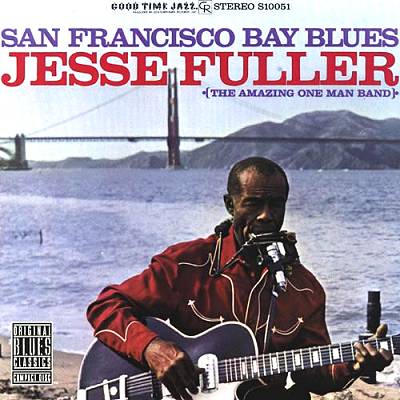
Jesse Fuller


I thought this was another i had featured here before but can't find any sign of it inn the archives - very strange. Anyway, a great Lp by one man band Jesse and recorded in one take by the sound of it. Actually reading the sleeve notes I see it was recorded live at a club called Good Time Jazz in 1962/3.

Wikipedia says -

"Jesse Fuller (March 12, 1896 — January 29, 1976) was an American one-man band musician, best known for his song "San Francisco Bay Blues".


Fuller was born in Jonesboro, Georgia, near Atlanta. He was sent by his mother to live with foster parents when he was a young child, in a rural setting where he was badly mistreated. Growing up, he worked a multitude of jobs: grazing cows for ten cents a day, working in a barrel factory, a broom factory, a rock quarry, on a railroad and a streetcar company, shining shoes, and even peddling hand-carved wooden snakes.
He came west and in the 1920s worked briefly as a film extra in The Thief of Bagdad and East of Suez. Eventually he settled in Oakland, California, across the bay from San Francisco, where he worked for the Southern Pacific railroad. During World War II, he worked as a shipyard welder, but when the war ended he found it increasingly difficult to find work. Around the early 1950s, Fuller's thoughts turned toward the possibility of making a living playing music."

Tracks are as follows -

1. John Henry
2. I Got A Mind To Ramble
3. Crazy About A Woman
4. Where Could I Go But To The Lord
5. Stealin' Back My Old Time Used To Be
6. Brownskin Girl I've Got My Eye On You

Jesse Fuller - Side Two

Baba Brooks


OK this is the last ska single from the dusty old box for a while you'll probably be glad to know! I've enjoyed going through them again. Lastly a rocking instrumental by Baba Brooks. Lesser known C.Duffus and C. Brown on the flip side.

Wikipedia says -

"Oswald "Baba" Brooks aka Baba Leslie (born c.1935) was a trumpet player who played jazz in the 1950s with the Eric Dean orchestra and recorded during the 1960s original Jamaican ska era for producers Duke Reid, Sonia Pottinger and her husband Lindon, King Edwards, and Prince Buster.

Brooks was born in Kingston, Jamaica c.1935.He played trumpet on recording sessions from the late 1950s onwards, often uncredited, and formed his own band in the early 1960s, having a hit in 1962 with "Independence Ska", which celebrated Jamaica's break from colonialism.[1] he also performed on several sessions with The Skatalites. He had further hits in 1964 with "Bus Strike" and "Musical Workshop". The band followed this in 1965 with "Guns Fever", recorded at Studio One. Brooks and his band continued to play on recording sessions until the early 1970s."


Baba Brooks - Shank I Sheck

S. Duffus/C. Brown - No Body Know

Laurel Aitken


More ska on the Dice label from 1966.

Wikipedia says -

"Born in Cuba of mixed Cuban and Jamaican descent, Aitken and his family settled in Jamaica in 1938. After an early career working for the Jamaican Tourist Board singing mento songs for visitors arriving at Kingston Harbour, he became a popular nightclub entertainer. His first recordings in the late 1950s were mento tunes such as "Nebuchnezer", "Sweet Chariot" (aka the gospel classic "Swing Low, Sweet Chariot") and "Baba Kill Me Goat". Progressing to a pre-ska shuffle, Aitken's 1958 single "Little Sheila"/"Boogie in My Bones" was one of the first records produced by Chris Blackwell, who founded his Island Records label that year, and the first Jamaican popular music record to be released in the United Kingdom. Other rock and roll singles from this period include "Low Down Dirty Girl", "Drinkin' Whisky" and "More Whisky", produced by Duke Reid.
Aitken moved to Brixton, London in 1960 and recorded for the Blue Beat label, releasing fifteen singles before returning to Jamaica in 1963. He recorded for Duke Reid, with backing from The Skatalites on tracks such as "Zion" and "Weary Wanderer", before returning to the UK, where he began working with Pama Records. He recorded hits such as "Fire in Mi Wire" and "Landlord and Tenants", which led to a wider recognition outside of Jamaica and the UK. This cemented his position as one of ska's leading artists and earned him the nicknames The Godfather of Ska, and later Boss Skinhead. He gained a loyal following not only among the West Indian community, but also among mods, skinheads and other ska fans. He had hit records in the United Kingdom and other countries in the 1950s through to the 1970s on labels such as Blue Beat, Pama, Trojan, Rio, Dr. Bird, Nu-Beat, Ska-Beat,Hot Lead and Dice. Some of his singles featured B-sides credited to his brother, guitarist Bobby Aitken. Aitken also recorded a few talk-over/deejay tracks under the guise of 'King Horror', such as "Loch Ness Monster", "Dracula, Prince of Darkness", and "The Hole". Aitken settled in Leicester with his wife in 1970. His output slowed in the 1970s and during this period he worked as an entertainer in nightclubs and restaurants in the area including the popular 'Costa Brava Restaurant' in Leicester under his real name Lorenzo. In 1980, with ska enjoying a resurgence in the wake of the 2 Tone movement, Aitken had his only success in the UK Singles Chart with "Rudi Got Married" (#60)released on I-Spy Records (the label created and managed by Secret Affair. Aitken's career took in mento/calypso, R&B, ska, rock steady, and reggae, and in the 1990s he even turned his talents to dancehall. He performed occasional concerts almost until his death from a heart attack in 2005. After a long campaign, a blue plaque in his honour was put up at his Leicester home in 2007."


Laurel Aitken - Jamaica

Laurel Aitken - I Don't Want No More

Bob Andy/Etheopians


More ska/rock steady on the Rio label from 1967.

Bob Andy's official website says -


"Bob Andy (born Keith Anderson) emerged as a solo star in 1966 with the smash hit "I've Got to Go Back Home", a song which has become a much-loved anthem for Jamaicans. He had served his singing and songwriting apprenticeship with the legendary vocal group THE PARAGONS, which he founded with Tyrone (Don) Evans and Howard Barrett, later joined by John Holt. The Paragons had several hits for producer Coxsone Dodd including the Number One "Love At Last", penned by Bob.
As one of STUDIO ONE's leading lights, Bob worked closely with Jackie Mittoo on many of the label's seminal sounds. Besides writing songs for himself which have become reggae standards - "Feeling Soul", "My Time", "Going Home", and "Too Experienced", to name just a few - Bob contributed hits for many of the other artists there.
In 1970, international recognition came when Bob and Marcia Griffiths recorded Nina Simone's "Young, Gifted and Black", which sold 1/2 million in the UK and Europe, and still receives frequent airplay today. BOB & MARCIA became household names, appearing on Top of the Pops and touring extensively. They had another UK Top Ten single and two albums for Trojan Records.

During the early 70s Bob continued his solo recordings; "You Don't Know" and "Life" are two songs from this time which hold a special place in the hearts of his British fans. After the duo split in 1974, Marcia became one of Bob Marley's I-Threes, and Bob's singles "Fire Burning" and "Check It Out" struck a responsive chord with Jamaicans in the new social consciousness of the Manley era."

Learn more about Bob Andy HERE.


Bob Andy - Stay In My Lonely Arms

The Ethiopians - Dun Dead A'Ready

Thursday, February 16, 2012

Lloyd Robinson


Another ska single from 1963. Not much known of this particular artist but I did find this small snippet of info -

Reggae singer Lloyd Robinson recorded a number of songs for Studio One starting in 1963. He later went on to cut sides for many Jamaican producers including Duke Reid, Lloyd Daley, Sir JJ and more. Robinson was a member of the late '60s rock-steady group the Tartans with Cedric Myton (who would later start the Congos), sang duets with Glen Brown and was half of the duo Lloyd and Devon, which had a hit for Derrick Morgan's Hop label, "Red Bum Ball." ~ Joslyn Layne, All Music Guide


Lloyd Robinson - I Need Your Love

Lloyd Robinson - You Told Me