Sunday, August 31, 2008

Roger Dee - (requested re-up)


Slim pickings at the bootsale today although I did find this oddity which is on the Toby label from early 70's I imagine judging by some of the impersonations Mr. Dee is attempting pictured on the back of the sleeve - like Tiny Tim, Rolf Harris and Frankie Vaughn. This sounds like a live show in front of an enthusiastic audience at Pontins Holiday camp as they get a name check on the back in the sleeve notes which state-

"Roger was born in Pontins - the son of a lady and gentleman - obviously a marriage of convenience. He merrily tap danced his way up the Ladder of Fame, to become the famous tap dancing window cleaner that he is today!!"

Thanks to many informative comments when I last posted this in 2006 there is more information about Roger which you can find if you type in Roger Dee into the search window above.


Roger Dee - Side One

Roger Dee - Side Two


These SendSpace files are available for seven days or untile exhausted.

Saturday, August 02, 2008

Ronnie Barker


An LP on the K-Tel record label from 1978. A compilation of Ronnie's songs, sketches and monologues mainly culled from his TV shows.

Wikipedia says-

"Barker was born in Bedford in Bedfordshire. He had two sisters; Vera (his older sister) and Eileen (his younger sister). The family moved to Oxford when his father, a clerk for Shell Oil, was relocated, when Barker was two years old. He took to writing plays for his family and neighbours, and often sat in the audience of The Oxford Playhouse, his local repertory company, dreaming of fame. Barker attended the City of Oxford High School for Boys, in Oxford, and at sixteen he left and took a job as a bank clerk - but the theatre called. He wrote to the Aylesbury Repertory Company in 1948 and his show business career began. Barker then went on to join the Playhouse Theatre, Oxford, at the time under the actor-management of Frank Shelley, as an actor and stagehand, at £2 10s per week. The two appeared together there, in Ben Travers's A Cuckoo in the Nest and, subsequently, in a number of other venues and roles. In 1993, Barker dedicated his autobiography to Shelley, whom he called one of the "three wise men who directed my career; without men like these, there would be no theatre."

Discover more about Ronnie Barker HERE.


Ronnie Barker - They Tell Me There's A Lot Of It About

Ronnie Barker - Not Round Here

Ronnie Barker - Pismonunciation

Ronnie Barker - The Welsh Medley


These SendSpace files are available for seven days or until exhausted.

Friday, August 01, 2008

Homer and Jethro


"Besides being a touring comedy team they were noted as seasoned Nashville session musicians. In other words they played on a lot of albums backing up various famous musicians. They were not always credited on the records, and they were paid a set fee for their work. They had their first break as teenagers playing on the Renfro Valley Barn Dance. A locally produced radio show in Tennessee (USA). This lasted until around 1938.

When World War II began the budding stars split up. Homer served in European theater of Operation and as Jethro put it "He was the unsung hero of the Pacific. They wouldn't let me sing!"

After the war the two regrouped and took jobs with Spike Jones. They toured briefly but then got a gig as regulars on the Chicago National Barn Dance as well as regular spots on Don McNeil's Breakfast Club. Both radio programs were based in Chicago. Homer & Jethro were to settle in Chicago and remain even after becoming a national success.They recorded a record or two on the King label circa 1946-48 and then Were Signed by Steve Sholes to RCA in 1948.

Their routine had always been deadpan parodies of popular songs. (sort of a precursor to Weird Al Yankovich) However, they were both first rate musicians and this is why their parodies songs were always popular. They had a number 2 country hit with How Much Is That Hound Dog In The Winder and number 14 with the Parody, Battle of Kookamonga (take off of Horton's Classic Battle of New Orleans)"


Homer & Jethro - Pore 'Ol Koo-Liger

Homer & Jethro - Yeller Rose Of Texas

Homer & Jethro - Cold Cold Heart No. 2

Homer & Jethro - Sixteen Tons

Homer & Jethro - The ballad Of davy Crew-Cut

Homer & Jethro - He'll Have To Go


Homer & Jethro - Your Clobbered Heart

Homer & Jethro - Slow Poke No. 2

Homer & Jethro - Tennessee Border No. 2

Homer & Jethro - Screen Door

Homer & Jethro - Unhappy Day

Homer & Jethro - Homer & Jethro's Pickin' & Singin' Medley


These SendSpace files are available for seven days or until exhausted.

Thursday, July 31, 2008

Big Al Davies - Landlubber


First part of animation my son Archie has made for Landlubber, a track from Big Al's first CD "Feztastic".

Wednesday, July 30, 2008

Ray Dorset


Bought in a charity shop today for a pound. This LP from 1972 on the Boulevard label is actually a compilation of songs Ray did with Good Earth from two LP's on the Saga label in 1968. Not a patch on what he did later with Mungo Jerry - these are bluesy rockers and sound rather like demos to me.

"Ray Dorset had his moment in the spotlight when his band, Mungo Jerry, recorded one of the biggest selling hits of 1970. A skiffle-style blues, "In The Summertime", sold more than thirty million copies worldwide and became a classic of the summer season. It topped the charts a second time when a version by Shaggy was featured in the film, Flipper. The song has also been recorded by Elton John and Bob Dylan. Dorset received two Ivor Novello awards as songwriter.

Dorset was already a veteran performer when he formed Mungo Jerry in 1969. His first band, the Blue Moon Skiffle Group, featuring Phil Collins on drums, was formed when he was eleven years old. Three years later, he briefly joined Jackie Edwards's group. In the early-1960s, his band, the Concords shared a weekly gig at the Station Tavern in Richmond with the Rolling Stones.

Forming a new band, Good Earth, with keyboardist Colin Earle, guitar, kazoo and jug player Paul King, upright bassist Mike Cole and washboard Joe Rush, Dorset signed with independent label, Saga. When executives of the label discovered that the band was taking a jug band-influenced approach, their contract was dropped.

Moving to Dawn Records, and changing their name to Mungo Jerry. Dorset and the band were an immediate success. Their debut performance, at a festival in Hollywood, a small village near Newcastle-Under-Lyme, put them on the same bill as such top acts as the Grateful Dead, Jose Feliciano, Ginger Baker's Air Force and Black Sabbath. Their good-humored music, however, captured the headlines. "


Ray Dorset - Jack Sly

Ray Dorset - Unwashed, Unwanted

Ray Dorset - Let Me Come Into Your Party

Ray Dorset - Help Yourself


These SendSpace files are available for seven days or until exhausted.

Friday, July 25, 2008

Holy Modal Rounders


LP on the Base Record label recorded in 1967. Weirdo drug crazed hippie folk outfit from New York. Makes the Incredible String Band sound like a sedate string quartet.

"The Holy Modal Rounders were almost the very definition of a cult act. This isn't a case of a group that would be described by such cliches as "if only they got more exposure, they would certainly reach a much wider audience." Their audience was small because their music was too strange, idiosyncratic, and at times downright dissonant for mainstream listeners to abide. What makes the Rounders unusual in this regard is that they owed primary allegiance to the world of acoustic folk -- not one that generates many difficult, arty, and abrasive performers.

The Holy Modal Rounders were not so much a group as a changing aggregation centered around the two principals, Peter Stampfel and Steve Weber. When the pair got together in 1963, the intention was to update old-time folk music with a contemporary spirit. As Stampfel told Folk Roots in 1995, "The Rounders were the first really bent traditional band. And the first traditionally-based band that was not trying to sound like an old record." They weren't the only musicians in New York thinking along these lines, and Stampfel and Weber contributed heavily to the first recordings by a similar, more rock-oriented group, the Fugs.

The Rounders began recording in the mid-'60s for Prestige as an acoustic duo. Even at this early stage, they were not for everybody. Although clearly accomplished musicians, and well-versed in folk traditions, they were determined to subvert these with off-kilter execution and strange lyrics that could be surreal, whimsical, or just silly. They outraged folk purists by simply changing melodies and words to suit their tastes on some of their cover versions of old standards; Stampfel once wrote in the liner notes that "I made up new words to it because it was easier than listening to the tape and writing words down."

On their 1967 LP Indian War Whoop, Stampfel and Weber added other musicians, including playwright Sam Shepard on drums (Shepard also wrote some material). The resulting chaos was just as as inspiring, but both material and performance improved on 1969's Moray Eels Eat the Holy Modal Rounders. This addled combination of folk and psychedelia was their most inventive work, and featured their most famous song, "If You Wanna Be a Bird" (which was used on the Easy Rider soundtrack)."


Holy Modal Rounders - Indian War Whoop

Holy Modal Rounders - Sweet Apple Cider

Holy Modal Rounders - Soldier's Joy

Holy Modal Rounders - Cocaine Blues

Holy Modal Rounders - Sky Divers


These SendSpace files are available for seven days or until exhausted.

Thursday, July 24, 2008

Oldies But Goodies


A great compilation of early ska and rhythym and blues from Jamaica from the 60's on the Melodisc label. Heavily influenced by the music of New Orleans and the southern states of America, whose powerful radio waves reached the Carribean. We can hear the echoes of Shirley and Lee, Fats Domino and Dave Bartholemew etc. in many of these tracks.

Duke Reid

"Duke Reid was born in Jamaica as Arthur Reid around 1915. As a young man he served in the Police Force for about ten years. He had a love of American R & B music and owned a Liquor Store on Bond Street, with his wife, the Duchess. The shop was called Treasure Isle. He had a record program on Jamaica radio called "Treasure Isle Time" playing R & B 78's. Leading USA Jazz artist like Lester Young, Colman Hawkins, Tab Smith and Illinois Jaquet could be heard. By the mid fifties Duke Reid had his own sound system. This comprised of large speakers and a record playing deck together with a powerful amplifier. He used a large van to transport this equipment around Jamaica to dance halls and open air events. Due to the nature of the van it became known as the Trojan. Clemont Seymore Dodd also had a sound system called Sir Coxone Downbeat after the Yorkshire cricketer Coxone. They had many a " Battle of the sound Systems" and towards the end of the fifties Duke Reid the Trojan was crowned king. His record production career began in 1959 on the "Trojan " record label, these were on 78's, such as Duke's Cookies and Chuck and Dobby "Cool School". On the Duke Reid label due to demand he issued home made recordings of the USA R & B style music. He formed his own backing band the Duke Reid Group who backed young singers like Derrick Morgan and the Jiving Juniors. Around this time the Jamaican R & B gave way to Ska, the guitar and piano played on every beat whilst the drummer reversed the offbeat, the bass played a powerful 'walking' rhythm. Duke Reid built his own recording studio, of wood, above the 'Treasure Isle Liquor Store'. Now he could with his engineer, Bryon Smith, achieve a high quality production and experiment with new sounds and rhythms."

Folks Brothers

"Prince Buster established a mix and blend of restricted roots musical forms; using ingredients such as Mento and Burro with a reinforcement of jazz horns in parts mixed with R&B rhythms to construct a decidedly unique new sound. The creation of Ska turned the R&B rhythmic outline inside out by utilizing and co-ordinating of an after-beat guitar strut on the second and fourth heats. A lot of the songs that Prince Buster produced were no doubt unquestionably political, in that they embraced a Marcus Garvey type mind-set of narcissisms and pride in Africanisms blackness

Prince Buster embraces the Africanisms effects within his music productions, none more so than his production of the Folks Brothers "Oh Carolina" back in the 1960s. Oh Carolina very first recording to use the Rastafarian rhythmical drumming group of Count Ossie for accompaniment. In other words the Ska beat combines the poignant backbeat of New Orleans style rhythm & blues and Mento along with a flavouring of Africanisms within the consortium of the music. 1962 after working for Clement Dodd of the Studio One Fame as henchman, Prince Buster took to producing his own records, with labels that read like a religious presentation of deliverance. "


Keith and Enid - Worried Over You

Duke Reid's Group - What Makes Honey

Rudy and Sketto - My heart's Desire

Helena Darling - The Flames

The Folks Brothers - Carolina

Derrick Morgan - Throw Them Away


These SendSpace files are available for seven days or until exhausted.

Tuesday, July 22, 2008

Ronnie Barker & Ronnie Corbett


"For sixteen years, big Ronnie Barker and little Ronnie Corbett hit hard on the nation's funny bone with their gently subversive, often wonderfully rude comedy routines, which lampooned countless aspects of British life - pompous authority figures, eccentric middle class guests at dreary cocktail parties, shabby men (with distinctly surreal private lives) putting the world to rights over a beer or ten, ghastly restaurants with rude waiters and incompetent chefs, bumptious politicians, leery rock stars and deeply suspicious doctors. Although often regarded as a "safe" series, The Two Ronnies' best sketches often strayed toward decidedly bizarre and ridiculous Monty Python territory, which isn't surprising as several of the Pythons (together with genius upstarts like Marshall and Renwick) wrote for the series - that's when the great Ronnie Barker wasn't providing the bulk of the material himself under a number of unlikely pseudonyms! (Remember Gerald Wiley? That was him.) The musical numbers can seem dated to modern eyes, but the country and western parodies from 'Big Jim Jehosophat'(Corbett) and 'Fatbelly Jones'(Barker) were always a joy, wrapping dozens of double-entendres around some genuinely catchy tunes, as were the lesser-seen spoofs of Chas and Dave, Status Quo and even Kid Creole and the Coconuts! As with many of the 'old school' comedians, the Two Ronnies' work has endured far better than many of the 'alternative' comedians who tried to push them aside - not only that, they're still being repeated."

The Two Ronnies - Nell Of The Yukon

The Two Ronnies - It Blows My Mind

The Two Ronnies - In The Summertime

The Two Ronnies - Girl From Arkensaw

The Two Ronnies - Barn Dance


These SendSpace files are available for seven days or until exhausted.

Monday, July 21, 2008

Stanley Unwin


"Born in Pretoria, South Africa, it was his mother who unwittingly provided him with the inspiration for his language.

When she tripped up one day, she told her son that she had "falloloped over and grazed her knee clapper".

Unwin developed his unique language by reading fairytales to his children.

He began his career as a BBC engineer in 1940, and was soon persuaded to perform his party piece in front of a microphone.

His fame grew after he began doing spots on variety show broadcasts.

One of his biggest fans was the late Tommy Cooper who once described him as "bleeding barmy".

Unwin was also said to have influenced comedians such as Spike Milligan, Peter Cook, Freddie Starr and the Monty Python crew.

He also starred in a number of films, with roles including the Chancellor in hit children's film Chitty Chitty Bang Bang and the landlord in Carry On Regardless.


He developed his own unique language
In 1968 Unwin reached a whole new audience when he appeared on The Small Faces' 1968 album Ogdens Nut Gone Flake."


Stanley Unwin - The Pidey Pipeload Of Hamling

Stanley Unwin - Goldyloppers And The Three Bearloders

Stanley Unwin - Olympicold B.C.

Stanley Unwin - Hi-De-Fido

Stanley Unwin - Artycraft


These SendSpace files are available for seven days or until exhausted.

Wednesday, July 16, 2008

Wally Whyton


An Lp on the budget Golden Guinea label from 1964. Fond memories of Wally on childrens television with puppets Ollie Beak and Fred Barker singing songs like the ones on this record.

Wikipedia says-

"Wally Whyton (born Wallace Victor Whyton, 23 September 1929, London, England - died 22 January 1997, London), was a British musician, songwriter and radio and TV personality.

He grew up listening to jazz, blues and folk music, and learned to play first the piano, then trombone, and finally guitar. In 1956, while working in advertising [1], he formed the Vipers Skiffle Group, which became the resident band at the 2i's Coffee Bar in Soho. After a number of hit records produced by George Martin, including Whyton's song "Don't You Rock Me Daddy-O", the group split up in 1960, and Whyton moved into television work.

Very photogenic and with a soft spoken voice, Wally Whyton normally wore a cardigan as he presented the children's programmes Small Time, Lucky Dip, Tuesday Rendezvous (on which The Beatles made their second TV appearance, performing Love Me Do), Five O'Clock Club, Ollie and Fred's Five O'Clock Club and Five O'Clock Funfair for Associated-Rediffusion and Rediffusion London, appearing with the puppet characters Pussy Cat Willum, Ollie Beak and Fred Barker (the latter two of which he created himself) and often with Muriel Young and Bert Weedon. Wally Whyton normally performed a song while playing his guitar on the children's shows.

Subsequently, many will remember him as the host of Granada TV's 'Time For A Laugh', a teatime collection of cartoon capers. From the 1960s to the 1990s he was a presenter on BBC Radio 2, mainly fronting folk and country music programmes. One of these was called "Country Club" and on once a week in the evening. He always finished it by saying in his very recognisable way: "Goodnight".

Despite his busy schedule as a broadcaster, Whyton continued to find time to record. As well as recording an album of Woody Guthrie songs, Children's Songs of Woody Guthrie, he wrote and recorded the conservation anthem, "Leave Them a Flower"."


Wally Whyton - Ba-a-bay Medley

Wally Whyton - Riding In My Car Medley

Wally Whyton - There's A Hole In MY Bucket


These SendSpace files are available for seven days or until exhausted.

Wednesday, July 09, 2008

Roy Hudd


An LP I found at a boot sale a while back from 1965- recorded before an invited audience on the World Record Club label. Roy is joined by Doug Fisher, Sheila Steafel and Jock Druncan. Musical arrangements and direction by Norman Percival. I love the Singing Postman inspired song here "Peeping Tom" that sounds exactly like him!

"A famous face in showbiz for thirty five years, Roy Hudd is natural comedy entertainer, a talented actor, playwright, sketch-writer, and performer.

He broke into TV appearing on Not So Much A Programme, More A Way of Life, but found wider fame with 1969’s The Roy Hudd Show.

Since 1975 The News Huddlines has had an amazing run on Radio 2, and is something of an institution. Although it's currently off-air, it will be back next year.

Roy's work as a dramatic actor in television has also won him praise. Dennis Potter's Lipstick on your Collar proved a huge success. This led to his most endearing dramatic role, again written for him by Potter, that of Spoonerism-afflicted Ben Baglin in Karaoke.

Roy was recently seen as Archie Shuttleworth in Coronation Street."


Roy Hudd - Notice To Quit

Roy Hudd - Peeping Tom

Roy Hudd - Share My garden With Me

Roy Hudd - Please Put A Penny

Roy Hudd - The Society Wedding Stakes

Roy Hudd - Bus Driver

Roy Hudd - A Stroll Down Memory Lane


These SendSpace files areavailable for seven days or until exhausted.

Tuesday, July 08, 2008

Ian Wallace


Bought this this morning in the Chester Oxfam shop for a couple of quid. Its more than I would pay nornally but Ive always had a soft spot for Ian Wallace since I saw him on children's TV back in the 50's- probably singing "The Hippopotamus Song".
This was released in 1957 on the Parlophone label. No mention of the Beatles producer George Martin on it but imagine he had something to do with it as he worked for Parlophone and produced lots of records by Peter Sellers, The Goons, and other comedy acts at the time.
On this EP he is accompanied by Donald Swann on piano and indeed three of the songs here are written by Flanders & Swann.

Wikipedia says-

"Ian Bryce Wallace, OBE (born 10 July 1919) is a British bass-baritone opera and concert singer, of Scottish extraction.

Born in London, Wallace trained as a lawyer, but never practiced. After World War II he was for many years a feature at Glyndebourne and was also closely associated with Scottish Opera. From the early 1960s to the 1980s, he performed a one man show, featuring operatic excerpts, ballads and comic songs. He was particularly noted for his performances of the music of Flanders and Swann, and The Hippopotamus became his signature tune.

To the general public, Wallace is best known for having been a panellist throughout the 27-year run of the radio panel game My Music, not missing a single episode of more than 520 that were broadcast.

Although proudly Scottish by ancestry and upbringing, Wallace happened to be born in London, a fact that was the subject of several jokes and at least one trivia question on My Music.

He now lives in Highgate in North London with his wife Patricia. He has published two autobiographies: Promise Me You'll Sing Mud and Nothing Quite Like It."


Ian Wallace - Transport Of Delight

Ian Wallace - The Gay Gondolier

Ian Wallace - The Income Tax Collector

Ian Wallace - Down Below


These SendSpace files are available for seven days or until exhausted.

Monday, July 07, 2008

Ivy Pete & His Limbomaniacs


An LP on the Somerset label from the late 50's when "limbo" was a big dance craze. This is a weak kind of blue-eyed calypso that was made for tourists and for playing at parties. Great kitsch sleeve though which is the only reason I bought it.
The sleeve notes don't tell us much about Ivy pete and his band but says- " Authorities say all you need for a limbo party is three poles ( two upright and one across - see sleeve ) and a group of people with strong backs "bent" on having a ball with "Ivy" Pete and the gang. We recommend you don't try the flame bit on the pole.... this is for real experts or drunks that live near the firehouse."


Ivy Pete - Jamaica Farewell

Ivy Pete - Little Brown Skin Girl

Ivy Pete - Sly Mongoose

Ivy Pete - I Adore Her

Ivy Pete - Donkey Wants Water

Ivy Pete - Limbo Man


These SendSpace files are available for seven days or until exhausted.

Thursday, July 03, 2008

Hums Of Pooh


A World Record Club label 45 from the 50's i would guess from the plummy BBC voices on here. Probably played on Uncle Mac's Childrens request show but I don't remember it. Norman Shelley plays Pooh and I think David Davis is playing the piano.

Wikipedia says of Norman Shelley-

Norman Shelley (February 16, 1903 – August 22, 1980) was an English actor, best known for his work in radio, in particular for the BBC's Children's Hour. He also had a recurring role as Colonel Danby in the long-running radio soap opera The Archers.

Perhaps Shelley's single best-known role was as Winnie-the-Pooh in The Children's Hour adaptations of A. A. Milne's stories - for many people of the right age, his is the definitive voice of Pooh. Other roles for The Children's Hour included Dr. Watson (opposite Carleton Hobbs as Holmes) in a series of adaptations of Arthur Conan Doyle's Sherlock Holmes stories; and the role of Dennis the Dachshund in the specially-written Toytown series. Shelley also played the parts of Gandalf and Tom Bombadil in the 1955-6 radio adaptation of J. R. R. Tolkien's The Lord of the Rings. In the 1973 BBC television series Jack the Ripper Shelley played Detective Constable Walter Dew.

A recurring rumour holds that some of Winston Churchill's most famous speeches to Parliament during World War II were subsequently recorded for radio broadcast (the House of Commons not being at the time set up for location recording) not by Churchill, but by Shelley impersonating Churchill. Although the rumour has been promoted by controversial revisionist WWII historic writer David Irving to support his unflattering view of Churchill, there is a lack of supporting evidence, and many of Irving's specific claims have been disproven by other researchers. Shelley did record a performance of Churchill's "We shall fight on the beaches" speech, but that was several years after the speech was originally made, and there is no record of its having been broadcast as genuine Churchill (or, indeed, at all).

Former BBC producer Trevor Hill (BBC Northern Children's Hour, Sooty, Pinky and Perky etc.) was a close friend of Norman Shelley and actually worked with him during the war at the BBC when Norman was often persuaded to imitate Churchill while everyone in the room closed their eyes. According to Trevor it was impossible to tell the difference. He is also adamant that Shelley deputised for Churchill on wartime radio on at least three separate occasions (possibly more), when Churchill was either out of the country or indisposed ill in bed. It was a well kept secret, however, because the government did not want either the British public or the Nazis to know where Churchill was or what he was doing."


Hums Of Pooh - Side One

Hums Of Pooh - Side Two


These SendSpace files are available for seven days or until exhausted.

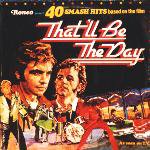
That'll Be The Day (reposted by request)


In 1972 David Essex/Ringo Starr made the film "That'll Be The Day" on the Isle of Wight. Billy Fury made a cameo appearance in the movie as "Stormy Tempest", a 50's holiday camp ballroom singer, more or less reflecting his own image from the early days. The movie premiered in West End in April 12th 1973 and was a huge success, as was it's soundtrack album which spent 7 weeks as No. 1 on the charts. The album contained a mixture of oldies together with some specially-recorded material, including 5 tracks by Billy.
This wonky cassette is just half the double LP and has been chewed all down one side hence the poor sound quality. The Viv Stanshall track seems to have recorded o.k. this time despite the tape being a bit chewed up. Stanshall is actually credited with the writing of What In The World (Shoop) that Billy Fury (Stormy Tempest) sings here and I've no Idea who Dante and the Evergreens are? They could even be Billy Fury in a different guise.

Here's a segment from a site about Steve Winwood who does some work on the soundtrack along with many others.

"An article in New Musical Express 10/28/72 described the project: "The film features the music of the times (before the Beatles). The Everly Brothers are seen in the picture, as are Viv Stanshall and Bill Fury who fronts a mythical band of the period. It is this band, known as the Stormy Tempest and the Typhoons, that is creating particular interest because of its star-studded line-up. The personnel is of a flexible nature and Keith Moon, Pete Townshend, Ron Wood, Graham Bond and John Hawkins have already been featured in soundtrack recordings. The NME learns this week that Stevie Winwood and Jack Bruce have now joined this array of musical talents."

The 2-LP soundtrack features three sides of oldies, ironically including Bobby Vee And The Crickets' version of "Well All Right", and one side of new material. The new tracks are credited to David Essex ("Rock On"), Billy Fury ("A Thousand Stars", "Long Live Rock", "That's All Right Mama", "Get Yourself Together", "What Did I Say"), Viv Stanshall ("Real Leather Jacket"), Stormy Tempest ("What In The World (Shoop)"), Eugene Wallace ("Slow Down"), and Wishfull Thinking ("It'll Be Me"). Steve did not appear in the film. To date, the album has only been re-issued on an incomplete bootleg CD. Our assessment is that Steve probably played organ on "That's All Right Mama" and "Get Yourself Together", and possibly piano on Ray Charles' "What Did I Say"."

Discover more about Billy Fury HERE.


Viv Stanshall - Real Leather Jacket

Danny & The Juniors - At The Hop

Dante & The Evergreens - Ally Oop

Stormy Tempest - What In The World (Shoop)

Billy Fury - That's Alright Mama

Billy Fury - Get Yourself Together


These SendSpace files are available for seven days or until exhausted.

Monday, June 30, 2008

Ethel Waters


Found this in Brick Lane I think some years ago - once the property of Camden Library. It's on the Biograph label from the 60's - a compilation of songs from 1921 to 1927.

Waters was the first black Superstar...an innovator who opened all the theatrical doors hitherto closed to black performers of her day, to attain the towering position she reached as a headliner. She fought hard and long to achieve solo star status in the white world of vaudeville, night clubs, Broadway theater, radio, films and television. More than any other black performer of the century, Ethel Waters was a woman of the theater, and the celebrity she attained in maturity as an actress tended at times to overshadow-at least in memory-the importance of her accomplishments and influence as a singer.
Her talents defied categorical limits. She was the fountainhead of all that is finest and most distinctive in jazz and popular singing. Widely imitated during the 30's and 40's, one still hears echoes of Ethel Waters in many singers who came after her. Joe Turner, Bing Crosby, Ivie Anderson, Lee Wiley, Mildred Bailey, Connie Boswell, and Ella Fitzgerald have acknowledged their debt to her. Her range soared easily from a low, chest tone to a high, clear head voice: on records she sang from a low E to high F, just over two octaves, and on "Memories of You" she hits a spectacular high F sharp. Her diction was clear and impeccable, coloring the lyrics with the proper emotion necessary to express the feelings she wanted to convey.

Born October 31, 1896, in Chester, Pennsylvania, her eighty year life was a turbulent one filled with low valleys and high peaks. In her autobiography, His Eye is on the Sparrow, she frankly detailed the squalor of her sordid childhood and early struggles. Her singing career began with amateur night performances in Philadelphia, then slowly moved in the black theater circuit, where she was billed as "Sweet Mama Stringbean."

She began recording in 1921 for the Black Swan label, continuing with that company through 1924. When she introduced "Dinah" at the famous Plantation Club (Broadway and 50th Street) in New York City in 1925, she met with such success that she was signed by Columbia Records, for whom she was to make many of her most famous recordings during the next decade. Her career continued to escalate in such black shows as Africana, The Blackbirds of 1928 (and 1930) and Rhapsody in Black. In 1929, she made her film debut in the new talking films, singing "Am I Blue?" and "Birmingham Bertha" in On with the Show, remade a few years later as Forty-Second Street

In 1933, her sensational rendition of "Stormy Weather" at the Cotton Club made her the talk of the town; when Irving Berlin heard her sing it, she was signed for his As Thousands Cheer, a revue starring Marilyn Miller and Clifton Webb. She stopped the show with "Heat Wave" and "Suppertime" and was elevated to co-starring status. At the same time, she became the first Negro to star in a sponsored coast-to-coast radio show, accompanied by the Jimmy Dorsey orchestra. Her Broadway career continued its spectacular ascent with the hit shows At Home Abroad, Mamba 's Daughters, Cabin in the Sky, and Member of the Wedding. Later, she filmed the latter two, appearing also in Gift of Gab, Cairo, Tales of Manhattan, Pinky, and The Sound and the Fury. These films and her numerous recordings remain a legacy for audiences too young to have been or heard this legendary performer at her peak.

Her last years were spent touring with the evangelist Billy Graham, still performing occasionally, until her death on September 2, 1977, in Chatsworth, California."


Ethel Waters - The New York Glide

Ethel Waters - At The New Jump Steady Ball

Ethel Waters - Dyin' With The Blues

Ethel Waters - Kiss Your Pretty Baby Nice

Ethel Waters - Jazzin' Babies Blues

Ethel Waters - Kind Lovin' Blues


These SendSpace files are available for seven days or until exhausted.

Wednesday, June 25, 2008

Les Bantous De La Capitale


The Bantous from a Fiesta label LP released in 1978.

"Les Bantous de la Capitale is one of the longest-lasting and most influential groups in the musical history of the Congo (now Democratic Republic of the Congo). Formed in 1959, the band played a major role in the introduction and growing popularity of boucher, which vitalized the Cuban-influenced rumba, and soukous. Initially co-led by saxophonists Dieudonne "Nino" Malapet and Jean Serge Essous, Les Bantous de la Capitale made their mark with a series of dance-inspiring singles that are reprised on the three-CD collection Les Merveilles Du Passe. Les Bantous de la Capitale has withstood several personnel changes. When Essous elected to remain in Paris after recording with the group, Malapet assumed leadership. Despite geographical obstacles, Essous has continued to perform with the band. Although the Congolese government's issuing of an official cultural policy, Authenticit '67, resulted in the loss of several musicians, substitutes were found and Les Bantous de la Capitale has continued to tour and record. Singers have included Kosmos Kapitza, Pamelo Mounk'a, and Tchico Tchicaya. Guitarists have included former Franco & Ok Jazz member Nedule Papa Noel and Samba Mascott. Les Bantous de la Capitale can be found on solo albums by Mascott, Mounk'a, and Essous."


Les Bantous - Riamana

Les Bantous - Sisi

Les Bantous - Zala Reconnaissant

Les Bantous - Mome Yombo


These SendSpace files are available for seven days or until exhausted.

Monday, June 16, 2008

The City Quads


I can't believe I haven't uploaded some tracks from this LP before. Its one I found at Brick Lane flea market many years ago for a few pence. Its on the Polydor label and made in what was Rhodesia and is now a troubled Zimbabwe. Sleeve printed in Germany. No date but imagine it would be late 50's or early 60's.

No info. on the internet so just a little information on the sleeve notes.

" Polydor presents a unique collection of popular African tunes sung ina variety of native languages by one of the best known vocal groups in Rhodesia, The City Quads. The performance you hear on this LP could be called a mixture of African folklore and pop songs of a kind one is always likely to hear wherever people gather together in an African township."

The music in particular-

LINDEA - (sung in Shona ) Love songs are always popular, and this one is a most tender example.

LIZOFIKANINI LANGA - (sung in Sindebele ) This is a sort of non-political spiritual and tells of an oppressed people's longing for the day when they will be free.

IDALALAKECE - (sung in Sindebele ) Now we have a gay wedding song. There is much shouting and cheering because the young girl is to be married.

BALELE EYAYA - (sung in Sindebele ) This is a son g about a policeman who is alays pounding the beat and writin g in his little book, but who never has time to write home to his family.

LA MULELA - ( sung in Xhosa ) Here we have a song about animals fighting; "unless they are broken apart one of them will have his tail cut off!"

RUDO - (sung in Shona ) The lyrics of this song say: "There couldn't be anyone better than you. Your love haunts me even when you are not there."

NYATELU UGIHILE - (sung in Xhosa ) Another wedding song. Here we are told it is customary for a girl to sing the first song.


The City Quads - Lindea

The City Quads - Lizifikanini Langa

The City Quads - Idalalakece

The City Quads - Balele Ekaya

The City Quads - La Mulela

The City Quads - Rudo

The City Quads - Nyatelu Ugihile


These SendSpace files are available for seven days or until exhausted.

Sunday, June 15, 2008

Allan Sherman


Found this 1964 LP by Allan Sherman at the roadside bookstall in All Saints in Manchester at the weekend. A few good novelty songs based on old standards given a Jewish twist. The only thing that spoils it for me is the canned laughter and applause on each track.

Wikipedia says-

"Employed as a producer by Mark Goodson-Bill Todman Productions, Sherman was the creator and original producer of the popular I've Got a Secret from 1952 to 1958. During this time, he recorded a 78RPM single, containing A Satchel And A Seck (to "A Bushel And A Peck" from Guys And Dolls, and Jake's Song. This single sold poorly and, when time came to write his autobiography, Sherman didn't even acknowledge it. He also produced a short-lived 1954 game show, What's Going On? Sherman was fired after a particularly unsuccessful episode of I've Got a Secret featuring Tony Curtis that aired June 11, 1958. But later, after becoming a celebrity himself, Sherman would make some return appearances on the program.

Later, he found that the little song parodies he performed to amuse his friends and family were taking a life of their own. Sherman had the good fortune to live in the Brentwood section of West Los Angeles next door to Harpo Marx, who invited Sherman to perform his song parodies at parties attended by Marx's show-biz friends. After one such party, George Burns phoned a record executive and persuaded him to sign Sherman to a contract. The result was an LP of these parodies, My Son, the Folk Singer, in 1962. The album was so successful that it was quickly followed by My Son, the Celebrity.

In 1962, capitalizing on his success, Jubilee Records re-released the 1951 single on the album More Folk Songs by Allan Sherman and His Friends, which was a compilation of material by various Borscht Belt comedians, such as Sylvia Froos, Fyvush Finkle and Lee Tully, along with the Sherman material.

As suggested by the albums' titles, Sherman's first two LPs were mainly Jewish-folk-culture rewritings of old folk tunes. His first minor hit was "Sarah Jackman" (pronounced "Jockman"), a takeoff of "Frère Jacques" in which he and a woman (Christine Nelson) exchange family gossip ("Sarah Jackman, Sarah Jackman, How's by you? How's by you? How's by you the family? How's your sister Emily?" etc.) By his peak with My Son, the Nut in 1963, however, Sherman had broadened both his subject matter and his choice of parody material and begun to appeal to a larger audience.

Sherman wrote his parody lyrics in collaboration with Lou Busch. A few of the Sherman/Busch songs are completely original creations, featuring original music as well as lyrics, rather than new lyrics applied to an existing melody. The Sherman/Busch originals — notably "Go to Sleep, Paul Revere" and "Peyton Place" — are delightful novelty songs, showing genuine melodic originality as well as deft lyrics."

Discover more about Allan Sherman HERE.


Allan Sherman - Grow, Mrs. Goldfarb

Allan Sherman - Your Mother's Here To Stay

Allan Sherman - Pills

Allan Sherman - Shine On, Harvey Bloom

Allan Sherman - J.C. Cohen


These SendSpace files are available for seven days or until exhausted.
Monday, June 09, 2008

Laff Blasts From The Past


A great Lp I found a few years back in Brick Lane in East London. It's a compilation of amusing r&b songs from the archives of Herb Abramson. Released in 1985 on the Red Lightnin' label.

"He was born in 1916 in Brooklyn, New York City and initially studied to be a dentist. But he landed a job with National Records producing such performers as The Ravens, Billy Eckstine and Joe Turner. Herb founded his first record company, Jubilee Records, in 1946 with Jerry Blaine. Herb aspired to record jazz, R&B and Gospel recordings. Though Blaine was having some success recording Jewish novelty records, this genre did not interest Abramson, so he sold his interest in Jubilee to Blaine. Herb and his wife Miriam were close friends with fellow jazz buff Ahmet Ertegun and together they founded Atlantic Records in 1947. Herb was president of Atlantic and Ahmet was vice-president. Both Herb and Ahmet handled the creative end of the business and Miriam handled the business end."

Discover more about Herb Abramson HERE.


The Essentials - Sha-He-Be

Otis Blackwell - Back Trail

The Cashmeres - Daddy, Can I Go To The Hop?

The Jarmolettes - Yes, We Have No Bananas

The Magnetics - Sardines

Tony Middleton & Jack Hammer - Earth Cousins

The Dovers - The Invasion


These SendSpace files are available for seven days or until exhausted.