Sunday, July 04, 2010

The String-a-longs


Another boot sale find today which I remember from my youth. An EP on the London label from 1961. Its a bit scratchy on side two so sorry for the clicks and jumps.

Wikipedia says-

"The String-A-Longs were an instrumental group from Plainview, Texas, produced by Norman Petty on Warwick Records. They consisted of Richard Stevens, lead guitar, Keith McCormack and Jimmy Torres, rhythm guitars, Aubrey de Cordova, bass guitar and Don Allen, drums.

Their biggest hit single was "Wheels" in 1961, which was revived later the same year by the Joe Loss Orchestra as "Wheels Cha Cha". The tune peaked at #3 on the Billboard Hot 100 and was the number 8 single of 1961 according to Billboard. The track reached number 8 in the UK Singles Chart. It sold over one million copies, and was awarded a gold disc. The tune became popular in France later in 1961 under the title "Dans le cœur de ma blonde". "Wheels" was followed by "Brass Buttons" (U.S. #35), "Should I", and "Replica"."


The Stringalongs - Wheels

The Stringalongs - Mina Bird

The Stringalongs - Should I

The Stringalongs - Scottie

The Ases Of Flamenco


An EP I found the other day in a charity shop for a quid. I was struck by the title and the cover design. Not a great lover of flamenco myself but some of you might enjoy this. Obviously a holiday purchase I would imagine from the 60's on the Spanish Regal label.

Wikipedia says-

"Flamenco is a style of music and dance which is considered part of the culture of Spain, although it is actually native to only one region: Andalusia.
Andalusian, Gypsy, Sephardic, Moorish and Byzantine influences have been detected in flamenco, often claimed to have coalesced around the time of the Reconquista in the 15th century. The origins of the term are unclear; the word flamenco itself was not recorded until the 18th century.
Flamenco is the music of the Andalusian gypsies and played in their social community. Andalusian people who grew up around gypsies were also accepted as "flamencos" (Paco de Lucía). Other regions, mainly Extremadura and Murcia, have also contributed to the development of flamenco, and many flamenco artists have been born outside Andalusia. Latin American and especially Cuban influences have also contributed, as evidenced in the dances of "Ida y Vuelta"."


Cojo De Huelva - Padre, Tengo El Peneamiento

Juanito Varea - La Mejor Gitana

Chiquito De Triana/ Manalo El Gafass - Di Mi Pecho../De La Isla A Cal

Thursday, July 01, 2010

Charlie Gillett - Undercurrents/Jello Biafra


Continuing the homage to the late Charlie Gillett here are two Undercurrents shows on Capital Radio from 1980/81 - not sure of exact dates.
In the first Charlie has guest Jello Biafra the singer with the Dead Kennedys. Biafra chooses a few punk and new wave records including UKDK and ? and the Mysterians.
The second show Charlie plays some independent records ranging from the sublime Gregory Issacs to the ridiculous "Puppet On A String" by Big Hair. Charlie reckons this was his favourite record of the moment back then - hard to believe!

Wikipedia says -

"Jello Biafra (born Eric Reed Boucher; June 17, 1958) is an American musician, spoken word artist and leading figure of the Green Party. Biafra first gained attention as the lead singer and songwriter for San Francisco punk rock band Dead Kennedys. After his time with the band concluded, he took over the influential independent record label Alternative Tentacles, which he had co-founded in 1979 with Dead Kennedys bandmate East Bay Ray. Although now primarily focused on spoken word art, he has continued as a musician in numerous collaborations.

Politically, Jello is a member of the Green Party and actively supports leftist political causes. Biafra ran for the party's Presidential nomination in 2000, finishing second to Ralph Nader. He is a self-identified anarchist who advocates civil disobedience, direct action, culture jamming, and pranksterism in the name of political causes. Biafra is known to use absurdist media tactics in the tradition of the Yippies to highlight issues of civil rights, social justice, economic populism, boosterism, anti-corporatism, peace movements, anti-consumerism, environmentalism, anti-globalization, universal health care, LGBT rights, anti-capitalism, abortion access, feminism, and the separation of church and state."


Charlie Gillett - Jello Biafra Pt. 1

Charlie Gillett - Jello Biafra Pt.2

Charlie Gillett - Undercurrents 4 Pt. 1

Charlie Gillett - Undercurrents 4 Pt. 2

Wednesday, June 30, 2010

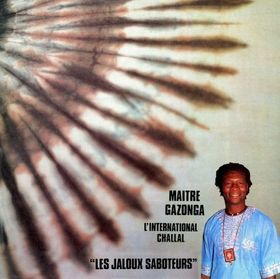
Maitre Gazonga


An LP on the Tangent label from France. Not much can be found out about Maitre just this small biog -

"Born May 27th, 1948 - Died April 1st, 2006

He studied in Fort Lamy, now Djamena, and later worked as a bookkeeper. When he was 21 he decided to become a musician and together with several others he created orchestre Saltanat Africa but before long he left them and formed his own band l'International Challal. Hamed drew his inspiration from the folk music of all the regions in Chad."


Maitre Gazonga - Koysse

Maitre Gazonga - Les Jaloux Saboteurs

General Prince Adekunle


More Nigerian Highlife by General Prince Adekunle and his Western Brothers from an LP on Orisun Iye Records recorded in 1973. Pretty typical of it's type - a medley of several songs on side two comprising of Iwa Re, Otito Ni Yio Leke, Tika Lo Soro, Teni begi Loju and Egbe U.N.C.O. ( London).

Wikipedia says -

"General Prince Adekunle is a Nigerian Jùjú musician. He is of Egba origin, from Abeokuta in Ogun State. Prince Adekunle has been a major innovator and force in the jùjú music scene, with his distinctive driving Afrobeat style. Famous musicians such as Sir Shina Peters and Segun Adewale started their careers playing with his band, the Western Brothers. Although he toured in England in the early 1970s, he did not become well known outside Nigeria."


Prince Adekunle - Side Two

Mario Rui Silva


An LP on the Disco Deal label recorded in France back in the 80's I would guess - I've had this album from Brick Lane market for many years now. Mostly laid back instrumental latin sounding guitars from Angola. Nothing to be found about him on the net although found a few recent records so he's obviously still around and making music.

This is what Wikipedia says about the music of Angola-

"The music of Angola has been shaped both by wider musical trends and by the political history of the country. In the 20th century, Angola has been wracked by violence and political instability. Its musicians have been oppressed by government forces, both during the period of Portuguese colonization and after independence. Angolan music also influenced Lusophone music in Brazil and Cuban music.
The capital and largest city of Angola is Luanda, home to a diverse group of styles including Angolan merengue, kilapanda and semba, the last being a genre with roots intertwined with that of Brazilian samba music. Just off the coast of Luanda is Ilha do Cabo, home to an accordion and harmonica-based style of music called rebita.
Compared to many of its neighbors in Southern Africa, as well as other Portuguese colonies (especially Cape Verde), Angola's music has had little international success. The first group to become known outside of Angola was Orquestra os Jovens do Prenda, who were most popular from the late 1960s to the early 1970s, and have continued sporadically performing and recording since. The big band included two trumpets, a saxophone, four guitars and a half-dozen percussion instruments. They played kizomba (a native style based around the marimba xylophone), using the four guitars to approximate the sound of the marimba, and quilapanga."


Mario Rui Silva - Sungaly

Mario Rui Silva - Dembita

Mario Rui Silva - Lamento Pra Ngola Ritmos

Mario Rui Silva - Balanchino

Mario Rui Silva - Lonjura

Wednesday, June 23, 2010

Charlie Gillett - Bob George & Martha DeFoe/ Families


This cassette from the early 80's features songs on the theme of Families and in the second hour - guests Bob George and Martha DeFoe who had written The International Discography Of New Wave. They talk about the book and the music scene in New York at that time. Apolgies as always for the lo-fi tape sound which is due purely to age - these tapes played fine 25 years ago!

Wikipedia says-

"B.George (born Bob George, November 24, 1949, in Youngstown, Ohio) is the co-founder and Executive Director of the ARChive of Contemporary Music in New York City. With over two million sound recordings, the ARC is the largest popular music collection in America. The initial donation of 47,000 discs that began ARC’s collection came from B. Himself, who accumulated them in the interval between moving to New York and publishing the International Discography, noted below.
George went to New York City in 1974 as a visual arts student at the Whitney Museum Studio Program. From 1975 to 1979, he co-directed performance artist Laurie Anderson’s stage show. In 1977, he formed One Ten Records and released the first commercial compilation of audio work by visual artists—a two record set entitled Airwaves, that included the initial recordings of Laurie Anderson and unreleased work by Meredith Monk. In 1980, he received a National Endowment for the Arts grant to produce recordings by visual artists, and in 1981 released Laurie Anderson’s first single “O Superman”. This single went to number two on the UK charts and reached the top 20 in 16 countries. It was eventually released by WEA and has sold close to a million copies worldwide.
In 1981, George published the first comprehensive discographical reference work on Punk and New Wave music, titled Volume, the International Discography of the New Wave. By its second edition in 1982, the book had grown to over 700 pages and was co-published and distributed internationally by Omnibus Press. Volume continues to be the definitive reference guide to this material, cited in The Readers Catalog, England's Dreaming, and many other publications."


Charlie Gillett - Families Pt.1

Charlie Gillett - Bob George & Martha DeFoe

Monday, June 21, 2010

Frank Sidebottom RIP


Sad news about Frank( Chris Sievey) today.

Here's side one of Frank's 10" LP "Medium Play" from 1990 on the In Tape label to remind us of the great man.

"Frank Sidebottom: Nothing more than Chris Sievey wearing a paper maché head. He was created by Sievey as the Freshies' number one fan (well, The Freshies' only fan), and managed to get a career out of being the band's only fan. Ironic that the Freshies' fan would be more famous than the Freshies themselves.

Frank once sold a video by mail-order called "Frank's Home Movie Video". He reportedly recorded a personalised intro on each video ordered, and coloured all the sleeves in by hand!

He had many songs released, although all of them are near impossible to get hold of. For example, he released a couple of "Timperley" EPs, where all the tracks contained, er, "Timperley" (it was where he lived, or something). Yes: all of them. Every single one. Other famous releases included "Frank Sings The Magic Of Freddie Mercury and Queen", and the 12" version called "Frank Sings The Magic Of Freddie Mercury And Queen And Kylie Minogue (you know; her off 'Neighbours')". The most memorable tracks being "Frank Gordon" (a version of "Flash Gordon"), and "I Am The Champion" (a version of "We Are The Champions"). He also released a single entitled "Panic by The Sidebottoms", containing no less than nine different mixes of the same song (one of which was the "Demon Axx Warriors from Oblivion Mix"). And John Kettley wasn't the only BBC weatherman to have a song written about him, as Ian McCaskill's name was put to Frank's imaginatively-titled "Ian McCaskill". And we haven't even mentioned "Best of the Answering Machine", "6 All-time Great Footballing Chants (including 'Nil-Nil', 'Wemberley', and 'There's Only One Referee')" or "Frank checks into Auntie Edie's", yet. Or the album "B******s To Christmas"."

Thursday, June 17, 2010

Ekow Redding


Another Highlife Lp, this time from Ghana on the D Fix label, released in 1977. Pretty typical of it's type and incorporating some afro-beat and line up that features a brass section, guitars , drums, keyboards and maracas.

"Highlife is a musical genre that originated in Ghana in the 1900s and spread to Sierra Leone, Nigeria and other West African countries by 1920. It is very popular in Liberia and all of English-speaking West Africa, although little has been produced in other countries due to economic challenges brought on by war and instability.

Highlife is characterized by jazzy horns and multiple guitars which lead the band. Recently it has acquired an uptempo, synth-driven sound (see Daddy Lumba). Joromi is a sub-genre."


Ekow Redding - Ono A Na Mepe No (Medley)

Jackie Edwards


A rare Island LP from the 60's. A curious mixture of cheesy ballad,ska with some R&B thrown in. I think it's Millie of My Boy Lollipop fame dueting with Jackie on My Desire.

Wikipedia says -

"Edwards was born in Jamaica and came to the attention of Chris Blackwell in 1959; when Blackwell set up Island Records in London in 1962, Edwards travelled with him. Edwards worked as a singer and songwriter for Island as well as performing duties such as delivering records. He wrote both "Keep On Running" and "Somebody Help Me", that became #1 singles in the United Kingdom for The Spencer Davis Group. He continued to work as a recording artist himself, with regular album releases through to the mid-1980s"


Jackie Edwards - Ain't Got No Home

Jackie Edwards - That Lucky Old Sun

Jackie Edwards - Come On Home

Jackie Edwards - Do You Want Me Again

Jackie Edwards - A Little Smile

Jackie Edwards - My Desire

Celestine Ukwu


Another Brick Lane find from many years ago. Unusual to see a xylophone player as the leader of a Nigerian guitar band. This LP on the Phonogram label came out in 1975.
Pleasant enough highlife with jazzy tinge the xylophone gives it.

"Celestine Ukwu began his musical career during the 1960's with Michael Ejeagha's Paradise Rhythm Orchestra in Enugu, capital of the former Eastern Region of Nigeria. He left four years later to launch his own band, the Music Royals. Following a hiatus caused by the Biafran war of independence from 1967-70, the Music Royals were resurrected as the Philosophers National, who distinguished themselves with a series of sparkling, subtle highlife releases during the 1970s. Ukwu's signature tune is undoubtedly 1970's "Igede (Pt. 1)," an instrumental piece based on Igbo folklore. Its haunting melody was the basis for the tune "Elozekwana Nwanne Gi" by Enugu chanteuse Nelly Uchendu on her 1978 LP "Aka Bu Eze" (Homzy HCE 012). Ukwu's crowning achievement was arguably 1975's "Ejim Nk'onye," which combined Igbo poetry with passages of instrumental brilliance. Sadly, Ukwu perished in an automobile accident in 1977, depriving Nigerian music of one of its shining stars. Titles in this discography for which there are no track listings are taken from Ronnie Graham's "Sterns/DaCapo Guide to Contemporary African Music."


Celestine Ukwu - Asili

Earl Bostic


LP bought years ago at a remainder stall in East St. market in London. One track is damaged. Some familiar standards like Sentimental Journey, Rose Marie and The Third Man Theme which is my particular favourite.

Wikipedia says -

"Bostic was born in Tulsa, Oklahoma. He turned professional at age 18 when he joined Terence Holder's 'Twelve Clouds of Joy'. He made his first recording with Lionel Hampton in October 1939, with a.o. Charlie Christian, Clyde Hart and Big Sid Catlett. Before that he performed with Fate Marable on New Orleans riverboats. Bostic graduated from Xavier University in New Orleans. He worked with territory bands as well as Arnett Cobb, Hot Lips Page, Rex Stewart, Don Byas, Charlie Christian, Thelonious Monk, Edgar Hayes, Cab Calloway, and other jazz luminaries. In 1938, and in 1944, Bostic led the house band at Small's Paradise. While playing at Small's Paradise, he doubled on guitar and trumpet. During the early 1940s, he was a well respected regular at the famous jam sessions held at Minton's Playhouse. He formed his own band in 1945 and made the first recordings under his own name for the Majestic label.He turned to rhythm and blues in the late 1940s. His biggest hits were "Temptation," "Sleep," "Flamingo," "You Go to My Head" and "Cherokee." At various times his band included Jaki Byard, John Coltrane, Benny Golson, Blue Mitchell, Stanley Turrentine, Tommy Turrentine, Keter Betts, Sir Charles Thompson, Teddy Edwards, Tony Scott, Benny Carter and other musicians who rose to prominence in jazz.
Bostic's King album titled Jazz As I Feel It featured Shelly Manne on drums, Joe Pass on guitar and Richard "Groove" Holmes on organ. Bostic recorded A New Sound about one month later again featuring Holmes and Pass. These recordings allowed Bostic to stretch out beyond the 3 minute limit imposed by the 45 RPM format. Bostic was pleased with the sessions which highlight his total mastery of the blues but they also foreshadowed musical advances that were later evident in the work of John Coltrane and Eric Dolphy."


Earl Bostic - The Third Man Theme

Earl Bostic - The Key

Earl Bostic - Does Your Heart Beat For Me

Earl Bostic - El Choclo Cha Cha

Earl Bostic - Gondola

Earl Bostic - Sweet Pea

Wednesday, June 16, 2010

Charlie Gillett - A Sound Man


Searching through some old boxes the other day I found these pages from The Sunday Times written by Mick Brown back in the 80's when Charlie's wonderful book "The Sound of the City" was revised and republished.


Friday, June 11, 2010

Charlie Gillett - Dave Robinson


This weeks dip into the Charlie Gillett radio archive brings us a show from the mid 80's on Capital with guest Dave Robinson who started Stiff Records in the late 70's.
Interesting chat and records chosen by both as always.

Wikipedia says -

"Stiff Records is a record label created in London in 1976 by entrepreneurs Dave Robinson and Andrew Jakeman (aka Jake Riviera), and active until 1985. It was reactivated in 2007.

Established at the outset of the punk rock boom, Stiff Records signed pub rock acts and marketed them as punk and New Wave, including Nick Lowe, Wreckless Eric, Elvis Costello and Ian Dury. The label's marketing and advertising was often provocative and witty. Stiff billed itself as "The World's Most Flexible Record Label". Other slogans were "We came. We saw. We left.", "If It Ain't Stiff, It Ain't Worth a Fuck", and "When You Kill Time, You Murder Success" (printed on promotional wall clocks). On the label of Stiff's sampler compilation Heroes & Cowards was printed: "In '78 everyone born in '45 will be 33-1/3". A very early Stiff sampler album, A Bunch of Stiff Records, introduced the slogan, "If they're dead, we'll sign them" and "Undertakers to the Industry".

Stiff also produced eccentric but highly effective promotional campaigns, such as the three package tours in 1977 (Live Stiffs), 1978 (Be Stiff) and 1980 (Son Of Stiff), Elvis Costello's "busking outside CBS Records" arrest and the at least 29 different wallpaper sleeves printed for Ian Dury's second album, Do It Yourself, with associated unscheduled makeovers of unsuspecting record shops.

Barney Bubbles was responsible for much of the graphic art associated with the early Stiff releases."


Charlie Gillett - Dave Robinson Pt.1

Charlie Gillett - Dave Robinson Pt. 2

Johnny Taylor


Charlie Gillett sent me this LP on the Soul City Records label some years ago - complete with hand written notes about each track. I used to send Charlie mix tapes of my market finds and he sometimes sent a record or two back that he had no further use for and thought I might enjoy. This much treasured early Johhny Taylor is excellent R&B from the 60's and owes much to Sam Cooke and Bobby Blue Bland as Charlie points out in his brief notes.

Wikipedia says -

"Johnnie Harrison Taylor was born in Crawfordsville, Arkansas. As an adult, he had one release, "Somewhere to Lay My Head", on Chicago's Chance Records label in the 1950s, as part of the gospel group Highway QCs, which had been founded by a young Sam Cooke. His singing was strikingly close to that of Sam Cooke, and he was hired to take Cooke's place in Cooke's gospel group, the Soul Stirrers, in 1957.
A few years later, after Cooke had established his independent SAR Records, Taylor signed on and recorded "Rome Wasn't Built In A Day" in 1962. However, SAR Records quickly became defunct after Cooke's death in 1964.
In 1966, Taylor moved to Stax Records in Memphis, Tennessee, where he was dubbed "The Philosopher of Soul". Whilst there he recorded with the label's house band, Booker T. & the MGs. His hits included "I Had a Dream", "I've Got to Love Somebody's Baby" (both written by the team of Isaac Hayes and David Porter) and most notably "Who's Making Love", which reached No. 5 on the Billboard Hot 100 chart and No. 1 on the R&B chart in 1968. "Who's Making Love" sold over one million copies, and was awarded a gold disc.
Taylor once toured in California with blues singer Blues Boy Willie of Memphis, Texas.
During his tenure at Stax, he became an R&B star, with over a dozen chart successes, such as "Jody's Got Your Girl and Gone", which reached No. 23 on the Hot 100 chart, "Cheaper to Keep Her" (Mack Rice) and record producer Don Davis's penned "I Believe in You (You Believe in Me)", which reached No. 11 on the Hot 100 chart. "I Believe in You (You Believe in Me)" also sold in excess of one million units, and was awarded gold disc status by the R.I.A.A. in October 1973.[2] Taylor, along with Isaac Hayes and The Staple Singers was one of the label's flagship artists. He appeared in the documentary film, Wattstax, which was released in 1973."


Johnny Taylor - In Love With You

Johnny Taylor - Rome (Wasn't Built In A Day )

Johnny Taylor - Never Never

Johnny Taylor - Getting Married Soon

Johnny Taylor - Run But You Can't Hide

Johnny Taylor - A Whole Lotta Woman

Les Quatre Etoiles (Four Stars)


A West African supergroup based in France where this record was made in the 80's I would guess. On the Melodie (Tangent) label. If this doesn't have you dancing around your living room then nothing will!

"Les Quatre Etoiles is the Soukous musical group consisting of the Congolese musicians, Bopol Mansiamina, Wuta Mayi, Syran Mbenza and Nyboma.
Their album, Sangonini, was produced by the renowned African music producer Ibrahim Sylla. The song "Doly", from Sangoni, enjoyed worldwide popularity, reaching no. 3 in the Colombian music charts. The song "Papy Sodolo", has been covered by Tabu Ley Rochereau, another African musician of note. Another song, "Sangonini", produced in Paris and released in 1993, has also been popular.
Les Quatre Etoiles has also released the albums Adama Coly and Souffrance, as well as Live in London, a recording of their performance in the UK capital.
Their polished renditions begin in the Soukous tradition, with a slow, harmonious introduction; this then breaks out, again as in the Soukous tradition, into a fast-paced chorus known as the 'sebene' with resonating, repeated electric guitar rhythms in the background, interwoven with a choice assortment of African percussion instruments accompanied by orchestras.
Each of the four members of Les Quatre Etoiles have long established individual musical careers."

Discover more about Les Quatre Etoiles HERE


Quatre Etoiles - Kabyby

Quatre Etoiles - Mayanga

Dave Berry


Found this in the Oxfam shop the other day. A single from 1988 on the Flagstaff Records label. I must admit I only bought it for the signature but intrigued to hear what Dave had done to a Stones classic. Sadly it's a pretty lack lustre version. The B side is more interesting though still not a patch on his hits of the 60's. You are urged to check out the double CD of his early hits that has just been released.

Wikipedia says -


"He performed a mixture of hard R&B and pop ballads. He was popular in Britain, and on Continental Europe. His early hits name checked his backing band, The Cruisers who at that time were made up of John Fleet (bass and piano), Roy Barber (rhythm guitar), Frank Miles (lead guitar) and Kenny Slade (drums). Berry parted company with this line-up around the time of "The Crying Game". He recruited four more local musicians - Frank White, Johnny Riley, Pete Cliff and old friend Alan Taylor to be the second generation of Cruisers, with lead guitarist White eventually replaced by Roy Ledger until around 1965, when personnel changes began to be more frequent.

"The Crying Game" (1964), B. J. Thomas' sentimental "Mama" (1966) and "This Strange Effect" (1965) - the latter written by Ray Davies, are among his best remembered hits. Indeed, "This Strange Effect" became a Number One hit for him in Holland and Belgium, countries where he still enjoys superstar status, resulting in a Special Award from Radio Veronica, Holland, for their best selling pop single of all time. His 1965 hit "Little Things" was a cover version of Bobby Goldsboro's Stateside Top 40 success. Another one of his songs, "Don't Gimme No Lip Child", was covered by the Sex Pistols. His stage act, drawing largely on Elvis Presley, and Gene Vincent, provided an inspiration for Alvin Stardust. Such was his enigmatic, and unconventional presence, that several punk rock acts, such as the Sex Pistols, later acknowledged him as an inspiration.

Berry used sessions guitarists Jimmy Page, John Paul Jones and Big Jim Sullivan extensively.

The Geoff Stephens penned song, "The Crying Game", brought Berry's voice to his biggest international audience ever in 1992, when it was used as the theme song for one of that year's most successful films - Neil Jordan's The Crying Game. Berry also regained some much-overlooked recognition, when he was the surprise hit of the annual Alexis Korner Tribute in 1995."


Dave Berry - Out Of Time

Dave Berry - Serenade To Alice

Thursday, June 03, 2010

Charlie Gillett - Leiber & Stoller


Continuing the celebration of the radio shows of much missed DJ Charlie Gillett this week's show comes from November 1982 I think and guests Jerry leiber and Mike Stoller who almost single-handedly wrote much of the rock 'n' roll hits of the 50's, including Charlie Brown, Hound Dog, Yakety Yak etc. They were over to see the opening of a musical based on their songs featuring Darts called Yakety Yak,
Charlie is in his element here with two of his heroes and its a lively show with plenty of banter and great songs they wrote or have chosen.

Wikipedia says -

"Their first successes were as the writers of such crossover hit songs as "Hound Dog" and "Kansas City." Later in the 1950s, particularly through their work with The Coasters, they created a string of ground-breaking hits that are some of the most entertaining in rock and roll, by using the humorous vernacular of the teenagers sung in a style that was openly theatrical rather than personal, songs that include "Young Blood," "Searchin'," and "Yakety Yak." They were the first to surround black music with elaborate production values, enhancing its emotional power with The Drifters in "There Goes My Baby" and influencing Phil Spector who worked with them on recordings of The Drifters and Ben E. King. Leiber and Stoller went into the record business and, focusing on the "girl group" sound, released some of the greatest classics of the Brill Building period.
They wrote hits including "Love Me," "Loving You," "Don't," and "Jailhouse Rock," among others for Elvis Presley. They were inducted into the Songwriters Hall of Fame in 1985 and Rock and Roll Hall of Fame in 1987."


Charlie Gillett - Leiber & Stoller Pt.1

Charlie Gillett - Leiber & Stoller Pt.2

Tuesday, June 01, 2010

Burl Ives

Burl ivesAn LP from the same boot sale as Attila The Stockbroker - the other end of the musical spectrum! This 60's album on the World Record Club label is just one man and his guitar singing some old traditional folk songs.

Wikipedia says-

"Ives was born in 1909 near Hunt City, an unincorporated town in Jasper County, Illinois, the son of Levi "Frank" Ives (1880–1947) and Cordelia "Dellie" White (1882–1954). He had six siblings: Audry, Artie, Clarence, Argola, Lillburn, and Norma. His father was at first a farmer and then a contractor for the county and others. One day Ives was singing in the garden with his mother, and his uncle overheard them. He invited his nephew to sing at the old soldiers' reunion in Hunt City. The boy performed a rendition of the folk ballad "Barbara Allen" and impressed both his uncle and the audience.

From 1927-29, Ives attended Eastern Illinois State Teachers College (now Eastern Illinois University) in Charleston, Illinois, where he played football. During his junior year, he was sitting in English class, listening to a lecture on Beowulf, when he suddenly realized he was wasting his time. As he walked out the door, the professor made a snide remark, and Ives slammed the door behind him.Sixty years later, the school named a building after its most famous dropout.Ives was also involved in Freemasonry from 1927 onward.

On 23 July 1929 in Richmond, Indiana, Ives did a trial recording of "Behind the Clouds" for the Starr Piano Company's Gennett label, but the recording was rejected and destroyed a few weeks later."


Burl Ives - Ladies Man

Burl Ives - Henry Martin

Burl Ives - How Could You Use A Poor Maiden So

Burl Ives - Pueblo Girl

Burl Ives - Lily Munro

Burl Ives - Hypochondriac Song

Burl Ives - Pirate Song

Attila The Stockbroker


Found this LP at a boot sale yesterday - on the Probe label released in 1988. Born from the punk movement and akin to such poet/performers as John Hegley, John Cooper Clarke and Henry Normal but not quite in that league. One side is "Wordside" and the other "Thrashside" which is the one I've chosen.

His website says of him-

"Sharp-tongued, high energy, social surrealist rebel poet and songwriter. His themes are topical, his words hard-hitting, his politics unashamedly radical, but Attila will make you roar with laughter as well as seethe with anger...

Inspired by the spirit and 'Do It Yourself' ethos of punk rock, and above all by The Clash and their overtly radical, political stance, he started as a punk bass player in 1977 and took the name Attila the Stockbroker in 1980, blagging spots for his poems and songs in between bands at punk gigs. He quickly got a couple of John Peel radio sessions, a deal with London independent record label Cherry Red Records and before very long was on the front cover of Melody Maker...and he hasn't looked back since! He celebrated the 25th anniversary of his first gig with a sold out show at the Komedia Theatre in Brighton on September 8th 2005.

Attila has spent the last 28 years performing his work across the world at literary and music festivals, rock venues, arts centres, pubs, universities, schools, folk clubs and punk squats in the UK, Germany, the Netherlands, Belgium, Canada, Australia, New Zealand, the US, Euskadi, France, Scandinavia, Portugal, Austria, Switzerland, Italy, Poland, Hungary - and more improbably in Romania, Bulgaria, Czech Republic and a hotel basement in Stalinist Albania. 23 countries in all! "

Discover more about Attila The Stockbroker HERE.


Attila The Stockbroker - Thrashside

Friday, May 28, 2010

Charlie Gillett - Asha Bhosle/ Atlantic Records


Another Capital Radio show from 7-9-86 with guest Asha Bhosle, the Queen of Bollywood playback singers in the first half and a brief history of Atlantic Records in the second. Taken from a C60 and one side of a C90 cassette so please excuse the adverts which sometimes appear. I did try and edit on the fly back then but obviously I was busy doing something else this particular evening and let the tape run.

Wikipedia says -

"Asha Bhosle (Marathi: आशा भोसले) (born September 8, 1933) is an Indian singer. She is best known as a Bollywood playback singer, although she has a much wider repertoire. Her career started in 1943 and has spanned over six decades. She has done playback singing for over 1000 Bollywood movies and sold many records. She is the sister of playback singer Lata Mangeshkar.

Bhosle is considered one of the most versatile South Asian singers — her range of songs includes film music, pop, ghazals, bhajans, traditional Indian Classical music, folk songs, qawwalis, Rabindra Sangeets and Nazrul Geetis. She has sung in over 14 languages including Assamese, Hindi, Urdu, Telugu, Marathi, Bengali, Gujarati, Punjabi, Tamil, English, Russian, Czech, Nepali, Malay and Malayalam.

Bhosle is believed to have sung over 12,000 songs. Though her sister, Lata Mangeshkar was featured in the Guinness Book of World Records during 1974-1991, for having sung the most songs in the world, reputed sources have introduced concerns to its veracity, claiming that the Guinness counts were exaggerated and Bhosle had recorded more songs than Mangeshkar. Bhosle herself pointed out that she had made the most recordings by any singer - 12,000."


Charlie Gillett - Asha Bhosle

Charlie Gillett - Atlantic Records Pt.1

Charlie Gillett - Atlantic Records Pt.2

Geraldo & His Orchestra


Another 78 from the boot sale recently. Enjoy Yourself has been covered many times - in recent years by The Specials. I seem to remember C'est Si Bon being a big hit in the 50's but not sure who by.

Wikipedia says -

"He played piano and organ and studied at the Royal Academy of Music in London. He started his career as a pianist playing for silent films.
Geraldo became a major figure on the British entertainment scene for four decades, having fronted just about every kind of ensemble and influenced the successful careers of numerous top singers. For his broadcasts he varied the style of his orchestra quite considerably, and a particular series Tip Top Tunes (employing a full string section alongside the usual dance band) enjoyed great popularity. Several commercial recordings were made, spotlighting the considerable arranging talents of the young Wally Stott (better known in the US as Angela Morley) .
Over the years, most of the UK's top musicians played with Geraldo's orchestra, including Ted Heath, who played first trombone in the orchestra before leaving to form his own band and the guitarist Ken Sykora, later to become a respected radio personality.
In the 1950s he composed the start-up music for Scottish Television. Entitled Scotlandia, it was heard virtually every day for over thirty years at the beginning of programmes.
Geraldo died from a heart attack while on holiday in Switzerland in 1974. In 1993 a new Geraldo Orchestra, directed by trombonist Chris Dean, toured the UK provinces."


Geraldo & His Orch. - C'est Si Bon

Geraldo & His Orch. - Enjoy Yourself

The Cranes Skiffle Group - (RE-UP)


Another 78 from the boot sale today. On the Embassy label from 1957. Cranes Skiffle Group was actually Chas McDevitt and His band who had a big hit with "Freight Train" with Nancy Whiskey singing the lead vocal that same year.

"The group had already recorded 'Freight Train' for Oriole Records; thanks to the demo discs produced by their new manager, Bill Varley. Bill ran Trio Recordings, a small studio in Tin Pan Alley. It was Varley who suggested that to get an edge over the other skiffle groups they should include a girl in their line-up. Folksinger, Nancy Whiskey, who had also appeared on the Radio Luxembourg talent competition was invited to join the group. At first reluctant to give up her folksinging, she joined the boys at the end of December 1956. They re-recorded 'Freight Train' with Nancy taking the vocals. On the same session they recorded; 'Cotton Song', 'New Orleans' and 'Don't You Rock Me Daddy O'. The last track was released on Embassy records, Oriole Records' cheap subsidiary that sold in Woolworth's. They used the pseudonym 'The Cranes Skiffle Group'. 'Worried Man', originally recorded for Embassy, whilst Jimmie MacGregor was with the group, was substituted on their second Oriole release."

Discover more about Chas McDevitt HERE.


Cranes Skiffle Group - Cumberland Gap

Cranes Skiffle Group - Freight Train

Friday, May 21, 2010

Charlie Gillett - Hank Ballard/ Hamid Sagzou


Enjoyable Charlie Gillett radio show from 7-12-86 with guests Hank Ballard and Hamid Sagzou ( apologies if this spelling is wrong as it undoubtedly is!).

Wikipedia says of Hank Ballard-

"Hank Ballard (November 18, 1927 – March 2, 2003), born John Henry Kendricks, was a rhythm and blues singer, the lead vocalist of Hank Ballard and The Midnighters and one of the first proto-rock 'n' roll artists to emerge in the early 1950s. He played an integral part in the development of rock music, releasing the hit singles "Work With Me, Annie" and answer songs "Annie Had a Baby" and "Annie's Aunt Fannie" with his Midnighters. He later wrote and recorded "The Twist" and invented the dance, which was notably covered by Chubby Checker."

Read more about Hank Ballard HERE.


Charlie Gillett - Hank Ballard/Hamid Sagzou Pt. 1

Charlie Gillett - Hank Ballard/Hamid Sagzou Pt. 2

Thursday, May 20, 2010

Music Hall To Variety Vol. 3


This is a great LP of old Music Hall songs from the early part of the last century. I have managed to collect all three volumes from various flea markets and bootsales over the years. The third Volume contains some droll comedy sketches which have dated rather badly but also some novelty song gems like Mary From The Dairy by Max Miller and Under The Bed by Nellie Wallace.

"Surviving recordings make it clear that few music hall stars had good voices. Like their vaudeville counterparts in the U.S., their primary qualifications were energy and personality. The best music hall performers had both in abundance. Marie Lloyd (seen at left) was one of the most beloved music hall stars. Her stage humor ranged from the wholesome to the risqué. If her trademark parasol failed to open, she would quip, "I haven't had it up for ages." One of her songs was "She Sits Among Her Cabbages and Peas" – a title that sounds less innocent than it looks. Lloyd always adapted her act to the audience at hand, winning almost universal affection. Playwright and poet T. S. Eliot explained her appeal this way –

No other comedian succeeded so well in giving expression to the life of the music hall audience, raising it to a kind of art. It was, I think, this capacity for expressing the soul of the people that made Marie Lloyd unique.
- Selected Essays by T. S. Eliot, Faber and Faber, London, 1941

After World War I, food service disappeared from the music halls, and traditional theatre seating replaced the old benches and tables. But there was still plenty of beer! Performers faced more concentrated scrutiny, which only strengthened the popularity of favorites like comic singers Florrie Forde, George Robey and Harry Champion. Most performers preferred songs with simple repetitive refrains that were easy for audiences to remember and sing along with. "

Find out more about the music hall HERE.


Gracie Fields - Rochdale Hounds

Tessie O'Shea - Two Ton Tessie

Ronald Frankau - I'd Like To Have A Honeymoon With Her

The Don Juans


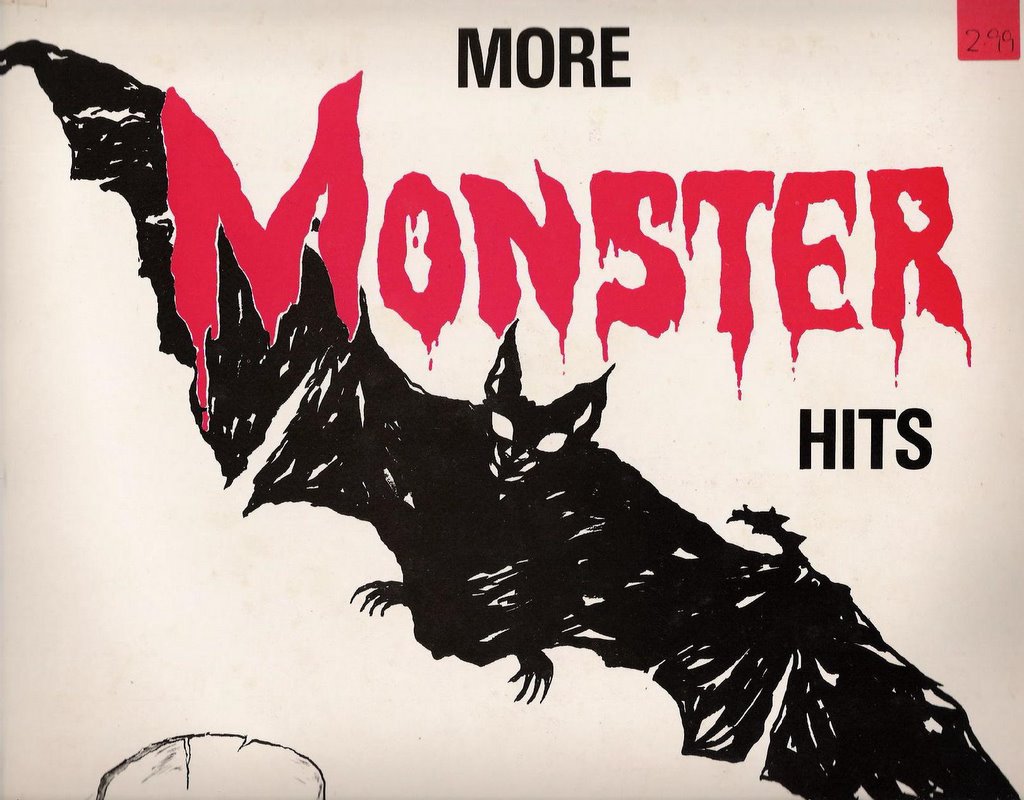
Another mystery disc for an early Halloween. Found at a boot sale last year for a few pence. It sounds a bit like the Barron Knights for those firmiliar with their work. Calling it "More Monster Hits" is quite funny as they obviously never had any or anything approaching a hit. Nothing can be found about them on the internet. Bullseye seems to be a label based in the North East of England and run on a shoe string judging by the sleeve art! Other tracks include versions of Cecelia, Take These Chains From My Heart and Old Shep. The whole thing seems to have been masterminded by someone called Ray Banks who has even signed the back of the sleeve.


Don Juans - Ghost Riders

Don Juans - I Love To Go A-Wandering

Don Juans - Dracula

Friday, May 14, 2010

Charlie Gillett - Little Richard/ Danny Holder (Soca)


A two part City Limits show on Capital here from the early 80's - the first half featuring rock 'n roll pioneer Little Richard who was in London to promote a biography that had just been published. Charlie plays some of his hits and and Richard chooses a couple of his favourites including Ike & Tina Turner and Prince.
The second half of the show is Danny Holder's choice of the Soca and Calypso hits of the time including songs by Relater and Sparrow etc.

Wikipedia says of Little Richard-

"Richard Wayne Penniman (born December 5, 1932) known by the stage name Little Richard, is an American singer, songwriter, pianist and recording artist, considered key in the transition from rhythm and blues to rock and roll in the 1950s. The Rock and Roll Hall of Fame web site entry on Penniman states that:

"He claims to be “the architect of rock and roll,” and history would seem to bear out Little Richard’s boast. More than any other performer - save, perhaps, Elvis Presley, Little Richard blew the lid off the Fifties, laying the foundation for rock and roll with his explosive music and charismatic persona. On record, he made spine-tingling rock and roll. His frantically charged piano playing and raspy, shouted vocals on such classics as "Tutti Frutti", "Long Tall Sally" and "Good Golly, Miss Molly" defined the dynamic sound of rock and roll."

Penniman began his recording career in 1951 by imitating the gospel-influenced style of late-1940s jump blues artist Billy Wright, but did not achieve commercial success until 1955, when, under the guidance of Robert "Bumps" Blackwell, he began recording in a style he had been performing onstage for years, featuring varied rhythm, a heavy backbeat, funky saxophone grooves, over-the-top Gospel-style singing, moans, screams, and other emotive inflections, accompanied by a combination of boogie-woogie and rhythm and blues music. This new music, which included an original injection of funk into the rock and roll beat, inspired James Brown, Elvis Presley, Otis Redding and generations of other rhythm & blues, rock and soul music artists. He was subsequently among the seven initial inductees into the Rock and Roll Hall of Fame in 1986 and was one of only four of these honorees (along with Ray Charles, James Brown, and Fats Domino) to also receive the Rhythm and Blues Foundation's Pioneer Lifetime Achievement Award.

In October 1957, while at the height of stardom, Penniman abruptly quit rock and roll music and became a born-again Christian. In January 1958, he enrolled in and attended Bible college[8] to become a preacher and evangelist and began recording and performing only gospel music for a number of years. He then moved back and forth from rock and roll to the ministry, until he was able to reconcile the two roles in later life."


Charlie Gillett - Little Richard

Charlie Gillett - Danny Holder

Sweet & Greasy


Patchy LP on the Liberty label from 1970 . Compiled by Bob Hite of Canned Heat fame.
My favourites here are by the Pelicans who sound a bit like The Coasters. Other doo-wop type groups included are The Robins, Jewels, Crystals and the Avalons.

Wikipedia says-


"In the beginning and during its heyday, this type of music did not have a specific name; the term "doo-wop" was not used.

In the 1950s, this type of harmonized group sound was referred to (broadly) as "rock and roll," but more narrowly as "R&B." However, R&B was still too general a term, since R&B included single artists, instrumentalists, and jump blues bands, as well as vocal groups. At the time, the best and most accurate term used was probably "vocal group harmony," but the style still did not have an official name, despite the fact that it dominated the charts in the late 1950s and early 1960s. The term "doo-wop" first appeared in print in 1961, notably in the Chicago Defender, when fans of the music coined the term during the height of a vocal harmony resurgence.[citation needed]

There is confusion regarding which recording was the "first" to contain the phrase "doo-wop." There is general acknowledgement that the first hit record to use the syllables "doo-wop" in the refrain was the 1955 hit, "When You Dance" by The Turbans (Herald Records H-458), in which the chant "doo-wop" can clearly be heard. As for the very first instance ever, there are several candidates: "doo-wop" can be heard in the chorus of the 1954 song "Never" by a Los Angeles group called Carlyle Dundee & The Dundees (Space Records 201); the 1955 song "Mary Lee" by The Rainbows on Red Robin Records contains the background "do wop de wadda" and was a Washington DC regional hit on Pilgrim 703; the 1956 song "In the Still of the Night" by The Five Satins, featured the famous plaintive "doo-wop, doo-wah" refrain in the bridge; and finally, the little-known "I Belong To You" by the Fi-Tones in 1956 on the Atlas label (release #1055).

It has been erroneously reported that the phrase was coined by radio disc jockey Gus Gossert in the early 1970s. However, Gossert himself said that "doo-wop(p) was already being used [before me] to categorize the music in California." After some time,the term "doo-wop" finally caught on as a description and category for R&B vocal group harmony. Many collections that were exclusively composed of original recordings of this music were sold, all under the name of "doo wop," which became the accepted term that still is used today."


Shades - Dear Lori

Shades - One Touch Of Heaven

Pelicans - Miss Lucy

Pelicans - Down In Mexico

Sha-Weeze - You Made Me Love You

Savoys - Hopin' For Your Return

Bill Doggett


A slightly warped copy of a very scratchy LP from Brick Lane I suspect. Imagine how great a newly remastered compilation of his best stuff must sound! I'm sure there must be one around somewhere.

Wikipedia says-

"William Ballard Doggett (February 16, 1916 – November 13, 1996) was an American jazz and rhythm and blues pianist and organist.

He was born in Philadelphia, Pennsylvania. His mother, a church pianist, introduced him to music when he was 9 years old. By the time he was 15, he had joined a Philadelphia area combo, playing local theaters and clubs while attending high school.

Doggett later sold his band to Lucky Millinder, and worked during the 1930s and early 1940s for both Millinder and arranger Jimmy Mundy. In 1942 he was hired as The Ink Spots' pianist and arranger.

Toward the end of 1947, he replaced Wild Bill Davis as the pianist for Louis Jordan's Tympany Five. It was in Jordan's group that he first achieved success playing the Hammond organ. In 1950 he is reputed to have written one of Jordan's biggest hits, "Saturday Night Fish Fry", for which Jordan claimed the writing credit.

In 1951, Doggett organized his own trio and began recording for King Records. His best known recording is "Honky Tonk," a rhythm and blues hit of 1956 which sold four million copies (reaching #1 R&B and #2 Pop), and which he co-wrote with Billy Butler. He won the Cash Box award for best rhythm and blues performer in 1957, 1958, and 1959. He also arranged for many bandleaders and performers, including Louis Armstrong, Count Basie, Ella Fitzgerald, and Lionel Hampton. He continued to play and arrange until he died of a heart attack in New York City."


Bill Doggett - Oops

Bill Doggett - Stop That Twistin' In Here

Bill Doggett - I Cover The Waterfront

Bill Doggett - Lady's Choice

Bill Doggett - Mommy Pt.1 & 2

Thursday, May 13, 2010

Round The Horne (RE-Up)


"Round the Horne crackled out of the nation's wirelesses Sunday afternoons from 1965, becoming one of the most popular comedies of the era until it finished in '69.

With its ground breaking mixture of innuendo, camp comedy and word play, it netted a regular audience of more than 15million listeners and was one of the best loved programmes in radio history.

A colourfully bizarre collection of characters and memorable catch phrases burst across the airwaves from the pages of its brilliantly inventive and sometimes outrageous scripts, the majority of which were written by zany duo Barry Took and Marty Feldman.

Kenneth Horne as the straight man anchored the whole careering, seething, teaming, chaotic hullabaloo emitted from the likes of J Peasemold Gruntfuttock, Rambling Syd Rumpo, Daphne Whitethigh, Shamus Android, Binkie Huckaback and Dame Celia Molestrangler (played by Betty Marsden, Hugh Paddick, Bill Pertwee and Kenneth Williams). This mad-cap bunch mercilessly sent up the establishment via a combination of bawdy jokes and surreal literary invention acted out in a series of sketches. Kenneth Williams camped his way through the script as limp-wristed Sandy, normally introduced by Hugh Paddick's character saying "Hello I'm Julian and this is my friend Sandy", making homosexual double entendres that allowed British suburbia to laugh openly about what had been strictly taboo."


Round The Horne - J. Peasmold Gruntfuttock Sings

Round The Horne - O Lucky Jim

Round The Horne - A Nice Cup Of Tea

Round The Horne - The Cucumber Song

Round The Horne - O What A Beauty

Round The Horne - Rhymes

Round The Horne - Early One Morning

Round The Horne - Among My Souvenirs

Saturday, May 08, 2010

Charlie Gillett - Echoes 1984


Continuing the Charlie Gillett homage with a show from 1984 where he is the guest of Stuart Colman on the Radio London show Echoes which took the Honky Tonk slot when Charlie left in 1978.
Charlie talks about his days at Radio London, Oval Records and his book Sound Of The City which had just been re-published in a new expanded edition.
Music includes Lene Lovich, Johnny Allen and Delbert McClinton.


Charlie Gillett - Echoes Pt.1

Charlie Gillett - Echoes Pt.2

Martin Denny


Martin Denny is the King of Exotica - his first record with that name released back in the 60's that came to represent that genre of music beloved of audiophiles and lovers of strange and other worldly music that fills your head with the sounds of the jungle, far off pacific islands and distant shores. Volume 2 carries on where the first left off - " Herein Mr. Denny's imagination has gone even further afield, and with superb Spectra-Sonic Sound giving us matchless fidelity, he has further exlored the myriad tinkle of instruments foreign to our civilization, plus fresh approaches on those firmiliar to our ears."

"Denny was born in New York, and raised in Los Angeles, California. He studied classical piano and at a young age toured South America for four and a half years with the Don Dean Orchestra. This tour began Denny's fascination with Latin rhythms.
After serving in the United States Army Air Forces in World War II, Denny returned to Los Angeles where he studied piano and composition under Dr. Wesley La Violette and orchestration under Arthur Lange at the Los Angeles Conservatory of Music. He also studied at the University of Southern California.
In January of 1954, Don the Beachcomber's (which later became Duke Kahanamoku's) brought Denny to Honolulu, Hawaii. He performed here for ten years, forming his own combo in 1955 and signing to Liberty Records. The original combo consisted of Augie Colon on percussion and birdcalls, Arthur Lyman on vibes, John Kramer on string bass, and Denny on piano. Lyman soon left to form his own group and future Herb Alpert sideman and Baja Marimba founder Julius Wechter replaced him. Harvey Ragsdale later replaced John Kramer."

Discover more about Martin Denny HERE.


Martin Denny - Escales

Martin Denny - When First I Love

Martin Denny - August Bells

Martin Denny - Bacoa

Martin Denny - Ebb Tide

Martin Denny - Rush Hour In Hong Kong

Roy Smeck


A boot sale bargain from a few years back. A record on the London label from the 60's when Smeck was getting on in years but still able to prove he was "Wizard of the Strings". Look him up on YouTube - some great old film of him juggling with his uke etc. - he was quite a showman.

"You may recognize the name Roy Smeck as much for his own prolific recordings as for the dozens of guitar instruction books he issued throughout the years. Blessed with some of the most nimble fingers imaginable, Smeck's approach to music often bordered on the showy, novelty side, but he also influenced many Western swing guitarists in the process. Smeck began issuing records and appearing on Warner Bros. movie shorts during the 1920s. It was then that he introduced his unique blend of jazz, country, and Hawaiian styles, wowing anyone who heard or saw him in action. In addition to working solo, Smeck also played on sessions by country greats Vernon Dalhart and Carson Robinson and formed his own band in the '30s, the Vita Trio. It was around this time that the guitarist began issuing a stream of instructional books on everything from how to play guitar, ukulele, and Hawaiian slide guitar to banjo. After several years of minor success recording for ABC, Kapp, and other small labels, in the '70s the reissue label Yazoo released several of Smeck's virtuoso recordings from his early days, causing a whole new round of interest in the guitarist."

Discover more about Roy Smeck HERE.


Roy Smeck - Some Of These Days

Roy Smeck - The Sheik OF Araby

Roy Smeck - Drifting And Dreaming

Roy Smeck - Limehouse Blues

Roy Smeck - My Little Grass Shack

Roy Smeck - Rocking The Uke

Tuesday, May 04, 2010

Charlie Gillett - Fools/Rain/Calypso


This weeks celebration of Charlie Gillett's radio shows features two from the mid 80's - not sure of the actual dates, perhaps someone out there knows?
The first is another themed show called "Fools & Clowns" but Charlie admits during the show that the crucial "clown song" was left at home so mostly they are all songs about fools. It has The Alchemist written on the side of the tape but Charlie doesn't mention that on the show itself but refers to "The Rock Show", so this maybe a series I had completely forgotten about he did for Capital Radio. Maybe this Alchemists shows started around the same time? But sadly my memory isn't what it was! These old tapes ain't what they were either so please excuse the rather quiet audio and the pops, crackles and hisses.

The other show has The Alchemists written on it also and features songs on the theme of Rain. In the second half Charlie is joined by guests Flying Turkey and Scorpion who play some calypso and soca records from the West Indies - one of first intimations of Charlie's interest in World Music and a taste of things to come.


Charlie Gillett - Fools & Clowns

Charlie Gillett - Rain

Charlie Gillett - Rain/Calypso

Me Myself and Me Again


A curio I picked up for 50p in a charity shop this morning on the Antic label recorded in 1976.

On the back of the sleeve it says -

"Me Myself And Me Again is actually Vivian Fisher, a 26 year old recording engineer and frustrated musician. Despite dabbling in cornet, french horn, trombone and piano, Vivian really always wanted to play every instrument. Then. one day when recording a marching brass band in the street, he discovered the sound was actually recorded in segments as the band moved past. This gave him the idea of a multi-track recording of himself impersonating the sound and character of the different parts of the brass band - and "Blaze Away" is the result."


Me Myself Anf Me Again - Blaze Away

Me Myself And Me Again - Blaze Away (This Is How It's Done)

Monday, May 03, 2010

Lata Mangeshkar


An LP on the Angel Records label from the early 60's. Some great songs taken from Bollywood films of the 40's and 50's including Mother India, Nagin and Shabab.

Wikipedia says -

"Lata Mangeshkar (born 28th September, 1929) is a singer from India. She is one of the best-known playback singers in the Hindi film industry. Mangeshkar's career started in 1942 and has spanned over six and a half decades. She sang in over a thousand Bollywood movies and has sung songs in over twenty regional Indian languages, but primarily in Hindi. She is the elder sister of the equally accomplished singer Asha Bhosle and lesser-known singers, brother Hridayanath and sisters Usha and Meena. Lata is the second vocalist ever to have received the Bharat Ratna, India's highest civilian honour.
Lata was featured in the Guinness Book of World Records from 1974 to 1991 for having made the most recordings in the world. The claim was that she had recorded no less than 25,000 solo, duet, and chorus-backed songs in 20 Indian languages between 1948 to 1974 (30,000 songs between 1948 and 1987, according to the 1987 edition). Over the years, while several sources have supported this claim, others have raised concerns over its veracity, claiming that this number was highly exaggerated and that Lata's sister, Asha Bhosle, had more song recordings than she had."


Lata Mangeshkar - Mahfil Men Jal Uthi Shama

Lata Mangeshkar - Jiya Beqarar Hai

Lata Mangeshkar - Man Dole

Lata Mangeshkar - Chale Jana Hahin

Lata Mangeshkar - Jogan Ban Jaaoongi

Lata Mangeshkar - Nagari Nagari Duware

Soul Vendors (Re-Up)


An old LP on the Coxone label from 1967 found at a flea market some time ago. Its a bit scratched so please forgive the blips and pops.

"The Soul Vendors the group that gave us 'Rock Steady', the phrase originated by Coxone Dodd, the record producer and owner of Studio One studio. This new sound was much slower than Ska, stronger base line and a persistent shuffling rhythm together with some very fine sax and trumpet solo's, and the organ was used to greater effect. The vocal styles were very soulful, heavily influenced by the USA soul and R & B records of that period. "Rock Steady" by Alton Ellis issued in 1967 on the Treasure Isle label sums up the new style, using repeat upbeat guitar riff and the brass section answering the vocals, beautiful sax solo, even a vocal backing group, all added up to a suberb production by Duke Reid who went on to make this new sound his own. "


Soul Vendors - Give It To Me

Soul Vendors - The Raver

Soul Vendors - Everybody Knows

Soul Vendors - Give Me Little Sign

Soul Vendors - Just A Bit O' Soul

Sunday, May 02, 2010

Super Biton Du Mali


I cannot honestly say where this LP on the French Tangent label came from. Probably bought in East Street market, London, back in the 90's when records like this were very plentiful. Originally released in 1983.
I could not glean much about Super Biton on the internet but I found this small snippet of information-


"Formed in 1952, this band features largely modern instrumentation (brass, guitars, drums, synths) and plays music based on traditional Bambara rhythms. They toured Europe several times in the early '80s, led by trumpet player Madaou Ba, and are one of the few big bands to survive into the '90s." ~ Steve Huey, All Music Guide


Super Biton - Waracoro

Super Biton - Kara Demba

Super Biton - Flani- N'Goni

Arthur Lyman


A Brick Lane find I think from afew years back - this 1966 recording by Arthur Lyman on the Vocalion label is essential listening , I would have thought , for fans of "exotica" and Hawaiian cocktail lounge jazz. The sleeeve notes tell us the record was made in the " acoustically near perfect Aluminum Dome on the beautiful grounds of Conrad Hilton's fabulous Hawaiian Village Hotel in Honolulu, where the Arthur Lyman Group were appearing in the Shell Bar."

"Arthur Lyman (February 2, 1932 - February 24, 2002) popularized a jazzy style of Hawaiian music during the 1950s, and gathered a following as a purveyor of so-called exotic music or Exotica. As a child, Lyman moved to the large Hawaiian city of Honolulu, where he became interested in the music of Benny Goodman and Lionel Hampton. He learned to play along with their records on a toy marimba. At the age of 14, he joined a jazz group and by his early 20s was performing with "mood music" king Martin Denny.
Known for his vibraphone stylings, bird songs and bells, Lyman helped turn exotic music into a national trend in the 1950s and 1960s, producing more than 30 albums and almost 400 singles and earning three gold albums.
In 1957, Lyman recorded "Yellow Bird," a Haitian folk song. The song made the Billboard magazine charts, peaking at #4 in 1961.
Lyman's last charting album in 1963 was I Wish You Love, but his music enjoyed a new burst of popularity in the 1990s with the easy listening revival. He died from throat cancer in February 2002."

Discover more about Arthur Lyman HERE.


Arthur Lyman - Sim Sim

Arthur Lyman - Kasumi Love Theme

Arthur Lyman - Caravan

Arthur Lyman - Akaka Falls

Saturday, May 01, 2010

Hoagy Carmichael


An LP on MCA Coral from the 80's I would guess as that's when I bought it. Delightful songs that still sound great today.

Wikipedia says-

"Born in Bloomington, Indiana, Carmichael was the only son of Howard Clyde Carmichael and Lida Robison. He was named Hoagland after a circus troupe “The Hoaglands” who stayed at the Carmichael house during his mother’s pregnancy. Howard was a horse-drawn taxi driver and electrician, and Lida a versatile pianist who played accompaniment at silent movies and for parties. The family moved frequently, as Howard sought better employment for his growing family. At six, Carmichael started to sing and play the piano, absorbing easily his mother’s keyboard skills. By high school, the piano was the focus of his after-school life, and for inspiration he would listen to ragtime pianists Hank Wells and Hube Hanna. At eighteen, the small, wiry, pale Carmichael was living in Indianapolis, trying to help his family’s income working in manual jobs in construction, a bicycle chain factory, and a slaughterhouse. The bleak time was partly spelled by four-handed piano duets with his mother and by his strong friendship with Reg DuValle, black bandleader and pianist known as “the elder statesman of Indiana jazz” and “the Rhythm King”, who taught him piano jazz improvization."

Discover more about Hoagy Carmichael HERE.

Hoagy Carmichael - Lazy River

Hoagy Carmichael - Judy

Hoagy Carmichael - Stardust

Hoagy Carmichael - In The Cool,Cool,Cool of The Evening

Friday, April 30, 2010

The Ramblers Dance Band (Re-Up)


A Highlife LP on the Decca label from West Africa recorded in 1969.

The sleeve notes say-

"It is over a decade now since Decca started recording local artists in West Africa. During this stretch of time dance bands have sprouted and wilted away to die in the true tradition of musicla groups. Somehow one band has satyed around longer than most; it seems to have succeeded where others have failed. The Ramblers Dance Band, nearly eight years old, have introduced glamour to the West African Highlife scene. the band have provided it's dance fans with their highlife tunes, while for those who prefer to listen it has supplied the necessary innovations to the traditional forms."


"From its early development in Ghana through the 1970s, Highlife was Africa's first big popular music trend. Evolving from the the music of society bands and military marching bands, Highlife music re-africanized these contemporary instrumental ensembles, adding local percussion, indigenous rhythms and crafting local lyrics around powerful local themes. Highlife, named for the lifestyle of the high society Africans who were its early patrons, was the first major popular music trend in West Africa. Some of Nigeria's early highlife luminaries Bobby Benson, Cardinal Rex Lawson, EC. Arinze, Stephen Amechi, Inyang Henshaw, Celestine Ukwu and many others are still revered to this day. Though highlife lost some of its national power during the Civil War years, Highlife Heavies like Chief Stephen Osita Osadebe and Oliver DeCoque remain powerful National forces. Recentely a young generation has worked to put highlife back on the map."

Discover more about Nigerian Highlife HERE


Ramblers Dance Band - Ekombi

Ramblers Dance Band - Agyanka Dabre

Ramblers Dance Band - Ama Bonsu

Ramblers Dance Band - Nyame Ne Nyhehyee

Ramblers Dance Band - Nyame Mbere

Ramblers Dance Band - Alome

Ramblers Dance Band - Knock On Wood