Monday, May 25, 2009

Little Marcy


Not a great deal from the boot sales lately but did find this curiosity today for a few pence. Little Marcy is a ventriloquists doll and well known amongst collectors of strange records. It's on the Word World Wonder Series label out of Waco Texas. It has a price tag of 1:98 dollars on the sleeve depicting marcy and her animal friends.
It was released in 1968.

"Marcy Tigner, her puppet Little Marcy, and her unusual "child-like" singing voice, found her art, her niche, in the only venue available to so many like her - Christian childrens' music. Over three decades her unusual act has been fascinating, inspiring, sometimes repelling audiences from all over, depending on one's beliefs and point of view. Even today, when her music is often categorised as 'bad' or 'disturbing,' people find confirmation of their faith in it - and in fact, it stands head and shoulders above most of the other work in the genre thanks to top-notch production values.


Her albums have been released and re-released under various labels and at various prices, as was (and probably still is) typical for the genre. What we have here is an attempt - likely foredoomed to failure - to list every "Little Marcy" album and related release ever, along with whatever other data we can glean from thrift store record purchases and random bits of research."


Little Marcy - If I Could Talk With The Animals

Little Marcy - Oh, Miss Chicken

Little Marcy - Old MacDonald Had A Farm

Little Marcy - Never Smile At A Crocodile

Little Marcy - I Love Little Pussy

Little Marcy - Smokey The Bear

Ken Dodd


No apologies for uploading more Ken Dodd this time froma cassette I found a while back at a cheapo remaindered book chain. Taken from one of his old radio shows by the sound of it.

"Kenneth Arthur Dodd was born on 8th November 1927 in Knotty Ash, Liverpool.

Ken Dodd got his big break appearing at Nottingham Playhouse in 1954, going on to top the bill at Blackpool in 1958 from where his show was broadcast live the following year.

His career as a comedian really took off with the advent of television but his act still owed a lot to the traditional "stand-up", prevalent in the old Variety Theatre.

Not only a legendary comedian however, his musical career has been sensational, particularly in the 1960's when his singles, such as 'Happiness', 'Promises' and 'The River' topped the Charts and in 1965, 'Tears' sold over two million copies, earned Ken two gold discs and went straight into the Charts at no.1. 'Tears' is still one of the biggest-selling singles of all time!

Ken has not been short of Radio and Television appearances either. 'Doddy's Music Box', 'The Ken Dodd Show', 'Ken Dodd's World of Laughter' and of course, 'Ken Dodd and the Diddymen' as well as the highly acclaimed 'Audience With' shows have all got high ratings.

Ken is also an accomplished actor. He has starred in both 'Twelfth Night' and the 1996 movie epic 'Hamlet', as well as famously starring in 'Dr. Who and the Bannermen'.

He was awarded an OBEin 1982 and in 1991 was given the British Comedy Awards' highest accolade for his lifetime contribution to humour, a 'Lifetime Achievement Award'."

Thursday, May 21, 2009

Psycho Serenade


A few strange records found on an LP called Psycho Serenade on the Beware label that came out in the 80's. Mostly trashy novelty songs and weird rock 'n' roll obscurities mixed in with old ads. and film trailers etc.

The sequence goes as follows-

1. Come With Me To The Casbah - Ganimian and his Orientals
2. Souie Baby Souie - Nanine
3. Cailifornia Hippy Murders - Red River Dave
4. Shake Your Tail Feather - The Five Du-Tones
5. The Riddler - The Riddler
6. Mad - The Social Outcasts

Tuesday, May 19, 2009

Bob Kerr's Whoopee Band (re-Up)


A short radio programme from a series Bob Kerr did for the BBC I imagine back in the 80's or 90's. This taken from a cassette someone sent me and it is sadly lacking in any info. Bob Kerr Is currently on tour with the re-formed Bonzo Dog Band.

"The WHOOPEE BAND have performed on stage and TV in most European countries, had their own 45 minute TV show in Germany, not to mention their very own TV series for London Weekend Television in the 70's, it was called "Making Whoopee". They have worked with many leading stars including Lionel Bart, Peter Cook & Dudley More and Max Wall. They have toured with Ralph McTell, Manhattan Transfer and many more.
Such is the bizarre nature of this outfit they not only play Theatres and Festivals all over Europe and beyond, they even played at the legendary BOB DYLAN concerts in Earls Court London in the late seventies and when Roger Daltrey of The Who got married they even played at his wedding. The WHOOPEE BAND have appeared in concert at the Philharmonic Hall in St. Petersburg, Russia and in Denmark with Dame Edna Everage ............in various concerts with Chris Barber, Kenny Ball, Lonnie Donegan and Acker Bilk plus many many more."

Discover more about the Whoopee Band HERE.

Another selection of songs here including Pasadena, Hard Hearted Hannah and Somebody Stole My Gal. In fact I think these may not be radio shows atall but television shows on London Weekend as mentioned in the website.

Thursday, May 14, 2009

Roger Stevens


New song and animation from our poet friend Roger who used to be a Killer Rabbit and part of the Wrong Brothers amongst many others. He also plays keyboards in a band called Damn Right I've Got The Blues. Buy his books and music HERE and visit his poetry blog HERE.

Tuesday, May 12, 2009

Theo Blaise (Re-Up)


A great LP found at Brick Lane flea market back in the 80's. This record on the TBK label was released in 1982. Theo recorded in Paris but has since given up performing to study music I am reliably informed. No idea who the fabulous guitarist playing here is.

Wikipedia says -

"Soukous (also known as Lingala or Congo, and previously as African rumba) is a musical genre that originated in the two neighbouring countries of Belgian Congo and French Congo during the 1930s and early 1940s, and which has gained popularity throughout Africa. "Soukous" (said to be a derivative of the French word secouer, to shake[1]) was originally the name of a dance popular in the Congos in the late 1960s, and danced to an African version of rumba. Although the genre was initially known as rumba (sometimes termed specifically as African rumba), the term "soukous" has come to refer to African rumba and its subsequent developments.

Soukous is called Congo music in West Africa, and Lingala in Kenya, Uganda and Tanzania - referring to the Lingala language of the region from where it originated. In the 1980s and early 1990s, a fast-paced style of soukous known as kwassa kwassa – named after a popular dance, was popular. A style called ndombolo, also named after a dance, is currently popular."

More theo Blaise at SoMEtHIng FoR tHE WeeKEnd.

Wednesday, May 06, 2009

Columbia Novelty Orch./ Savoy Havana Band


Another 78 from the same batch this morning. I've realised I already have this on a CD called "The Wibbly Wobbly Walk" on the Saydisc label released in 1985.

The sleeve notes by Brian Rust say -

Columbia Novelty Orchestra: The Little Wooden Whistle Wouldn't Whistle - Here is another studio band, probably including Jules levy Jr. a brilliant cornetist like his father, but who died in his thirties not long after, and certainly featuring Billy Jones as vocalist; he was one of the Hapiness Boys, the most popular act on pioneer American radio. Recorded on March 8th, 1924, this is a curious mix of romantic and almost surrealistic.

Savoy Havana Band: Why Did I Kiss That Girl? A smash hit from the first part of 1924, recorded by the Havana Band after Bert Ralton took the original band to Australia. Ramon Newton, it's violinist-director, is also the singer.


Columbia Novelty Band - My Little Wooden Whistle Wouldn't Whistle

Savoy Havana Band - Why Did I Kiss That Girl?

Tom Foy


A 78 found today in a charity shop amongst some others- mostly classical.
I know little about Tom Foy . He reminds me of George Formby but without the ukulele - a sort of northern gormless comedian that was popular back then. Looking back we wonder why!

"Although famed as "The Yorkshire Lad", Mr. Foy was born in Manchester, of Irish parents. After
serving his apprenticeship as a sign writer, he set up in business in Halifax, training in his spare time
as an acrobat at nearby Shroggs Park. Tiring of sign writing he joined a travelling circus as a scenic
artist and clown, and made his first music-hall appearance in Manchester as a lightning cartoonist.
There followed work as a song and dance man, a black-faced comedian in a Wild West show, then as
an Irish comedian. It was Eugene Stratton who urged him to go to London, and arranged a trial turn at
the Oxford. He soon became established in the West End, presenting his broad Yorkshire comedy
sketches, including "Tom Foy and His Donkey" [which included a live donkey]. In pantomime he was a
popular dame, but his real panto' speciality was as "Idle Jack." Tom Foy collapsed while playing the
Argyle, Birkenhead on 23 July, 1917, and died a few weeks later at the age of 38."


Tom Foy - In Trouble Again

Tom Foy - Much Obliged To Me

Monday, April 27, 2009

Alfred Apaka


Found recently in a charity shop in Chester for a couple of quid. A double LP of his best songs for the Decca label - released after his death in 1960's. A bit too MOR for my taste but I was drawn to the "exotica" elements and particularly to the song "Princess Poo-Poo-Ly Has Plenty Of Papaya".

"Alfred Aloha Apaka (1919 -- 1960) was one of the influential performers in the history of Hawaii's popular music. Although he recorded for less than a decade, Apaka set the standards for modern Hawaiian music with his joyful, baritone vocals and highly entertaining performances. In his book, Hawaiian Music and Musicians, George Kanahele wrote that Apaka was "the possessor of one of the most remarkable voices to come out of Hawaii. A natural, untrained, voice, it was strong, masculine and agile.....a delicate instrument that could range from B flat to E in pianissimo." Apaka inherited his musical skills from his great aunt, Lydia Ahola, the daughter of Queen Lilioukalani. In an interview with The Honolulu Sun Bulletin, Apaka's son, Jeff, who also became an entertainer, said, "I like to think that Dad's musical training came in a direct line from the queen." During the '40s, Apaka performed with several orchestras including Don McDiamond's Royal Hawaiian Hotel house band and Ray Kenney's band in New York. Overheard by Bob Hope while singing at a luau in Honolulu, Apaka became a regular guest on Hope's radio and television shows. Although many predicted that he would become a successful mainstream vocalist, Apaka took a different route when he convinced multimillionaire Henry Kaiser to build a hotel, The Hawaiian Village, that included a showroom where he starred in his own extravagant revue. Apaka's energetic performances soon made the hotel an essential tourist attraction, and his popularity continued to grow. Plans for a nationally broadcast television special were finalized in February 1960. A few days later, however, Apaka suffered a fatal heart attack while playing hand ball."


Alfred Apaka - Ebb Tide

Alfred Apaka - You Are Beautiful

Alfred Apaka - Princess Poo-Poo-Ly Has Plenty Papaya

Shep's Banjo Boys


Slim pickings this week round the charity shops so just this LP from Shep's Banjo Boys on the Nevis label for a few pence. I guess it would be from the 60's or 70's judging by the cover. They are still going strong and based in Manchester - weddings, parties and cruise ships a speciality. Signed on the back by the band too and on two large photos of Happy Valley in Llandudno inside as a bonus!

There official website says-

"Howard Shep Shepherd is recognised as Britain’s foremost banjo player whose Manchester based Banjo Band Shep's Banjo Boys first became nationally recognised for their live musical spots on Granada TVs long running series “The Comedians”.

Since then, Shep's Banjo Boys have appeared at theatres and venues all over the UK and performed abroad.

During the 80’s Shep's regularly entertained QE2 passengers playing background reception music, welcome aboard acoustic music in addition to their cabaret spot.

Today, in addition to his band, Shep finds his Duo or Trio are very popular (see Shep's Rhythm Aces). Shep's Duo have regularly entertained passengers UK-wide on the Orient Express' Northern Belle train. They are ideal for store openings keeping customers entertained and cheerful, the same goes for wedding receptions, their music keeps everyone in a happy mood."

Discover more about Shep's Banjo Boys HERE.

Shep's Banjo Boys - Baby Face Medley

Shep's Banjo Boys - St. Louis Blues

Shep's Banjo Boys - I Had A Dream Dear Medley

Tuesday, April 21, 2009

Jimmy Edwards - (re-Up)


From an LP on the Spark label released in 1973. Jimmy edwards sings bawdy pub songs and plays his trombone accompanied by Ken Mackintosh and his band. Also on the record is special guest Joe "Mr. Piano" Henderson.

"Jimmy Edwards was a British radio and television comedy actor, best known as Pa Glum in Take It From Here and as the headmaster 'Professor' James Edwards in Whack-O.

Born James Keith O'Neill in Barnes, London, Edwards served in the Royal Air Force during World War II, winning the Distinguished Flying Cross. His Dakota was shot down at Arnhem in 1944, resulting in plastic surgery — he disguised it with the huge handlebar moustache that later became his trademark.

A feature of London theatre in the immediate post-War years, having previously performed in the Cambridge Footlights review, Edwards gained wider exposure as a radio performer, appearing in the long-running Take It From Here, where he developed the Glums alongside June Whitfield.

Graduatating to television, his appeared in shows such as the panel game Does the Team Think?, The Seven Faces of Jim, as well as guest slots in Make Room for Daddy and Sykes. Edwards also worked with Eric Sykes when he acted in the Sykes-penned short films The Plank (1967) (alongside Tommy Cooper) and Rhubarb (1969) (which also featured Harry Secombe).

He published his autobiography, Six of the Best, in 1984, as a follow up to the earlier Take it From Me. Amongst his outside interests were brass bands and the handlebar Club, in which all the members had such moustaches. During the 1970s he also came out as a homosexual."


Discover more about Jimmy Edwards HERE.

Tuesday, April 14, 2009

Jimmy Durante


I found this LP on Brunswick label today at the antiques centre in Frodsham for a quid. Too lazy to take a photo or scan the cover I have found one similar on the internet.
It has some nice tunes on it and makes me appreciate how good a pianist old "Schnozzle" was. They don't make 'em like this anymore which is a shame. Some old chestnuts including songs that Jimmy wrote himself.

Wikipedia says -

"Durante was born in Brooklyn, the third of four children born to Italian-Americans Mitch Durante (1855-1929) and Margaret (née Lentino) Durante (1858-1936). A product of working-class New York, Durante dropped out of school in the eighth grade to become a full-time ragtime pianist, working the city circuit and earning the nickname "Ragtime Jimmy," before he joined one of the first recognizable jazz bands in New York, the Original New Orleans Jazz Band. Durante was the only member of the group who did not hail from New Orleans. His routine of breaking into a song to deliver a joke, with band or orchestra chord punctuation after each line became a Durante trademark. In 1920, the group was renamed Jimmy Durante's Jazz Band.

Durante became a vaudeville star and radio attraction by the mid-1920s, with a music and comedy trio called Clayton, Jackson and Durante. Lou Clayton and Eddie Jackson, probably Durante's closest friends, often reunited with Durante professionally. Jackson and Durante appeared in the Cole Porter musical The New Yorkers which opened on Broadway on December 8, 1930.

By 1934, he had a major record hit, his own novelty composition Inka Dinka Doo and it became his theme song for practically the rest of his life. A year later, Durante starred on Broadway in the Billy Rose stage musical Jumbo, in which a police officer stopped him while leading a live elephant and asked him, "What are you doing with that elephant?" Durante's reply, "What elephant?", was a regular show-stopper. Durante also appeared on Broadway in Show Girl (1929), Strike Me Pink (1934), and Red, Hot and Blue (1936).

He began appearing in motion pictures at about the same time, beginning with a comedy series pairing him with silent film legend Buster Keaton and continuing with such offerings as The Wet Parade (1932), Broadway to Hollywood (1933), The Man Who Came to Dinner (1942, playing "Banjo", a character based on Harpo Marx), Ziegfeld Follies (1946), Billy Rose's Jumbo (1962, based on the 1935 musical) and It's a Mad, Mad, Mad, Mad World (1963)."

Discover more about Jimmy Durante HERE


Jimmy Durante - Start Off Each Day With A Song

Jimmy Durante - Mad Bird Melody

Jimmy Durante - I Want A Girl ( just like the girl that married dear old Dad )

Jimmy Durante - Inka Dinka Doo

Jimmy Durante - You Made Me Love You

Jimmy Durante - Carolina In The Morning

Monday, April 06, 2009

Victor Borge


I found this today in the British Heart Foundation shop in Chester for a little over a pound. Its a 10 inch LP on the Philips label from the mid 50's recorded in concert in Boston. I have a other records and CD by him so surprised I havent featured him before now on this blog. Certainly an aquired taste but very funny use of language especillay his "Phonetic Punctuation" which sadly is not included here. I will have to upload that some other time.

Wikipedia says -

"Borge was born Børge Rosenbaum in Copenhagen, Denmark, into a Jewish family. His parents, Bernhard and Frederikke Rosenbaum, were both musicians (his father was a violinist in the Royal Danish Chapel, and his mother played piano), Borge took up piano like his mother at the age of 3, and it was soon apparent that he was a prodigy. He gave his first piano recital when he was 8 years old, and in 1918 was awarded a full scholarship at the Royal Danish Academy of Music, studying under Olivo Krause. Later on, he was taught by Victor Schiøler, Liszt's student Frederic Lamond, and Busoni's pupil Egon Petri.

Borge played his first major concert in 1926 at the Danish concert-hall Odd Fellow Palæet (The Odd Fellow Mansion). After a few years as a classical concert pianist, he started his now famous "stand up" act, with the signature blend of piano music and jokes. He married American Elsie Chilton in 1933, the same year he debuted with his revue acts. Borge started touring extensively in Europe, where he began telling anti-Nazi jokes.

When the Nazis occupied Denmark during World War II, Borge was playing a concert in Sweden, and managed to escape to Finland. He traveled to America on the USS American Legion, the last neutral ship to make it out of Petsamo, Finland, and arrived August 28, 1940 with only 20 dollars, three of which went to the customs fee. Disguised as a sailor, Borge returned to Denmark once during the occupation to visit his dying mother.
Even though Borge didn't speak a word of English upon arrival, he quickly managed to adapt his jokes to the American audience, learning English by watching movies. He took the name of Victor Borge, and, in 1941, he started on Rudy Vallee's radio show, but was hired soon after by Bing Crosby for his Kraft Music Hall.

From then on, it went quickly for Borge, who won Best New Radio Performer of the Year in 1942. Soon after the award, he was offered film roles with stars such as Frank Sinatra (in Higher and Higher). While hosting The Victor Borge Show on NBC from 1946, he "developed many of his trademarks, including repeatedly announcing his intent to play a piece but getting "distracted" by something or other, making comments about the audience, or discussing the usefulness of Chopin's Minute Waltz as an eggtimer. Or he would start out with some well-known classical piece like Beethoven's "Moonlight Sonata" op. 27 and suddenly drift into a harmonically suitable pop or jazz tune like "Night and Day" (Cole Porter)."

Discover more about Victor Borge HERE.


Victor Borge - Side One

Victor Borge - Side Two

Wednesday, April 01, 2009

Tom Lehrer


A rather scratchy LP I bought today at Crewe flea market for a quid. This was recorded before an audience in 1965 in a San Franciscian night club. Based on songs he wrote for satirical TV show called "That Was The Week That Was" not to be confused by the Britsih show of the same name.

Here's what Wikipedia says about him-

"As an undergraduate student at Harvard University, he began to write comic songs to entertain his friends, including "Fight Fiercely, Harvard" (1945). Those songs later became (in a joking reference to a leading scientific journal) The Physical Revue. Influenced mainly by musical theater, his style consisted of parodying the then-current forms of popular song. For example, his appreciation of list songs led him to set the names of the chemical elements to the tune of Gilbert and Sullivan's "Major General's Song".
Inspired by the success of his performances of his songs, he paid for some studio time to record an album, Songs by Tom Lehrer, which he sold by mail order. Self-published and unpromoted, the album, which included the macabre ("I Hold Your Hand In Mine"), the mildly risqué ("Be Prepared"), and the mathematical ("Lobachevsky"), became a success via word of mouth. With a cult hit, he embarked on a series of concert tours and released a second album, which came in two versions: the songs were the same but More Songs by Tom Lehrer was studio-recorded, while An Evening Wasted with Tom Lehrer was recorded live in concert.
By the early 1960s Lehrer had retired from touring (which he intensely disliked) and was employed as the resident songwriter for the US edition of That Was The Week That Was (TW3), a satirical TV show. An increased proportion of his output became overtly political, or at least topical, on subjects such as pollution ("Pollution"), Vatican II ("The Vatican Rag"), race relations ("National Brotherhood Week"), American militarism ("Send the Marines") and nuclear proliferation ("Who's Next?" and "We Will All Go Together When We Go"). He also wrote a song which satirized the alleged amorality of Wernher von Braun. A selection of these songs was released in the album That Was The Year That Was."

Find out more about Tom Lehrer HERE.


Tom Lehrer - What Ever Happened To Hubert?

Tom Lehrer - New Math

Tom Lehrer - Alma

Tom Lehrer - Who's Next?

Tom Lehrer - The Vatican Rag

Tuesday, March 31, 2009

Charlie Higgins


Not much gleaned on the internet about Charlie Higgins who was popular during the 30's. Windyridge Records has a CD of his novelty songs available still but the ones here are from the 12 CD set called "Vintage British Comedy" on the Signature label which are excellent compilations and contain songs and sketches by artists such as Max Miller, Billy Bennett, Old Mother Riley and Charlie Chester to name but a few.


Charlie Higgins - I'm A Daddy At 63

Charlie Higgins - In The Waxworks Late Last Night

Charlie Higgins - Charlie's Breach Of Promise Case

Charlie Higgins - Charlie's Saxaphone

Charlie Higgins - Bumpety Bumpety Bump

Monday, March 30, 2009

Adge Cutler & The Wurzels


I found this today in a local charity shop for 75p. I have uploaded some tracks before by the Wurzels but they have long since dried up. So here is both sides of this LP on the EMI label from 1966/67 recorded "Live at the Royal Oak, Nailsea, Zummerzet".

"Born Alan John Cutler in Bristol in 1930, he spent his early life in the small town of Nailsea in Somerset, and one of his first jobs involved working for a local cider mill — but, influenced by Len Uke Thomas (a local Bristol comic singer and entertainer) and a stint on the road as Acker Bilk's road manager, he took to a career in music. Armed only with a few songs he had written, in June 1966 he approached agent John Miles, who helped put together the band the Wurzels with guitarist and banjo player Reg Quantrill, accordionist Reg Chant, double bass player John Macey, and Brian Murphy on the wurzelphone — in reality a tuba. One of the first songs they played live was Cutler's composition "Twice Daily" — about a shotgun wedding between a young farmhand and the farmer's daughter Lucy Bailey — which was later to be banned from radio play by the BBC owing to its risqué lyrical content.

Encouraged by the local sales in the West Country, EMI nationally released the single "Drink Up Thy Zider" backed with "Twice Daily" and saw it scrape into the bottom of the chart at number 45, quickly followed by the album Adge Culter & the Wurzels, mostly recorded at the Royal Oak pub in Nailsea and including both sides of the single as well as humorous songs "Champion Dung Spreader," "Hark at 'Ee Jacko," "The Mixer Man's Lament," and "When the Common Market Comes to Stanton Drew." The album climbed to number 38 in the LP charts. After this brief foray into the national charts, the band returned to performing live concerts locally in Somerset. Cutler was a lifelong supporter of the Bristol city football club, and one of his songs, "Morning Glory," was changed to "One for the Bristol City," which the team used to fire itself up before each game.

On the May 5, 1974, following a Wurzels concert, Adge Cutler overturned his car on a roundabout in Chepstow and died from his injuries. Following his death, the Wurzels continued as a trio, by then featuring a completely different lineup of Tommy Banner, Tony Baylis, and Pete Budd. Amazingly, they enjoyed a period of chart success in the long hot summer of 1976, including even the number one single "Combine Harvester (Brand New Key)," based on the Melanie hit with new lyrics written by Brendan O'Shaughnessy, and the Top Three single "I Am a Cider Drinker," based on a holiday hit from the previous year, "Una Paloma Blanca."

Discover more about Adge Cutler & the Wurzels HERE.


Adge Cutler - Side One

Adge Cutler - Side Two

Sunday, March 29, 2009

George Formby


Two scratchy 78's I picked up at the boot sale today for 50p each. Not songs I've heard before I must admit . Wartime morale boosters but obviously didn't go down as well as he'd hoped - certainly not in the same class as some of his better known songs but interesting none the less.

"Musical comedian George Formby was among Britain's most popular stars during the first half of the 20th century, with a legacy encompassing over 200 records and more than 20 hit films. Born George Hoy Booth on May 26, 1904 in Lancashire, England, he was the son of George Formby, Sr., himself a popular Edwardian music hall comedian. The younger Formby first worked as an apprentice jockey, but his father's sudden death in 1921 prompted him to pursue his own career as a performer; he initially worked under his given name, but later adopted his father's nom-de-stage following his marriage to dancer Beryl Ingham, who soon took over the reins of her husband's career. Initially, Formby attempted to approximate his father's act, but with little success; the chance acquisition of a banjo ukelele proved the key to establishing his own stage persona, and in light of audiences' enthusiastic reactions to his idosyncratic, self-taught playing style, the instrument was never again far from his side.

With his toothy grin and goofy personality, Formby was dubbed "the beloved imbecile" by pundits; after earning a loyal following among music hall denizens, he scored a major pop hit with 1932's "Chinese Blues," which when renamed "Chinese Laundry Blues" became his signature song for the duration of his career. Two years later Formby made his first film, Boots! Boots!; the picture was a smash, and he swiftly contracted to make 11 more films for Ealing Studios. Over the course of movies like 1935's No Limit, 1937's Feather Your Nest and 1938's It's in the Air, he became Britain's biggest star, earning an estimated £100,000 a year; his films also continued to provide him with a wealth of saucy hit records, including "The Window Cleaner," "Fanlight Fanny," "Riding in the T.T. Races" and the Noel Gay-penned "Leaning on a Lamp Post," perhaps his most popular song."

Discover more about George Formby HERE.


George Formby - Our Fanny's Gone All Yankee

George Formby - Unconditional Surrender

George Formby - The "V" Sign Song

George Formby - The Old Cane Bottom Chair

Thursday, March 26, 2009

Peter Sellers


I bought a couple of CD's yesterday in a charity shop. On the Signature label - part of a 15 CD set called "Vintage British Comedy". These tracks culled from Vol.9 and Vol. 10. Other artists include Frankie Howard, Will Hay, Arthur Askey, Max Miller etc.

"Sellers was born in Southsea, Hampshire to a family of entertainers. His parents nicknamed him Peter at an early age, after his elder stillborn brother. He attended the North London Roman Catholic school, St. Aloysius College, although his father, Yorkshire-born Bill Sellers (1900 - 1962), was Protestant and his mother, Agnes Doreen 'Peg' née Marks (1892 - 1967), was Jewish. His maternal grandmother, Benvenida Welcome Mendoza (1855 - 1932), was of Portuguese-Jewish descent; her grandfather, Mordecai Mendoza (1774 - 1851), was a first cousin of English prizefighter Daniel Mendoza (1764 - 1836). Sellers was also a cousin of Talksport radio presenter Mike Mendoza.

Accompanying his family on the variety show circuit, Sellers learned stagecraft which proved valuable later. He performed at five at the burlesque Windmill Theatre in the drama Splash Me!, which featured his mother.[citation needed] He was a versatile artist, excelling at dancing, drumming well enough to tour with jazz bands (his drumming is shown in a clip of The Steve Allen Show in 1964), and playing ukulele and banjo. In Parkinson, Sellers claimed his father had taught George Formby to play ukulele. Sellers played ukulele on the "New York Girls" track for Steeleye Span's 1975 album Commoner's Crown.

During World War II, Sellers was an airman in the Royal Air Force, rising to corporal, though he had been relegated to ground staff due to poor eyesight. His tour included India and Burma, although the duration of his stay in Asia is unknown and its length may have been exaggerated by Sellers himself. He also served in Germany and France after the war.

As a distraction from the life of a non-commissioned officer, Sellers joined the Entertainments National Service Association (ENSA), allowing him to hone his drumming and comedy. He occasionally impersonated his superiors, and his portrayal of RAF officer Lionel Mandrake in the film Dr. Strangelove may have been modelled on them. He bluffed his way into the Officers Club using mimicry and the occasional false moustache, although as he told Michael Parkinson in the 1972 interview, occasionally older officers would suspect him. The voice of Goon Show character Major Dennis Bloodnok came from this period."

Discover more about Peter Sellers HERE.


Peter Sellers - Jakka & The Flying Saucers Pt. 1

Peter Sellers - Jakka & The Flying Saucers Pt. 2

Peter Sellers - Never Never Land

Sunday, March 15, 2009

Norman Wisdom


Three tracks from Norman Wisdom from a rare 1968 LP on the EMI label called "One Man's Music - The Songs of Noel Gay". Mostly very slushy sentimental ballads sung by the likes of Beryl Reid, Des O'Connor and the Mike Sammes Singers. Not really my cup of tea but though you would like to hear them anyway.

"Norman Wisdom was born in the London district of Marylebone to Frederick and Maude Wisdom. His father was a chauffeur and his mother a dressmaker. After a difficult and poverty-stricken childhood he joined the 10th Hussars and began to develop his talents as a musician and stage entertainer

After he left the army he went into show-business, gradually becoming one of Britain's most successful stars. In 1954 he released the best-selling single that is still closely associated with his name, "Don't Laugh At Me (Cause I'm A Fool)".
Moving into film in the 1960s, he created an accident-prone, clownish character called Norman Pitkin, a lovable fool who appeared in several successful films, most notably The Early Bird (1965). His famous and widely imitated cry as Pitkin was "Mr Grimsdale! Mr Grimsdale!

In 1967, he was widely praised for his performance as a serious actor in The Night They Raided Minsky's, but his career began to decline in the 1970s and he was out of favour with British tastes in comedy for many years. On 11 February 1987 Norman Wisdom was the subject of Thames Television's This Is Your Life.
He became widely popular again in the 1990s, helped by the young comedian Lee Evans, whose act was heavily influenced by Wisdom's work. The highpoint of this new popularity was the knighthood he received in 1999 from Queen Elizabeth II.
After he was knighted, true to his accident-prone persona, he couldn't resist pretending to trip on his way out off the platform."

Discover more about Norman Wisdom HERE.

Norman Wisdom - Leaning On A Lamp Post

Norman Wisdom - Doing The Lambeth Walk

Norman Wisdom - Me And My Girl

Friday, March 13, 2009

Peter Cook & Dudley Moore


A double cassette found today in a charity shop for 99p. It contains Peter Cook's original E.L.Wisty LP (1965)and the Evening With... LP (1974). This cassette was released in 1994. Here's one side which includes the classic "One Leg Too Few" sketch.

"Well the Not Only was Peter Cook and the But Also, Dudley Moore. In the 60s and 70s this pair were a major part of the new comedy era, and Peter Cook was probably one of those who was the most responsible for the change in direction of comedy. He wrote a couple of well received revues for the West End, Pieces of Eight, and then One over the Eight, and then with Moore, Jonathon Miller and Alan Bennett, wrote and starred in Beyond the Fringe, the show that finally killed off the intimate review and replaced it with the Satire movement. Cook was the professional amongst the four and as such was paid more (although he actually received less due to his agent taking his cut!), and was responsible for a lot of the script, whereas Moore, was the musical one and came up with the parodies and musical interludes.

Not Only But Also was their BBC show, written and conceived by the pair, which developed their partnership, and gave rise to the famous Dagenham Dialogues of Pete and Dud, and included other gems such as One Leg too Few, and Sir Arthur Streeb Greebling. Their way of writing was rather novel in as much as they would talk into a microphone, recording their impromptu speech and then review it, developing parts that they thought had promise and discarding the rest. The scripts were not written in stone though, and half of the charm of the show is the ad-libs from Cook and Moore's reactions to them, usually with him trying to hold back laughter."

Discover more about Peter Cook HERE.


Pete & Dud - Hello

Pete & Dud - One Leg Too Few

Pete & Dud - Madrigal

Pete & Dud - Mini Drama

Wednesday, March 11, 2009

Stanley Holloway


I've mentioned Stanley Holloway before a couple of times but this LP on the Vanguard label from the 60's is quite rare I think and so here's a few more tracks of his reworking of some old music-hall favourites.

Stanley Holloway (born Stanley Augustus Holloway) was born on the 1st October 1890 in London, England, UK and died on the 30th January 1982 in Littlehampton, England, UK.

"He tried to make a go of his first job as a clerk in a Billingsgate fish market, but the call of the theatre was loud and strong. Originally planning an operatic career, Holloway studied singing in Milan, but this came to an end when World War One began. Finishing up his service with the infantry, Holloway headed for the stage again, making his London premiere in 1919's Kissing Time. His first film was The Rotters (1921), and the first time the public outside the theatres heard his robust voice was on radio in 1923. Holloway toured the music hall-revue circuit with his comic monologues, usually centered around his self-invented characters "Sam Small" and "The Ramsbottoms."

Holloway's entree into talking pictures was with a 1930 film version of his stage success, The Co-Optimist. The British film industry of the '30s was more concerned in turning out "quota quickies" so that Hollywood would send over an equal number of American films, but Holloway was able to survive in these cheap pictures, occasionally rising to the heights of such productions as Squibs (1935) and The Vicar of Bray (1937). In 1941, Holloway was cast in one of the prestige films of the season, George Bernard Shaw's Major Barbara; this led to top-drawer film appearances throughout the war years, notably This Happy Breed (1944), The Way to the Stars (1945) and Brief Encounter (1947). Though he'd had minimal Shakespearian experience, Holloway was selected by Laurence Olivier to play the Gravedigger in Olivier's filmization of Hamlet (1947), a role he'd forever be associated with and one he'd gently parody in 1969's Private Life of Sherlock Holmes.

Gaining an American audience through repeated showings of his films on early-'50s TV, Holloway took New York by storm as Alfred P. Doolittle in the stage smash My Fair Lady - a role he'd repeat in the 1964 film version (after James Cagney had turned it down), and win an Oscar in the bargain.

Continuing his activities in all aspects of British show business -- including a 1960 one-man show, Laughs and Other Events -- Holloway decided he'd take a whack at American TV as the butler protagonist of the 1962 sitcom Our Man Higgins. It's difficult to ascertain the quality of this series, since it had the miserable luck of being scheduled opposite the ratings-grabbing Beverly Hillbillies.

Stanley Holloway perservered with stage, movie, and TV appearances into the '70s; in honor of one of his two My Fair Lady songs, he titled his 1981 autobiography Wiv a Little Bit of Luck.

Discover more about Stanley Holloway HERE.


Stanley Holloway - Lily Of Laguna

Stanley Holloway - Any Old Iron

Stanley Holloway - A Bachelor Gay

Stanley Holloway - While Strolling In The Park

Stanley Holloway - Wot Cher, All The Neighbours Cried

Shanker Jaikishan


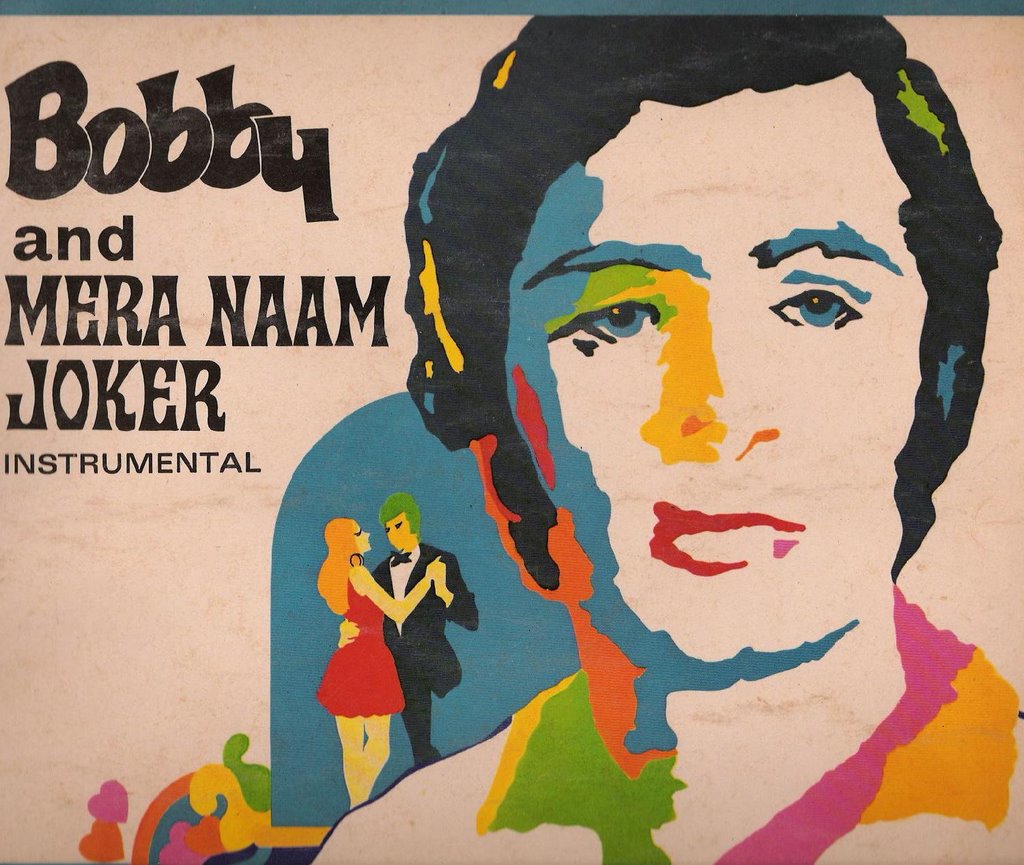
An Oxfam shop buy from a couple of years ago, this Bollywood LP is all instrumentals and from two films "Mera Naam Joker" and "Bobby". Not sure of the dates of the films but this record was released in 1973.

"Shankar-Jaikishan were the greatest musical duo to have graced the world of Hindi cinema. So great was the impact of their creative genius that it had a lasting impact on the music of the Hindi films. Shankar-Jaikishan understood the taste of the masses, were able to cater to them, as well as moulded their tastes. No wonder then that during their tenure as music directors, they were exceedingly popular and 75 per cent of the films for which their scores were reounding hits - many have celebrated silver jubilees.

Shankar was born as Shankar Singh Raghuvanshi on October 15, 1922. His fathers name was Ram Singh Raghuvanshi, while Jaikishan was born as Jaikishan Dayabhai Paanchal on November 4, 1932 in Basanda, Gujrat. Neither Shankar nor Jaikishan were keen on education. Their schooling, as best, may be considered as scanty. Their love for music lured them away from any kind of systematic scholastic persuit.

Shankar's passion was the tabla. He learnt the fundamentals from Baba Nasir Khansahib. Through ceaseless practice and marathon riyaaz sessions, he mastered his skills and developed his own style. Jaikishan's interests were singing and playing harmonium. His first lessons in music were with Sangeet Visharad Wadilalji. He studied clasical music from Prem Shankar Nayak. On moving to Bombay, he studied under Vinayak Tambe. Shankar and Jaikishan, throughout their career, preferred their own favourite instruments: the tabla and the harmonium.

Shankar, initially joined a theatre group run by Satyanarayan and Hemawati. He then become a member of Prithvi Theatres, where he played the tabla and undertook minor roles in the company's plays. Jaikishan was on the lookout for a job related to music and Shankar introduced him to Prithvi thetres as a harmonium player. Susequently, they worked as assistants to the celebrated composer pair Husnlal-Bhagatram and imbibed much of their form and structure, which they successfully employed in a refined style. Shankar-Jaikishan both had a penchant for acting. Initially they happily undertook bit roles in Prithvi Theatres' plays, and, later they both played significant roles in the company's play Pathan. Shankar played a fisherman in R.K films Aag (1948), while Jaikishan acted in two films : Shri 420 (1955) and Begunaah (1957). The popular song 'Aei Pyaase Dil Bezubaan..' from the film Begunaah was picturised on him."

A Wikipedia write up about the film "Mera Naam Joker" HERE


Shanker Jaikishan - Chabi Kho Jae

Shanker Jaikishan - Na Mangu Sona Chandi

Shanker Jiakishan - Jane Kahan Gaye Woh Din

Tuesday, March 10, 2009

King Sunny Ade


I can't believe I haven't uploaded any King Sunny Ade sides before as I have several of his LP's - mostly released in Africa. He was picked up by Island Records in the 80's for a brief period but soon fell out of favour despite the success of other "world music" artistes such as Salif Keita and Youssou N'Dour etc.
This LP on his own Sunny Alade Records label from the 80's is a good taster of ju ju music at that time and features some wonderful lap steel guitar and talking drums.
I saw him at his first? London concert around 1987 at the Hammersmith Odeon and he and his band were truly wonderful - the live experience far superior to the records.

Wikipedia says-

"Born to a Nigerian royal family in Ondo, Adé left grammar school to pursue his career, which began with Moses Olaiya's Federal Rhythm Dandies, a highlife band. He left to form The Green Spots in 1967. He formed a record label in 1974, fed up with being exploited by a major label. After the death of Bob Marley, Island Records began looking for another third world artist to put on its contract and Fela Kuti was just signed to Arista Records. Producer Martin Meissonnier introduced King Sunny Adé to Chris Blackwell, leading to the release of Juju Music in 1982. Many music afficianados are quick to point out that Sunny Ade's brand music of Juju could not be ignored by anyone at the time, and they were not surprised that Chris and his crew decided to launch an attack on the world music scene with a very brillian artist such as Ade. Any first timer that listens to Sunny Ade's brand of Juju music will be attracted to the rhythm section. Till today, this seminal recording is often acclaimed to be one of the most important records in Africa. Adé gained a wide following with this album and was soon billed as "the African Bob Marley". Sunny Adé headlined concerts in the United States. The New York Times' Robert Palmer described one of Adé's several concerts in New York in the 1980s as one of the most significant pop music events of the decade[citation needed] and Ade as "one of the world's great band leaders"[1] His second album under the cusp of international stardom was Synchro System which attracted many converts of world music and it deservedly earned him a grammy nomination in the folk/ethic music category. Soon after, Nigerian imports (mostly pirated copies) of his massive back catalog began flooding the Western market. Island, concerned about sales and Adé's refusal to include more English in his repertoire, cut him loose after his third LP, 1984's Aura which featured Stevie Wonder on the harmonica. Sunny Ade has said in the past that his refusal to allow Island to meddle with his compositions and over-Europeanise and Americanise his music were the reasons why Island decided to look elsewhere.

In 1984, he and his music were featured in Robert Altman's comedy film O.C. & Stiggs His music was also featured in one of Richard Gere's movie "Breathless".

By the end of the 1980s, Adé released several albums in his native Nigeria. He continued to garner critical acclaim and widespread popularity in Africa. He featured prominently in Manu Dibango's 1994 star studied "WAKAFRIKA" album."


King Sunny Ade - Osupa Mi Tole etc.

Montego Joe


An LP on the Transatlantic label from 1965 featuring some instrumental jazz with an extra helping of timbales and conga drums.
Not much is found on internet about Montego Joe and I can be pretty sure thats not him on the sleeve!

Francis Squibb in the copious sleeve notes says -

"Montego Joe's personal history is sketched in the notes of his first LP on Prestige, but one correction must be noted: the correct date of his arrival in the United Staes from his native Jamaica is 1939, when he was "nine or ten years old."
In the years since and especially the last decade, he has become increasingly concerned about public and professional mis-understanding about the conga as a musical instrument - equating it with the bongo drums, for example and associating it with "beatniks".
The instrument has a distinguished history, having been used as a medium of communication before and during the days of slavery - not, as is often said, through some sort of primitive morse code, but through pitch variation in imitation of speech melody. Thus, from a strictly musical standpoint, if properly played the conga can be far more "experessive" than most of the drums and percussion devices used in jazz - a fact proved by this and his earlier LP."

Also playing on the LP are Al Gibbons - tenor sax, arranger and conductor. Leonard Goines - trumpet. Arthur jenkins - piano. Ed Thompson - bass. Milford Graves - drums , timbales. Sonny Morgan - miscellaneous percussion.


Montego Joe - Give It Up

Montego Joe - Ewe

Montego Joe - The Bata Blues

Montego Joe - Concumba

Montego Joe - Lexington Avenure Line

Monday, March 09, 2009

Leo De Lyon


A boot sale find from years ago on the London label from 1960.
A curious mix of MOR cocktail jazz and impersonations of instruments like trombone, trumpet and double "Slam Stewart" bass etc. Some corny gags thrown in for good measure.
Not much gleaned from the internet but the sleeve notes written by Leo tell us that he has toured the world with his show, from the London Palladium, China Theatre in Stockholm, Australia and the Far East and now Africa. He was in the navy and then television on such shows as "Wish You Were Here" and now cabaret. He is accompanied on this record by Andy Johnson - drums, Manny Parkes - bass and Arthur Heatley on tenor sax and alto sax.

His film appearances are listed HERE.


Leo De Lyon - How About You?

Leo De Lyon - Bewitched , Bothered and Bewildered

Leo De Lyon - Purple Flamingo

Leo De Lyon - Pennies From Heaven

Leo De Lyon - Leo In Africa

Wednesday, March 04, 2009

Monster Rock 'N' Roll (Re-Up)


From an Lp called "Monster Rock 'n' Roll" on the Crypt label with a dedication to Screaming Lord Sutch. One can see why he would enjoy some of these offerings. Mostly from the late 50's. The tracks are as follows-


1. Monster Hop - Bert Convy
2. Mad House Jump - The Daylighters
3. Split Personality - Jim Burgett
4. The Monster Hop - Jimmy Dee
5. Nightmares - John Sowell
6. The Horror Show - Sharkey Todd
7. Igor;s Party - Tony's Monstrosities

Bert Convy.

"Convy was born in St. Louis, Missouri to Monica and Bert Convy. Convy was a member of the 1950s vocal band, The Cheers, who had a Top 10 hit in 1955 with "Black Denim Trousers (and Motorcycle Boots)". He was also a minor league baseball player."

The Daylighters.

"The Daylighters -- not to be confused with the Texas blues band of the same name -- was a Chicago soul male vocal group of the '60s. The Birmingham, AL-born group was started by high school student Tony Gideon in the mid-'50s. Seeking fame and fortune, Gideon, Eddie Thomas, George and Dorsey Wood, and Levi Moreland moved to Chicago, IL, in 1958. Two months later, Moreland returned to Alabama. WGES radio DJ George "G.G." Graves introduced him to record shop/record label/club owner Norvel "Cadillac Baby" Eatmon, who issued the group's first record "Mad House Jump" on his Bea and Baby label."

Jimmy Dee.

"What happened to him later is not quite clear. Some say he joined the Houston police force, others like Joel Whitburn reckon he managed the Houston Astrodome. A third source puts him in Chicago living the life of a very wealthy man with no interest in his rocking past. This Jimmy Dee apparently recorded for Inner-Glo and Pixie, but he's not the Little Jimmy Dee on Infinity, nor the Jimmy Dee on Ace and Scope."

Saturday, February 21, 2009

Danny Kaye


Wikipedia says-

"Born David Daniel Kaminsky to Jewish Ukrainian immigrants in Brooklyn, Kaye became one of the world's best-known comedians. He spent his early youth attending Public School 149 in East New York, Brooklyn, before moving to Thomas Jefferson High School, but he never graduated. He learned his trade in his teen years in the Catskills as a tummler in the Borscht Belt.

Danny Kaye made his film debut in a 1935 comedy short entitled Moon Over Manhattan. In 1937 he signed with New York-based Educational Pictures for a series of two-reel comedies. Kaye usually played a manic, dark-haired, fast-talking Russian in these low-budget shorts, opposite young hopefuls June Allyson or Imogene Coca. The Kaye series ended abruptly when the studio shut down permanently in 1938.

Kaye scored a personal triumph in 1941, in the hit Broadway comedy Lady in the Dark. His show-stopping number was "Tchaikovsky", by Kurt Weill and Ira Gershwin, in which he sang the names of a whole string of Russian composers at breakneck speed, seemingly without taking a breath.

His feature film debut was in producer Samuel Goldwyn's Technicolor 1944 comedy Up in Arms, a remake of Goldwyn's Eddie Cantor comedy Whoopee! (1930). Goldwyn agonized over Kaye's ethnic, Borscht-belt looks and ordered him to undergo a nose job. Kaye refused, and Goldwyn found another way to brighten Kaye's dark features by lightening his hair, giving him his trademark redheaded locks. Kaye's rubber face and fast patter were an instant hit, and rival producer Robert M. Savini cashed in almost immediately by compiling three of Kaye's old Educational Pictures shorts into a makeshift feature, The Birth of a Star (1945)."

Sunday, February 15, 2009

Billy Bennett


Brief history of Billy Bennett (1887 - 1942)

"My father was a very clever comedian. At present he's in hospital. He broke two of his fingers cracking jokes to a deaf and dumb man."

"His father was John 'Jock' Bennett of 'Bennett and Martel', a knockabout double act on the English music halls at the turn of the century. The son followed the father into show business after a brief spell working in insurance. He trained as an acrobat, then ran away and joined the army, serving in World War One and being decorated. During the war, he became a canteen comic and, on his return to the halls in 1919, he performed a soldier act, complete with martial airs and songs like It's a Long Way to Tipperary. This was not appreciated at the Theatre Royal Dublin by the audience or the manager and Bennett felt obliged to resort to disguise for his own safety. Thus, the false moustache and the plastered quiff of hair. Soon, the army clothes went in favour of ill-fitting evening dress. The army boots remained.

Apparently, he had written parodies when a schoolboy for his father's music hall friends, so naturally he continued, producing monologues which were, in the main, skits on well-known Victorian monologues and poems, such as Robert Service and Cuthbert Clarke's The Shooting of Dan McGrew, Kipling's Road to Mandalay, George R Sims' Christmas Day in the Workhouse and Amy Woodforde Finden's Kashmiri Love Song from 'Indian Love Lyrics', which became, in Bennett's hands, the impenetrable and insane parody Ogul Mogul - A Kanakanese Love Lyric. No matter that many of the originals have faded into obscurity ("Years have rolled on since that happened"), the surrealist imagery of the Bennett rewrites live on - literate, audacious and screamingly funny."


So says Dan Quinn on the re-release of the Topic LP "Almost A Gentleman". A friend sent me several Bennett tracks not on that CD that he dubbed from his 78 collection , hence the rather scratchy sound quality. Despite this the humour and wonderful surreal wordplay shines through.


Billy Bennett - Mottoes

Billy Bennett - The Green Tie Of The Little Yellow Dog

Joan Turner


Someone sent me this recording of Joan Turner on cassette tape many years ago and I've just found it again. Not really my cup of tea but remember her from the radio and TV in the 50's and 60's when she was still a big star in the U.K. Sadly she fell on hard times and now lives in sheltered accomodation in Surrey I believe and planning on writing her autobiography which includes her affairs with Terry Thomas, Tony Hancock and other show biz stars of the time.

Wikipedia says-

"Joan Turner (born Belfast, Northern Ireland, November 24, 1922) is a comedienne and singer who, in the 1960s and 1970s was a major star in the UK. She had her own television show, topped the bill at the London Palladium, appeared in the 1963 Royal Variety Show and topped the bill over The Beatles She appeared in the London stage musical Oliver! for two years, was romantically linked to Peter Sellers and was one of the highest-paid women in British showbiz.

In later years, it was reported that, after two divorces, she "drank and gambled away her fortune"and she was declared bankrupt in 1977.

In 1991, she was a guest of honour at the Queen Mother's 90th birthday celebrations. and, in the early 1990s, attempting to revive her career, she had a role as Auntie Lou in the Channel 4 series Brookside and a cameo role in the BBC TV series EastEnders.In 1996, she went to California to attempt to give it "one more try".

In March 2001, the Sunday Mirror newspaper reported that she was living "among the winos, drug addicts and down-and-outs in Beverly Hills, Los Angeles... dressed in charity shop clothes and surrounded by her worldly possessions - with barely a penny to her name." She was interviewed in situ as a "bag lady" on Sunset Boulevard in the August 2001 Channel 4 documentary Celebrity: The Rise and Fall and it was reported elsewhere that she had spent five years as a "down-and-out" in LA. Later that year, she returned to the UK."


Joan Turner - Live

Saturday, February 07, 2009

B. Gabbidon


More ska on the Blue beat label from Basil Gabbidon in 1964.

Here's a segment from the Basil Gabbidon story -

"In addition to playing the trombone in the school's brass band, Basil had become interested in the guitar at the same time. His desire to play music was all consuming. His father had an old guitar with broken strings and Basil took up the challenge. He repaired the strings, bought himself a book of guitar chords and learnt to play the guitar from scratch. "Its not like today, we made things happen ourselves," as he recalls teaching himself to play. Initially, Basil wasn't interested in reggae. It was still a relatively new form of music coming over from Jamaica and instead, the music mad youngster preferred heavier tunes from the Rolling Stones, Jimmy Hendrix, Mandrill and the Isley Brothers. "We turned on the radio and listened to pop music and the Stones, I liked the way they performed their songs. I didn't like the Beatles 'cause everyone else liked them." One of the first reggae tunes to catch his ear was a reggae version of Blue Moon, the old Rogers & Hart classic. Another tune that had a bigger impact on him was Blood & Fire. Released in 1970 by Niney The Observer (aka Winston Holness, but called Niney when he lost a thumb in a workshop accident), it was amongst the avalanche of sound system pre-releases that found their way to Britain and were eagerly snapped up by the flourishing Carribean communities. However, it wasn't until Bob Marley's classic 1973 album, Catch A Fire was released that Basil was finally hooked after he heard it played in a local park during a festival, and his desire to play reggae music became a serious aim."


B. Gabbidon - Independence Blues

B. Gabbidon - For My Love

The Bluebeats


Yet another from the Basildon box of goodies I found way back. No info found about the Bluebeats but there is a modern ska band by the same name but assume they are not connected in any way. Released 1964.
Heres an interesting segemnt from The Blue beat Story site - well worth checkingmout for history of the label.

"In 1952 Jamaican entrepreneur Stanley Motta started making his own recordings in Kingston, inspired by Bertie King, an ex Alpha School Musician who had been resident in the UK since 1938 and was well known on the British Jazz circuit. King had released a few British recorded Mento records in the UK on his Limbo label, and when he returned to Jamaica in the early 1950s he suggested to Motta the idea of setting up his own recording facility and producing his own records for sale to the local JA market as well as exporting to the UK - in direct competition with neighbouring Trinidad, which was achieving much international acclaim for Calypso.

Shallit found himself in the position of being the agent to whom Stanley Motta would ship his tapes for mastering and pressing by Decca on his MRS (Mottas Recording Studio) label on 78 r.p.m. discs, which were then shipped back to Jamaica. This trans-Atlantic connection opened up the channels for Shallit to licence music directly from Jamaica, and he would soon establish links with all of the islands emerging producers and artists. As 78s gave way to the advent of the 7 45, Shallit set up the Kalypso subsidiary label which would include the first known recordings from Laurel Aitken and Lord Tanamo in its catalogue of some fifty Mento and R&B titles.

Other Melodisc subsidiary labels during the 1950s were such names as; Top, Son, Check, Dees, Hornet, Wasp, and D -an early Duke Ried outlet. The surge of popularity in Jamaican R&B in the late fifties was to see the foundation of three new subsidiary labels, each of which would specialise in releasing Jamaican and UK recorded R&B marketed primarily at the UKs growing West Indian population; Dice, Rainbow, and most influentially; the Blue Beat label."


The Bluebeats - Blue Beats Over

The Bluebeats - Kiss The Baby

Friday, February 06, 2009

Rolly "Yo Yo" Daniels


As about as obscure a record as you can get. On an equally obscure record label from the 60's I imagine. No mention of Rolly "Yo Yo" Daniels on the internet. Any information regarding this artist or his backing band " The Daybreakers" and Don Rendell most welcome.

Could it be this Don Rendell playing the saxaphone on this record I wonder?


Rolly "Yo Yo" Daniels - Yo Yo Boy

Rolly "Yo Yo" Daniels - The Teacher

Wednesday, February 04, 2009

egnekn


A curio that turned up in the post today from Ken Gen in New York who runs the Sound Of Lamination website and produces performances and rituals based on the act of lamination. The 45 rpm single is literally the sound of the laminating machine on one side and discussion backstage at some art event on the other. Ken tells me that this is the very last copy of 200 he had made from a grant from John Cage.

On the sleeve notes it says -

" Lamination Ritual celebrates the transformation of the mundane into the realms of OFFICIALDOM, of ordinairy into extraordinairy. Laminationis completely participatory and accesssible to everyone. Lamination is versatile. It can be an object of utilty or whimsical extravagance. It can warm the body and open the mind. Lamination preserves, brightens and protects indsicriminately. Lamination counters our increasingly fast paced world by virtually slowing down the entropy process."


egnekn - The Sound Of Lamination

egnekn - Repairing The Machine During The Excavated Jewels Of Ertsatz Exoticism

Tuesday, February 03, 2009

Monty & Roy


A nother 45 on the British Blue Beat label that that was part of Melodisc. Released in 1961. Roy was Roy Panton an Monty was Monty Morris, Roy Panton takes up the story-

"I am Roy Panton. I was born in the parish of Kingston, Jamaica W. I. on March 28, 1941. I started singing at an early age, while I was in school. Singing was special to me as I enjoyed having an audience. After school, I decided that that was the root of my dreams and so I took it steps further.

I teamed up with Stranger Cole to form a group called The Rovers and, in the later years of the 50s, we auditioned for the famous Duke Reid. Our first song was called "Freedom Land" and the b side was "Adam and Eve". After our first recording, the group dissolved.

Later on, I teamed up with Monty Morris and we were called Monty & Roy. We recorded for Leslie Kong of the Beverlys label. The recording consisted of two songs: "Shes Mine", and the other side of the single was "Girl Of My Dream". We then went on to record for Duke Reid on the Trojan Label and for him we recorded approximately four songs. After a short stint with Duke Reid, we moved to the Sir Coxsone Downbeat label and one of the songs we did for him was entitled “Jenny”. "


Monty & Roy - Tra La La Boogie

Monty & Roy - In And Out The Window

Bobby Kingdom


More jamaican R&B from Bobby Kingdom on the Blue Beat label released in 1962. Much influenced by the New Orleans and southern states artists like Fats Domino, Little Richard, etc. The Twist was a big dance craze at the time and they had their own take on it. Not much info. about Bobby Kingdom on the internet. Any further info. greatly appreciated.


Bobby Kingdom - Brand New Automobile

Bobby Kingdom - Spanish Town Twist

Monday, February 02, 2009

Prince Buster


Another Blue Beat single from 1965 at the height of the Ska boom in Jamaica. Prince Buster is one of the most well known and prolific exponants. This song is based around the Bonanza TV theme - a popular western series through the 50's and 60's.

Wikipedia says of Prince Buster-

Campbell was born into a family in Kingston as a son of a helicopter pilot. He grew up in one of the city's toughest neighborhoods. At a young age, he developed a taste for turkish delight and yearned to be a cook. In 1956, he started singing at Kingston nightclubs for small pay. He formed a succession of bands with several of his friends, none of which were really successful.

What turned Campbell's music career around was the growing sound system craze. Across Jamaica, music promoters drove vans filled with stereo equipment to stage mobile parties. The operators of the sound system would play the most popular R&B dance records of the day, and often they would have a vocalist called a toaster call out the dancers' names, chant in rhythm, and make light-hearted boasts; the toaster form was the primary influence on early rap MCs.

Eventually, Campbell was introduced to Clement Dodd, a musically-inclined businessman who operated one of Kingston's most popular sound systems. Interestingly, Campbell was not hired as a musician but as security; because of rivalries between fans devoted to a particular sound system, the parties sometimes could become quite rough, and Campbell had been a skillful amateur boxer as a teenager. It was in this line of work that he earned the nickname "The Prince", which along with his boyhood moniker "Buster" (from his middle name Bustamente), formed the name under which he would later become famous.

He joined the Nation of Islam after meeting Muhammad Ali whilst on a tour of England in 1964."

Discover more about Prince Buster HERE


Prince Buster - Bonanza

Prince Buster - Wonderful Life

Swinging Ovaltiners


A curiosity from the swinging 60's. The Ovaltiners is a club for children who drink a particular hot malted drink made with milk. This was given away free it says. Just send two and sixpence or half-a-crown to 99 Park Lane in London. There was even an Ovaltine Crunch Bar but I dont remember them. The Ovaltiners first appeared on Radio Luxembourg in the 30's. The original theme was composed by Carroll Gibbons. Some beat group type versions here along with dixieland, tijuana and swing. Played by Eric Delaney and his Music and The Ovaltiners Beat Group led by Eric Delaney.


The Ovaltiners Beat Group - London Bridge Is Falling Down

Eric Delaney - Ovaltine Theme (Swing)

Eric Delaney - Ovaltine Theme (Tijuana)

The Ovaltiners Beat Group - Oranges & Lemons

Eric Delaney - Ovaltine Theme (Dixieland)

The Ovaltiners Beat Group - Ovaltine Theme

Sunday, February 01, 2009

Girl Satchmo


blue 001, originally uploaded by Kollage Kid.

A Blue Beat single I found many years ago at a jumble sale in Basildon of all places along with dozens of others. I have no idea who Girl Satchmo is or about her partner who sounds more like Satchmo than she does. Its rather confusing really?
If anyone can shed any light it will be most welcome.


Girl Satchmo - Brother Joe

Girl Satchmo - Don't Be Sad

Flickr

This is a test post from flickr, a fancy photo sharing thing.

Saturday, January 31, 2009

Barry Andrews (Re-Up)


I think I found this Virgin single at Brick Lane back in the 80's. I can't find that much about Barry, only that he was in the punky pop band XTC for a while and left to join Robert Fripp in the League of Gentlemen and eventually Shriekback who may or may not still be around? In between he made this fine single that sadly wasn't a hit and a solo album I forget the name of. Maybe looking HERE will help fill in these gaps in my woeful blurb.


Barry Andrews - Rossmore Road

Barry Andrews - Win A Night Out With A Well-Known Paranoiac

Monday, January 26, 2009

Andy Eastwood


Found this CD " Ukulele Mania" on the ACE label (2004) in a charity shop today for a pound. Always nice to hear old George Formby songs given an airing. We saw Andy on the Ken Dodd "Happiness Show" in Llandudno a couple of years ago and he was very entertaining. I can see why he is much in demand on cruise ships and these touring "wartime" revues like "We'll Meet Again" etc. It has also been signed by Andy and dedicated to someone called Jean. The uke played on the CD is a Gibson UB3 that was once owned by George Formby himself.

His website says -

"Andy's expertise derives from experience - he entered showbusiness as a child and studied classical violin and piano. But he also developed a passion for jazz and pop and went on to make history at Oxford University by being the first musician ever to give a degree recital on the ukulele! He is now described as one of the world's foremost exponents of the instrument.
Andy traveled the world in cabaret before the legendary Ken Dodd gave him a break into theatre work and he has now performed at many of Britain's most prestigious theatres in a variety of productions, including the hit wartime revue We'll Meet Again, with which he has toured the country five times - giving over 350 performances - portraying one of his showbusiness heroes, George Formby!"

Find out more at Andy Eastwood's website.


Andy Eastwood - He Played The Ukulele As The Ship Went Down

Andy Eastwood - The Lancashire Toreodor

Andy Eastwood - With My Little Stick Of Blackpool Rock


These SendSpace files are available for seven days or until exhausted.

Tuesday, January 13, 2009

Cosmotheka (Re-Up)


Cosmotheka sing a few old favourites from the days of music hall on their 1992 BBC radio show "Cosmotheka's Comedy Songbook" live from the Palace Theatre , Redditch in the West Midlands.

"For those of us that had the pleasure of witnessing the ‘act’ that was Cosmotheka (Dave & Al Sealey) should count ourselves lucky. I say this in the knowledge that I, along with countless others will recall with nostalgia the songs set before us for the first time on CD. So, congratulations to Graham Bradshaw at Folksound for issuing it. I won’t re-trace the history of the duo (Dave does that in the accompanying booklet) but needless to say a majority of the most popular numbers from their extensive repertoire appear here. To name-check a few, we have ‘Wot A Mouth’, ‘Don’t Do It Again, Matilda’, ‘Thuthie’ and ‘Wot I Want Is A Proper Cup Of Coffee’. Dave and Al’s tireless pursuit of the rich music hall heritage that was so much a part of Britain’s social structure is a testament to all song collectors. I reflect with fondness my particular association with the duo when I was asked to play a difficult banjo break on one of their recordings and all the encouragement they gave me in completing the task. Without the likes of Cosmotheka, the world of folk music (which they embraced as much as the music halls) would be a poorer scene. Sadly Al passed away in 1999 leaving a legacy of recordings that if they were to be released today would bring a smile to the sternest of critics. Perhaps now the ball has started rolling someone somewhere will re-issue all of Cosmotheka’s back catalogue."

Buy the CD of some of their best known songs HERE.

Tuesday, January 06, 2009

Bobby Comber - (Re-Up)


Bobbie Comber from a tape on the Poppy label. No date. Historic recordings from 78's.

Tracks are-

1. The Return Of Barnacle Bill The Sailor
2. An Elephant Never Forgets
3. Peg-leg Jack
4. With Her Head Tucked Underneath Her Arm Pts 1 & 2