Tuesday, January 31, 2012

Ayinde Bakare


Another old highlife/juju LP from Nigeria. It has a raw earthy charm consisting mainly of hypnotic drums and chanting and tinny guitar. It has 30p scrawled on the front cover so I guess that's what I paid for it back in the 80's. The record on African Songs label would be from the 60's or 70's I would guess.

Ayinde's son says -

"My father Ayinde Bakare was the originator of Juju music, especially in Lagos in those days. They were the original creators of Juju music, not this ‘Owambe’ Juju music. They called their own music traditional, classical Juju music which was in the form of highlife. His own father was from Ajikobi compound in Ilorin. My dad was from a royal family and on account of that he was forbidden from playing music because musicians were seen as beggars and praise-singers. He father who was a trumpeter in the military brought him to Lagos. I was born in Lafiaji Oke Suna. So, I happened to know my dad as a musician. My dad had six children. I am the first.

Dad started his musical career with Tunde King. It was the same Tunde King who brought up the late Ambrose Campbell. My father’s mentor was Tunde King. They were playing a form of afro-Cuban Juju music. The music of that era was influenced by the Second World War. My father went to the warfront along with Tunde King, Nightingale and Ambrose Campbell. Most of them fought in the Second World War. It was there they were taught how to play guitar. They came back with a kind of Brazilian flavoured music.

The white men gave it the name Juju music but we called it ‘faaji’ music in those days. I was young when my dad was reigning as a star. It was his stardom that enticed me to learn how to play guitar. By then I knew Victor Uwaifo who was then a student as St. Gregory College. He was in Form Four and was living in our area. It was from him I saw a guitar book. I ordered for it from England and taught myself to play guitar. Every weekend I used to clean my father’s guitar in preparation for their going to play. That was my job: to clean the guitar with coconut oil. It was during the cleaning that I started learning how to play the guitar, using the guitar manual I ordered from England."

Tracks are as follows -

1. Ma Yowo Loro Mi
2. Ayoola Sosanya
3. Tesilimi Ayilara
4. Abo Oluwa
5. Egbe House


Ayinde Bakare - Side One

The Crowns


An LP on the Pama label from UK which is mainly known for home grown Ska and Reggae records in the 60's and 70's. This second division soul is pleasant enough but not a patch on Tamla Motown or Stax.

The sleeve notes by John Lea-Frances say -

"The Crowns really came about because the three buddies who virtually grew up together and sang together for "kicks" went their own separate ways when enlisted in Uncle Sam's forces. Trevor was dishing out uniforms at the U.S. Air Base, Omaha, Nebraska, when who should he see in line but Bunny and Bobby. Trevor exploded with "If that don't CROWN it all," and thus the name was born. Now some two and half years later, based here in London, the CROWNS are one of the most demanded soul harmony groups and their initial disc sales proved that their talent ranks with the greatest.
Seeing them on stage is enough to give anyone a nervous twitch at the sheer speed of their brilliant act."

Tracks are as follows -

1. Mellow Moonlight
2. I surrender
3. Let's Go Baby
4. Mr. Success
5. My Baby Just Cares For Me
6. Jerking The Dog


The Crowns - Side One

Monday, January 30, 2012

Stephen Osita Osadebe


Delightful jangly "highlife" from Nigeria circa 1975 as the LP title suggests. Another Cheshire Street or Brick Lane market purchase from the 80's. I thought I had featured it before but seems this is the first time.

Wikipedia says -

"In March 1936, Osadebe was born in Igbo town of Atani, in Southeastern Nigeria. He came from a line of singers and dancers in Igboland. His genre, Highlife encompassed Igbo musical elements. Along with this, calypso, samba, bolero, rumba, jazz and waltz were also present in Osadebe's musical style. It was in his high school years in Onitsha, a major commercial city near Atani, that Osadebe grew interested in music.
Osadebe started his career performing at nightclubs in Lagos in the southwestern region of Nigeria. He gradually worked his way up to releasing his first album in 1958. In his career Osadebe went on to write over 500 songs; half of these songs were released commercially. He had been a part of The Empire Rhythm Orchestra, led by E. C. Arinze in which he had learned much of his music skills.
As he became better established, Osadebe's style matured to include social commentary, similar to, but not as confrontational as Fela Kuti. Personal trials and tribulations was usually the main topic of his commentaries. Osadebe often extended his tracks for his audiences enjoyment, allowing room for 'people on the dance floor' to indulge in the songs.
Following the Nigerian Civil War in the late 60's, the massive exodus of the eastern peoples of Nigeria (especially the Igbo) out of western Nigeria had caused the death of the Highlife's prominence in the then capital, Lagos. During the war and after the war Osadebe maintained his scheduled live performances. Juju music and later Afrobeat took precedence in Lagos, and in the 70's James Brown and various other music forms became popular in the city. In this same decade Osadebe's career had reached its zenith. After turning 50 in 1986 Osadebe started to give priority to fatherhood and gave more of his time to his son Obiora and his other children from his wives. One of Osita Osadebe's last revered album's is "Kedu America".
Osita Osadebe died in St. Mary's Hospital Waterbury, Connecticut on the 11 May 2007 after suffering from severe respiratory difficulties."

Tracks are as follows -

1. Onu Kwube
2. Ejim Ofor Aga
3. Instrumental 1


Stephen Osita Osadebe - Side One

I'Agerie Etertelle


I think this Lp was from the remaindered stall down Cheshire Street from the 80's. Not played it before as it has some dodgy tracks covered in the label which has been aligned badly and bits have come off. So just the first 4 tracks of side two here.
You get a taste of what the LP is like anyway - lovely atmospheric flute and drums mostly recorded in the field by Gerard Kremer on the French Arion label in 1978.

Wikipedia says about Algerian music -

"Algerian music is virtually synonymous with raï among foreigners; the musical genre has achieved great popularity in France, Spain and other parts of Europe. For several centuries, Algerian music was dominated by styles inherited from Al-Andalus, eventually forming a unique North African twist on these poetic forms. Algerian music came to include suites called nuubaat (singular nuuba). Lately derivatives include rabaab and hawzii.
Music in Algeria in general offers a rich diversity of genre, popular music (Shaabi), Arabo-Andalusian music (Malouf San'aa, Gharnati, etc. ..) music classical Arabic, Bedouin, Berber music (Kabyle, Shawi, Tuareg, Etc. ..), Rai ...
Sha-bii is, in North African countries, folk music; in Algeria, however, it refers to a style of recent urban popular music, of which the best known performer was El Hajj Muhammad El Anka considered like the Grand Master of Andalusian classical music. True styles of folk music include hofii, a form of female vocal music, and zindalii, from Constantine.
Biyouna is an Algerian singer whos music is a mixture of pop, rock, raï, jazz and other types of music. Her last record Blonde dans la Casbah has been a great success.
Rai is a creative outlet to express political discontent,this music is a mix between Western music and Bedouin music. "Rai became an important means of cultural expression for a minority struggling to carve out an ethnic identity and a space for itself in an inhospitable, racist environment" Rai is more than simply cultural expression, it morphed into a unique blend of popular "rebel" music. "What makes raï so rebel, so politically charged, is the fact that it goes against the hard-line conservative government, a religiously fundamentalist establishment. Unlike traditional music, with its subtlety, flowery language, and innocuous subject matters, raï is notable for its blunt imagery and willingness to tackle subjects such as sex, booze, lust, and drink - all of which the deeply religious establishment frowns upon."
The Malouf is the Arab-Andalusian music of Constantine and is also well known in Tunisia and Libya, it is a very large number of diversified musical repertoire of Algeria. Nevertheless, malouf can not compete commercially with popular music, much of it Egyptian, and it has only survived because of the efforts of the Tunisian government and a number of private individuals. Malouf is still performed in public, especially at weddings and circumcision ceremonies, though recordings are relatively rare."

Tracks are -

1. Danse De Tiaret
2. Mariage Algerois
3. Danse Des Aures
4. Chant De Biskra

L'Algerie Eternelle - Side Two

Monday, January 23, 2012

Edikanfo


This LP from a remainder stall on Brick Lane was bought back in the 90's. Made in Holland on the EG label in 1981. Produced by Brian Eno. I guess this was around the time Brian was experimenting with "world music" with David Byrne and Talking Heads and projects like "My Life In The Bush Of Ghosts". The music is typical afro-beat similar to Fela Kuti and other stars from Ghana and Nigeria at that time.

Wikipedia says -

"By the beginning of the 1970s, traditionally styled highlife had been overtaken by electric guitar bands and pop-dance music. Since 1966 and the fall of President Kwame Nkrumah, many Ghanaian musicians moved abroad, settling in the US, UK and Nigeria. Highlife bands like Okukuseku recorded in Lagos or Nigeria's eastern Igbo region. In 1971, the Soul to Soul music festival was held in Accra. Several legendary American musicians played, including Wilson Pickett, Ike and Tina Turner and Carlos Santana. With the exception of Mexican-American Santana, these American superstars were all black, and their presence in Accra was seen as legitimizing Ghanaian music. Though the concert is now mostly remembered for its role as a catalyst in the subsequent Ghanaian roots revival, it also led to increased popularity for American rock and soul. Inspired by the American musicians, new guitar bands arose in Ghana, including the Ashanti Brothers, Nana Ampadu & the African Brothers, The City Boys and more. Musicians such as CK Mann, Daniel Amponsah and Eddie Donkor incorporated new elements, especially from Jamaican reggae. A group called Wulomei also arose in the 1970s, leading a Ga cultural revival to encourage Ghanaian youths to support their own countrymen's music. By the 1980s, the UK was experiencing a boom in African music as Ghanaians and others moved there in large numbers. The group Hi-Life International was probably the most influential band of the period, and others included Jon K, Dade Krama, Orchestra Jazira and Ben Brako. In the middle of the decade, however, British immigration laws changed, and the focus of Ghanaian emigration moved to Germany.

The Ghanaian-German community created a form of highlife called Burger-highlife. The most influential early burgher highlife musician was George Darko, whose "Akoo Te Brofo" coined the term and is considered the beginning of the genre. Burgher highlife was extremely popular in Ghana, especially after computer-generated dance beats were added to the mix. The same period saw a Ghanaian community appear in Toronto and elsewhere in Canada. Pat Thomas is probably the most famous Ghanaian-Canadian musician. Other emigres include Ghanaian-American Obo Addy, the Ghanaian-Swiss Andy Vans and the Ghanaian-Dutch Kumbi Salleh. In Ghana itself during the 1980s, gospel and reggae became extremely popular. The Genesis Gospel Singers were the most widely-known gospel band. By the late 1990s, a new generation of artists discovered the so called hip-life. The originator of this style is Reggie Rockstone, a Ghanaian musician who dabbled with hip-hop in the United States before finding his unique style. Hip-life has since proliferated and spawned stars such as Reggie Rockstone, Obrafour, Akyeame and Tic Tac."

Tracks are as follows -

1. Blinking Eyes
2. Moonlight Africa
3. Daa Daa Edikanfo


Edikanfo - Side Two

Wednesday, January 18, 2012

Purab Aur Pachhim (East and West)


I thought I had uploaded this LP before but couldn't find it in the archives which is strange as the Twinkle Twinkle Little Star track is a classic of Bollywood kitsch. Sadly the rest is rather ordinairy of it's type. Released in 1971 on the Odeon label and seems to have been the property of Radio Bolton at one time. A soundtrack recording from the film of the same name. All the best singers are here - Ash Bosle, Lata Mangeshkar etc.

IMDb says of the film -

"Circa British rule in India, Harnam betrays a freedom fighter, and as a result is rewarded, but the freedom fighter is killed, leaving his wife, and family devastated and destitute. Years later, the freedom fighter's son, Bharat, has grown up and goes to Britain to study. On his arrival in Britain, he is quite shocked to find that the Indian population settled there, shun India and Indians. He takes it upon himself to try and change their way of thinking, meets with Prithi, a Blondie of Indian origin, and both fall in love. Prithi accompanies him to India, and is appalled at the conditions that Bharat and his family in. Will this shock end their relationship?"

Tracks are -

1. Twinkle Twinkle Little Star
2. Raghupati Raghay - Ram Dhun
3. Koi Jab Tumhara Hriday Tod De
4. Purva Sunhani Aai Re
5. Om Jai Jagdish Hare - Aarti (Sad)


Purab Aur Pachhim - Side Two

Asian Pop


Not sure where this LP comes from - China, Tiawan, Japan? It's on the Hai Shan Records label from the 60's or 70's I would guess by the clothes the girl is wearing. If anybody knows do get in touch in the comments. It's rather dull sounding - the kind of stuff one imagines China would send to the European Song Contest in the 70's if they were eligible!

Chinese Pop - Side One

Tuesday, January 17, 2012

The Platters


Some doo wop for a change now with The Platters from the late 50's on this rather battered Mercury LP.

Wikipedia says -

"The Platters formed in Los Angeles in 1953 and were initially managed by Ralph Bass. The original group (Alex Hodge, Cornell Gunter, David Lynch,Joe Jefferson, Gaynel Hodge and Herb Reed) managed to land a contract with Federal Records, but found little success before meeting music entrepreneur and songwriter Buck Ram. The band recorded a series of singles backing Linda Hayes before Ram made some changes to the lineup, most notably the addition of lead vocalist Tony Williams (Linda Hayes' brother) and female vocalist Zola Taylor. Under Ram's guidance, the Platters recorded seven singles for Federal in the R&B/gospel style, scoring a few minor regional hits on the West Coast. One song recorded during their Federal tenure, "Only You (And You Alone)", originally written by Ram for the Ink Spots was deemed unreleasable by the label.
Despite their lack of chart success, the Platters were a profitable touring group, successful enough that The Penguins, coming off their #8 single "Earth Angel", asked Ram to manage them as well. With the Penguins in hand, Ram was able to parlay Mercury Records' interest into a 2-for-1 deal. To sign the Penguins, Ram insisted, Mercury also had to take the Platters. Ironically, the Penguins would never have a hit for the label."

Tracks are as follows -

1. Heart Of Stone
2. I'd Climb The Highets Mountain
3. Sptember In The Rain
4. You've Changes
5. I'll Get By
6. I Giove You My Word


The Platters - Side One

Sunday, January 15, 2012

Roland Kirk


Not a great modern jazz fan but I do have this in my collection. Made in 1962 on the Mercury label. I love the cover photo of Kirk with three saxaphones which he could play all at once and still have room for a nose flute - though I may be making that up! One can see here the influence on Don Van Vliet and others and a kind magical waywardness that appealed to my art school contemporaries.

Wikipedia says -

"Kirk was born Ronald Theodore Kirk in Columbus, Ohio, but felt compelled by a dream to transpose two letters in his first name to make Roland. He became blind at an early age as a result of poor medical treatment. In 1970, Kirk added "Rahsaan" to his name after hearing it in a dream.
Preferring to lead his own bands, Kirk rarely performed as a sideman, although he did record with arranger Quincy Jones and drummer Roy Haynes and had notable stints with bassist Charles Mingus. One of his best-known recorded performances is the lead flute and solo on Jones' "Soul Bossa Nova", a 1964 hit song repopularized in the Austin Powers films (Jones 1964; McLeod et al. 1997).
His playing was generally rooted in soul jazz or hard bop, but Kirk's knowledge of jazz history allowed him to draw on many elements of the music's past, from ragtime to swing and free jazz. Kirk also absorbed classical influences, and his artistry reflected elements of pop music by composers such as Smokey Robinson and Burt Bacharach, as well as Duke Ellington, John Coltrane and other jazz musicians. The live album Bright Moments (1973) is an example of one of his shows. His main instrument was the tenor saxophone, supplemented by other saxes, and contrasted with the lighter sound of the flute. At times he would play a number of these horns at once, harmonizing with himself, or sustain a note for lengthy durations by using circular breathing, or play the rare, seldom heard nose flute. A number of his instruments were exotic or homemade, but even while playing two or three saxophones at once, the music was intricate, powerful jazz with a strong feel for the blues."

Tracks are -

1. We Free Kings
2. You Did It, You Did It
3. Some Kind Of Love
4. My Delight

Roland Kirk - Side Two

Saturday, January 14, 2012

Blues/Rock Avalanche


A double Lp from the Chess label circa 1984. A live concert but no information on the sleeve as to where or when. Features such artists as Elias McDaniel (Bo Diddley), Willie Dixon, Lafayette Leake, Jimmy Reed, T-Bone Walker etc.

Wikipedia says of Bo Diddley -

"Ellas Otha Bates (December 30, 1928 – June 2, 2008), known by his stage name Bo Diddley, was an American rhythm and blues vocalist, guitarist, songwriter (usually as Ellas McDaniel), and inventor. He was also known as "The Originator" because of his key role in the transition from the blues to rock & roll, influencing a host of acts including Buddy Holly, Jimi Hendrix, The Rolling Stones, The Velvet Underground, The Who, The Clash, The Yardbirds, and Eric Clapton. He introduced more insistent, driving rhythms and a hard-edged guitar sound on a wide-ranging catalog of songs. Accordingly, he was inducted into the Rock and Roll Hall of Fame and received Lifetime Achievement Awards from the Rhythm and Blues Foundation and a Grammy Award from the National Academy of Recording Arts and Sciences. He was known in particular for his technical innovations, including his trademark rectangular guitar."

Tracks are as follows =

1. I Hear You Knockin' - Elias McDaniel
2. You Can't Judge A Book By It's Cover - Willie Dixon
3. Diddley Daddy - Elias McDaniel
4. Early In The Morning - McKinley Morganfield


Blues/Rock Avalanche - Side one

Monday, January 09, 2012

Red Bird Era


LP on the Charly label from the 80's. Great compilation of songs from the 60's on the Red Bird label set up by Leiber & Stoller in New York including such artists as the Dixie Cups, Alvin Robinson, The ad-Libs and The Robbins who came from New Orleans.

Wikipedia says of the Dixie Cups -

"The group hit the top of the charts in 1964 with "Chapel of Love," a song that Phil Spector, Jeff Barry and Ellie Greenwich had originally written for The Ronettes. The trio consisted of sisters Barbara Ann and Rosa Lee Hawkins; plus their cousin Joan Marie Johnson, from the Calliope housing project in New Orleans. They first sang together in grade school. Originally they were to be called Little Miss and the Muffets, but were named The Dixie Cups just prior to their first release.
By 1963 the trio had decided to pursue a career in music and began singing locally as the Meltones. Within a year Joe Jones, a successful singer in his own right with the Top Five 1960 single "You Talk Too Much," became their manager. After working with them for five months, Jones took them to New York, where record producers / songwriters Jerry Leiber and Mike Stoller signed them to their new Red Bird Records.
Their first release, "Chapel of Love," proved to be their biggest hit, although they had other hits with "People Say" (#12, 1964), "You Should Have Seen the Way He Looked at Me" (#39, 1964), "Iko Iko" (#20, 1965), and "Little Bell" (#51, 1965). "Chapel of Love" sold over one million copies, and was awarded a gold disc.
"Iko Iko", a New Orleans R&B standard, was recorded early in 1965. Barbara Hawkins had heard her grandmother sing the song, first recorded in 1954 as "Jock-a-Mo" by James "Sugar Boy" Crawford. Barbara Hawkins: "We were just clowning around with it during a session using drumsticks on ashtrays. We didn't realize that Jerry and Mike had the tapes running". Leiber and Stoller overdubbed a bassline and percussion, and released it. It was The Dixie Cups' fifth and last hit."

Tracks are =

1. Dixie Cups - Gee baby Gee
2. Dixie Cups - Aint That Nice
3. Dixie Cups - All grown Up
4. Dixie Cups - Iko Iko
5. Dixie Cups - little bell
6. Alvin Robinson - Let The Good Times Roll
7. Alvin Robinson - Down Home Girl
8. Ad Libs - I'm Just A Down Home Girl

Red Bird Era - Side Two

Allen Sherman


Found this 1964 LP by Allan Sherman at the roadside bookstall in All Saints in Manchester at the weekend. A few good novelty songs based on old standards given a Jewish twist. The only thing that spoils it for me is the canned laughter and applause on each track.

Wikipedia says-

"Employed as a producer by Mark Goodson-Bill Todman Productions, Sherman was the creator and original producer of the popular I've Got a Secret from 1952 to 1958. During this time, he recorded a 78RPM single, containing A Satchel And A Seck (to "A Bushel And A Peck" from Guys And Dolls, and Jake's Song. This single sold poorly and, when time came to write his autobiography, Sherman didn't even acknowledge it. He also produced a short-lived 1954 game show, What's Going On? Sherman was fired after a particularly unsuccessful episode of I've Got a Secret featuring Tony Curtis that aired June 11, 1958. But later, after becoming a celebrity himself, Sherman would make some return appearances on the program.

Later, he found that the little song parodies he performed to amuse his friends and family were taking a life of their own. Sherman had the good fortune to live in the Brentwood section of West Los Angeles next door to Harpo Marx, who invited Sherman to perform his song parodies at parties attended by Marx's show-biz friends. After one such party, George Burns phoned a record executive and persuaded him to sign Sherman to a contract. The result was an LP of these parodies, My Son, the Folk Singer, in 1962. The album was so successful that it was quickly followed by My Son, the Celebrity.

In 1962, capitalizing on his success, Jubilee Records re-released the 1951 single on the album More Folk Songs by Allan Sherman and His Friends, which was a compilation of material by various Borscht Belt comedians, such as Sylvia Froos, Fyvush Finkle and Lee Tully, along with the Sherman material.

As suggested by the albums' titles, Sherman's first two LPs were mainly Jewish-folk-culture rewritings of old folk tunes. His first minor hit was "Sarah Jackman" (pronounced "Jockman"), a takeoff of "Frère Jacques" in which he and a woman (Christine Nelson) exchange family gossip ("Sarah Jackman, Sarah Jackman, How's by you? How's by you? How's by you the family? How's your sister Emily?" etc.) By his peak with My Son, the Nut in 1963, however, Sherman had broadened both his subject matter and his choice of parody material and begun to appeal to a larger audience.

Sherman wrote his parody lyrics in collaboration with Lou Busch. A few of the Sherman/Busch songs are completely original creations, featuring original music as well as lyrics, rather than new lyrics applied to an existing melody. The Sherman/Busch originals — notably "Go to Sleep, Paul Revere" and "Peyton Place" — are delightful novelty songs, showing genuine melodic originality as well as deft lyrics."

Discover more about Allan Sherman HERE.

Tracks are as follows -

1. Pop Hates The Beatles
2. Beautiful teamsters
3. Kiss Of Myer
4. Crazy Downtown
5. The 12 Gifts Of Christmas
6. By Bye Bloomberg

Allen Sherman - Side Two

Tuesday, January 03, 2012

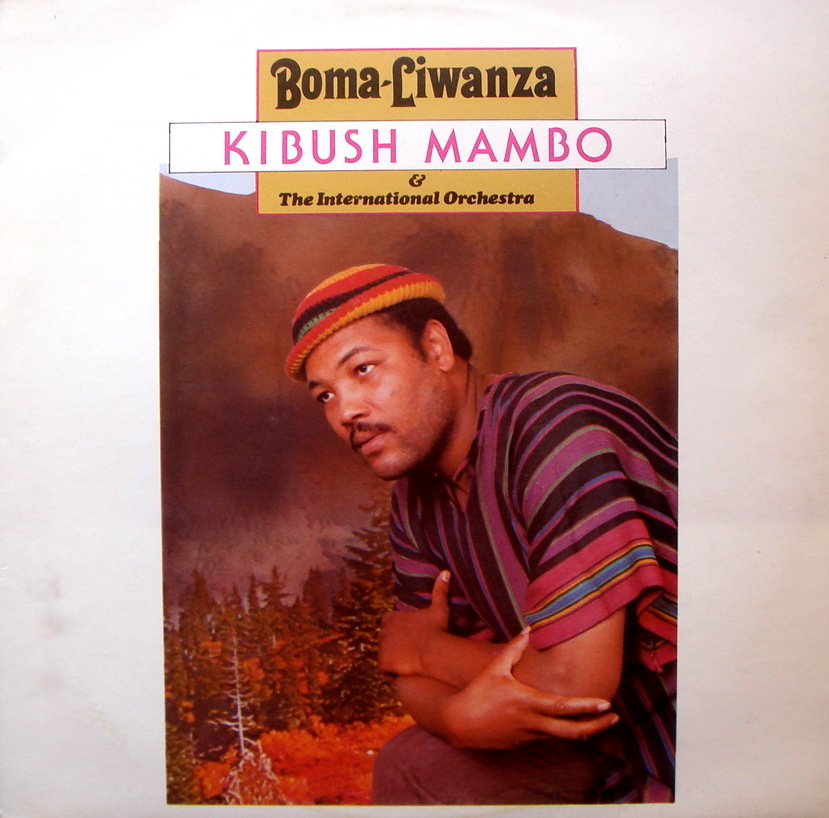
Boma - Liwanza


Not sure where I found this LP on the Valdene Records label from the 80's I would guess. Nice soukous from West Africa.

Peter Toll reports:

"Jim Monimambo must have come to Kenya in the mid 1970s. He might have arrived there in 1975 with Kalombo Mwanza's Orch. Basanga, a band that also included Tabu Batchalinge Ogolla and Loboko Pasi who joined Orch. Boma Liwanza soon after getting to Nairobi. Apparently Orch. Basanga fell apart upon arrival because this is what Loboko Pasi said in an article in The Nation (June 17, 2006):

"I had heard about Franco's tours to Kenya and how he would attract crowds in Nairobi and Kisumu. I was very excited about the tour. I had also heard that Nairobi was the London of East Africa, the land of milk and honey. If I couldn't get to London, I told myself, Nairobi would do," adds Pasi.
¶ The tour was to take Orchestra Basanga through Uganda and Tanzania followed by a grand performance in Nairobi before returning home. So after a rather lukewarm reception in Uganda and a low-key performance in Tanzania, the band, led by Kalombo Mwanza, set out for Nairobi. However, somewhere along the way, internal rifts developed over money after the tour's sponsor took off with the little cash that had been realised.
¶ "That was a trying time for me. I was among the band's youngest members, it was my first foreign tour and there we were, splitting. I wondered how I would find my way back home with no money," recalls Pasi.
¶When they got to Nairobi, the band split up and it was every man for himself. With no tools of trade, no person to turn to, Pasi wandered in the streets of Nairobi, hoping to meet a Congolese who he would share his problems with.
¶"I did not even have a guitar to perform on the streets to raise money for food".
¶For almost a month, Pasi had to beg to survive. The paradise in Nairobi was elusive.
¶"It was not London to me any more. There was no milk, no honey, not even bread crumbs. I was starving, I needed something to do to get food," recalls Pasi.
¶After knowing his way around town, Pasi joined a Congolese band by the name Boma Liwanza.
"I just introduced myself and they allowed me to perform with them although they doubted my abilities. I proved myself and they accepted me officially," he says.

In the mid 1970s Monimambo became a singer with Boma Liwanza and a popular one. In 1976 he even started to record with his own band Special Liwanza - which was probably just a studio band made up of members of Boma Liwanza. It seems Jim was still with Boma Liwanza in 1979 when he wrote one of their big hits, "Milimani".

However, around the same time he also started performing with George Kalombo Mwanza's new band Viva Makale and that's where he sang with a Zairean artist who had just returned from Tanzania, Moreno Batambo. Soon after, the two started a new band, Shika Shika, but unfortunately, Moreno wanted to be his own boss, so he moved within a year to form Moja One. I believe Orch. Shika Shika was formed in 1980, the year Moreno's "Maisha Ya Mjini" was recorded."

Tracks are as follows -

1. Mono
2. Sina mambo
3. Bilobela


Boma-Liwanza - Side One

Jimmy Logan

A bit late for Hogmanay but here on this Music For Pleasure label from 1976 is this tribute to Scottish performer Sir Harry Lauder by another scot Jimmy Logan.

Wikipedia says -

"Educated at Gourock High School, Inverclyde, Logan left school at the age of 14. His family, in the 1930s and 1940s, toured the small music halls of Scotland and Northern Ireland. By 1944 he was in pantomime when he played the cat in Dick Whittington and His Cat. His connection with pantomime would continue throughout his life, most famously with the long running pantomimes produced by Howard & Wyndham in Glasgow, Edinburgh, Newcastle and Aberdeen.
Jimmy Logan, starring with Jack Radcliffe and Eve Boswell, held the record number of performances of the famed Five Past Eight shows staged each summer at the Alhambra Theatre,. Logan purchased the Empress Theatre for £80,000 in 1964. He refurbished it, re-opening it as the 'New Metropole'. One of the first events to be staged there was the first Scottish production of the rock musical Hair.
His first acting role was in the film Floodtide (1949), a drama set on Clydeside. He also performed in Carry on Abroad (1972) and Carry On Girls (1973). His London stage debut came in The Mating Game (1973).
He staged an adaptation of Oor Wullie, the Sunday Post comic strip character, for the Dundee stage. His one-man musical based on the life of Scottish entertainer Sir Harry Lauder, was called Lauder (1976). Logan collected Lauder memorabilia, which is now housed in the Scottish Theatre Archive at the University of Glasgow.
Other theatrical events included The Entertainer (1984), Brighton Beach Memoirs (1989), Bill Bryden's The Ship, The Comedians (1991), On Golden Pond (1996) and Death of a Salesman at the Pitlochry Festival (1992). In 1991 he had a supporting role in the Swedish comedy film Den ofrivillige golfaren, which was partly filmed in Scotland.
Logan was awarded an honorary doctorate by Glasgow Caledonian University (1994), honoured with an Order of the British Empire (OBE) for "services to Scottish theatre" in 1996, and was elected a Fellow of the Royal Scottish Academy of Music and Drama in 1998.
Logan's last two performances were at Pitlochry Festival Theatre and the Glasgow's Pavilion Theatre respectively."

Tracks are -

1. Medley: It's Nice To Get Up In The Morning- Rising early In The Morning - Fou The Noo.
2. Roamin' In The Gloamin'
3. She's The Lass For Me
4. Somebody's Waiting For Me
5. Wee Deoch an' Doris
6. I'm Goinbg To Marry 'Arry


Jimmy Logan - Side One

Wednesday, December 14, 2011

Heroes & Villains Concert 1982

An LP on the Dakota label from 1982. A concert recorded on 21st September the same year at the Hammersmith Odeon to celebrate 15 years of BBC Radio One. Profits from the concert went to the Nordoff Robbins Music Therapy Centre charity.
Mostly stars of the 60's here who have come out in force and by and large sound pretty good - playing their big hits to an enthusiastic audience.

Tracks are as follows -

Side One.
1. Flowers In The Rain - Carl Wayne & Magnum
2. One Way Love - Cliff Bennett
3. Little Things - Dave Berry
4. He's In Town - Rockin' Berries
5. There's Always Something There To Remind Me - Sandie Shaw
6. Sorrow - The Merseybeats
7. Hallelujah Freedom - Junior Campbell
8. Tobacco Road - Nashville Teens

Side Two.
1. Out Of Time - Chris Farlowe
2. Hippy Hippy Shake - Swinging Blue Jeans
3. Yesterday Man - Chris Andrews
4. Game Of Love - Wayne Fontana
5. Wild Thing - The Troggs
6. Wondrous Place - Billy Fury
7. Legend Of Xanadu - Dave Dee, Dozy, Beaky, Mick & Tich
8. What'd I Say - Ensemble

Friday, December 09, 2011

Perspectives In Percussion

Another LP from the Hospice Shop today. This time some rather ordinary exotica/ stereo testing music - big band with added percussion . It's on the Somerest label and made in Canada in the 60's I would guess. It says on the sleeve " The world's greatest percussionists, solists and section men (?) recorded in Hollywood without attenuated dynamics ( whatever that is?)"
Orchestra lead by Skip Martin.

Space Age Musicmaker says of Skip Martin -

"Raised in Indianapolis, Skip Martin studied clarinet and played with local orchestras through high school and while attending Indiana University. After graduation, he took a job at radio station WLW in Cincinnati. Around 1936, he began playing alto and baritone sax for a series of big bands, including Charlie Barnett, Jan Savitt, Glenn Miller, and Benny Goodman. He also wrote an occasional arrangements. Count Basie recorded a number of Martin's compositions in the 1940s, including a minor hit, "Tuesday at Ten." After a stint with NBC and CBS radio in New York, Martin was enlisted in the Army Air Corps and trained as a pilot.

He settled in Los Angeles and went into studio work. He worked mainly as a fill-in, contributing individual arrangements, such as Les Brown's hit, "I've Got My Love to Keep Me Warm," but rarely handled a whole album. He assisted Leo Arnaud on the score for the Red Skelton movie, "Excuse My Dust," and conducted the orchestra on the soundtrack for Fred Astaire's movie, "Royal Wedding." He also worked with the Pied Pipers and Tony Martin in the early 1950s. After a short spell as a staff arranger for NBC television, he moved back to Hollywood and went freelance. In the late 1950s, he produced several albums for Somerset that rank among the best of the "percussion" craze. The list of players includes some of the best West coast jazz players of the time: Jimmy Rowles, Pete Candoli, Frank Rosolino, Larry Bunker, Irv Cottler, and Don Fagerquist. Martin also arranged a selection of composer Dave Kuhn's theme and incidental music for the 1958-59 TV series, "Mickey Spillane's Mike Hammer," that RCA released to ride on the coattails of the success of Henry Mancini's "Peter Gunn" LPs."

Tracks are as follows -

1. I'll See You In My Dreams

2. And Then There's Bells

3. Red River Cha Cha

4. Night train To New Orleans

5. C'est Magnifique

6. Tampico


Mike Terry

Initially attracted to the smiling face of Mr. Terry and his Clackers I was sadly disappointed when I played this LP on the Joy label from 1972. It's a kind of poor man's Russ Conway/ Mrs. Mills record and hardly worth a second listen. I upload one side so you can see what I mean.

The sleeve notes say -

"Mike terry has built himself quite a reputation around the Northern Clubs as a honky tonk pianist, reputation which is spreading South with each record and each appearance. And when you count amongst these appearances one with Dorothy Squires at her second epic making Palladium concert you can imagine the strength of the invasion. Dorothy, in fact, has a lot to do with Mike's success; she taught him stagecraft - and who better to instruct in the art of holding an audience. The story starts some 28 years ago when Mike was born in Leeds. At thirteen he was taking piano lessons from a local teacher and at fiteen had won a local honky tonk contest. The prize was Winifred Atwell's "other piano". A prize that Mike treasures to this day."

Tracks are -

1. In Apple Blossom Time/ The Honeysuckle & The Bee/ Moonlight & Roses
2. Scotalnd The Brave/I Love A Lassie/ Roaming In The Gloaming
3. I Cant Give You Anything But Love Baby/ Side By Side/ Happy Days & Lonely Nights
4. Always/ My Wonderful One/I'm Forever Blowing Bubbles

Wednesday, December 07, 2011

Flanagan & Allen

An LP on the EMI label from the Hospice Shop today. Songs and patter from the 30's up until the 50's on this compilation obviously taken straight from old 78's due to the background hiss and crackle on most tracks.


Wikipedia says -

"As music hall comedians, they would often feature a mixture of comedy and music in their act; this led to a successful recording career as a duo and roles in film and television. Just prior to and throughout the Second World War they appeared in several films helmed by Marcel Varnel and John Baxter. Flanagan and Allen were both also members of The Crazy Gang and worked with that team for many years concurrently with their double-act career.

Flanagan and Allen's songs featured the same, usually gentle, humour for which the duo were known in their live performances, and during the Second World War they reflected the experiences of ordinary people during wartime. Songs like 'We're Gonna Hang out the Washing on the Siegfried Line' mocked the German defences (Siegfried Line), while others like 'Miss You' sang of missing one's sweetheart during enforced absences. Other songs, such as their most famous, 'Underneath the Arches' (which Flanagan co-wrote with Reg Connelly), had universal themes such as friendship. The music was usually melodic, following a binary verse, verse chorus structure, with a small dance band or orchestra providing the accompaniment. The vocals were distinctive because while Flanagan was at least a competent singer and sang the melody lines, Allen used an almost spoken delivery to provide the harmonies.

The recordings of Flanagan and Allen remain popular, and the duo are frequently impersonated by professionals and amateurs. Royal Variety Performances often feature people 'doing a Flanagan and Allen', notably Roy Hudd and Christopher Timothy, Bernie Winters and Leslie Crowther. In 1980 the latter two featured in a one-off musical drama about the duo produced by ATV for the ITV network.

The later comedy team Morecambe and Wise, who often expressed their admiration for Flanagan and Allen, recorded a tribute album, Morecambe and Wise Sing Flanagan and Allen (Phillips 6382 095), in which they performed some of the earlier team's more popular songs in their own style, without attempting to imitate the originals. Fans of either comedy team may be slightly disappointed by this album, since all of the selections are performed absolutely straight, with no comedy except for a brief amount of banter after one of the songs. Run Rabbit Run was one of their best hits in World War Two."


Songs are -

1. "Oi!" Intro: A Million years
2. Life Begins Again
3. |Memories Medley: Part 1 - Wanderer, Dreaming, Where The Arches Used To Be.
4. Memories Medley: Part 2 - Can't We Meet Again, A Million Tears, Underneath The Arches.
5. Down And Out Blues
6. I'm Sending Out An S.O.S.

Tuesday, December 06, 2011

Bill Tapia RIP

Bill Tapia playing in Japan a couple of years ago. He died the other day aged 103.

Learn more about Bill = http://www.billtapia.com/

Monday, November 21, 2011

Joe Turner

An LP on the BluesTime label from 1969. In the wake of the British beat invasion of the USA and interest in the blues and R&B that followed a few of the old bluesmen that were still active re-made some of their old hits of the 40's and 50's. Arranged and conducted by Gene Page this is a similar update with lush big band playing with Joe but it's not all bad though not a patch on the originals.

"Born in Baltimore, Turner was first taught piano by his mother when he was five. He moved to New York around 1925 and enjoyed much popularity among musicians in Harlem, working with June Clark (1927-1928), Benny Carter (1929), and Louis Armstrong (1930). He accompanied the singer Adelaide Hall in a piano duo with Alex Hill and then with Francis Carter; he and Carter toured Europe with Hall in 1931. Turner performed as a soloist throughout Europe until 1939, and then in the USA. After working as a member of an army band led by Sy Oliver (1944-1945) and with Rex Stewart (1946) he returned to Europe and played in Hungary (1948) and Switzerland (1949-1962). He then settled in Paris, where from 1962 he held a residency at La Calvados; he also performed in Great Britain, Switzerland, and the USA. Turner was influenced mainly by James P. Johnson, Fats Waller, Art Tatum, and Erroll Garner."

Tracks are as follows =

1. Shake Rattle and Roll
2. Lonesome Train
3. Corrina, Corrina
4. How Long, How Long Blues
5. Careless Love
6. Two Loves Have I