Thursday, October 25, 2007

3 Haunted Houses


Three very different songs called "Haunted House" by three very different artistes.

The first from Ray Noble's Orchestra in the 30's or 40's is from a cheap CD called Childrens All-Time Classics on the Cedar label.

The next is by Leon redbone from the album "On The Track" and the third and my favourite is by Jerry Lee Lewis from a compilation of his songs at his time with Mercury Records from 1973. I also have a version by Ry Cooder and John Hiatt etc. playing live but unfortunately I can't find it at the moment.

Discover more about Ray Noble HERE.

Discover more about Leon Redbone HERE.

Discover more about Jerry Lee Lewis HERE.


Ray Noble Orchestra - Haunted House

Leon Redbone - Haunted House

Jerry Lee Lewis - The Haunted House


These SendSpace files are available for seven days or until exhausted.

Saturday, October 20, 2007

Al Bowlly


Watched part of a fascinating profile of Al Bowlly on BBC 4 last night and this remined me of a couple of the novelty songs he sang before he became more well known as a "crooner".

Wikipedia says-


"In the 1930s, he was to sign two contracts which were to change his fortunes - one in May 1931 with Roy Fox, singing in his live band for the Monseigneur Restaurant in London, the other a record contract with Ray Noble's orchestra in November 1930. During the next four years, he recorded over 500 songs. He also found time to occasionally record with other orchestras such as Lew Stone's ; however, he was inundated with demands in this period, and made the bulk of his recordings with Noble. There was considerable competition between Noble and Fox for Bowlly's time, as for much of the year, Bowlly would spend all day in the recording studio with Noble's band, rehearsing and recording, only to then spend the evening playing live at the Monseigneur with Fox's band. A visit to New York in 1934 with Noble resulted in more success and their recordings first achieved popularity in the USA; he appeared at the head of an orchestra hand-picked for him and Noble by Glenn Miller (the band included Claude Thornhill, Charlie Spivak, and Bud Freeman, among others).
During the early-mid 1930s, such songs as "Blue Moon", "Easy to Love", "I've Got You Under My Skin", and "My Melancholy Baby" were sizable American successes — so much so that Bowlly gained his own radio series on NBC and travelled to Hollywood to co-star in The Big Broadcast in 1936, which also starred one of his biggest competitors, Bing Crosby. Al Bowlly often worked with Ray Noble and His Orchestra.
In December 1931, Bowlly had married Freda Roberts, but the marriage proved a disaster, with Bowlly discovering his new wife in bed with another man on their wedding night. The couple separated after two weeks, and sought a rapid divorce. He remarried in December 1934, this time to Marjie Fairless, the marriage lasting until his death."

Discover more about Al Bowlly HERE.


Al Bowlly - Making Wickey Wackey

Al Bowlly - Pied Piper Of Hamelin


These SendSpace files are available for seven days or un til exhausted.

Tuesday, October 16, 2007

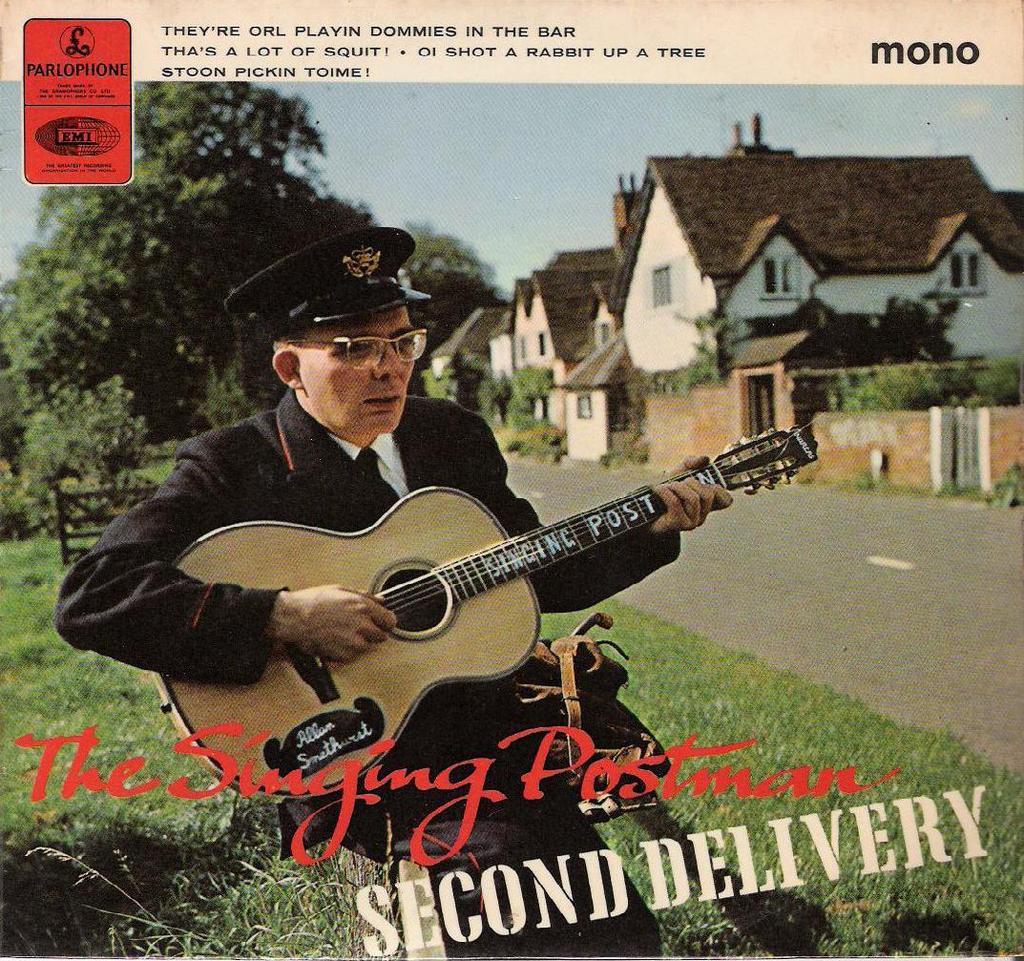
Allan Smethurst ( The Singing Postman )


"As the Singing Postman, Allan Smethurst benefited from the British public’s endearing sympathy for the underdog. His most popular hit, Hev Yew Gotta Loight, Boy?, momentarily outsold the Beatles — in East Anglia, at least — and for a few weeks became a national catchphrase. But like many novelty stars before and since, his 15 minutes of fame was little more than that, and after four albums he faded from the public consciousness ending his days as an alcoholic in the care of the Salvation Army.
Smethurst, a postman from Norfolk who hummed his tunes on his daily round, bought his guitar from Woolworths in 1949 and started writing and playing his own dialect songs, initially confining his activities to his bedroom. “It was ten years afore I dare let people hear them,” he once admitted. Plucking up the courage to send a tape to the BBC in Norwich, he was given a spot on a local radio show compered by a sales promotion man, Ralph Tuck, who promptly founded a record label called The Smallest Recording Organisation in the World to promote the Singing Postman. The 100 discs which Tuck had cut in the early weeks of 1966 promptly sold out and Smethurst became an overnight star, ousting the Beatles from the top of the East Anglian hit parade."
It was sadly downhill from then on. He took up drink to try and cure his crippling stage fright but obviously he was destined to be a "one hit wonder" and the music biz moved on to the next novelty act.


Allan Smethurst - The Postman And The Milkgirl

Allan Smethurst - Norwich Is A Fine City

Allan Smethurst - Bubbies And The Wall

Allan Smethurst - Took A Long Time


These SendSpace files are available for seven days or until exhausted.

Sunday, October 14, 2007

Bernard Cribbins


"Born in 1928, in Lancashire, Bernard Cribbins is one of the best known children's entertainers in the UK. He has been an actor since the age of 14, when he became a student player with his local repertory company.
By the 1950s, Cribbins had become a star of the London stage, featuring in his own revue. It wasn't until the 1960s, however, until he attained true public acclaim, appearing in a string of successful films and had musical success with a number of novelty records like Right Said Fred and Hole in the Ground. He is better known today for voice over work (The Wombles, as well as numerous advertisements) and his appearances on Noel's House Party on BBC1."

Discover more about Bernard Cribbins HERE.


Bernard Cribbins - The Bird On The Second Floor

Bernard Cribbins - Verily


These SendSpace files are available for seven days or until exhausted.

Monday, October 08, 2007

Fred Douglas


Not really a boot sale find but an excuse to upload some novelty songs by Fred Douglas who I know nothing about except he made lots of cover versions of hits on the cheap Regal label that sold in Woolworths I believe back in the 30's and 40's. Later they had the Embassy label which did a similar service - all the pop hits of the day by obscure singers who nobody had ever heard of! Fred Douglas went by several other nom de plumes so probably appeared on other records too.

Any information about Fred greatly appreciated.


Fred Douglas - You've Got Those Wanna-Go-Back-Again Blues

Fred Douglas - I've Found A Roundabout Way To Heaven

Fred Douglas - Hello Aloha, How Are You?

Fred Douglas - Bandy Bertha's Birthday


These SendSpace files are available for seven days or untilk exhausted.

Wednesday, October 03, 2007

Sid James


That dirty laugh, the bag of spanners features, star of many Carry Ons and foil for Hancock in Hancock's Half Hour. Another profile of a great british character actor.

Wikipedia says-

"James was born Joel Solomon Cohen, to Jewish parents, later changing his name to Sidney Joel Cohen and then Sid James, in a peculiar quirk of fate on Hancock Street, Hillbrow, Johannesburg, South Africa. He worked as a diamond cutter, hairdresser, dance tutor and reputedly a part-time boxer in fairgrounds, before becoming a professional actor.
It was at a hairdressing salon in Kroonstad, Orange Free State that he met his future wife. He married Berthe Sadie Delmont, known as Toots on 12 August 1936 and her father Joseph Delmont, a wealthy Johannesburg businessman, bought a salon for James. Within a year, however, James announced that he wanted to become an actor and joined Johannesburg Repertory Players. Through this he got work with the South African Broadcasting Corporation.
He and Delmont divorced in 1940 mainly as a result of James's many relationships with other women; it was a pattern that continued throughout his life. In 1943, he married a dancer, Meg Sergei, née Williams (born 1913). They divorced on 17 August 1952. On 21 August that year he wed Valerie Elizabeth Patsy Assan (born 1928), an actress who used Ashton as her stage name. During their marriage, he had a well publicised affair with his Carry On co-star, Barbara Windsor.
During the Second World War, he became a lieutenant in the South African Army in an entertainment unit, and subsequently took up acting as a career. He came to Britain in 1946 on the back of his service gratuity. Initially he worked in repertory before being spotted by the nascent British post-war film industry."

Discover more about Sid James HERE.


Sid James - An Appreciation of....


This SendSpace files is available for seven days or until exhausted.

Kenneth Horne


Kenneth Horne ( third from the left ) always made me laugh and the two shows I remember most from my childhood and early years are Beyond Our Ken and Round The Horne that also starred Kenneth Williams , Hugh Paddick and Betty Marsden also seen in this photo. This is another radio profile of approx 60 mins. in length.

Wikipedia says-

"Born Charles Kenneth Horne , he was the son of Charles Silvester Horne (1865-1914), a Congregationalist minister, Liberal MP for Ipswich, and powerful orator who built the White House in Sandford Avenue, Church Stretton as the family home, and is commemorated by the 'Silvester Horne Institute' in Church Stretton, Shropshire. His maternal grandfather was Herbert Cozens-Hardy, the Liberal MP for North Norfolk who became both the Master of the Rolls and Baron Cozens-Hardy on 1 July 1914.
During World War II, Horne served in the RAF, reaching the rank of Wing Commander. As part of BBC radio's support of the war effort entertainment programmes were devised to target each wing of the armed forces, this led to Horne's involvement in Much-Binding-In-The-Marsh set at the titular fictitious air force base, a series which continued until 1954.
He died from a stroke whilst standing up to make a speech at the Dorchester Hotel in London, just after the fourth series of Round the Horne was completed. A fifth series had been commissioned, but it was decided that the show could not continue without its star."

Discover more about Kenneth Horne HERE


Kenneth Horne - Horne A Plenty


This SendSpace file is available for seven days or until exhausted.

Thursday, September 27, 2007

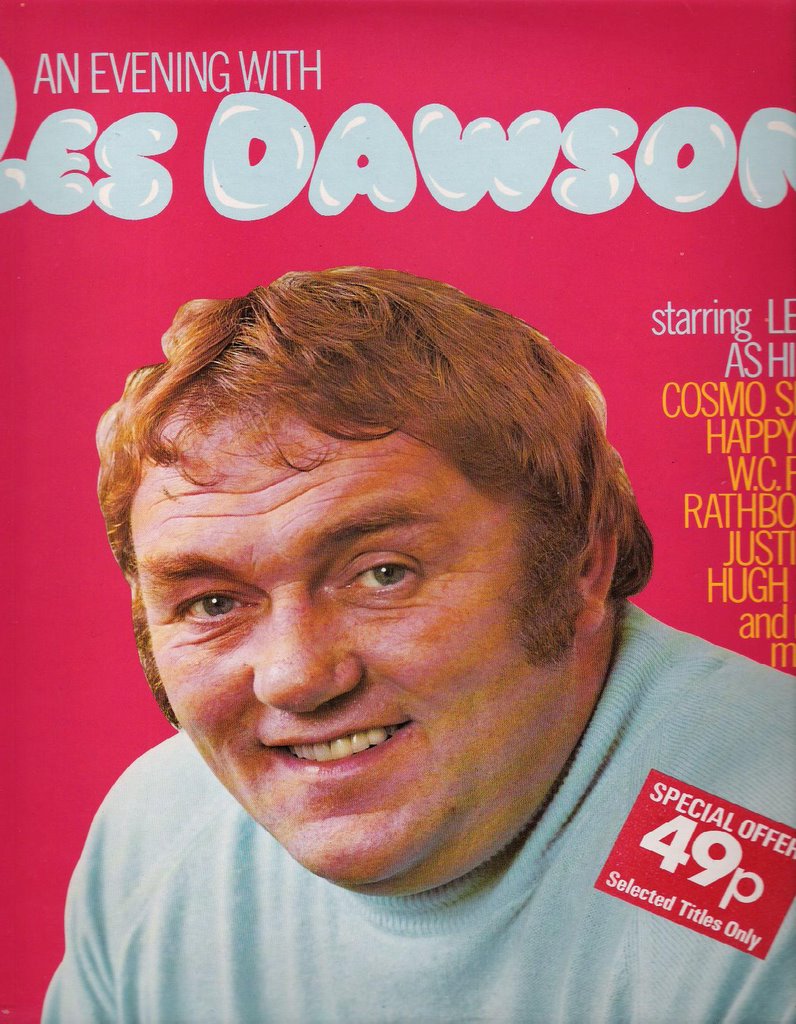
Les Dawson


Here's another radio profile from the "How Tickled I Am" series, this time of Les Dawson.

"Les Dawson (2 February 1931 - 10 June 1993) was a popular Lancashire comedian, known for his deadpan style. Dawson was a curmudgeon, famous for jokes about his mother-in-law and his wife.
Dawson began his entertainment career as a club pianist ("I finally heard some applause from a bald man and said 'thank you for clapping me' and he said 'I'm not clapping - I'm slapping me head to keep awake.'"), but found that he got more laughs by playing wrong notes and complaining to the audience. He made his television debut in the talent show, Opportunity Knocks, and was seldom absent from British television screens in the years that followed. His best known routines featured Roy Barraclough and Dawson as two elderly women, Cissie Braithwaite and Ada Sidebottom who, having worked in a mill in their youth, spoke some words aloud and mouthed others--particularly those pertaining to bodily functions and sex; they also repeatedly pushed up their bosoms, in pantomime dame style, an act copied faithfully from his hero, Norman Evans. Dawson's humour, though earthy, was seldom coarse, and he was as popular with female as with male audiences."

Discover more about Les Dawson HERE.


Les Dawson - How Tickled I Am


This SendSpace file is available for seven days or until exhausted.

Frank Randle


I have a few old radio shows , mostly profiles of british comedians and so I thought I would air a few of them here as the boot sales and charity shops are a bit quiet these days.
Here's what Wikipedia says about Frank Randle-

"Frank Randle (Born Arthur Hughes, also known as Arthur McEvoy) (January 30, 1901 - July 15, 1957) was an English comedian. A contemporary of fellow Lancastrians George Formby and Gracie Fields, he was regarded as more subversive, perhaps the reason that the immense popularity he enjoyed during his lifetime has not survived him.
Born in Wigan, Lancashire, he left school aged 13 and worked in a variety of menial jobs until two years later he joined an acrobatic troupe. In 1928, he began to tour as a comedian, principally in Lancashire and the North, developing his own show, Randle's Scandals. He took equity in John E. Blakeley's Manchester-based Mancunian Film Studios and appeared in eight of its productions.
Randle's mischievous wit led to a running conflict with Harry Barnes, police chief of Lancashire seaside resort Blackpool, who frequently banned and censored his material. Randle responded to his critics in robust fashion, frequently throwing his false teeth into the audience and once bombarding Blackpool from an aeroplane with toilet rolls. Randle's police charge sheet is lodged with the Lancashire Constabulary collection, cared for by Lancashire County Museums.
On the outbreak of World War II, having failed his medical to join the RAF, Randle joined the Home Guard and started to establish a career in films that even overtook that of Formby. His iconoclastic portrayal of the underdog, flouting authority and disrupting the establishment found a ready audience in a population suffering the privations of war.
With the decline of the music halls in the 1950s, Randle's popularity faded. Pressed by debts and tax arrears and suffering from the consequences of a life of alcohol abuse, he was made bankrupt by the tax authorities in 1955. He died in Blackpool of gastroenteritis, in 1957."

Discover more about Frank Randle HERE


Frank Randle - How Tickled I Am


This SendSpace file is available for seven days or until exhausted.

Tuesday, September 25, 2007

Ken Dodd


Go to Swapatorium to hear Ken Dodd profile "How Tickled I Am".

Monday, September 24, 2007

Al Jolson


I've mentioned Al Jolson before but I found another CD of his "Very Best Of....." on the Music Club label the other day in a charity shop and thought I would upload some of his novelty songs. The third track "Oogie Woogie Wa Wa" comes from a compilation that Angel Radio sent me from their archives some years ago.

Wikipedia says-

"Al Jolson (May 26, 1886–October 23, 1950) was a highly acclaimed American singer, comedian and actor of Jewish heritage whose career lasted from 1911 until his death in 1950. He was one of the most popular entertainers of the 20th century whose influence extended to other popular performers, including Bing Crosby, Frank Sinatra, Dean Martin, Judy Garland, Sammy Davis, Jr., Eddie Fisher, Jerry Lewis, Elvis Presley, Tom Jones, and Michael Jackson.
Al Jolson was the first popular singer to make a spectacular "event" out of singing a song. Prior to Jolson, popular singers such as John McCormack and Henry Burr would stand still with only very minimal gesturing as they sang. Jolson, in comparison, had tremendous energy displayed in his performances by way of dynamic gestures and other physical movement. Jolson was the first entertainer to ever utilize a ramp extending out into the audience from the center of the stage. Jolson insisted on having a ramp so he could be closer to the audience. It was very common for Jolson to sit on the end of the ramp and have personal one-on-one conversations with audience members which is something that had also never been done prior to Jolson.
Jolson was known to stop major Broadway productions in which he was involved, turn to the audience and ask them if they would rather hear him sing instead of watching the rest of the play. The answer from the audience was always a resounding "yes" and Jolson would spend at least the next hour singing an impromptu concert to an ecstatic audience. George Burns, the popular American comedian and friend of Al Jolson probably described Jolson best when he said, "...Jolson was all Show Business!"

Discover more about Al Jolson HERE.


Al Jolson - Oogie Woogie Wa Wa

Al Jolson - The Spaniard That Blighted My Life

Al Jolson - De Camptown Races


These SendSpace files are available for seven days or until exhausted.

Thursday, September 20, 2007

Sophie Tucker


A CD from the local library sale I bought yesterday. Its on the Living Era label from 1985 and most of the songs were recorded in the 1930's.


"Sophie Tucker was born in Russia while her mother was emigrating to America to join her husband, also a Russian Jew. Her birth name was Sophia Kalish, but the family soon took the last name Abuza and moved to Connecticut, where Sophie grew up working in her family's restaurant.

Playing piano to accompany her sister at amateur shows, Sophie quickly became an audience favorite; they called for "the fat girl." At age 13, she already weighed 145 pounds.

She married Louis Tuck in 1903, and they had a son, Bert, but she divorced Tuck fairly quickly. Leaving Bert with her parents in 1906, she went to New York, changed her name to Tucker, and began singing at amateur shows to support herself.

She was required to wear blackface by managers who felt that she would not otherwise be accepted, since she was "so big and ugly" as one manager put it. She joined a burlesque show in 1908, and, when she found herself without her makeup or any of her luggage one night, she went on without her blackface, was a hit with the audience, and never wore the blackface again.

She briefly appeared with the Ziegfield Follies, but her popularity with audiences made her unpopular with the female stars, who refused to go on stage with her.

Tucker's stage image emphasized her "fat girl" image but also a humorous suggestiveness. She sang songs like "I Don't Want to Be Thin," "Nobody Loves a Fat Girl, But Oh How a Fat Girl Can Love." She introduced in 1911 the song which would become her trademark: "Some of These Days."

She added jazz and sentimental ballads to her ragtime repertoire, and, in the 1930s, when American vaudeville was dying, she took to playing England. She made eight movies and appeared on radio and, as it became popular, television."


Sophie Tucker - Makin' Wicky Wacky Down In Waikiki

Sophie Tucker - I'm The Last Of The Red Hot Mamas

Sophie Tucker - Some Of These Days


These SendSapce files are available for seven days or until exhausted.

The Wonders Of Babelfish

Bootsalesounds .The English artist Michael Leigh roots for its AUDI whether log boat Sale sound forgotten beads from the depths of flea market crates and trunks. And wants to amuse thereby above all as he explains in the following one. Michael Leigh in De:Bug 98 the sound of the trunk Boat Sale sound saw the light of the world as a Yahoo Group, which I had begun at the beginning of last yearly. Actually I wanted to use it as place, in order to store music files, which I had mentioned occasionally in one my other Blogs (www.flobberlob.blogspot.com). The Yahoo Group consisted of 30 members, that herumlungerten all gladly in the background, in order to down-load the files, but never gave feedback. Thus I that that was not anything for me, decided and imagined: Why I do not make simply an AUDI whether log from it, in which I can featuren the whole music, which I find on flea markets and boat Sales. One should mention perhaps that boat Sales are condemned popular in England, particularly in the summer. The people meet then on parking lots and sell their stuff from the trunk. Before boat Sale sound I had few other Blogs and like that was already an AUDI whether log in the reason a natural development for me. Since I was into the 60ern on the kind School, I had collected records. I was particularly interested in the generic term cures side and the Novelties of the music Business already at that time. Therefore the plates on my Blog are normally also Songs of artists, over whom one actually hears nowadays nothing. Recently for example I found a record of Charlie Drake, which in England a few hit had during the late 50's and early 60's and a popular Comedystar in the television was, whose shows ran for a very long time. It times described as: "quaint, troubled, sympathetic little one who is strangely reminiscent OF A Botticelli cherub". And it had let peel a voice in addition, the lacquer could. On the plate were few its hits and some completely unknown pieces like "I draws to The end to OF My Yodel", "Starkle Starkle Little Twink" or "Don't a Trim My Wick", all full enthusiasm for English humor, wordplays and Nonsense verse, as they could so hardly have exceeded Lewis Carrol, Edward Lear and spike Milligan. Another jewel was the Percussionist and jazz musician Rupert Clemendore on the LP "Le jazz" on that 60's Cook Laboratories label. One of the exotic jazz albums from the west Indies (Trinidad to be over exact). The Cover gives already a correct impression. Normally halbseidene beautifulnesses with an arrangement from palms is on such records, but here it should happen more subtly. And alone the words "Patois jazz" let me believe in the fact that more was to be found here. There is nearly always first the Cover, which bring me to it, my pennies rauszuruecken. Sometimes one is then inspired by the plate also, but usually the plate, which hides itself behind a great Cover has, not to do nothing at all thereby. Rupert and its volume however play so a kind of unobstrusive, but pleasant cocktail jazz, with which above all the two Vocal TRACKS out-sting, and which create it then also on the Blog. The Slevenotes explains that appropriate: "which makes Rupert with its voice on ' Chop Suey Mambo ', must remain completely unclassifiable." And in another Song it then still rappt from the Harem, which pursues it, if he down-runs in Trinidad the park Street. In the middle in the mediocrity the "Mish Mosh" album of Mickey Katz started me - also again first due to the Covers -. A wonderful photo of Mr. Katz, disguises as a butcher, who sits with its saxophone on the chopping block, and behind him the other instruments hang peacefully lined up with sausages and Bagles. The Songtitel sounded also everything like Winner: "How Much Is That Pickle in The Window" or "I'm A Schlemiel OF Fortune", how one can resist there? It came then raus the fact that Mickey was a Top Dialektkenner in spike Jones ' volume and later own ways went. It was so convinced of the fact that its music was in music solid not only merrily, but also that he employed the best session musicians Hollywoods for it. And again a quotation of the grandiosen Sleeve Notes: "Mickey's approach tons of A song is simple. He of grave the nation's favourites and of gives them the stamp OF his unique and abundant wit. The poor unsuspecting tune suddenly finds itself with more of twists than A barrel of OF pretzels and more spice than A plate OF pastrami." How one sees, the things, which I find, are very different. And I do not only try to show on the Blog also by the apparently indiscriminate composition like differently different Aeras in its Style, but also in its humor are. I always select music, which surprises me at least amused, more frequently however and brings me sometimes also directly to the laughter for the Blog. And I hope that she reaches also at the people, which visit the Blog. I am glad to have a very broadly varied music taste and hope, boat Sale sound reflect also, although the drive luck and coincidence are. Meanwhile I get also the feedback, which I had at that time already expected, and by rapidly Share my audio files can be theoretically eternally attainable (I have before You send It used, until I had to determine that after one week everything disappears there). I am naturally linked with other audio Blogs and must say that there is very much mutual encouragement and support among us. That nearly already is heart-warming up. OVER MICHAEL LEIGH I am 58 years old artists and live with my family in Cheshire. I studied, work painting however to time particularly with collages and Mailart. Otherwise I make art books, eraser temples, postcards and various audio work. Mail kind stepped something due to my other on-line occupations admitted into the background, but to send away, still fun makes collages via Mail for me. Michael Leigh 98

Saturday, September 15, 2007

Spike Milligan


A comedy genius and inspiration. From the incredible ground breaking Goon Shows to his hilarious wartime autobiographies and TV shows like "Q5", The World OF Beachcomber, etc. etc. He made many records and a few of my favourites here from various sources - the latter two with Peter Sellers from a compilation of Peter Sellers on the EMI Comedy Classics series from 1990.

Wikipedia says-

"During most of the late 1930s and early 1940s Milligan performed as an amateur jazz vocalist and trumpeter, both before and after being called up for military service, but even then he wrote and performed comedy sketches as part of concerts to entertain troops. After his call-up, but before being sent abroad, he and fellow musician Harry Edgington would compose surreal stories, filled with puns and skewed logic, as a way of staving off the boredom of life in barracks.
During World War II he served as a signaller in the 56th Heavy Regiment Royal Artillery, D Battery, as Gunner Milligan, 954024 with the First Army in North Africa and then in Sicily and Italy. He rose to the rank of Lance-Bombardier and was about to be promoted to Bombardier when he was wounded in action in Italy. Subsequently hospitalised for shell shock, he was demoted by an unsympathetic commanding officer back to Gunner.
After his hospitalisation, Milligan drifted through a number of rear-echelon military jobs in Italy, eventually becoming a full-time entertainer. He played guitar with a jazz/comedy group called The Bill Hall Trio in concert parties for the troops. After being demobilised, Milligan remained in Italy playing with the Trio but returned to England soon after. While he was with the Central Pool of Artists (a group he described as composed "of bomb-happy squaddies") he began to write parodies of their mainstream plays, that displayed many of the key elements of what would become The Goon Show with Peter Sellers, Harry Secombe and Michael Bentine.

Milligan returned to England in the late 1940s and made a precarious living with the Hall trio and other musical comedy acts. He was also trying to break into the world of radio, as either a performer or as a script writer. His first success in radio was as writer for Derek Roy show. Milligan soon became involved with a relatively radical comedy project, The Goon Show. Known during its first season as Crazy People, or in full, "The Junior Crazy Gang featuring those Crazy People, the Goons!", the name was an attempt to make the programme palatable to BBC officials by connecting it with the popular group of comedians known as The Crazy Gang.
Milligan was the primary author of The Goon Show scripts (though many were written jointly with Larry Stephens, Eric Sykes and others) as well as a star performer."

Discover more about Spike Milligan HERE


Spike Milligan - Wiry Twerp

Spike Milligan - Q Five Theme

Spike Milligan & Peter Sellers - Unchained Melody

Spike Milligan & Peter Sellers - Dance With Me, Henry


These SendSpace files are available for seven days or until exhausted.

Billy Costello ( Requested again )


Billy Costello from an old cassette tape that someone sent me years ago - sorry about the crackles and pops. Requested again by a few people and I'm only too happy to oblige as I love these old cartoons ( Billy did Popeye's voice for many years ) and the songs.


Here's what Wikipedia has to say about Popeye The Sailor-

"Popeye the Sailor is a famous comic strip character, later featured in popular animated cartoons. He was created by Elzie Crisler Segar[1] (who would sign some of his early Popeye comic strips with a cigar because it sounded the same as his name) and first appeared in the King Features comic strip Thimble Theatre on January 17, 1929. Popeye quickly became the main focus of the strip, which was one of King Features' most popular strips during the 1930s. Thimble Theatre, carried on after Segar's 1938 death by artists such as Bud Sagendorf, was renamed Popeye in the 1970s. Today drawn by Hy Eisman, Popeye continues to appear in first-run strips in Sunday papers (daily Popeye strips are reruns of older strips).
In 1933, Max and Dave Fleischer's Fleischer Studios adapted the Thimble Theatre characters into a series of Popeye the Sailor theatrical cartoon shorts for Paramount Pictures. These cartoons proved to be among the most popular of the 1930s, and Popeye at one time rivaled Mickey Mouse for popularity among audiences. After Paramount assumed control of the Fleischer Studio in 1942, they continued producing the series until 1957. Future Popeye cartoons were produced for television from 1960 to 1962 by King Features, and from 1978 to 1982 as well as 1987 to 1988 by Hanna-Barbera Productions."


Billy Costello - I'm Nobody's Sweetheart Now

Billy Costello - Blow The Man Down

Billy Costello - Teddy Bears Picnic

Billy Costello - Merry-Go-Round Broke Down

Billy Costello - Tiger Rag


These SendSpace files are available for seven days or until exhausted.

Monday, September 10, 2007

Radio Fun


A CD on the Happy Days label from 1993 with novelty songs mostly from the 30's and 40's. Lots of firmiliar names here like George Formby and Hoagy Carmichael rubbing shoulders with more unfirmiliar names like Jack Simpson and Milt Herth Trio.
Reginald Gardiner's "Trains" was a favourite on Children's Favourites on the radio and nice to find both sides of the 78 here.

Wikipedia says-

"Reginald Gardiner (February 27, 1903-July 7, 1980) was a British-born actor in film and television. A graduate of the British Academy of Dramatic Arts. He made his film debut in 1926 in the silent film The Lodger, by Alfred Hitchcock. Moving to Hollywood, he was cast in numerous roles, often as a British butler. One of his most famous roles was that of Schultz in Charlie Chaplin's The Great Dictator. Toward the end of his career, Gardiner made increasing guest appearances on the leading television sitcoms of the 1960s. In his last major role, he played alongside Phyllis Diller in The Pruitts of Southampton."

We have menioned Frank Crumit before and notmuch can be found out about Albert Richardson. But I found this short biog. of Jack Jackson on a website dedicated to Radio Luxembourg where he used to DJ during the 60's.

"Unquestionably the Dean of Deejays, Jack Jackson pioneered many of the gimmicks now taken for granted on radio and is regarded as one of the great masters of the turntable by other d.j.'s young and old. He breaks one of the unwritten rules of modern pop radio that all d.j.'s should be as young as their audience--he makes no secret of the fact that he is in his middle fifties, yet somehow (and this is his secret) puts out shows as lively as anyone half his age. His use of humour in his programmes is now widely copied, but few others can match his effects, which he spends hours perfecting in his expensively equipped studio at home. Jack Jackson was born in Belvedere, Kent, and as a young man studied at the Royal Academy of Music before entering show biz as a trumpet player. In the years which followed he played with numerous top bands such as those of Ambrose, Jack Hylton and Jack Payne, before forming his own dance orchestra in 1933. Until the outbreak of World War II he was almost constantly employed at the Dorchester Hotel in London. After the war he decided not to reform his band and turned to compering record shows on BBC radio His methods of presentation were completely revolutionary and after the initial resistance were welcomed as opening new fields of entertainment."


Frank Crumit - The Pig Got Up And Slowly Walked Away

Reginald Gardiner - Trains

Albert Richardson - The Old Sow

Jack Jackson Orchestra - You Can't Do That There 'ere


These SendSpace files are available for seven days or until exhausted.

Max Miller


A cheap CD on the Delta Music label released in 2002. Mostly live concert material from the Finsbury Park Empire and Holborn Empire at the height of his fame in the 40's.

Wikipedia says-

"Born in Hereford Street, Brighton as Thomas Henry Sargent, Miller became notorious for his double entendre based humour, which at the time saw him banned from the BBC on more than one occasion. His jokes were reputedly written in two notebooks, a white notebook for 'clean' humour, and a blue one for 'adult' jokes. He was known for his outlandish outfits, which generally included patterned plus fours and matching long jacket (a look which has clearly influenced the stage outfits of modern comedian Roy 'Chubby' Brown), with a trilby hat and kipper tie. He was also a popular singer of comedy songs, his most famous being Mary From the Dairy, which was also his signature tune. He also appeared in 14 films and made three Royal Variety Show appearances.
In real life, he was completely unlike his stage persona, quite bourgeois, almost puritan, not allowing any bad language in the dressing-rooms. At home, he lived in deep privacy, devoted to his surprisingly posh wife, and fond of keeping parrots. He was also famously mean, except for his donations to blind charities. (He’d been temporarily blinded in the trenches and never knew if he’d recover his sight.) But these were kept strictly secret. Apart from that, his only act of generosity would be an occasional sixpence to a lad in the street, to fetch him some more parrot-food.
In old age, he would say “Me, Max Miller, I’m nothing. But the Cheeky Chappie, he’ll live for ever.” He told a Sunday paper “I’ve got enough money to last me the rest of my life - if I die tomorrow.” Soon afterwards he died, on May 7th 1963, at his home at 25 Burlington Street, Brighton, from a heart ailment; he had been cared for by his wife Kathleen Marsh."


Discover more about Max Miller HERE.


Max Miller - Down Where The Rambling Roses Grow

Max Miller - Mary Ann

Max Miller - The Hiking Song


These SendSpace files are available for seven days or until exhausted.

Sunday, September 09, 2007

Big Al Davies


Another great track animated by Ron Bookless from Big Al's CD "Feztastic" which you can buy HERE.

Wednesday, September 05, 2007

Leon Redbone


A CD originally released in 1987 but re-released on the Sugar Hill label in 1995. Leon Redbone continues to amuse and delight with his choice of old songs and arrangements for his unique guitar playing and vocals. I was first aware of him when his first album was released back in the 70's with two camels on the sleeve and Leon looking like a cross bewteen Groucho Marx and a plantation owner.

Wikipedia says-

"While living in Canada in the early 1970s, Redbone began performing in public at Toronto area nightclubs and folk music festivals. At one point, it was rumored that he was Andy Kaufman, or Frank Zappa, in disguise, but since their deaths, the rumors have subsided.
In 1974, Rolling Stone magazine ran a feature article on Redbone, a full year before he had a recording contract. Described in the article as "so authentic you can hear the surface noise." His first album, On the Track, was released by Warner Bros. Records in 1975.
He was introduced to a larger public as a semi-regular musical guest on NBC's Saturday Night Live throughout the late 1970s and into the 1980s. In a late-'70s appearance on the The Merv Griffin Show, he was introduced as "Andy Kaufman ...maybe or maybe not," alluding to the eccentric comedian as being his possible true identity.
Redbone has released approximately fifteen albums and earned a cult-like fan community who will travel significant distances to hear him perform. His recurrent gags involve the influence of alcohol and claiming to have written works well before his time (as part of the age mystery schtick), and his concerts blend performance, comedy, and skilled instrumentals."

Discover more about Leon Redbone HERE.


Leon Redbone (with Hank Willimas Jnr.) - Lovesick Blues

Leon Redbone - Somebody Stole My Gal

Leon Redbone - Aw You Salty Dog


These SendSpace files are available for seven days or until exhausted.

Monday, September 03, 2007

Shirley Temple


A cheap CD from 2003 on the Memory Lane label found at a boot sale or market - I forget which. A child star from the golden age of Hollywood- she made countless movies and sang and danced in most of them. I deliberately avoided "Animal Crackers" and "On The Good Ship Lollipop" etc. as they have been heard so many times before.

Wikipedia says-

"Temple began dance classes at Meglin's Dance School in Hollywood in 1931, at the age of 3. Her film career began when a casting director from Educational Pictures visited her class. Although Temple hid behind the piano in the studio, she was chosen by the director, invited to audition, and, eventually, signed to a contract with Educational.
Temple worked at Educational from 1932 to 1933, and appeared in two series of short subjects for the studio. Her first series, Baby Burlesks, satirized recent motion pictures and politics. In the series "Baby Burlesks", Temple would dress up in a diaper, but then be wearing adult clothes everywhere else. The series was considered controversial by some viewers because of its depiction of young children in adult situations. Her second series at Educational, Frolics of Youth, was a bit more acceptable, and cast her as a bratty younger sister in a contemporary suburban family.
While working for Educational Pictures, Temple also performed many walk-on and bit player roles in various films at other studios. She is said to have auditioned for a lead role in Hal Roach's Our Gang comedies (later known as The Little Rascals) in the early 1930s; various reasons are given for her not having been cast in the role. Roach stated that Temple and her mother were unable to make it through the red tape of the audition process, while Our Gang producer/director Robert F. McGowan recalls that the studio wanted to cast Temple, but they refused to give in to Temple's mother's demands that Temple receive special star billing. Temple, in her autobiography Child Star, denies that she ever auditioned for Our Gang at all.[2] However, Temple had some connection with Our Gang in that Temple's carpool friend, David Holt, had a small role in the 1933 Little Rascals film Forgotten Babies."

Discover more about Shirley Temple HERE.


Shirley Temple - Ta La La

Shirley Temple - You Gotta Eat Your Spinach, Baby

Shirley Temple - In Our Little Wooden Shoes


These SendSpace files are available for seven days or until exhausted.