Friday, September 29, 2006

Oldies But Goodies


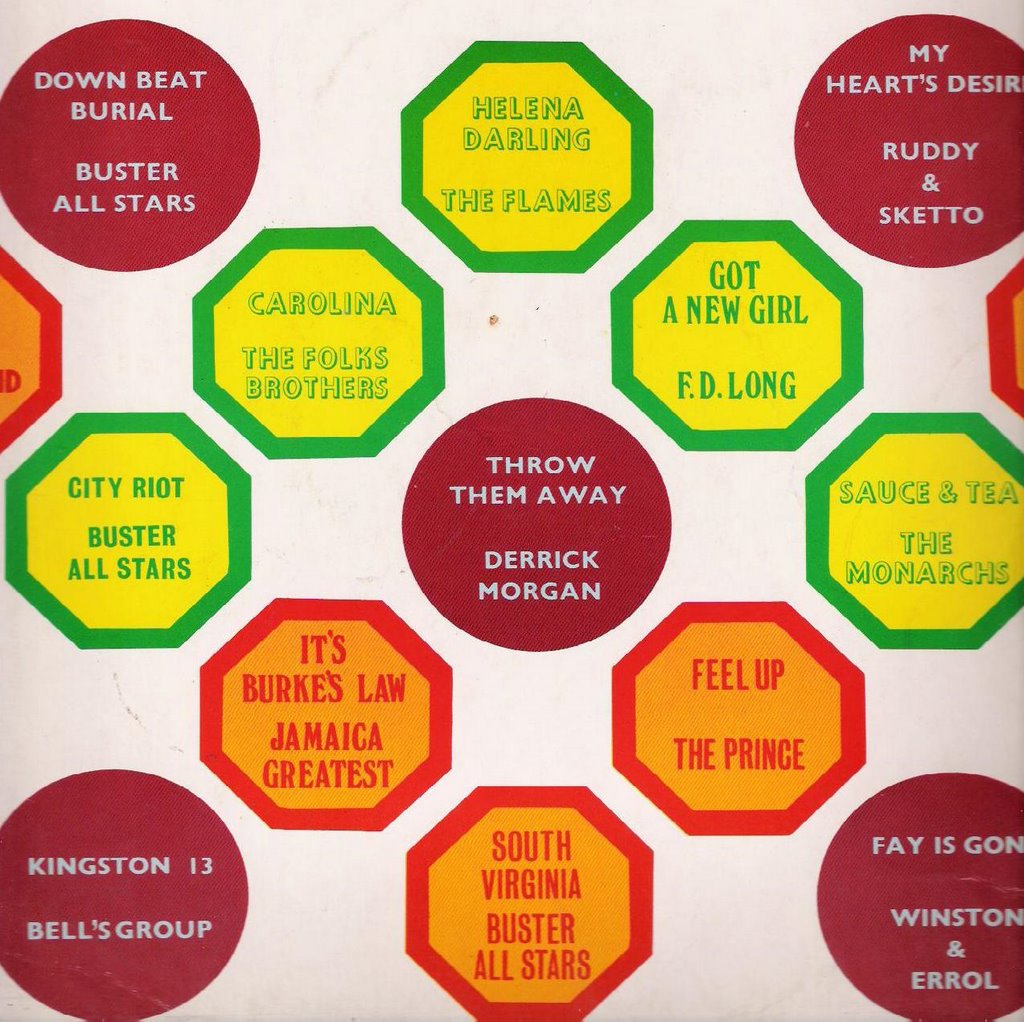
A fantastic old scratchy Melodisc LP from Brick Lane market I found many years ago. It has the most wrong sleeve ever as all the song titles are mixed up and the label on the disc itself is Side One on BOTH sides! So I had to listen to the lyrics to get the titles but some of the instrumentals might be wrong? Anyway all the songs are from the 60's when Ska was at it's height in Jamaica and one can clearly hear the influence of New Orleans and American rythym and blues and jazz here.

"Ska Music originated in Jamaica as a result of Jamaican musicians adopting and personalising many different forms of American music. By the early 1950's Jamaican bands were taking inspiration from American artists and forming bands like Eric Deans Orchestra featuring the talents of trombonist Don Drummond and guitarist Ernest Ranglin. By the end of the 1950's, jazz, r&b, and mento (a style of calypso) influences were merged into a new style called Shuffle. Shuffle gained popularity through the works of such greats as Neville Esson, Owen Grey, The Overtakers, and The Matador Allstars.
In 1962, a time when Jamaica was copying the musical style of America, Cecil Bustamente Campbell, later known as Prince Buster, knew that something new was needed. He had his guitarist Jah Jerry emphasize the offbeat instead of the downbeat. To the present day, the offbeat is essential to Jamaican music styles. Ska Music was born.

Despite the primitive mono recording facilities, it was the determination of the ska enthusiasts which enabled ska to become the first truly commercial Jamaican Music. In fact, the ska was later named the national dance and music of Jamaica.

In the 1970's the Rude Boy ideals were revitalized and expressed in the fusion of reggae and punk by bands such as The Clash (Rudie Can't Fail). In the mid to late 1970's, bands such as The Coventry Automatics chose to use ska instead of reggae because, according to Jerry Dammers, it was easier. The Coventry Automatics later became The Automatics then The Specials AKA The Automatics, then The Special AKA, then The Specials."


The Folks Bothers - Oh Carolina

Buster Allstars - Down Beat Burial

Winston & Errol - Fay Is Gone

Jamaica Greatest - It's Burke's Law

The Prince - Feel Up

The Flames - Helena Darling


These SendSpace files are available for seven days or until exhausted.

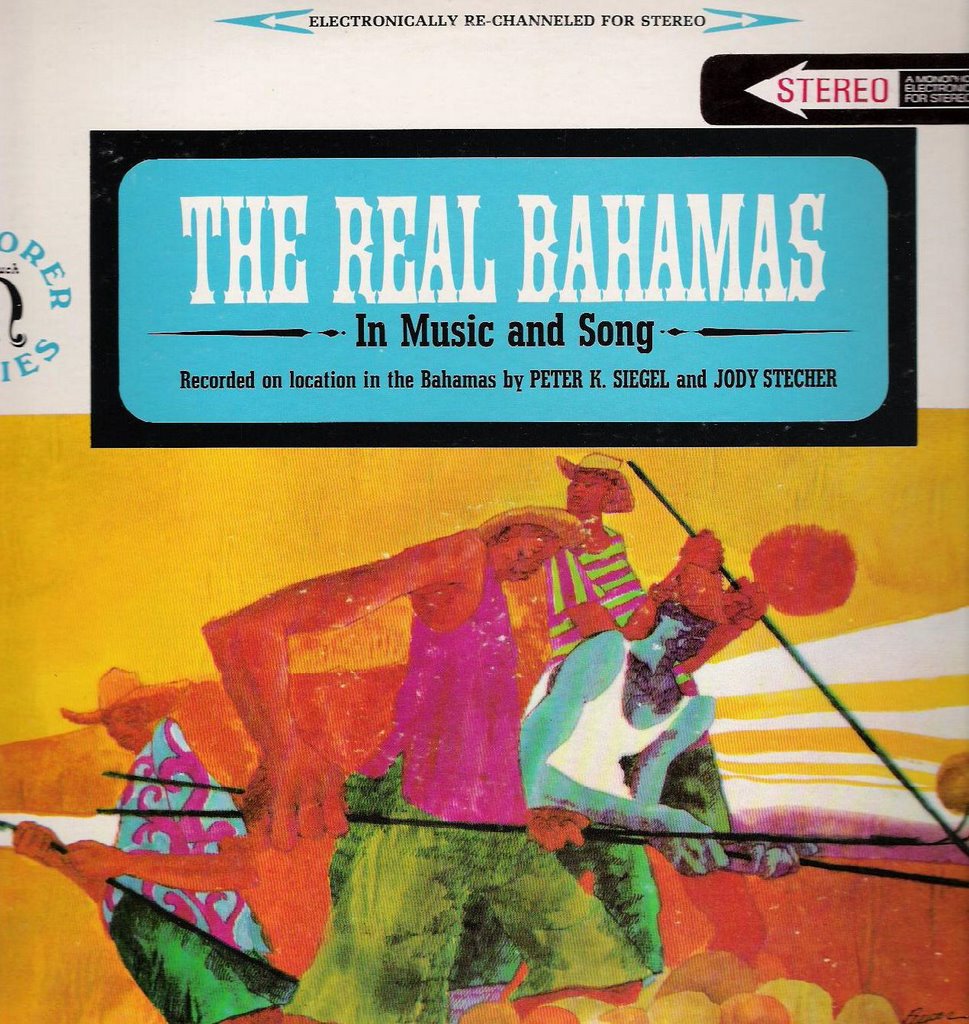
The Real Bahamas


An LP on the Nonesuch label from 1965. Field recordings made by Peter K. Siegel and Jody Stecher. Some fine spirituals and folk oriented gospel by the Pindar Family, Same Greene, Frederick McQueen etc. I have chosen tracks featuring Joseph Spence, the renowned Bahamian guitarist who I first heard when Ry Cooder played some of his favourite records on a radio show back in the 70's.

Here's what Wikipedia says about him-

"Joseph Spence (born August, 1910 in Andros, Bahamas - died March 18, 1984 in Nassau, Bahamas) was a Bahamanian guitarist, singer and blues musician. He is well known for his vocalizations and humming while performing on guitar. Several modern folk, blues and jazz musicians, including Taj Mahal, Ry Cooder, Woody Mann and John Renbourn were influenced by and have recorded variations of his arrangements of gospel and Bahamanian pop tunes. The earliest recordings of Joseph Spence were field recordings by folk musicologists such as Sam Charters. Nearly all of the recorded songs are in a Drop D tuning, where the sixth string is tuned to a low D rather than E, so that the guitar sounds, from sixth to first D A D G B E. The power of his playing derives from moving bass lines and interior voices and a driving beat that he emphasizes with foot tapping. To this mix he adds blues coloration and calypso rhythms to achieve a unique and easily identifiable sound. He has been called the folk guitarist's Thelonious Monk."


Pindar Family & Joseph Spence - We Will Understand It Better By & By

Joseph Spence - Don't Take Everybody To Be Your Friend

Joseph & Louise Spence - Won't That Be A Happy Time


These SendSpace files are available for seven days or until exhausted.
Thursday, September 28, 2006

Max Bacon


"Max was the larger-than-life drummer with the Ambrose Orchestra for many years, who also had a unique Jewish-style humour. Prior to joining Ambrose in late 1927, he had been with Leon van Straten's band in 1926 and also was briefly with Fred Elizalde's band (which seems to be made up of Ambrose musicians) and Al Starita's Kit-Cat band (probably a temporary substitute for Eric Little). He was a regular member of Ronnie Munro's band which recorded for Parlophone and Imperial from 1926 to 1929, and also with Arthur Lally's band at Decca in the early 1930s. His stint with Ambrose lasted until 1940 and his wry comments may be heard on a number of comedy titles, including the famous number "Cohen the Crooner (The Crosby of Mile-End)" which is extant on film. On leaving Ambrose, Max went into variety, and also acting, taking small parts in films and television shows."

These two tracks were sent on a cassette from a chap who dubbed them from old 78's using the "oil" method, whatever that means. He said it made for smooth running of the needle through the grooves of scratchy old wax discs. This style of crazy jewish humour reminds me of Stanley Unwin and his nonsense language.


Max Bacon - William T-Hell

Max Bacon - Little Red Hooding Ride


These SendSpace files are available for seven days or until exhausted.

Wednesday, September 27, 2006

Vote for old posts!

A Flickr DJ

Here's a chance to vote for your favourite posts again or any you may have missed in the past. Just leave the name of the post or the artist in the comments. Cheers!

Warren Smith


Part of one side of an LP on the Harvest label that came out in 1978. A concert at the Rainbow Theatre in London U.K. on April 30th 1977. Four Rock'n Roll legends including Charlie Feathers, Buddy Knox and Jack Scott. Here are the 4 tracks by Warren Smith-

1. Ubangi Stomp
2. Rock 'n' Roll Ruby
3. Blue Suede Shoes
4. I'm Movin' On

The sleevenotes by Geoff Barker say-

" Warren Smith is rightly introduced on the record as "The guy we've waited twenty years to see". Born in Mississippi in 1933, he was one of the many young rockabilly singers recorded by Sam Philips In Memphis, Tennessee for his legendary Sun record label. While the labels stars ( Elvis, Carl Perkins, Jerry Lee Lewis and Johnny Cash) were making it in a big way, there were a host of others laying down some equally innovative recordings. Warren Smith's first single issude in March 1956, was a Johnny Cash song - Rock 'N' Roll Ruby. This sold well around the Memphis area, and the follow-up Ubangi Stomp became a rockabilly standard, first coming to the attention of Britsih audiences via Jerry Lee Lewis's first album."

Monday, September 25, 2006

Lonnie Donegan


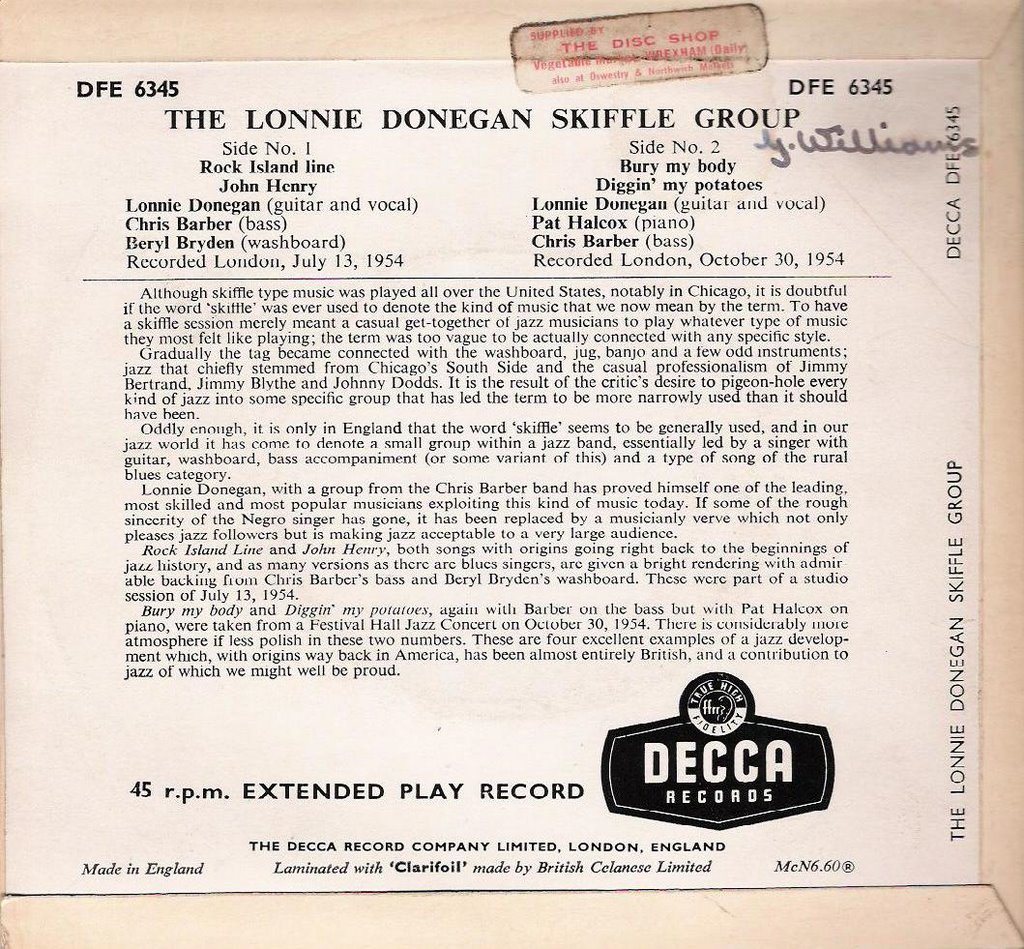
Another EP by Donegan that I found at the weekend for 25 pence. Recordings form the Festival Hall Jazz Concert of 1954 and in the studio at around the same time with Chris Barber (Bass), Beryl Bryden (Washboard) and Pat Halcox (Piano).

"He formed his own group, the Tony Donegan Jazz Band, in 1952. They were successful enough that the National Jazz Federation asked the band to play a show at Festival Hall with American ragtime pianist Ralph Sutton and blues/jazz legend Lonnie Johnson. The Federation had brought to the two over to England in defiance of a Musicians' Union ban on all foreign performers and needed a non-union band like Donegan's to play support for the two guests. The master of ceremonies at the show made a mistake in his announcement, introducing the American guitarist as "Tony Johnson" and the British banjo man as "Lonnie Donegan." The name stuck.

Donegan and his band eventually hooked back up with his old friend Chris Barber, who'd kept his band going throughout the previous two years, and eventually Barber and Donegan linked up with fellow jazzman Ken Colyer, into a kind of supergroup led by Colyer. The Ken Colyer Jazzmen, as they were called, specialized in Dixieland jazz, and built a formidible reputation, their shows popular in every club they played. It was during these shows, between sets by the full band, that Donegan would come on stage with two other players and perform his own version of American blues, country, and folk standards, punched up with his own rhythms and accents, on acoustic guitar or banjo, backed by upright bass and drums. The name "skiffle" was hung on this music as a way of referring to it on the group's posters. The word, according to Donegan, was suggested by Ken Colyer's brother Bill, who remembered an outfit called the Dan Burley Skiffle Group, based in Chicago in the 1930's. It seemed to fit, and it caught on; the Ken Colyer Jazzmen became almost as popular for Donegan's between-set skiffle songs as they were for their Dixieland music. "

Here's a previous post about Lonnie Donegan - SWAPATORIUM: Lonnie Donegan Showcase

Lonnie Donegan - Diggin' My Potatoes

Lonnie Donegan - John Henry


These SendSpace files are available for seven days or until exhausted.

Sunday, September 24, 2006

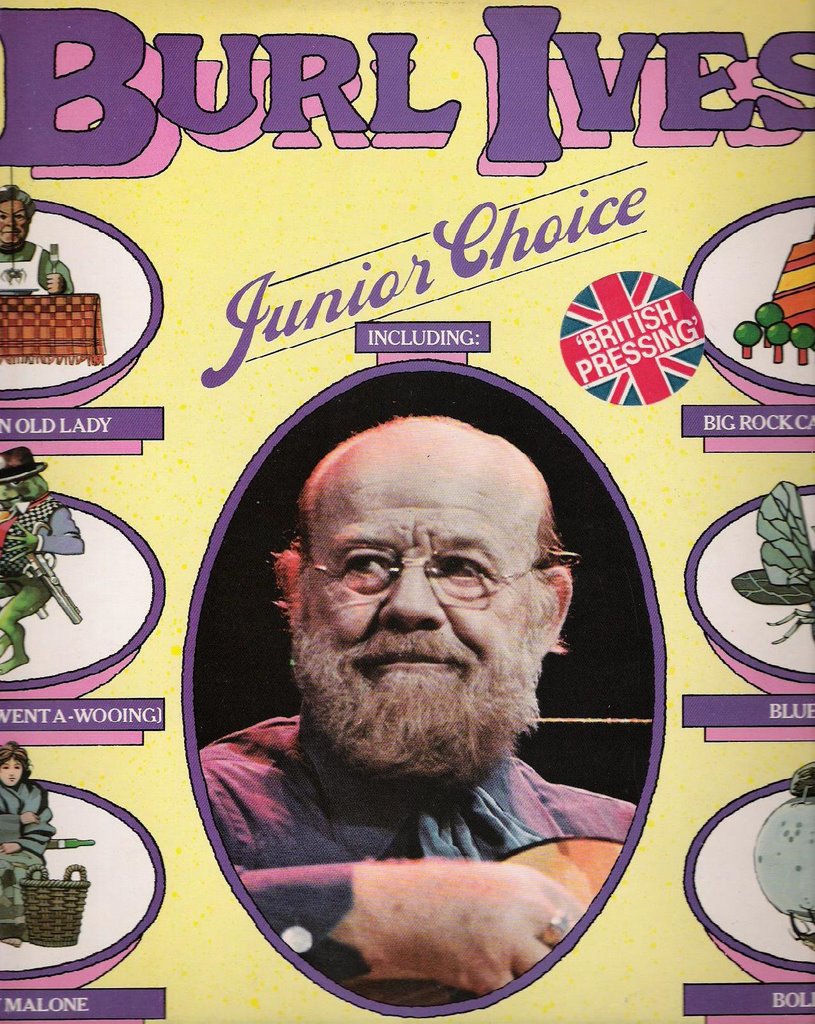
Burl Ives


Another found today in the same box as the Zillertaler Trio. Burl Ive's childrens songs were regularly played on the BBC's "Childrens Favourites" radio show of the 50's and 60's especially songs like There was An Old Lady and Blue Tail Fly etc.
This MFP LP was released in the 70's I would imagine. No date on the sleeve.

Here's what Wikipedia has to say about him-

"Burl Icle Ivanhoe Ives (14 June 1909 – 14 April 1995) was an acclaimed American folk music singer, author and actor.
Born near Hunt City in Jasper County, Illinois, Ives is probably best remembered for his music. He dropped out of college to travel about as an itinerant singer during the early 1930s, earning his way by doing odd jobs and playing his banjo. He was jailed in Mona, Utah, for singing “Foggy Foggy Dew”, which the authorities decided was a bawdy song.
Ives from 1927 to 1929 attended Eastern Illinois State Teachers College in Charleston (now Eastern Illinois University), where he played football. During college he was a member of the Phi Sigma Kappa fraternity. He dropped out of college because of poor grades and in 1930 landed on WBOW radio in Terre Haute, Indiana.
In 1940 Ives began his own radio show, titled The Wayfaring Stranger after one of his popular ballads. The show was very popular, and in 1946 Ives was cast as a singing cowboy in the film Smoky. His first book, The Wayfaring Stranger, was published in 1948.
Other movie credits include East of Eden (1955); Cat on a Hot Tin Roof (1958); The Big Country (1958), for which he won an Academy Award for Best Supporting Actor; and Our Man in Havana (1959), based on the Graham Greene novel.
In the 1940s Ives popularized several traditional folk songs, such as “Lavender Blue” (his first hit, a folk song from the 17th century), “Foggy Foggy Dew” (an English/Irish folk song), “Blue Tail Fly” (an old Civil War tune) and “Big Rock Candy Mountain” (an old hobo ditty)."

Read more about Burl Ives HERE.


Burl Ives - Whistling Rabbit

Burl Ives - Riddle Song

Burl Ives - The Man On The Flying Trapeze


These SendSpace files are available for seven days or until exhausted.

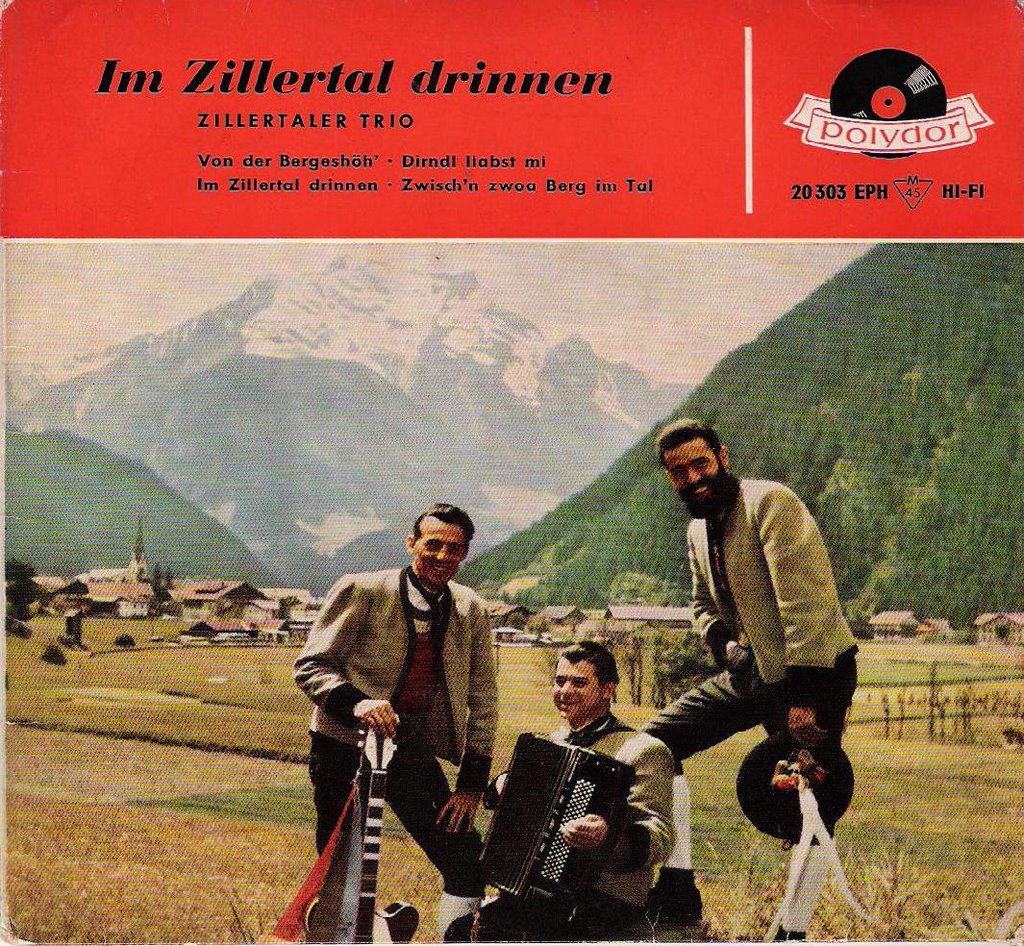
Zillertaler Trio


An EP of uncertain date found at car boot sale today just before the thunderstorm. I presume it's a German record as the label is printed in Germany. I was hoping for some yodelling and sure enough there is some. I have no idea what they are singing about but assume its about milk-maids and the joys of the mountains, leather shorts and the healthy outdoor life.
Perhaps a kind German person can enlighten us?


Zillertaler Trio - Im Zillertal Drinnen

Zillertaler Trio - Zwisch'n Zwoa Berg Im Tal


These SendSpace files are available for seven days or until exhausted.

Fezcast 2


Big Al Davies spins a few of his favourite tracks but keeps a low profile this time. Tunes from Sandie Shaw, Ivor Cutler, Ukelele Orchestra Of Great Britain, Loudon Wainwright III, Rolf Harris, Paul Giovanni and Magnet and Claude Vasori - not particularly in that order.

Saturday, September 23, 2006

Chicken Rock


No excuses for featuring this track again. One of my favourite "chicken songs". I saw this LP on Brick Lane market many years ago and imagined it was all songs about chickens! Sadly this was the only one but later I was able to make up my own cassette tape comp. of Chicken Songs to annoy my friends with. The title track is my Fat "Daddy" Holmes.

Here are some other rockabilly tunes from the same LP.


The Beaumarks - Rockin' Blues

The Champs - Roots

Scottie Stuart - Little Rocker

Carl Bonafede & The Gem Tones - Story That's True


These SendSpace files are available for seven days or until exhausted.
Thursday, September 21, 2006

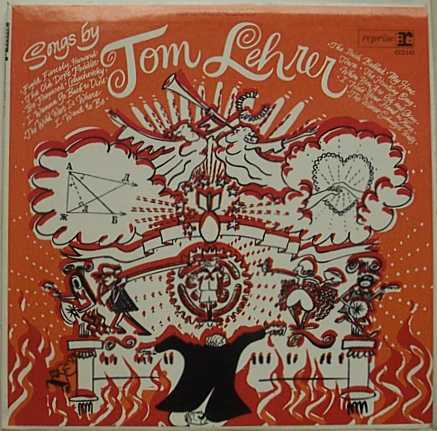
Tom Lehrer


One of three Tom Lehrer I have found cheaply but this is the cheapest as it was absolutley free - sent in the post by a kind lady who didn't have a record player and so thought I might like it! It's full of great songs- all very short and very funny.

Here's what Wikipedia says about him-

"As an undergraduate student at Harvard University, he began to write comic songs to entertain his friends, including "Fight Fiercely, Harvard" (1945). Those songs later became (in a joking reference to a leading scientific journal) The Physical Revue. Influenced mainly by musical theater, his style consisted of parodying the then-current forms of popular song. For example, his appreciation of list songs led him to set the names of the chemical elements to the tune of Gilbert and Sullivan's "Major General's Song".
Inspired by the success of his performances of his songs, he paid for some studio time to record an album, Songs by Tom Lehrer, which he sold by mail order. Self-published and unpromoted, the album, which included the macabre ("I Hold Your Hand In Mine"), the mildly risqué ("Be Prepared"), and the mathematical ("Lobachevsky"), became a success via word of mouth. With a cult hit, he embarked on a series of concert tours and released a second album, which came in two versions: the songs were the same but More Songs by Tom Lehrer was studio-recorded, while An Evening Wasted with Tom Lehrer was recorded live in concert.
By the early 1960s Lehrer had retired from touring (which he intensely disliked) and was employed as the resident songwriter for the US edition of That Was The Week That Was (TW3), a satirical TV show. An increased proportion of his output became overtly political, or at least topical, on subjects such as pollution ("Pollution"), Vatican II ("The Vatican Rag"), race relations ("National Brotherhood Week"), American militarism ("Send the Marines") and nuclear proliferation ("Who's Next?" and "We Will All Go Together When We Go"). He also wrote a song which satirized the alleged amorality of Wernher von Braun. A selection of these songs was released in the album That Was The Year That Was."

Find out more about Tom Lehrer HERE.


Tom Lehrer - The Old Dope Peddler

Tom Lehrer - Be Prepared

Tom Lehrer - The Wild West

Tom Lehrer - I Wanna Go Back To Dixie

Tom Lehrer - Fight Fiercely, Harvard


These SendSpace files are available for seven days or until exhausted.
Tuesday, September 19, 2006

Will Fyffe


This LP on the World Record label is a compilation of songs by the scottish comedian Will Fyffe which I always get mixed up with Sir Harry Lauder. Mostly from the late 20's and early 30's.

"He started his career in childhood touring with his father's dramatic company and made his debut as Little Willie in East Lynne.
At 15 he played Polonius in Shakespeares Hamlet. He then moved to the Music Halls doing sketches featuring Scottish characters many of which were recorded on to 78 rpm records. He appeared at the London Pavilion in 1921 and also appeared in a number of films during the 1930's.

He was presented with the C.B.E. for entertaining the troops during World War 2. He is best known for his recording of "I Belong To Glasgow" but made many other fine recordings demonstrating that he had an excellent singing voice and in my opinion was a superior entertainer to the better known Sir Harry Lauder."


Will Fyffe - I'm 94 Today

Will Fyffe - He's Been On The Bottle Since A Baby

Will Fyffe - The Railway Man


These SEndSpace files are available for seven days or until exhausted.
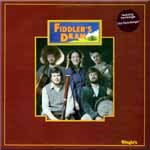
Fiddler's Dram


Another LP from the bootsale on Sunday. Their one and only hit "A Day Trip To Bangor" has surfaced on a couple of folk/novelty compilations and I was keen to see what else they had done. Mostly ordinairy folk rock from the 70's that reminds me of Steeleye Span and The Yetties etc.

Here's what Wikipedia has to say about them-

"Fiddler's Dram were a British folk band of the late 1970s. They were mainly known for their hit single Day Trip to Bangor (1979), although the sound of this record was not representative of the acoustic songs and tunes they had been performing for several years at folk clubs and festivals.
The members of Fiddler's Dram were:
Cathy Lesurf - vocals, bodhran
Alan Prosser - guitar, fiddle, bowed psaltery, bones
Chris Taylor - bouzouki, harmonica, appalachian dulcimer, mandola, tenor banjo
Ian Telfer - fiddle, bowed psaltery

They met at the University of Kent at Canterbury and were residents at Duke's Folk Club in Whitstable. With other club members including John Jones and Ian Kearey, they formed the Oyster Ceilidh Band c.1976, with Cathy Lesurf singing and later assuming the role of caller at dances.
Bassoon-player Will Ward had joined the Oyster Ceilidh Band by 1978, and became the fifth member of Fiddler's Dram on their eponymous second LP, recorded hurriedly to follow up on their unexpected success in the singles chart. The band were unable to achieve subsequent success however - in the words of Ian Telfer Day Trip To Bangor was "the kind of success you don't easily recover from. Fiddler's Dram did one more tour then gratefully took the money (and the gold discs) and ran".
Day Trip To Bangor was actually inspired after a day trip to Rhyl (a seaside resort 35 miles east of Bangor, North Wales), but because Bangor had an extra syllable and slipped off the tongue easier it was used ahead of Rhyl. This caused an outcry from Councillors and businesses in Rhyl who complained that the publicity would have boosted the resort's tourist ecomony.
The Oyster Ceilidh Band continued as both a dance and concert band however, changing their name c.1982 to Oysterband. Cathy Lesurf subsequently left the Oysters for a spell with the Albion Band."


Fiddler's Dram - Mama's Ill

Fiddler's Dram - Johnny John

Fiddler's Dram - Fedora


These SendSpace files are available for seven days or until exhausted.
Monday, September 18, 2006

Wavy Gravy

Evil Alien Diary
A short segment of a cassette some kind person sent me a few years back called "Wavy Gravy". Not sure if this was an official release or not. Can't find any record of it. probably a limited edition on obscure record label. Seems to be lots of garage bands mixed with old shlock film trailers.

Tracks are-

1. Bo Diddley - The Juveniles
2. Hambone Hunter - Ho Ho laughing Monster
3. The Motions - Bacon Fat
4. Igor & The Maniacs - Bumble Bee '65
5. Moses Longpeice - The Big Green

You can find it HERE.

Sunday, September 17, 2006

George Formby


George Formby's Crazy Record Parts 1 & 2

Delighted to find a boxed set of George Formby LP's on the World Record label yesterday at a boot sale for a pound! Four records in the set with songs from his stage shows and all his hits like "Leaning On A Lamppost", "Mr. Wu's A Window Cleaner" and many others. Also more obscure songs which I've uploaded here.

"Musical comedian George Formby was among Britain's most popular stars during the first half of the 20th century, with a legacy encompassing over 200 records and more than 20 hit films. Born George Hoy Booth on May 26, 1904 in Lancashire, England, he was the son of George Formby, Sr., himself a popular Edwardian music hall comedian. The younger Formby first worked as an apprentice jockey, but his father's sudden death in 1921 prompted him to pursue his own career as a performer; he initially worked under his given name, but later adopted his father's nom-de-stage following his marriage to dancer Beryl Ingham, who soon took over the reins of her husband's career. Initially, Formby attempted to approximate his father's act, but with little success; the chance acquisition of a banjo ukelele proved the key to establishing his own stage persona, and in light of audiences' enthusiastic reactions to his idosyncratic, self-taught playing style, the instrument was never again far from his side.

With his toothy grin and goofy personality, Formby was dubbed "the beloved imbecile" by pundits; after earning a loyal following among music hall denizens, he scored a major pop hit with 1932's "Chinese Blues," which when renamed "Chinese Laundry Blues" became his signature song for the duration of his career. Two years later Formby made his first film, Boots! Boots!; the picture was a smash, and he swiftly contracted to make 11 more films for Ealing Studios. Over the course of movies like 1935's No Limit, 1937's Feather Your Nest and 1938's It's in the Air, he became Britain's biggest star, earning an estimated £100,000 a year; his films also continued to provide him with a wealth of saucy hit records, including "The Window Cleaner," "Fanlight Fanny," "Riding in the T.T. Races" and the Noel Gay-penned "Leaning on a Lamp Post," perhaps his most popular song."

Discover more about George Formby HERE.


George Formby - I'm The Ukelele Man

George Formby - Have You Ever Heard This One?

George Formby - Wunga Bunga Boo

George Formby - I Can Tell It By My Horoscope


These SendSpace files are available for seven days or until exhausted.
Friday, September 15, 2006

Screaming Lord Sutch


Dracula's Daughter by Screaming Lord Sutch and The Savages.

"Although he was never a major pop player in the 60s - he was always more famous for being famous - Screaming Lord Sutch's band The Savages included Deep Purple's Ritchie Blackmore. Sutch plundered his act wholesale from Screaming Jay Hawkins and added a dash of Hammer horror; Blackmore often recalled the indignity of being a serious muso, standing in a West london pub dressed only in a loincloth, trying to keep his mind on playing as Sutch emerged from a coffin and advanced on him with a blood-dripping dagger drawn.

He also teamed up with Keith Moon, Jimmy Page, Blackmore and others on the 1969 album 'Screaming Lord Sutch And Heavy Friends', which was a pretty dire record, though his early 60s horrorshow rock pre-dated Alice Cooper, The Damned, Marilyn Manson and any number of goth bands by years. But it is as a 'political buffoon' that he will be best remembered."

Discover more about Screaming Lord Sutch HERE.

Fezcast from Big Al Davies


Llanbradach's finest singer/songwriter plays a few records at home. A mini-podcast full of novelty and wonder.

Wednesday, September 13, 2006

Letta Mbulu

Letta Mbulu
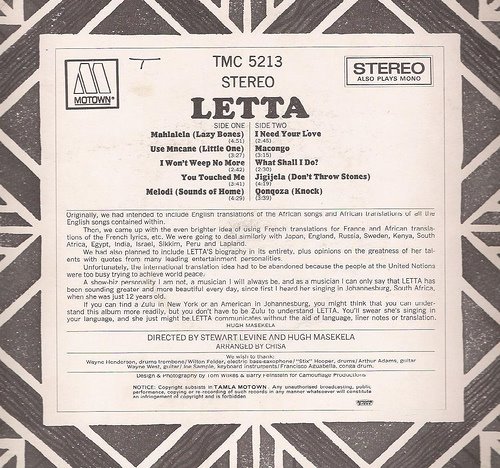
A unusual choice for the Tamla Motown label back in 1970 when the idea of "World Music" and WOMAD etc. would have to wait another fifteen years to become popular. I prefer the township songs here on a record produced by Hugh Masekela ( who also plays trumpet) - the soul tracks seem rather dull by comparison.

This is what Douglas Payne has to say about her-

"Letta Mbulu (pronounced "let-ah" "em-boo-loo") was born and raised in Soweto, South Africa.

Still in her teens, Letta began touring outside of Africa with the musical "King Kong," which ran for a year in England following a highly successful two-year run in South Africa. When the tour ended, she returned to South Africa but soon the policies of Apartheid were to force her to leave her native land for the U.S.A
She arrived in the United States in 1965 and quickly befriended such fellow South African exiles in New York City as Miriam Makeba, Hugh Masekela and Jonas Gwangwa - all alumni of the "King King" musical. Performances at New York's famed Village Gate club began to attract attention to her talents, particularly from jazz legend Cannonball Adderley, who invited her to tour with him (which she did throughout the remainder of the decade).

Letta Mbulu also displayed an early gift for writing joyful, memorable songs. These were showcased by no less an authority than Miriam Makeba on the singer's albums THE MAGNIFICENT MIRIAM MAKEBA ("Akana Nkomo"), ALL ABOUT MIRIAM ("U Shaka," "Jol'inkomo") and MAKEBA ("U-Mngoma," "Magwala Ndini").

Letta first made herself heard on records as part of Letta and the Safaris, a group featuring husband Caiphus Semenya and the South African husband and wife team of Jonas and Mamsie Gwangwa. A single, "Walkin' Around" was issued in 1966 by Columbia Records (home at the time to Bob Dylan and Simon & Garfunkle), but lack of publicity failed to garner much attention to the clever little R&B swinger.

Letta and Caiphus soon relocated to the West Coast, joining Hugh Masekela, who became a fixture of the California concert and recording scene. While there, producer David Axelrod fell under Letta's spell and had her signed to Capitol Records - home at the time to both the Beatles and the Beach Boys and where Axelrod himself was scoring big hits for Lou Rawls and Cannonball Adderley."


Letta Mbulu - Macongo

Letta Mbulu - Qonqoza (Knock)

Letta Mbulu - Use Mncane (Little One)


These SendSpace files are available for seven days or until exhausted.
Oh! What A Carry On


A record on the MFP label from the late 70's featuring songs not in the films but by some of the artists who took part in them over the years.

1. Be My Girl - Jim Dale
2. You Need Feet - Bernard Bresslaw
3. On Mother Kelly's Doorstep - Barbara Windsor
4. It's Alright With Me - Frankie Howard

"Possibly more than any other, the Carry On series of films typify the very essence of British comedy. They are, without doubt, the most enduring and endearing offspring of British cinema. From their debut in 1958 through to the present day, the mention of the words "Carry On" bring to mind images of saucy humour, larger than life characters and riotous slapstick. There are very few people in their home country, if not elsewhere, who haven't seen at least one of the 31 Carry On films, let alone the subsequent stage shows and television series.

The humour of the Carry Ons, while far from unique, is presented with such flair that when one thinks of the typical British comedy, the words "Carry On" immediately spring to mind. While remaining at all times highly suggestive, it never veered towards the obscene. The jokes and situations, while full of sexual innuendo and deliberately raised eyebrows, retain an innocence not found anywhere else. Great emphasis was placed on the double entendre and the dirty laugh, but overt sexuality and coarse language were always shunned."

Discover more about the Carry On films HERE.

Monday, September 11, 2006

Captain Beefheart


Not strictly a boot sale find but a very old and scratchy record I played to death back in 1970 when this first appeared on Frank Zappa's STRAIGHT label. Not quite up to the quirkiness and inspired daftness of Trout Mask Replica which was released two years previously and the Captain's finest hour ( and a bit ).

Biography by Jason Ankeny
"Born Don Vliet, Captain Beefheart was one of modern music's true innovators. The owner of a remarkable four-and-one-half octave vocal range, he employed idiosyncratic rhythms, absurdist lyrics and an unholy alliance of free jazz, Delta blues, latter-day classical music and rock & roll to create a singular body of work virtually unrivalled in its daring and fluid creativity. While he never came even remotely close to mainstream success, Beefheart's impact was incalculable, and his fingerprints were all over punk, new wave and post-rock.

Don Vliet was born January 15, 1941 in Glendale, California (he changed his name to Van Vliet in the early '60s). At the age of four, his artwork brought him to the attention of Portuguese sculptor Augustinio Rodriguez, and Vliet was declared a child prodigy. In 1954, he was offered a scholarship to study in Europe; his parents declined the proposal, however, and the family instead moved to the Mojave Desert, where the teen was befriended by a young Frank Zappa. In time Vliet taught himself saxophone and harmonica, and joined a pair of local R&B groups, the Omens and the Blackouts.

After a semester at college, he and Zappa moved to Cucamonga, California, where they planned to shoot a film, Captain Beefheart Meets the Grunt People. As the project remained in limbo, Zappa finally moved to Los Angeles, where he founded the Mothers of Invention; Van Vliet later returned to the Mojave area, adopted the Beefheart name and formed the first lineup of his backing group the Magic Band with guitarists Alex St. Clair and Doug Moon, bassist Jerry Handley and drummer Paul Blakely in 1964.

In their original incarnation, the Magic Band were a blues-rock outfit who became staples of the teen-dance circuit; they quickly signed to A&M Records, where the success of the single "Diddy Wah Diddy" earned them the opportunity to record a full-length album. Comprised of Van Vliet compositions like "Frying Pan," "Electricity" and "Zig Zag Wanderer," label president Jerry Moss rejected the completed record as "too negative," and a crushed Beefheart went into seclusion. After replacing Moon and Blakely with guitarist Antennae Jimmy Semens (born Jeff Cotton) and drummer John "Drumbo" French, the group (fleshed out by guitarist Ry Cooder) recut the songs in 1967 as Safe as Milk.

After producer Bob Krasnow radically remixed 1968's hallucinatory Strictly Personal without Beefheart's approval, he again retired. At the same time, however, Zappa formed his own , Straight Records, and he soon approached Van Vliet with the promise of complete creative control; a deal was struck and after writing 28 songs in a nine-hour frenzy, Beefheart formed the definitive lineup of the Magic Band -- made up of Semens, Drumbo, guitarist Zoot Horn Rollo (born Bill Harkleroad), bassist Rockette Morton (Mark Boston) and bass clarinetist the Mascara Snake (Victor Fleming) -- to record the seminal 1969 double album Trout Mask Replica."

Tracks are-

1. Lick My Decals Off Baby
2. Doctor dark
3. I love You, You Big Dummy
4. Peon
5. Bellerin' Plain

Discover more about Capatin Beefheart HERE.